Thursday, December 14, 2023

More struggles to cap an awful year !


Soothsayers were not kidding when they said that this was not a good year for folks like me. 

Three weeks ago, I started getting double vision and thought that there was something wrong with my new progressive lenses. After multiple visits to the optician, they said that my eyes were misaligned and only an opthalmologist could resolve the issue. So I thought I would resolve it quickly by using the private sector to get help.

The problem turned out to be much more complicated than I thought. I was diagnosed with Thyroid Eye Disease and after seeing three ophthalmologists, getting an MRI, and spending over $3k, I was able to order a new lens to mitigate my vision problems. Sadly for me, treatment in the private sector will cost me a five-figure sum over the next year, and I've decided to go back to the government-restructured hospitals for help. It's slower, but at least I can deplete my almost-full Medisave account.

( Concerned readers can note that tomorrow I get to see someone in TTSH, so please don't bash our excellent medical system here. )

So as of now, I can see clearer with one eye than two so I told the clinic to cover my left eye while I wait for my new lens stickers to arrive. 

The strain of managing private-sector clinic visits, research and costs has caused me to skip investing my latest tranche of training fees from my training problem. I taught 32 batches of students and this was the first time I held back in case I needed liquidity to pay the medical specialists. 

So you can imagine how I felt when markets rallied just as I predicted last week with REITs leading the charge?

Fortunately, I have not sold any holdings since interest rates have gone up and the fees are a drop of the ocean like everyone else stubborn enough to remain invested locally, I made a tidy sum today and look forward to an ever better Capricorn effect next year. 

But hey, health is always more important than wealth. Until I actually get a slot to consult a specialist in a government hospital and get my corticosteroids, which can take a while, I'm holding back my funds in the rare probability that my situation will get worse. I even have documents in a folder in case I get into an A&E situation. 

I have also started to obtain contacts for Malaysian private doctors. If I can combine an eye operation or steroid injection with a trip to KL, Girl Maths will tell me that the savings are enough for my hotel stay and shopping to be free! 

Finally, as I hit my 50s, I realise that the game is starting to move from Normal to Hard difficulty mode. There is no way I could have played my cards better, I even started a new gig to stabilise the loss of income from investment courses, but for every step I take forward, I have to take a step back. My only consolation is that at least I'm alive - I was shocked that a number of celebrities have passed away this week. 

Tomorrow, I will be conducting a lecture on Legal Ethics with the use of just one eye.  


Saturday, December 09, 2023

Letter to Batch 32 of the Early Retirement Masterclass


Dear Students of Batch 32,

It's been a great honour and privilege to conduct a 5-Day Early Retirement Workshop for you.

As I managed to complete successive instalments of this program, we found that the markets have been trending ever lower in 2023. Things have gotten so bad that the equity risk premium we tracked has exceeded 7%. The only time when the Singapore market was cheaper was at the bottom of the pandemic crash which created the most successful class I ever graduated.

If you decide to be plucky and invest this upcoming week in our portfolio your dividend yield will exceed 7.4%, and while there are no guarantees that geopolitics can worsen your performance, there are two upcoming events that may bring your portfolio performance some upsides.

The first is when the FOMC concludes in the middle of next week. If the Fed does not raise rates further, an investment into REITs should enjoy a nice rebound.

The second is after the New Year holidays when markets start 2024 with the Capricorn effect, which will bring further respite to Singapore stocks that took a pounding in December.

Beyond January 2024, I would like to think that luck may play a better role than skill. Things will look more positive if China demonstrates more resolve to stimulate its economy. Or perhaps we will see some glimmer of hope for peace in the Middle East. As far as Singapore is concerned, we’ve played our cards the best we can with a 30-day visa-free travel arrangement, our deep push into AI, and the arrival of Taylor Swift. As I’ve said in class, It’s ludicrous that such a well-run market with such a stable government can sell at a PE ratio of 9.7.

Lastly, I hope Batch 32 will participate actively in the FB group. I look forward to seeing you in the following community seminar slated for end-2023.

Hope to see you then!


Christopher Ng Wai Chung

Thursday, December 07, 2023

Short Update


I don't have a lot of time to be blogging this week because I'm conducting a course every night until the weekend. 

I'm also nursing the tail end of a nasty flu despite being flu-vaxxed.

So if I'm not conducting lessons over Zoom, I'm drinking lots of water and sleeping off my drowsy medication. 

Also, I've decided to do something unusual this December month. In the past, I have managed many book reviews on this blog as I believe it is useful for readers. This month, I've resolved to clear, as much as possible, all the works of fiction or non-finance works I've accumulated or ignored in the past.

So hopefully by this weekend when this blog resumes, I will have some fairly interesting insights from my reads.  

It's a holiday month, so maybe we can dispense with books on investing for just 30 days.


Sunday, December 03, 2023

Regular Employment is Dangerous


I've got some genuinely crazy fans on the dividends groups. One guy was so crazy and affected by my statement that "regular employment is dangerous" that he sent my LinkedIn profile to a headhunter who promptly concluded that I would never be able to get a job. I might be the only guy who can get a rejection from a headhunter for a job I never even applied for. 

( If you guys are wondering, the job is a robotic automation apprenticeship. I researched because I wanted to hunt down the headhunter and give him a piece of my mind. ) 

Today, I won't be covering the primary details of why regular employment is dangerous. We know that folks here have to deal with outsourcing and retrenchment as part and parcel of corporate life.  

Before I unpack the statement, regular employment is still the best way to attain FIRE, and I've actually turned away some unemployed potential clients because I'm not a miracle maker. So don't go resigning from your company reading this post.

a) Most economic rewards in Singapore go to capital rather than labour anyway

First of all, according to some economic data, in Singapore, labour's share of GDP is around 40+ per cent, which is about 10% lower than in many OECD countries. This means that in this country, we tend to get less of our productivity from earned income. Most rewards do, in fact, accrue to capital owners. Our attitude towards our work should be a means to generate capital because that's how you earn a larger share of our economy today.

b) All employment is time theft

The second reason is that if you look at your life from a different angle, all employment is time theft. At least in Singapore, we have yet to start to reward employees for results, so some folks are still bound by a 9-5 job. Why can't we leave the office when our job is done? There are also very few laws granting staff overtime after they hit a certain income. I think in this new era, we should beware of jobs that take up more of our time than necessary because you can monetise your after-office hours. This covers conference calls with the US and Europe.

But so far, you are not being compensated for it, and we've normalised the theft of time by organizations and companies for quite a while.

c) Reskilling and Skillfutures will benefit employers and may become bad investments of your time

I'm speaking with a lot of authority here because I was the IT certification king in my 20s and 30s. With Skillfutures, everybody is potentially the certification king of tomorrow, and the supply of skills will begin to exceed demand. Thanks to Coursera, the IT certifications kings of the 00s will have gone into extinction. In my case, the IT Certification King has transformed into the Dividends Pig. 

Here's a way to think about certifications vs qualifications. In economics, the Coarse theorem says that companies are better off outsourcing tasks which are well-defined and can be turned into a contract. Companies prefer to hire permanent staff when their tasks cannot be so easily documented and where work requires some flexibility and ability to handle ambiguity. 

Here's the rub: In order to be able to conduct a skills future course, the government must define a syllabus and come up with ways to test students on what they have learned. This is not too different from clearly defining a task. This will ultimately make it easier to outsource to another party. The process is very different from a university degree program that invests time into developing a skill but an attitude to deal with and handle novel problems. 

In my work in adult education, which has nothing to do with investing, I teach and describe things like HR performance appraisal forms. Students can describe them quite well and identify a system. Students are so-so at figuring out the strengths and weaknesses of these systems, but we do spoon-feed it to them. However, students are bad at predicting what happens to a company culture when a performance appraisal methodology is internalised. You can argue that predicting how employees will game the system is well beyond what adult education entails, but I'm quite passionate about ensuring that my students have some idea of how to do this. 

So what does this mean? MNCs and bigger companies will still pay a huge premium for university graduates and folks with qualifications. They can train employees to get skills for their work, but the value in having permanent staff is the general intelligence to gain market share and reduce costs. These guys can use a latticework of models they pick up and apply it to new situations at work ( hat tip to Charlie Munger). 

Basically, what I'm saying is that skills can help you get your current job, but to move up would require more than skills and if Skillsfutures makes skills available to everyone, you won't really benefit from spending too much time developing them. The mid-career degree will become inevitable. 

If regular employment is dangerous, what is the point of following Millennial career influencers who focus on office politics, leadership and networking? When the ones who see themselves as major players in the office are losing their jobs when interest rates go up? 

Fortunately for us, Gen Z is already responding to this devaluation of regular employment. 

My favourite Gen Z invention is overemployment, where highly productive software engineers work on two more jobs at the same time. This will allow them to FIRE even faster and cost them just a small part of their youth. Gen Z in Singapore should exploit the low unemployment rate to do this. You can figure out what to do with your life later. The only caveat is that over-employment must be used in tandem with investing to build capital to eventually replace your earned income. 

Imagine a new-age worker creating a combo chain of over-employment, dividends, asymmetric investing, and geo-arbitrage. Such an influencer does not exist in SG right now, but someone needs to invent one ASAP.

As much as I am now a sceptic about regular employment, downshifting and lying flat is probably a dumb idea. We should see ourselves as time merchants, selling out time for as much money as we can, then using our capital to buy other people's time to balance things out later in life. 


Wednesday, November 29, 2023

When do you give up your dreams for pleasure?


Collectively as a movement, we are getting better at the nuts and bolts of retirement planning. We are getting close to being able to balance our spending needs with maintaining a sustainable portfolio. But most of the folks in the movement have not mastered the fine art of living in retirement. Many are unprepared to decouple their personal identities from work. Others still live in fear of running out of money to spend.

As such, Welcome to the Hyunam-Dong Bookshop by Hwang Bo-Reum is another good book to read for folks at the tail-end of the FIRE journey. It gently talks about the mental processes of South Koreans who choose an alternative lifestyle against conventional measurements of success and shares some of the internal struggles of folks who drop out of mainstream life. 

I encourage readers to enjoy this book by supporting the author and its Singaporean translator. Instead, I will talk about one philosophical question raised by the book:

When should we give our dreams for pleasure?

The concept of a dream in this case is a little different from what we understand conventionally what it means. A dream is something you may long for to fit into what society deems a success. So in this case, for a South Korean, perhaps a dream is to become a senior manager of a chaebol. When a person is pursuing a dream, he is trying to achieve a long-term kind of satisfaction, but every conscious moment is a struggle through hard work, stress, anxiety, and pain. 

From a Korean perspective, the pursuit of a dream comes with sacrifice.

As opposed to a dream, pleasure is closer to conventionally what we think it is. Moments of pleasure signify the feeling of happiness and blissful contentment.

I was a corporate drone chasing my dreams of climbing up the rungs of a multinational when I was in my 20s, but after rounds of getting outsourced and doing outsourcing in the IT field, I realised that life-long employment is a pipe dream, and not everyone makes the director of a company. My dreams shifted to attaining financial independence through dividends investing. But after starting to live on dividend payouts at age 32, I carried working and meeting other conventional family milestones until I was 39 when I finally met my Waterloo in the public sector. 

This was a stage in my life when I was the most smug and confused. I spent 4 years studying law because I wanted an option to remain relevant in society. Law is, after all, the discipline chosen by the recently departed Charlie Munger, it is also the best thing to study if you have no idea what you want to do in life. I will never regret law school because every case is a latticework of models. But fate intervened when we sold out eight investment seminars during my days as a law student. After finding actual legal practice training worse than public sector work, I finally threw myself into investment training which I remain today.

The truth is, even post-financial independence, and having no idea what my dream is today, I was still struggling to stay relevant when I attempted to start legal practice early this year on top of my investment training business. This time, disaster struck. Not only was I unable to find clients for my legal work ( hard even for senior associates), but my hyperactive thyroid made a comeback. Luckily, I was able to salvage my legal training by taking some gigs in adult education this year for a small allowance. 

Until I read this book, I was not even aware that it's ok to give up a person's dream for pleasure. If you can live on your dividends and can work a little to reduce your rate of expenses to less than 3% of your overall investment portfolio, I know from my simulations that you can even enjoy spending more in your later years, while data from academics show that household expenses begin to drop when the head of the family reaches 50 years of age. 

What does giving up your dreams for pleasure like? In my naivete, I thought it was to start drawing down your assets to travel around the world. But many forms of FIRE do not have much money catered for travel - I have 5 pax in my family so every trip will be very expensive. 

I think what the book has done for me to generate some viable alternatives that will not break the bank. 

In this book, there is a story of a graduate who did well in university and has chosen to become a barista for the bookshop. He has a very fixed schedule in life, doing yoga, choosing coffee beans, and then serving coffee in the bookshop in the afternoon before retreating back to his apartment for rest and contemplation. His mother is distraught that he does not have a real job, but he takes coffee making to a whole new level, much like the concept of a shokunin or craftsman in Japan. 

Maybe being a master craftsman like those you find in Japan can be a pleasure. I definitely will not be able to monetise my Monte Carlo programs that simulate retirement portfolios and gradually improve them every time I see another research paper, it's just a way to add gravitas to this blog when I say that someone is underspending or even incorrect from a rational point of view. 

I think by now, you would have realised that I've not really gone beyond a paragraph or two on the book I was attempting to review, but it is obvious that this book has been extremely consequential in my life at the moment. 

Hope that some readers will attempt to read this and engage with me on this blog.


Monday, November 27, 2023

But people do enjoy spending their money !


In the rush to come up with sustainable ways to spend down your retirement assets, we often run into the problem where the thought leadership would reduce the withdrawal rate to achieve a safer withdrawal plan. It is only within the financial blogosphere that this is encouraged and celebrated. 

Everywhere else in the real world, we tend to forget that people actually enjoy their money and if you actually want to make your finances sustainable until you are age 120, a lot of your wealth will remain unspent. For me, unspent wealth is fine as I have biological kids, but the FIRE movement is full of singles so this will just result in a lot of extremely wealthy godchildren, nieces and nephews. 

The problem is that the conventional approach to FIRE using the Bengen approach, suppose you begin with a portfolio size of $1,000,000, and you designate 4% or $40,000 as your expenses the following year. Then you adjust it by the inflation rate the following year, and so on. The idea is that you won't run out of money in about 30-40 years. 

But in reality, folks are living longer, and that fear of running out of money will cause advisors to recommend lowering the starting amount to around $25,000 to increase the probability of sustaining the retirement portfolio closer to 50 years.

I leave it to readers to see how ludicrous it is to tell a millionaire to live within an inflation-adjusted $25,000 a year every year, some people may even think that some work is better than early retirement. 

How do we address this critique in a data-driven manner?

My solution is to run a Monte Carlo simulation of a 60/40 ETF portfolio and actually simulate the probability of having cash left after 50 years. However, I also enhanced my code with a measurement of utility.

When it comes to spending money, we prefer to spend it spread over a period of time rather than concentrate on a particular year. Spending more money creates more happiness, but does so with diminishing returns. There should also be a reasonable discounting factor where spending money now when you are young is better than spending it when you are old. The solution from economists is to apply a discounting factor into a class of Constant Relative Risk Aversion (CRRA) equations to amounts withdrawn for enjoyment. 

[You don't have to worry about the math because I have already coded it into Python Jupyter Notebook. ]

So let's start with a baseline. 4% withdrawal rate of a 60/40 portfolio. Adjusted annually by inflation that averages 3%. Risk aversion is that of a seasoned but cautious investor. We have a fixed time preference of 2%.


The first problem is that there is only a 16% chance of surviving 50 years. However, the expected utility of 24.66 is a baseline that measures the pleasure of spending the money over time. 

Now let's observe what happens when advice is given to reduce the withdrawal rate to 2.5%.


As it turns out, my simulations would support this lowering of the withdrawal rate to 2.5%. The probability of surviving 50 years is increased to 72%. We also have a higher utility as the money lasts longer and spreads over a longer period of time thanks to more compounding from money not spent.

So my models vindicate the advice to reduce the withdrawal rate to 2,5%!

Now, let's see what happens if we stop the Bengen approach. I modified my code to withdraw the prevalent balance of the portfolio at the same 2.5% rate. So if the portfolio rises to $1,100,000, we will spend $27,500 in the subsequent year. We ignore the effects of inflation. 


Because we have to draw 2.5% of the prevailing portfolio, the withdrawal system is 100% sustainable over many years, but note that the expected utility is even higher than the Bengen system because where the underlying portfolio does very well, you keep up with spending and enjoy more in that particular year. I repeated the simulation with 3% with no significant change in the expected utility.

What can we conclude from this series of experiments?

If you are offered a safe rate withdrawal of 2.5% for your portfolio by an advisor, do consider the feasibility of withdrawing 3% of your prevailing portfolio size instead. You will derive more enjoyment from your money over the next 50 years.

However, there is a weakness of this approach. What happens when you come across a year where your portfolio has shrunk so much that 3% of its size cannot sustain your expenses?

In a vacuum, it may be a reason to abandon this approach. 

But in reality, our basic needs should be reinforced by having an Enhanced Retirement Sum in our CPF Life before taking into consideration returns from our diversified ETF portfolio. Most of us are also sitting in gold mines otherwise called our residential properties. 

Ultimately, it may even be a reason to struggle hard when young to have a spouse and children. 

As I've said in a podcast before, children are the annuities of last resort. 

[ My program allows different risk appetites and time preferences. It can also adapt to a different mix of ETFs. The backtest is extreme and stretches back to the first availability of Yahoo finance data. ]


Friday, November 24, 2023

Is there Right and Wrong in Personal Finance?


As I continue to run into the rabbit hole of finance discussion groups on Telegram, I'm beginning to see a common phenomenon where useful discussions sometimes get derailed by "peacekeepers".

These peacekeepers often use some common tools like "different strokes for different folks". Some variant argument that says in effect "to each his own". As personal finance is personal, therefore argument of right or wrong or any value judgment is incorrect and affects the harmony of the environment. A variant of this system of argument goes on to accuse people of trying to enforce their views on others, being unaware that enforcing peace is also another form of enforcement and tyranny.

I'm not going to swap one tyrant for another because I actually believe that some financial moves are objectively better than others and just abdicating for the sake of harmony is not just sweeping the problem under the carpet, it betrays a lack of intellectual rigour and creative imagination.

My first argument is that "different strokes for different folks" will not cut it in a finance forum. I notice that when anyone mentions ILPs, almost 100% will agree unanimously that ILPs are a bad thing, so exceptions to the "different strokes" argument do exist.

My second argument is that some very similar strategies can be differentiated with financial metrics, like the Sharpe Ratio. Even extremely personalised and subjective metrics exist in the field of economics like Expected Utility. There are equations that describe their behaviour. We can estimate how much utility a strategy can bring for the user if we can do a bit of coding.

Take for example, that growth investing guru who likes to troll dividends investing forums. Arguments are almost childish. To these guys, Ali Baba and Tesla represent an investment into innovation and the future. Dividends are a dead-end strategy for boring boomers. Using a simple ratio like the Sharpe Ratio, maybe this guru is right, or maybe he is wrong, but at least we will know where he is coming from. It is also more likely dividend investors sacrifice some returns to take on lower volatility.  

I hope I can get some time to work on more complicated strategies like the rate of withdrawals in retirement. It may be possible to answer this question objectively using expected utility and time preference discounting. 

Current arguments on the rate of withdrawal have stopped being objective in any way. If the author of such strategies is concerned about every single tiny piece of risk in the future, then the only smart thing to do is to reduce the safe rate of withdrawal, blithely ignoring the fact that normal people do get satisfaction from spending some money. What is the point of following these arguments if they keep channelling fear and race to the bottom?

To give everyone an idea of what I'm working on next, I am beginning to suspect that spending 4% and then locking it down at the inflation rate may not anyone any favours if their portfolio actually does well. However, the alternative to spending 3% of the prevalent portfolio size at the time of the withdrawal may be better over the long term. 

I don't know which is better, but I have the mathematical tools and programming knowledge to get this matter settled once and for all. 


Sunday, November 19, 2023

Rich Dad, Poor Dad, or Ape dad?

It's been quite a while since I had a conversation about Rich Dad, Poor Dad by Robert Kiyosaki. The book had an enormous influence on Gen X but for dubious reasons. It centres around a false dichotomy, where you can learn from Poor Dad and then live a life of indentured servitude as an employee, or you can follow Rich Dad and run a successful business empire.

According to the book, my actual dad would be a Rich Dad. The chain of pet shops he founded still exists today, but my dad's primary mode of wealth creation was real estate. My dad sat on a piece of landed property and resisted all of his friend's suggestions to sell it and propelled himself to multimillionaire status while his pals languished after spending all the proceeds from selling their landed property. Along the way, he bought and sold some properties in JB with mixed results. 

In contrast, for the most part of my professional life pre-FIRE I would have been a Poor Dad. My dad never would have wanted me to walk down the road of a businessman because of problems meeting rental payments, staffing issues, and fighting with other business partners. I was exposed to company theft when I was a kid because my parents needed to find a plan to catch a salesgirl red-handed for stealing from the cashier. My dad impressed me as to why deal with so much of life's unpleasantness when I can get a degree and work for an MNC. Expat directors bought a lot of dog food from us and I was able to view their beautiful homes.

The path of an employee is a much smoother road than that of an entrepreneur. While rewards are great for folks who run businesses, one thing Kiyosaki leaves out is the survival rate. I grew up in a retail environment, so I was able to witness the turnover of retail outlets in the 1980s and 1990s. Business failures don't live to tell tales of their successes. 

Of course, I was never able to succeed conventionally as an employee in the end because I discovered dividends investing. Why bother even working for anyone if you can find a way to get paid for all your living expenses, and then work for yourself?

The modern approach towards wealth generation cannot be simplified into a Rich Dad - Poor Dad dichotomy.


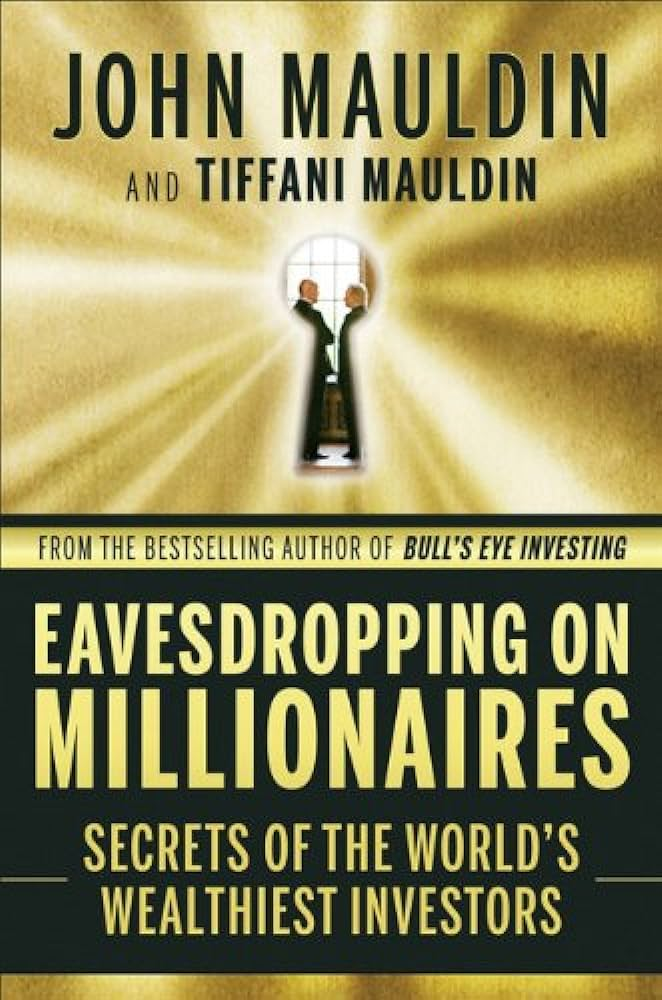
One way of getting an interview sample of millionaires Rich Dads is to consider John Mauldin's latest book Eavesdropping on Millionaires. I really like the interview format because multiple interviews were made 6 and then 12 years after the first interview. But you need to do the hard work of sifting out the commonalities between all these millionaires. 

One thing I found is that successful businesses have a much higher tolerance of risk compared to ordinary people. They can deal with a lot of ambiguity and can bounce back after a defeat. Another point is that almost all of them grew their wealth using investment instruments thereafter. Finally, many of the millionaires talk candidly about their children and most of the time, but seems to me that business acumen cannot be transmitted to future generations. If only more interviews are done in Asia where things are very different.


The problem with reading millionaire interviews is that these guys made money in a different economic climate. So the question is how to make money in the current era. 

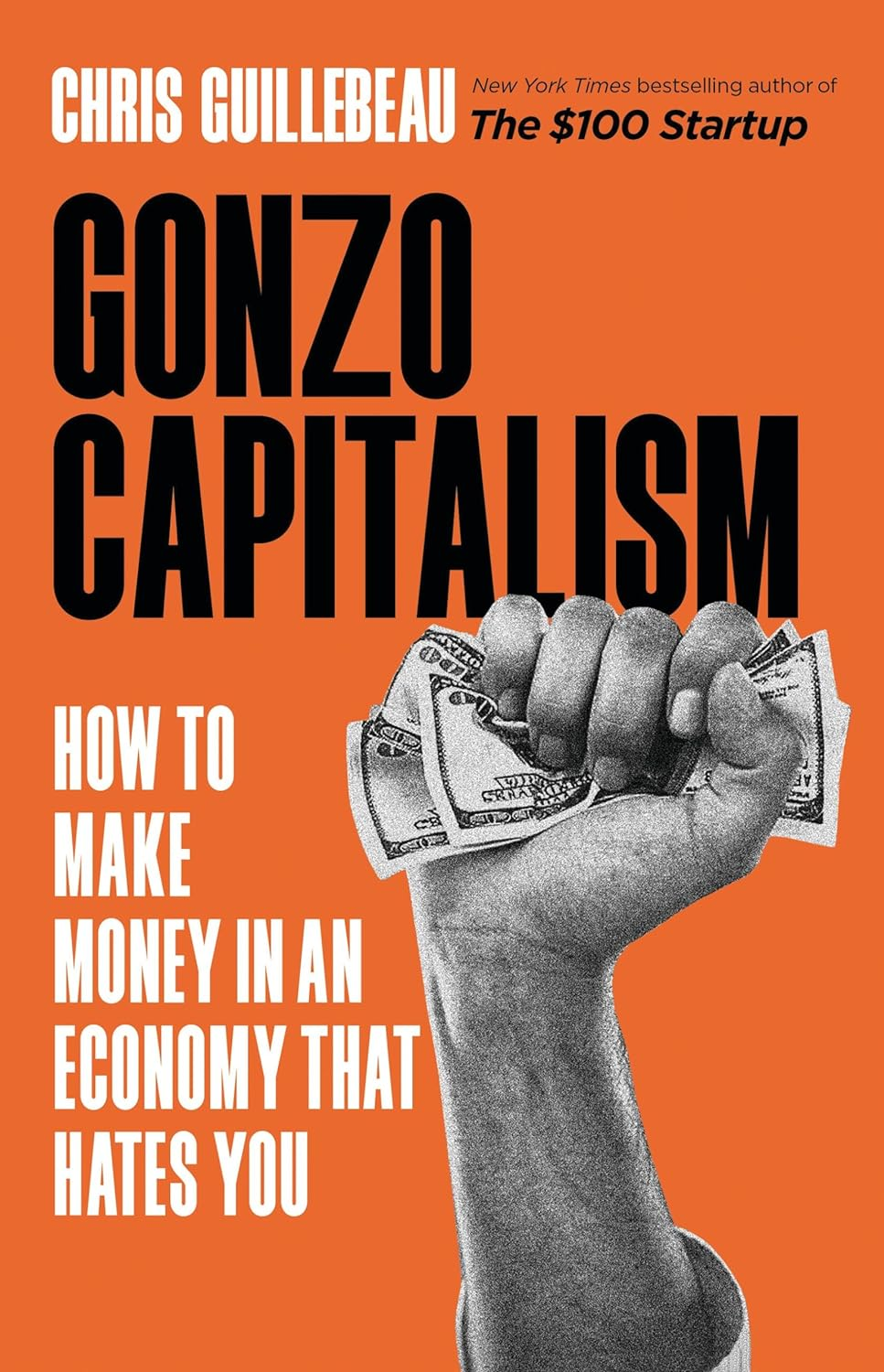
To solve that problem, Gonzo Capitalism by Chris Guillebeau gives a wonderful rundown on new ways of making money that Gen Z is getting themselves into. Chris goes all out to feature the weird ways of making money from becoming over-employed, to dabbling in NFTs and launching an IPO to sell your future earnings. For FIRE folks, Chris also talks about why he does not agree with FIRE and I like his arguments on that as well.  

I think if some of these Gen Z's succeed, there will be a rise of a new kind of dad - an APE Dad. Because younger generations in the US are saddled with expensive educational loans and saw through the pandemic, they will experiment with financial instruments with an asymmetric risk profile. To most of us, it may sound absurd to take welfare payouts to ape investors in Wall Street Bets but this kind of craziness is here to stay. 

I enjoyed both books immensely and actually think that you are better off reading them than anything by Robert Kiyosaki as sooner or later you might be subliminally programmed to join some MLM program. 

Let's be open-minded about how the young and old make their money. As I'm not young anymore, I'm fine with spending a fraction of my dividends and supplementing my income working for myself if the need arises. 


Thursday, November 16, 2023

Are Financial Influencers spending too little for their own good?

 "If you are spending, you are doing something wrong in this life" - Kyith Ng of Investment Moats fame

I caught Kyith making these tongue-in-cheek comments in the financial independence forums, subsequently, the Investment Moats blog published an article here which opened up avenues to analyse the lifestyles of thought leaders of the FIRE movement in Singapore. At the same time, some anonymous commenter called out Kyith for living like a Monk.  

The question is: can we resolve this question objectively without getting too personal?

The answer is yes, I built a framework using the equations in The Missing Billionaires book to project the ideal spending percentage for myself (an SG dividends investor using STI as a model) and for Kyith (a more sophisticated globally diversified ETF investor modelled after the VWRA ETF), I've come to the conclusion that Kyith of Investmoats is highly likely to be underspending and the calls comparing him to a monk can be justified objectively. 

I'm showing my work here, if you wish to understand the spreadsheet then, read the book that inspired this:


For Kyith's column, I used the PE ratio of the popular VWRA ETF to estimate long-term returns of global stocks, then I compared it with the real rate of return for SSBs that is sadly, currently negative to generate the mean return of the portfolio. The final outcome is that Kyith should be okay even if he spends 3% of his prevailing portfolio size for the rest of his life. 

As his blog hints that 2.5% is safer, we can easily conclude that he is drastically underspending his funds. Even more so, as he is single and may even have a strategy that is better than VWRA, I suspect his underspending is quite severe and even spending 4-5% of his prevailing portfolio may not seem too much considering that he still has CPF Life after age 65.

We should however note that this model assumes that he has a risk aversion similar to most savvy investors. If we adjust his risk aversion to members of the non-investing public then maybe his 2.5% is justified. I should remind readers that Kyith's 2.5% is actually quite brutal as it adjusts itself to the inflation rate and not to the size of his portfolio, so he's not likely to benefit from future increases in his portfolio size, hence he can't enjoy his life from increased spending in the future. Bengen's approach to the safe rate of withdrawal ignores the fact that for most individuals, their personal inflation rate is 1-2% higher than CPI adjustments in practice.

Finally, we can extend this insight when we observe other key thought leaders in the FIRE, space. AK71 does not seem to spend very much of his dividend payouts either. The only observed adat points of his expenditure is on Neverwinter Nights.

Naturally, I would not be writing this if I had not designed this spreadsheet for myself. 

Sadly for myself, considering only my local portfolio, according to the model, I'm actually overspending. But I have a justification because about half of my expenses go to the home mortgage which increases my home equity. I am also working as a trainer and part-time lecturer to make up for the shortfall.

My risk of underspending is very low as I will end up spending quite a bit on my kid's education in the future.

Perhaps, we can philosophically explore whether there is anything wrong with living like a monk. I was certainly underspending during my 20s and early 30s and have no regrets about doing what I did to build up my dividends portfolio. 

At the end of the day, I tried forming a conclusion based on a model derived from a book. It is possible for a rival advisor to use a different model to come out with the opposite conclusion. But I think that this process beats the "different stroke for different folks" argument from many financial advisors who simply do not have a framework to even think about risk and expected utility in the first place. 


Saturday, November 11, 2023

Why distilling common sense is not enough for investors


You might be wondering why I am reading so quickly. Sometime in September 2023, Amazon stopped selling The Economist on the Kindle and I've stopped my subscription to clear all the books I bought over the past few years. As The Economist is a hard read, I've released a lot of energy to read all the books on my KIV list.

I've decided to go easy on myself because lately, I've gotten into the "Adult Education industry" and have a small new gig that gives me extra pocket change, as I needed to come up with slides in a different field and maintain my investment training business at the same time, I decided to read books which are more inspirational and less heavy.

But years of reading the heavy has made it really hard for me to enjoy reading the lighter stuff. 

I think the essence of writing a best seller these days is to write fluff to appeal to the feeling and non-conscientious masses and just enjoy the stream of revenue that comes from folks who really can't give a damn about the internal contradictions in your work. In this case, The One Thing by Gary Keller is laughably absurd as it is actually a book about many things. You obviously need to be in good health with a supportive environment before you can focus on that One Thing that can improve your business or change your life!

My learning journey on how to write things that sell like hotcakes continued with Morgan Housel's Same as Ever.


As a book for investors, Same as Ever clearly disappoints. Morgan Housel has adopted the same formula as Yuval Harari. Say stuff that is uncontroversial and commonsensical, but back it up with a series of wonderful stories and memorable illustrations. In this sense, the book was good, I was emotionally affected by the opening chapter about a ski accident that caused the death of the author's friends.

Same as Ever will be an instant hit with folks in this finance blogosphere because, ultimately, you cannot disagree with anything Morgan says. Examples such as the idea that wounds can heal, but scars remain forever. People will be emotionally scarred by their economic experiences. Like folks who went through the Great Depression put a ridiculously high premium on security and may avoid equity investment. 

The book will not help you grow if you are already an investor. If anything, the book can only reinforce your confirmation bias. 

But, is it possible to deeply enjoy an author's work without having one's investment thesis fundamentally challenged? The answer is yes. 

I can even put in a suggestion on how the book can be improved. 

Morgan Housel needs to take greater risks. He needs to see if some of his ideas can be used to predict the future. A fundamental part of being an investor is to predict the future and monetise uncertainty. 

He did not do it, so I will do it for him.

For the folks who lived through the pandemic, I expect that they will not consume as much as earlier generations who partied when they were younger so I expect the younger Gen Z folks to be more frugal. This may create second-order effects which may impact brand loyalty negatively and even alcohol sales. A frugal generation can trigger deflation and lower interest rates on fixed deposits. 

The next group who will be disrupted are those hit by AI. So far we are only seeing this affect creatives in Singapore who developed a more aggressive hustle culture and fully intend to use AI to become even more productive. However, families and professionals experiencing AI disruption will scale back on equity investments as their own human capital becomes more volatile. This will be universally bad for equity markets.  Will local creatives mirror victims of the Great Depression given that they were labelled non-essential and then slammed by MidJouney and Dall-E? I think highly likely.   

Of course, there is a probability that Iwill be wrong, but what is the point of specifying common sense, and backing it up with beautiful illustrations without using it to predict the future? 

Wednesday, November 08, 2023

The New China Playbook


If you have been a subscriber to The Economist, you will have noticed how biased their reporting is in China. Almost all the news features are negative, and you will think China can be quite a dystopia. 

So, how does one read something that can counterbalance the negative articles in the Economist?

The New China Playbook by Keyu Jin fits the bill. The author was aligned with the Communist Youth League of China and educated in the US, and she has primarily painted a positive picture of the country. 

The book is very broad, and I want to point out two interesting points I learned from the book. 

The first point is the notion of "six wallets". In China, women will generally not marry guys who do not own their homes, so this can create rampant speculation and home values at high multiples of the annual income of citizens. All this being said, home ownership remains high thanks to the "six wallets" available to married couples. Thanks to the one-child policy, a married couple would not just have each other's finances to fund home ownership but also the wallets of their parents. If you and your spouse are only children of parents who are only children, then you may have access to as much as "ten wallets".

The second regards the idea of shadow banking. I've always thought shadowing banking is a loan shark activity that is highly illegal. But as it turns out, shadow banking is enabled by commercial banks and local enterprises that issue a new savings instrument called wealth management products, which can be moved off their balance sheets. Worse, to avoid a lost decade as in Japan, China announced a fiscal splurge where shadow banking became an essential source of funding for local governments. Details are complicated and involve a Local Government Financing Vehicle or LGFV.

As enlightening as the book is, readers need to remind themselves that the author, despite stellar Western credentials, seems to remain a card-carrying Communist, so she will put a positive spin on China. But her very factual description of the financial system in China does not give me any good feelings about the future of China at all. I would not like to partner with the mainland Chinese who share a common bloodline with me as they seem to be expert players of whatever loopholes and regulations the government throws at them.  Communists do not seems to understand the spirit of the law.

But, overall, combined with negative press from magazines like The Economist, this book is a welcome mix that can show investors a different perspective of China. 

I hope that similar books will be written for India and Japan to fill an investor's shelves.


Monday, November 06, 2023

The FIRE Journey requires cultivation of Inner Strength (neigong)


In case anyone is wondering Ji Yong's beloved epic Return of the Condor Heroes has just been translated into English and is available for purchase. As my mother tongue was quite bad when I was a kid, I was unable to participate in appreciating this part of Chinese Literature until quite late in my life. 

I think what I really appreciate about Jin Yong's novels is the concept of the Wulin which denotes the society and milieu that the martial artists live in. The Wulin has its own rules of conduct and some acts are seen as being righteous and others as being dishonourable. I'd like to see myself as being part of different Wulins. I used to have a role in the tabletop RPG world, but now I am squarely in the financial blogosphere. 

If we apply this analogy of the Martial Arts Wulin to the Financial world, then players in the industry would also play a role similar to martial arts world in Ancient China.

In this case, IMHO, a fee-based advisor like Christopher Tan would be the equivalent of Wang Chong Yang, founder of the orthodox Quan Zhen Sect. He has pioneered a martial arts style called BTIR and literally published a Master Financial Planning Manual (Walter Kluwers) which I cut my teeth on, and gave me the confidence to eschew financial advice from commissioned advisors and cultivate my inner strength to attain FIRE over twenty years ago. 

Naturally, I see ILPs as some kind of poison that is spreading to the middle class of Singapore and kind of commissioned advisors who go into Tinder to look for prospects or use balloons to lure kids akin to Ouyang Feng, Poison of the West.

I don't really see myself as a hero or villain in this Wulin. I'm amoral, have my own economic interests, and aspire to be more like the Lord of Peach Blossom Island. 

Today I just like to comment on the recent Endowus event that Christopher Tan was made to comment on FIRE. I think overall it was an insightful presentation and I would wanted more from the master, but I cannot in my good conscience agree totally with Christopher Tan over his comments on the FIRE movement. 

Christopher Tan made that comment that FIRE is not suitable for everyone and it is possible to end up missing out on life if one were to totally devote themselves to the pure attainment of Financial independence. 

In theory, Christopher Tan is right that if one were to devote too large of an allocation to dividends stocks, there may be no budget left to really enjoy yourselves. He is supported by a large amount of finance literature, ranging from financial planning books from the US that talk about saving 10% of one's income to books like Die With Zero which recasts travel as an investment that produces memory dividends. 

In practice, folks rarely attack a financial problem with this level of fanaticism. 

My rebuttal is as follows:

* cues flute music *

a) Some people actually enjoy FIRE

Christopher Tan in his wisdom knows that FIRE is hard and most folks would not enjoy attaining it. But over time I've noticed that folks who are INTJ and throng the forums on financial independence really enjoy going through the process of doing it. For ENTJs like me, I want the power that comes with FIRE, but I will not retire if I have a good career and a high status in my life. 

(A five-digit monthly dividend is good, but appearing in Money Mind is sometimes more fun! Why not do both? ) 

For someone like me who trains people for a living, I do know that if FIRE is introduced to an INTJ/ISTJ before they get pitched by an FA, I win because I know I have an alternative that fits that personality type and some commissioned FA down the road loses a sale. 

b) You do not need to complete the FIRE journey to enjoy it

Fans of this blog liked my initial idea of accumulating $300,000 as a target to get some passive income going but I realise that this goal is too intimidating for some people. Instead, I'm a strong advocate of setting aside $24,000 at around $2,000 per month to get an average of $100 of dividend income every month within a year of learning about FIRE. 

Trying to get $100 a month just requires setting aside about 50% of the median income for one year. If you quit after you attain your goal, it's fine because the $100 increase in income is something you can keep for a long time to come. 

This is money that you can earn beyond your day job. You can pat yourself on the back.

c) You may be missing out on a little bit of life right now just to get a better life later

Insight from economics is that while we do like to spend money now, we can also find spending a larger amount in the future more satisfying. The extent of this is dependent on our personal rates of time preference.

People who have investment portfolios can enjoy a bit of their money as they go along. I did a spreadsheet to optimise a person's Expected Utility on a portfolio of local blue chips and it's possible to spend about 2.8% of your local portfolio and adjust it upwards based on its total asset size every year. The key idea is that investment gains beyond 2.8% will enlarge the size of the portfolio and enable a larger expenditure in the future after compounding, but this entails farming half your dividends back into the stock market.

So in practice, if you start early, FIRE will not stop you if you have a desire to see the Arctic before you are 35. You can still pay for your first date with your future wife in Saizeriya.  

d) The FIRE journey is like the cultivation of neigong.

We have to accept that ultimately the journey to attain dividends requires discipline and plenty of learning. Not everyone in the Wulin can cultivate their inner strength and become a martial artist. Martial artists still need to be served food in an inn. Someone needs to till the soil. 

I think it's fine to decide to take on the FIRE journey or to pursue other interests in your life. But what I find puzzling is that some folks would go spend a weekend at a financial conference and still think FIRE is challenging.  

I think the only downside is that the Jin Yong Story will not be about you at the end of the day. 

( But you can still be the protagonist of a story about sparkly vampires. )


Friday, November 03, 2023

Thoughts when $1 SGD is $3.50 MYR


I was fortunate this week that I was invited to take a short half-day trip to JB with a pal who is Malaysian Chinese, and someone who earns in SGD and spends partly in MYR. This trip is useful to me because I'm thinking of running more errands in JB, but I do not wish to hang around for too long as all I need to do is collect rent, have a meal, and buy medication for both of me and my mum before heading back to SG.

Right now the exchange rate is ridiculous, but I don't really benefit from this. For most Singaporeans, you can afford to arrogantly go into JB and convert your SG to MYR and live like a king ( or at least arrogantly get a full body massage). For folks like me, I collect rent in MYR, spend whatever is reasonable there, and then convert the remaining amounts to SGD to buy dividend stocks back home.

 So if you think about it, I actually get less SGD over time and even have to deal with traffic jams which would definitely get worse this school holidays. 

Today I just want to talk about some random topics to earn back the lay-person readership who has read about 14 hardcore articles I've put up over the last two weeks.

a) Are Singaporeans arrogant in JB?

I was really privileged to meet my friend's aunt, a feisty woman who is in her 80s, and had breakfast with her. She ripped into me immediately and said that Singaporeans are arrogant to which I agreed.  If her money is x3.5 times the strength of mine, she'll have trouble being humble too.

I had a bowl of my favourite curry mee for $8 MYR - probably very expensive for locals but it's actually less than $3 SGD. 

But the strong Singapore dollar is no longer something we only experienced in Malaysia. In Istanbul, I was able to spend $138 SGD at Salt Bae's Nus-ret restaurant on a decent steak and a lamb chop. In Osaka, I fed my family of five in a small family udon shop for $35. 

( Do you know that GunPLA is half-price in Japan? )

But 1M65's recent video makes sense. Singaporeans should refrain from saying that everything is cheap when they travel because locals don't like it. We also did not really earn it, our Central Bank has been loading on gold for a number of months and Gold has been on the rise based on the momentum algorithms I run on a weekly basis. 

b) Malaysians who work in Singapore benefit from a strong SGD too

When we think about Malaysian locals' experience with arrogance, we must not forget that a lot of Malaysians, now Chinese and Bumiputra, perform their skilled trades in Singapore for x3.5 their home currency as well. 

I would argue that the economic impact of Malaysians who work in Singapore would be much larger given that they spend a larger proportion of their salaries in Singapore. This effect on inflation for Malaysians who work in JB is non-trivial as we news reports of better travel budgets and expensive home renovations made in Malaysia. 

My buddy has his share of envy from his relatives who are green-eyed because he earns SGD and spends MYR. I like his retort though, he asks them whether they liked spending the bulk of their lives travelling to Singapore to study at 4am in the morning. 

 All things considered, my views on investing in Malaysia have not changed. I regret that I was unable to liquidate my family's properties in JB and now I'm experiencing shrinking rents after currency translation. While I am trying to increase my time spent in Malaysia just to escape the high cost of living back in Singapore, my suggestion is to simply rent rather than buy from Malaysia. 

The long-term view is murky. It is now vital that the Anwer government survive this term and hopefully gain another.  The Perikatan National Party is known for the worst policy decision in the country for letting citizens draw from their EPF during the pandemic, so I hope they don't win,


I cannot imagine the Singaporean government ever publishing such figures as it may reinforce racial stereotypes back home, but this is certainly disturbing given that many Malaysian Chinese not only have EPF but also CPF in Singapore.

The Ringgit will continue to weaken, but I think Singaporeans will not enjoy the full effects unless they move further north away from JB where many folks actually earn in SGD. 


Wednesday, November 01, 2023

#14 The Missing BIllionaires - Can we invent a new form of FIRE from all this?


The Missing Billionaires by Victor Haghani and James White begins with a brilliant idea that with better financial decision-making tools, there would have been many more billionaires today. It then goes into first principles tying up returns, risk and a person's risk aversion to come up with useful formulas on position sizing. Later on, concepts like Expected Utility are added to the mix to assist readers with decision-making. I think this book would have been much better as a textbook with worked examples to illustrate real-life investment problems. However, some glaring gaps exist in the book, such as how the volatility of an asset class is estimated. I'm lucky that I've done some programming work to do this with Yahoo Finance data because otherwise reading the book will only give you some murky theoretical ideas that are hard to apply in your investment lives.

But all things being said, I would not do a chapter-by-chapter review if the book does not have ideas that are monetizable. There is definitely some room to make these fundamentals the cornerstone of a new investment course for beginners with some finessing in 2024. Of course, to be able to sell this course would be determined by how much I can automate the calculations and hide the equations from the actual student. I would be creating a spreadsheet for local dividend investors using these concepts to convince myself that it can add value to retail investors. 

I think more interesting, concepts of the book can create a new kind of FIRE called PlumpFIRE.

I've always found FATFIRE hypocritical as folks who want to do this are quite high-powered executives who probably successfully FIREd but enjoy working so much, that they look for an excuse to make their lives more comfortable. Sometimes FATFIRE folks may even be responsible for the toxicity at work. 

A more reasonable form of advanced FIRE, which I call PlumpFIRE can be taken from some concepts of the book. 

Here's what PlumpFIRE looks like:
  • As many annuities as humanly possible to generate a bare minimum standard of living. I suggest using CPF-LIFE at x1.5 of FRS to generate about $1,500 in terms of today's monthly income. Use the Standard plan to max out your purchase of annuities as this is money your kids do not need. Bonus points if you can defer your CPF-Life payouts.
  • A large diversified and balanced investment portfolio that can be globally diversified ETFs. This portfolio fluctuates in value and you spend 2.5% of its value by liquidating stocks or dividends every year. The idea is that by spending way less than the returns of the portfolio, you can expect an increasing capacity to spend every year as the portfolio gets bigger, enjoying more spending in your later years. This is also much safer from sequence-of-return risk. For this to work, you must be able to adjust your standard of living from portfolio fluctuations, so the Bengen 4% rule does not apply to you.
  • A portfolio of $1,000,000 can generate $25,000 a year. Plus $18,000 from CPF-Life. This results in about $43,000 of expenses a year, which is three times the basic standard of living for a 65-year-old in Singapore. 
You can always carry on working until your portfolio hits $2,000,000 if you want to spend more money. The odds are over time, your payouts will grow over time because your spending rate is low.

 I think PlumpFIRE will be a good mid-point between FIRE and FATFIRE.

If you have attained FIRE, I think PlumpFIRE is the next milestone. 


Tuesday, October 31, 2023

#13 The Missing BIllionaires - Risk and Uncertainty


We've come to the last article on this streak. For this book, we are at Chapter 18 and the rest of the book delves into various esoteric chapters under the Puzzles section. It is probably more productive that I conclude this series for what the book means to me and blog readers and encourage interested parties to either buy or read the book. 

( Judging from some discussions on the telegram groups, the book is getting traction for the local audience )

In this article, we will be discussing risk and uncertainty. I was laughing at some FAs who do not seem to appreciate the importance of the standard deviation of an investment portfolio, but the rabbit hole goes deeper. Most financial assets do not follow the normal distribution. Investors have to confront issues like fat tails, skew and actual events like war and recessions when they run actual portfolios. So anything that cannot be captured or measured as part of a parameter like standard deviation, skew or kurtosis gets lumped in a category called uncertainty. 

The book discusses the differences between risk and uncertainty then concludes that mathematically, then concludes that ideas like expected utility and the Merton share remain useful as adjustments required to account for uncertainty are de minimus. Adjustments downwards are only necessary for investors who are really risk averse.

So this is a fairly depressing conclusion for local investors who buy ILPs. 

Not only are ILP investors paying a ridiculously high cost that may be compensated by assuming more risk by the fund manager, but the ILP locks down your money longer forcing you to confront more uncertainty in the markets. 

Maybe the conclusion in this book can be used by disgruntled ILP customers one way in a FIDREC dispute. The way an ILP locks down your money, imposes ridiculous penalties for early redemption and makes you pay ridiculous management fees may one day be mathematically proven to be inappropriate for any retail investor under any circumstances.

But today will not be the day it happens yet.

That first step begins with refinements made to financial education at the street level. Pushing education on returns, risk, Kelly Criterion, Merton Share and concepts of utility to the masses may require huge educational reform.

For me killing off English Literature in favour of Economics at Secondary 1 will be a great way to start. If you are too sentimental about English Literature then maybe force Pride and Prejudice into the syllabus because Mr Darcy is sexy because of his passive income.

Our history texts should also consider key moments in financial history like Pan-Electric and CLOB because as a financial centre, we need to know what folks like Mahathr can do to mess us up really badly. I'm still traumatised from learning about useless shit like what Gambier is and the Anglo-Dutch Treaty.

But I think as a reader if you do love the humanities, you'd probably not enjoy reading this blog so much. Secondary school really refined my hatred for studying the humanities. I thought three years of law school could reverse it, but I think it polarised me further.


Monday, October 30, 2023

#12 The Missing Billionaires - About Options


When markets run out of assets to be bullish on, my industry will resort to talking up options trading. This is natural as you can be profitable strategies regardless of whether markets are bullish or bearish. I am not into options because they are zero-sum games. For every option you buy, someone has to write it to you. 

The options writer and options buyer can both be profitable at different times.

But the author wants to give options a chance. He wants to examine whether options can improve the expected utility of a portfolio. Even after analysis, the author believes very little about how options can provide a significantly higher Expected Utility for the investor. According to the author, investors can vary the proportion of their equity allocation in place of buying options.

It gets even worse when we consider the costs of playing options, which often comes with a wide bid-ask rate. Odds are most retail investors will be losing out to the brokerage houses and financial institutions who usually take the other side of the trade and have sophisticated tools to assist them.

Interestingly, the book does consider one specific scenario where the use of options would make sense. For young investors, according to Ian Ayres and Life Cycle Investing, it makes sense to leverage their equity portfolio using options to get more than 100% exposure to the asset class. 

But of course, some investors can treat long-shot options bets like lottery tickets. 

Just keep your positions small and utilise only fun money to do this. 

[ The next chapter of the book is on taxation; we will skip to the last chapter I will review tomorrow and end this series of articles. ]

Sunday, October 29, 2023

#11 The Missing Billionaires - Your personal inflation rate is not the inflation rate


We are onto Chapter 15 of the book. Almost 75% through!

This is a compelling and insightful chapter that really blew my mind. 

If an American adult in 1900 were to maintain their average expenses and increase it by the CPI every year, in 2022, they would only be spending $5,000 every year, while the average expenditure in the US would be 11x that number at $55,000!

This turns many retirement ideas on its head because the 4% withdrawal rate used in retirement planning is just adjusted by the CPI annually.

There are several ways to interpret this. One interpretation from the book is that most of us desire an increase of some amount over CPI. The book suggests that CPI+1.5% is a good start. Another interpretation is that our spending is higher than CPI because humanity keeps innovating and creating goods that impact our lives far more than the inflation rate. There's always the next Apple device around the corner. We should be prepared to work to continuously increase our standard of living. 

If we have to find a way to match CPI+1.5% every year, then we've got quite a big problem on our hands when we design a portfolio. Bonds provide too low a return once you factor in their non-trivial volatilities ( T-bills was 12%, not counting forex translation for Singapore Investors ).

According to the book, the best way to match CPI+1.5% is a portfolio of treasury inflation-protected bonds, which Singapore does not issue.

But there is good news.

A portfolio of equities can generate an earnings yield of 1 divided by a cyclically adjusted PE ratio after accounting for inflation. For Singapore, this earning yield is 7.4%. Is high. Furthermore, company earnings are generally less volatile than stock prices. The volatility of company earnings is only about a third of the swing in stock prices.

If you diversify your stocks across low CAPE markets and have the patience to hold them over the long term, your odds of beating CPI+1.5% are high.

So, what's the Holy Grail in building an investment?

The Holy Grail is known as a Constant Standard of Living Annuity. Something that can create a cash flow that lets you maintain your standard of living over time at CPI+1.5%.

But like the Holy Grail, this is hard to achieve as a Singapore Investor. Singapore does not issue inflation-protected bonds, and the only recourse is to look at a diversified pool of equities.

This may explain our national obsession with REITs' limited inflation protection and rental collections as dividend yields. 

It also shows us that lobbying MAS to issue inflation-protected bonds may be something that the middle class really needs.