Growing your Tree of Prosperity is an introductory investment guide written specifically for Singaporeans who wish to take their first step towards financial independence.
Saturday, October 28, 2023
#10 The Missing Billionaires - How theory meets practice for actual asset classes
Friday, October 27, 2023
#9 The Missing Billionaires - Understanding your own risk tolerance and time preference as an investor
- What the the overall risk aversion or lambda of an investor ? 1 = SBF, 2= ssavvy investor, 3=layman.
- To what extent is the time preference of the investor? What is the discount rate to make a $10,000 expenditure in one year equally satisfying as a $12,000 in two years?
Thursday, October 26, 2023
#8 The Missing Billionaires - What mortal retirees really need
Wednesday, October 25, 2023
#7 The Missing Billionaires - How to spend like you can live forever.
[This series is a slow chapter-by-chapter review of the book The Missing Billionaires by James White and Victor Haghani. It's getting special treatment on this blog because it is novel and can potentially result in a new Dr Wealth course. To understand it all, the best option is to read the book. Otherwise, you may need to read from the first instalment of this series here. We are currently at Chapter 10 of the book]
The after-seminar discussions were more valuable and we concluded that longevity can only be a great asset if life is worth living, and we can't conclude that is the case for all Singaporeans. For the wealthy, there's definitely a desire to be immortal. For the middle class who have to deal with rising costs and workplace stress, maybe it's time to die when your time is up.
If you aspire to live forever, then you need to run your investment portfolio like an endowment. Assuming a return of 5.4%, the standard deviation of risk assets of 18%. There are three conventional ways to spend your assets.
a) Spending $5.40 a year and then adjusting it by inflation.
This is closest to the conventional 4% withdrawal rule by Bengen that withdraws a fixed amount and adjusts it by inflation every year. At 5.4%, this is unsustainable because sequence of risk returns. This clearly plagues the FIRE community and a lot of ink and computer code has been spilled to solve this issue.
b) Spending a variable 5.4% of total portfolio assets every year.
This is slightly better because you spend less after your portfolio takes a beating, but this approach is also unsustainable after a while even though it is slightly better than the earlier option. It also means that you are flexible enough to adjust your expenses as you get older and face a bad year in the markets. So only wealthy folks can do this.
c) Spending a variable 4.1% of total portfolio assets every year.
To account for volatility drag, we have to adjust the 5.4% downwards to match geometric mean returns. This approach was found to be sustainable over a long period and also has stricter assumptions as the 5.4% rule. Only the wealthy can have this flexibility.
d) Account for maximum utility. personal risk tolerance and time preference
Naturally, as financial consultants, authors want to improve on conventional approaches to spending. The trick is that if you withdraw too much at the start, you may lose out on higher spending in the future, which you may enjoy.
![]() |
Just a hint on how the maths works |
The authors used a typical risk aversion lambda of 2 and came to the conclusion that you will be very much closer to spending about 2.4-2.5% of your total wealth every year.
While the authors mentioned that this approach does not see rapid adoption in the industry, do they look familiar to you as a Singaporean?
I believe that Singapore is run in this manner. We get to enjoy 50% of the NIRC from our international investments. If conservative returns are pegged around 5%, then this is exactly about 2.5% of our portfolio.
This also explains why Singaporeans may not like the way Singapore funds are government.
Our government invests as if Singapore will be around forever.
Individual Singaporeans somehow die on average at 84.
They prefer to spend more each year.
Tuesday, October 24, 2023
#6 The Missing Billionaires - A better approach to retirement spending
[This series is a slow chapter-by-chapter review of the book The Missing Billionaires by James White and Victor Haghani. It's getting special treatment on this blog because it is novel and can potentially result in a new Dr Wealth course. To understand it all, the best option is to read the book. Otherwise, you may need to read from the first instalment of this series here. We are currently at Chapter 9 of the book]
- Spending more is better than spending less.
- There is a decreasing marginal utility to spending more.
- Spending should be smooth over time.
- Spending should react to investment performance, and changes in the tax regime.
- Spending adjusts based on our longevity.
- Higher equity returns lead to more spending.
- Higher volatility leads leads to less spending.
- Longer life expectancy leads to lower spending.
- Lower subsistence requirement leads to higher total expected future spending.
Monday, October 23, 2023
#5 The Missing Billionaires - People are not robots
[This series is a slow chapter-by-chapter review of the book The Mission Billionaires by James White and Victor Haghani. It's getting special treatment on this blog because it is novel and can potentially result in a new Dr Wealth course. To understand it all, the best option is to read the book. Otherwise, you may need to read from the first instalment of this series here.]
The authors begin to address the weaknesses and critiques of investing based on expected utility maximization.
- One critique is to look at the field of behavioural finance, where people find that folks are risk-seeking when they are in a loss position and risk-averse when they have gains.
- Another is the idea that there are non-financial benefits that may inflate the utility of some losing bets, like buying 4D and gambling in casinos.
Sunday, October 22, 2023
#4 The Missing Billionaires - The St Petersberg Paradox.
[This series is a slow chapter-by-chapter review of the book The Mission Billionaires by James White and Victor Haghani. It's getting special treatment on this blog because it is novel and can potentially result in a new Dr Wealth course. To understand it all, the best option is to read the book. Otherwise, you may need to read from the first installment of this series here.]
- If you work for a startup and anticipate an IPO because you are optimising the utility of your wealth and not its expected value, in any case, you may want to liquidate your shares and cash out for more certainty than entertain the possibility of loss after the lockup period.
- The second application is the idea that Goals-based investing can be dangerous. Economists run computer simulations and found that insisting on meeting a financial goal, like earning 50% of your capital ( get rich or die trying ), can result in wealth loss compared to strategically sizing your investment bets to maximise utility. This is because bets get more desperate and aggressive the further you are away from your goal.
Saturday, October 21, 2023
#3 The Missing Billionaires - What is the expected performance of an investment trainer?
Friday, October 20, 2023
#2 The Missing Billionaires - How grown-ups discuss tech vs dividend stocks
Thursday, October 19, 2023
#1 The Missing Billionaires - The Merton Share
Wednesday, October 18, 2023
Ok, just came back from Osaka
Sunday, October 08, 2023
Catch me on this week's Money Mind !
Sunday, October 01, 2023
Does nobody want to provide financial services to the mass market anymore?
Now that the furore has died down, I'm sharing some thoughts about today's sad state of the finance industry.
Here is a little background on where I stand: quite early in my ERM course, my students are often stuck with ILPs and endowments they bought some time ago and getting suboptimal returns from them. But I need the license to tell them what to do with these investments. My solution was introducing them to a salaried advisor from Money Owl, the only source of salaried advisors with the license to get them to drop the plans. Otherwise, my students are on their own and need to develop their confidence with dividends investing before they can pull the plug.
I did this introduction for no fee initially, but subsequently, MoneyOwl would send me $20 food vouchers for each introduction I made. This would have been a derisory sum if not for the positive feedback I got from my students about their excellent service. In one case, we even got a student to go through the FIDREC process and won a better deal from financial institutions that missold these products to my student.
( Today, FAs meet my student and actually run away from her. She won a case with FIDREC! Who says my job is all about the money? )
I suspect this is the essence of what went wrong with MoneyOwl.
Someone always pays in this business. In the case of commissioned salespeople, it is the client. In the case of MoneyOwl, I suspect the advisor has to contend with a fixed monthly salary and the allies who have scant incentives to introduce customers to them. All this while commissioned advisors are getting wined and dined for the ILPs they shove into the masses' throats by hooking up with them on Tinder or using LED balloons to traumatise their kids. No amount of virtue signalling that you are the good guy will beat the almighty dollar paid to introducers and marketers. Case in point, I have had a very profitable arrangement with iFast Global Markets over the past few years.
So, we have the industry in this sad state today. Everybody wants to serve the rich. People need help finding a way to profitably serve the masses.
- Even the might of the NTUC Social Enterprise has decided to sound the retreat for Money Owl. I can attest that Money Owl gave excellent service to the masses. Sadly, it was simply not sustainable.
- Major robo-advisors here are running on VC funding and are yet to be profitable, no matter how cocky they are or the beautiful people they put on ads. It's no fun placing money on them to find them consolidated with a stronger player a few years later.
- You need about $350,000 to qualify for the fee-based advisor here. They are virtually a monopoly in this space and prefer investors who are "stewards of their wealth" and not those searching for investment alpha.
- TD Ameritrade wants to do something other than serve retail customers in favour of Accredited investors.
- Even in my line of work, raising the fees of my courses to a four-figure sum has given me more attentive students and a better class of people to serve.
Tuesday, September 26, 2023
On Istanbul
At the back of my head at the beginning of my trip, I wanted to know whether Turkey could be an economic role model for countries like Malaysia as they are quite progressive and moderate. Immediately, I was proven wrong by actual statistics. Malaysia has a GDP per capita of about 10-20% higher than Turkey.
Thursday, September 14, 2023
Next week : Istanbul
Just a couple of points for the curious :
- The disparity between money changers and Revolut is enormous. I converted SGD 500 to 8500 Turkish Lira with a local money changer. When I used Revolut, I got 9843 for the same amount. I guess the trick is to minimise the amount of cash you must carry when travelling.
- There's almost zero probability that my group would not get scammed. Some tips I got include picking things that belong to someone other than you on the ground, even if it seems like you are helping somebody else. Taxis can drive halfway and then claim that their meters are broken. Shopkeepers wrap up stuff for you when you are making enquiries on prices.
- If the price is not too unreasonable, you should close the deal and move on without much drama. I will focus on buying as little as I reasonably can since I'm not a shopper anyway.
For this trip, I may have overplanned, reading one travel guide and then giving myself a crash course on the history of Istanbul from the classical Greek era as the town of Byzantion to modern Istanbul.
I'll catch you guys on this blog when I return!
Saturday, September 09, 2023
Letter to Batch 31 of the Early Retirement Masterclass
Dear Students of Batch 31,
It's been a great honour and privilege to conduct a 5-Day Early Retirement Workshop for you.
First, I would like to apologise to the class for the lack of energy for my delivery.
Batch 31 concludes possibly one of the most challenging classes I ever taught. I started getting muscle aches and a sore throat from Day 1 of the class. I even visited the doctor that morning, but despite every medical precaution, my throat and cough kept progressively worsening. On the last day of training, I was literally on over ten kinds of drugs to mitigate my cold symptoms, my diabetic control and my hyperactive thyroid.
Despite all this, we could still build a reasonably attractive portfolio that generated about 6.5% yields. And to do this when our equity risk premium is over 6%. This portends well for the portfolio's future – but you need holding power.
It would help if you held onto the portfolio until the time interest rates are seen to stop rising, which can happen soon before the end of this year. After that, you can experience an upside when favourable circumstances arise. One possible scenario is when China uses the “bazooka” to stimulate their economy. Another is when some hope of peace appears in the Ukraine.
In the meantime, as you build your portfolio, expect some short-term pain as REITs continue underperforming against the STI index. Find solace in dividend payouts and see every downtrend as a bargaining opportunity whenever possible. Our stock selections in this batch do not contain much controversy, and I look forward to investing in your picks as soon as I find the liquidity to do so.
Lastly, I hope Batch 31 will participate actively in the FB group. I look forward to seeing you in the following community seminar slated for Sep/Oct 2023.
Hope to see you then!
Christopher Ng Wai Chung
Tuesday, August 29, 2023
Tan Kin Lian's results are consequential in this Presidential Elections
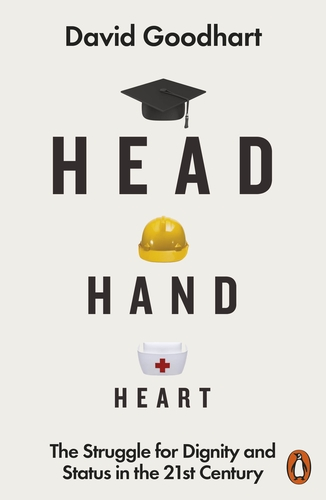
Sadly, the book was able to define the problem but does not delve into possible solutions. If anything, Singapore is already ahead of the curve - SIT does not look like a research university but an attempt to build a lucrative industrial apprenticeship program for polytechnic students. Skillsfuture also enables folks to qualify for new careers within a lifetime. We need to give Lawrence Wong time to rebalance the different work-collars.
We need to relook at the consequences of too much emphasis on the cognitive elite if Tan Kin Lian scores more than 20% after this Friday. I can think of examples where some policies are so complicated that folks with average IQ may need help to grasp them well.
The elected presidency is one such policy. Last night, we witnessed that even a presidential candidate, a student of RI and an actuarial scientist need to comprehend the limits of a President's power and be reminded by the moderator what the role of a President is all about.
Another policy is CPF Life. To make an informed choice between the Basic, Standard and Escalating plan, a citizen needs to understand the concept of an annuity and forecast his lifespan to minimise regret. Do we need three flavours of CPF Life? If you are an Oxford PPE, you can deal with 27 flavours of CPF Life, but even three flavours may be too much for ordinary citizens.
Suppose you look specifically at what makes Singapore successful. In that case, the scholarship system that allows the PAP to cherry-pick the best for their own ranks is one factor that keeps government expenses, corruption, and inflation lower than in other OECD countries.
If I were an opposition supporter, dismantling this scholarship system would be one of the surest ways to level the political field, more consequential than dismantling the GRC system because this is like the supply line that feeds the PAP army. The opposition can manipulate Hands and Hearts to vote for them to make this happen because they have been sidelined for so long. Tell me this: Has anyone ever celebrated when you parachute an army general into the C-Suite of a GLC?
Goodhart's book influenced Lawrence Wong because he has alluded to the head, hand and heart triad before in his speeches, but I'm afraid that Singapore may not have done enough.
A non-degree holder PAP MP has not existed for quite a while. The last was Charles Chong. Discrimination against non-degree holders in politics is current and more egregious than race or gender. If Tan Kin Lian wins big this Friday, we may need to reserve one seat for a non-degree MP in a GRC to ensure their views are heard.
Imagine a country where none of our Ministers have children studying in our Polytechnics or ITE.
Whenever a policy recommendation is made, it will always be one made for "other people's children".
Anyway, I might be wrong, and TKL loses his deposit on Friday, but I think we should still heed Goodhart's warning and bring balance to the head, hand and heart triad before angry Singaporeans start to vote to merge with Malaysia.
Like we learn from the West, when you spurn the heartlands, they may stop voting based on their best interests and start voting based on your worst.
There will be no dividends for me to collect after that.