Tuesday, March 05, 2019

The Model Thinker #8 : Models of Value and Power

Image result for break your chains

Suppose we are trying to get a board of six directors to agree on something. In this case, the board is has six members. Faction A has three directors that act in tandem. Faction B has two directors that vote together. Faction C has only one director.

Suppose to pass a resolution, 4 votes are required.

Suppose you are trying to influence the board and they slowly come round to agreeing with you, the Shapeley-Shubik index of power can be used to measure the influence of each faction.

If you convince Faction A first, you will have three votes. This is insufficient to get your resolution passed. But if you can get Faction B next, the resolution will pass, then Shapely-Shubik index for Faction B increases by 1 because they are pivotal for the resolution to be passed. In game parlance, B scores one point.

( For the folks who actually know this Shapely-Shubik index, Faction B's score actually increases by 1/6, which is the number of permutations by which each faction can slowly come round to agreeing with a resolution )

If you create a table of all the possible ways each faction can come round to agreeing with your resolution, we get the obtain following table :

-->
Order A B C
A B C 0 1 0
B C A 1 0 0
C A B 1 0 0
A C B 0 0 1
C B A 1 0 0
B A C 1 0 0
Index 4 1 1

From the diagram, you will find that Faction A has the most power, but Faction B and C have the same amount of power even though Faction B has twice the number of directors as Faction C. Also if you want to convince a group of people to act, you only need to convince Faction A and Faction C.

After learning about these models of power, I regret that this was not taught in Law School.

In Schemes of Arrangement that determines whether companies can be taken private, similar factions can be found amongst shareholders, but we do not have a way to determine how to influence each faction to vote in such a way as to allow a Scheme to be passed. Of course, as we are dealing with a much larger set of shareholders, a simple computer program may be required to determine which factions must be appeased the most to make the procedure a success.

After meditating on this chapter for a number of days, I realise that this Shapeley-Shubik index of Power has a powerful way to explain financial independence.

The basic expenditure you need to create an ordinary lifestyle functions like a voting threshold.

Getting employed will allow you to meet the needs of basic living. This also means that for many Singaporeans, your day job has an almost vice-like grip of power over you. So much so that your life is being regulated by your company. Great if you work for a good MNC, but not so great if you work for a shitty corporate culture run mostly by locals. ( Don't believe me, you can read up on how we Singaporeans torture our maids. )

Here's the thing : If your day job does not even give you a satisfactory lifestyle, your boss actually has very little power over you because you are already living in hell and can easily swap out one hell for another. ( This is why polytechnic and ITE graduates may find running a small business better than being a slave to a badly run SME. )

If you start working on your financial independence, your passive income will not make a difference to your golden handcuffs unless it can exceed your your basic living threshold. This is a very strong argument to lower "your voting threshold".

For those living in corporate hell and relying on one day job to make a living, passive income is often not enough to unshackle yourself from your corporate chains - you need to be able to live on some kind of side gig plus passive income to up your bargaining power.

That is a fact of life.

Of course, to keep you loyal, the countermove from HR is to ensure that you are not allowed to take a side gig.





Sunday, March 03, 2019

Seedly Event 2019 - Talk Cock Sing Song Ba Long Long ?


I was still recovering from yesterday's talk and the traction for this Seedly event has been amazing. At this point of time, bloggers have already beaten me to this game, and there is at least one summary that I think it's worth reading if you missed yesterday's event.

Interestingly, I don't have any negative things to say about the speakers before me. I typically conduct a critique of other speakers in the pane in a blog article that follows the event. Initially, I felt that some of Victor Chng's approach towards calculating yields based on original cost did cause me to balk quite a bit, but I went back and did some maths and his logic seemed sound after some close examination.

( One of my quirks is that I never bother about yield on cost. The past is the past and there might be another counter with better yields. Do you sell and buy the other counter ? )

a) Really regret not showing up in the morning

My only regret was that I wasn't too confident of my performance two nights ago, so I decided to spend Saturday morning rehearsing my speech. I figured that not making an impact as the final speaker that evening would have been a major disaster for my personal brand and it would undermine the faith Seedly had on me.

Because of that I was unable to attend the talks in the morning. I would have really wanted to hear Christopher Tan's presentation because I think he fired a major salvo against the commissioned sales industry.

b) Some of the shit that came out of my mouth worked !

Some parts of my performance were better than I expected.

"Dividends are the opiate of the capitalist masses" was unplanned but had some viral quality to it.

The origin of this quote was when my sociologist friend read my older books and said it was very similar to the Communist Manifesto. I have also said it few times in some other conversation under a different context. I think that this slogan has some potential and I may find a way to turn this into a fully blown 30 minute presentation in a future event.

c) Whether we speakers "talked cock" that day depends on your behaviour after the event.

While I was pleasantly surprised that Millenials are willing to spend 8 hours on a weekend to learn about personal finance. However,  I also believe that 99% of the audience would not really take action after the event. Some cynics have even started saying that because many of the speakers conduct courses for money, we were holding back some crucial data to help folks bridge the gap.

Naturally, my 30 minute presentation cannot attain the same depth as my 2 day Retirement Masterclass, but I was not the only speaker that day. I think that an attendee can combine the information from all the speakers that day, and along with help of some sponsors, make at least one investment.

d) I am taking concrete action after the Saturday event.

At this stage, since I have a business relationship with Dr Wealth, I can no longer toot the horn for Alvin Chow. I think his very clear presentation spoke for itself on Saturday.

When it comes to taking action, I should be leading the way.

Instead, I will be buying 8,800 shares of TLV first thing tomorrow morning. I won't follow Alvin's advice to sell though, because it actually pays a tiny dividend every October.

Incidentally, the engagement ring I got for my wife was from Taka.

e) Every speaker did not sell their seminars on Saturday - except me.

This is where I really tip my hat to the other speakers - other than myself, no one created a single sales slide to promote that offerings. It's really amazing that the industry is so willing to come together to share the good stuff to everyone.

But readers of this blog know that I am not a saint. I worked fairly hard for weeks to prepare the material and it was with the understanding that I was allowed to put in one slide and spend 1 minute to toot my horn.

Anyway, If you are one of those who wanted to get tickets to me free preview this Saturday.

The link is here.


Tuesday, February 26, 2019

The Model Thinker #7 : Concavity and Convexity

Convexity are functions with an increasing slope.

Most of us are familiar with the eighth wonder of the world compound interest, without which the financial markets would not exist :

V(t) = V(0)(1+R) ^ t

Another variant of convexity is exponential decay. In these models, the slow begins at a negative value and increases towards zero. A half-life model can predict that your engineering degree would be halve its value every 4-5 years.

Concave models are the opposite being functions with a decreasing slope. One possible function is the log function :

V(t) = N log Rt

Where the slope of a concave function is positive, it models diminishing returns. When concavity is assume, there is also a preference for diversity and risk aversion. One day in Kulai JB is great, but 10 days in Kulai will bore the shit out of you.

The Solow Growth model predicts that output in a given economy :

Output = A(LK)^0.5

  • Is linear with innovation
  • Is linear with the square root of labor and capital. ( Concavity )

If so, the long-run equilibrium output :

  • Increases linearly with labor and savings rate.
  • Exponentially with innovation ( Convexity )
  • Decreases with a rise in depreciation rate ( Convexity) 

Qualitatively speaking, the Solow Growth model may shed some light on Chinese GDP growth figures. Nations can receive a huge growth by adopting the technology of other countries. This explains China's explosive growth for the past 20 years.

However, sustainable growth requires innovation.

Notwithstanding the trade-war, the question is whether the patents filed in China are large paradigm shifting inventions or simply small incremental improvements.

If you agree with this week's copy of the Economist, then you will believe that you cannot innovate without an open mind and in a few years, China will more likely go the way of Japan and the GDP will trend lower over the next 20 years.

If this is true, then China will grow older before it grows richer.

Perhaps, more controversially, factoring the savings rate into long term Solow Growth Model, we may finally understand why the Oxford PPEs who run Singapore are so reluctant to have Singaporeans draw down on their CPF.

Sunday, February 24, 2019

Why i told my friend to get his son into JC instead of Poly.

The story began months ago after my friend wrote to me privately with a query. His son managed to score 12 points for his O level exams and he wanted to ask me where should his son go to next.

This a JC or Poly question.

Upon knowing his son's grade, I congratulated him, and told him that his son has done well. He should definitely give JC a try, and the actual identity of the JC did not matter. In spite of the fact that my friend is,  himself, a living and breathing example of a successful polytechnic graduate, I told him to stop considering a polytechnic education for his son for now. 

He agreed with me my analysis.

The press has been too positive about a polytechnic education lately. You can read about it here. 

But behind these positive press reports are numbers that are hard to put a positive spin to.

The first issue I have is that the permanent employment rate of polytechnic graduates is only 59%  six months after graduation. This is contrary to the way a polytechnic education was pitched to folks in  my generation. A polytechnic education was supposed to  prepare graduates to contribute to the needs of the economy the moment they graduate. If only 6 out of 10 of us have permanent jobs after graduation, i think something is very wrong about that promise.

Which bring us to the second issue, that 26.4% of poly grads can only get part-time employment after graduation. That is fine until you realise that average salary of a polytechnic graduate at $2,350 are derived only from those who graduated with permanent jobs.

If part-time employment is not taken into consideration when calculating polytechnic salaries, we cannot even conclude that salaries of polytechnic graduates have been going up with the rate of inflation in 2018! We may be getting back to that "lost decade"  when poly grads had no increases in salary at all when Singapore was injecting foreign talent into our economy.

Polytechnic diploma holders are the middle class and back bone of the Singapore economy. A vibrant middle class supports owners of capital by providing a pool of skilled labour and consume products produced by the companies that we own. Absent any evidence of extraordinary academic talent, most reasonable parents should expect that their kids should be able to get a polytechnic diploma and lead a middle income average lifestyle in Singapore.

As of now, entering a polytechnic does not automatically lead to a university degree - only about 20% of polytechnic graduates qualify for further education in a local university.

The statistics now paint a chilling picture for parents who desire a better life for their children.

Can our middle income group live the Singapore Dream when only 6/10 can land a permanent job ?

This is something we really need to think about. As of now, I do not have any suggestions on how policy makers can proceed except to continue to draw lessons from the mighty German economy and their apprenticeship system.


Friday, February 22, 2019

The Model Thinker #6 : Linear Regression

Image result for linear function


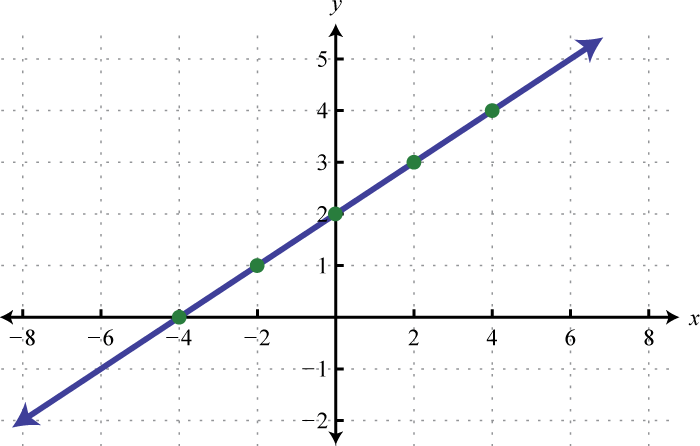
To understand a linear model, such as y = mx + b, you need to know that the dependent variable like y varies linearly with an independent variable like x. In real life, you can model almost anything linearly, such as modelling a person's math's score as a linear function of the number of hours studied, family socioeconomic status and number of accelerated classes.

In the earlier math example, the number of hours studied makes the biggest difference in math scores, followed by number of accelerated classes, followed by socioeconomic status ( yes ! ). This coefficient m in the equation above measures the magnitude of the variable.

Another concept in linear regression is the notion of significance or p-value. A low p-value of 5% or even 1% means that there is a large confidence that the coefficient is significantly higher than zero. A coefficient can be significant and yet be of a small magnitude.

At the qualitative level, understanding liner regression teaches us that there are two kinds of thinking that can be applied to investing.

Big Coefficient thinking is represented by the quantitative investing that I tend to do. You focus on the largest coefficients when making an investment decision. When I perform a backtest on REITs, I may discover that a low gearing results in a significantly better performance than a low price to book value. In such a case, I will select stocks with a low gearing because it gives me better bang for my buck.

The opposite of Big Coefficient thinking that quants should never ignore is New Reality thinking that a lot of investors may sub-consciously make in when deciding what to invest in.

We've had 10 years of falling interest rates and this has had a significant boost on REIT performance. REITS have done better than 18% for the past 10 years.

In almost every single back-test, buying the "less popular" REIT result in out performance due to higher yields. As of now, my students remain beneficiaries of these investment screens such the latest surge in Sasseur REITs. If they had bought the same stocks as I did based on our co-created portfolios with $10,000, more than half would have gotten back their course fees with plenty left to spare.

In light of the success of my student portfolios, I'd like to sound a note of caution.

If interest rates do go up on a sustained basis, a New Reality in REIT investing would take hold and quantitative models may not be of useful guidance moving forward. One possible scenario is a "flight to quality" where terrified REIT investors jump to Ascendas, Capitaland and Mapletree counters to ride out the storm. This is one possible scenario.

Is there a way to hedge against the prominence of this New Reality?

I put a small position in bonds and preference shares to lower the volatility of the final portfolio but more importantly, to ensure that New Reality Thinking is incorporated into my methodology, all stock positions are debated after making my students read the actual research done by stock analysts.

My students have been brutal in pruning some counters and could articulate their fears, the last batch even killed the top three yielding REITs from the backtested model.

Will such a hybrid model work ?

I guess only time will tell.


Tuesday, February 19, 2019

Curious case of leveraging Astrea IV bonds.

Sometimes I make mistakes when I teach a class. Fortunately, the smart folks who attend the session call me out very quickly and I can adjust my position rapidly on the spot.

In this case, I made a glaring mistake projecting the yield of Astrea IV bonds, taking the coupons and dividing it by market price to get more than 4% yields. One of my students is a brilliant CFA III candidate and he pointed out my mistake immediately after punching numbers into his Texas BA II calculator.

I have overestimated the yield to maturity of the bond.

The tragedy is that Astrea IV is that it has a provision that allows it to be called or cancelled in June 2023. This means that in June 2023, I will get back to $1000 of my money and 6 months worth of coupon payments even though the market price right now is a $1,080 high. Reading some other blogs, I came to the opinion that the odds of this bond being called is very high.

A more accurate estimate of the yield would therefore require using the IRR() command in Excel. I produce my cashflow projection assuming that the call will occur here :


  2019 2020 2021 2022 2023
Coupons  $43.50  $43.50  $43.50  $43.50  $1,021.75
Outflow -$1,080.00  $-    $-    $-    $-  
Net Pay Out -$1,036.50  $43.50  $43.50  $43.50  $1,021.75
           
IRR 2.85%        

Having this kind of IRR of 2.85% makes it a difficult candidate for leverage as my financing cost is current at 3.28%. This is sad because I typically pad a REIT portfolio with bonds to reduce overall volatility so investors can sleep well at night over the one year.

Interestingly, the Astrea IV bond also has an extra feature. If the underlying funds perform well a 0.5% bonus will be issued and if this turns out to be true, the cashflow diagram will be as follows :

  2019 2020 2021 2022 2023
Coupons  $43.50  $43.50  $43.50  $43.50  $1,071.75
Outflow -$1,080.00  $-    $-    $-    $-  
Net Pay Out -$1,036.50  $43.50  $43.50  $43.50  $1,071.75
           
IRR 4.01%        

If investors believe that the 0.5% bonus will be given out, then leverage becomes feasible.

I was fortunately enough to get into Astrea IV at a lower price in December so I do not need to correct my error in my leveraged portfolio, but investors may wish to instead employ a safe business trust like Netlink Trust or bank preference shares to lower the volatility of their leveraged portfolio.

Of course, I reversed my recommendation to my students immediately on Monday morning.

If you see any further errors, in my brief calculation do let me know.


Sunday, February 17, 2019

Letter to Batch 3 of Early Retirement Masterclass Students


<<  Sharing this to readers as it is also a personal update. First time running a course while on pain-killers. >>

Dear Students of Batch 3,

It’s been a great honour and privilege to be able to conduct a 2-Day Early Retirement Workshop for you.

This is the first class that I am conducting under a regime of painkillers. I had a toothache a day before and did not want to risk surgical extraction before conducting the lesson. I am grateful that a student introduced his dentist friend to conduct the procedure for me although I am not too sure whether I should just get it over and done with first thing tomorrow morning. This reflects the value of attending a course where students take their personal finance seriously. I hope that you are able to get to know each other better at least for networking purposes.

This course has seen largest number of structural changes since Batch 2. With the use of Mentimeter, the class can achieve consensus by voting on an asset allocation.  We also have enough data points from previous batches to inform everyone of the decisions made by previous batch of students. I hope that incorporating feedback will make each class more “intelligent” and we would be able to build successively better portfolios in the future.

One area that is left resolved is a correction made to the yield of Astrea IV Bonds. We initially calculated it to yield around 4% but revised it later to 2.83%. This is because a student pointed out that I should consider the scenario whereby the bond gets called in 2023 and work out a worst case scenario for the yield (yield to worst).  This might be too elaborate over a 2 day course but I expect to release a blog article on this within the next week.

Finally,  I attached the asset allocation suggested by the class in Annex A. I have also attached our co-created portfolio that yields 6.33% in Annex B of this message. Also included are the results of the equity screening in Annex C. These six stocks can be part of any equity portfolio but may not necessarily attract cheap margin financing.

I look forward to investing $10,000 of my own fees into my margin portfolio with an equity multiplier of 2 into the portfolio in Annex A. You will hear details of my execution sometime before the end of February.

It has been fun teaching you guys and co-creating new leverage portfolios together as  a class ! Now I got to get a good sleep so that I can get my tooth extracted tomorrow !

Christopher Ng Wai Chung


Thursday, February 14, 2019

Valentine's Day Post : Find love like a Quantitative Investor !

Image result for valentine's day

This Valentine's Day, readers are in for a treat !

Today, I will explain in detail my quantitative approach towards finding a significant other.

If I become a dating coach, I will become so rich, Warren Buffett will be asking me for financial advice.

If every guy follows my approach towards meeting women, SDN will cease to exist and no one will use Tinder anymore.

Here is how to adopt a quantitative approach to seeking love.

a) Decide to make a choice about your life partner.

Once upon a time, I was matchmade to a lady banker. After two dates, we decided to mutually call it off.

Allowing yourself to be subject to matchmaking is to surrender yourself to fate. Amor fati is the love of one's fate and promoted by philosophers like Nietzsche to suggest that one should view things like suffering as ultimately a good thing. Perhaps consequently, Nietzsche went insane from syphilis before he died.

Instead I suggest a superior approach which I term Amor Electionis. Love of choice.

If I don't let a broker choose the stocks I buy, I don't suggest you let anyone choose who you date.

b) Know what you do not want.

What led the matchmaking attempt to fail was that time when the lady banker showed up 45 minutes late and pulled a long face throughout the date causing me to miss out 1/3 of a movie. Her reason for being a bad date that day was that "the options she bought was out of the money."

At that point of time, I felt like a spurned investor in a S-Chip stock.

I made a decision then that I will stop dating and pursuing Singaporean women. Similarly when I craft a quantitative strategy, I reject all stocks domiciled in China in SGX.

It's not a judgment on all Chinese companies. 

just think that missing out on the good ones is a small price to pay to avoid the really bad ones.

c) Find a good place that acts as a screen for a good life partner.

A good fundamental screen may be to select stocks with a low price to book value but coupled with high dividend yields. These generate portfolios that can be held for life with minimal rebalancing.

Good value factors also determine whether someone is a good spouse. Someone who is resilient, conscientious and very much into self-improvement is a good partner for life.

The location where you meet women is very important.

To meet women who meet my screening criteria, I chose to take up foreign languages because language classes naturally attract people who are out to improve themselves and have the patience to pick up something new. I would have preferred finance classes but such classes have few female students.

In those days, I refused to choose Salsa dancing because I cannot figure out why men want to pick it up for any reason rather than to find a spouse. Salsa also attracts people who might value style over substance.

For that same reason, I do not use growth metrics in my quantitative screens no matter how trendy growth investing is these days.

d) Screen for a reasonable number of candidates.

Initially, I thought that language schools are a great way to meet spouses because of class turnover. French classes run 6 times a year with each 20-30 students in each class. If half are women, I could be looking at 60-90 potential matches a year. If I keep shifting my weekday classes, I have a veritable buffet in my hands.

Sadly, my first attempt to find a girlfriend from French School failed because I felt that women who take up French are fooled by the romantic feel of the language but get a rude sock as  French is highly technical and has a lot of conjugations. These women also seem to prefer Caucasian men. I did, however, earn myself a DELF certificate for my trouble.

If a screen does not give enough matches in one market, try another market ! A nice quantitative screen will test well even in Bursa Malaysia or the Hong Kong Stock Exchange.

In the end, I studied French and Japanese simultaneously.

e) Once you get a match. Take action !

Eventually, I lucked out.

A Malaysian girl popped into Bunka for two classes and decided to drop out because she did not like its teaching style. I told myself if I did not ask her out for a date, I would lose my chance forever... so I pounced.

A screen can flag many stocks, but at the end of the day, you need to open a brokerage account and create the portfolio that will take you out of the rat race.

As male readers might know, it is very hard for a Gen X RPG nerd to find a girlfriend and get settled down, but I took the idea of Love and scienced the shit out of it until I found my life partner.

I have won...

And for those who wonder about that lady banker I dated...

... according to FB, she is still single today !

Happy Valentine's Day and may your love life be as bullish as the stock markets in 2019 !

Huat Ah !


Tuesday, February 12, 2019

The Model Thinker #5 : Power Law Distributions: Long Tails


Image result for long tail

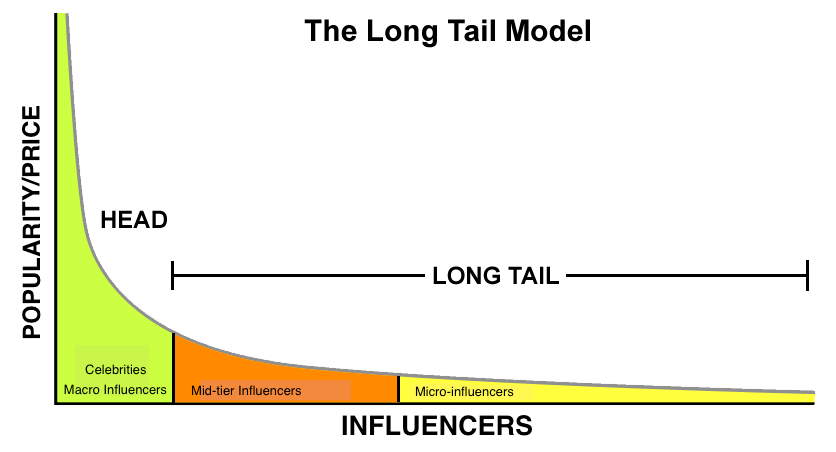
Long Tails are the bane of many investors. As I derive a lot of investment insights from quantitative investing, I have to accept the precarious position of comparing investment strategies using mean and variances while obviously being aware that markets do not act "normally".

Unlike the normal distribution, long tails are modelled differently.

One example is the size of cities.

Cities have a tendency to arrange themselves in power-law distributions which is governed by Zipf Law. The rank of a city multiplied by its size is a constant. New York has a population of 8.6M. Second in rank is Los Angeles has a population of 4M. 2 x 4M approximates the population of New York. The third largest city is Chicago has a population of 2.7M which is about a third of that of New York.

One model that explains why things somehow arrange themselves neatly into Power Laws is the preferential attachment model. This model assumes that entities like cities grow at rates relative to their proportional size.

One effect of long tails is that the social influence creates greater inequality. A better book or catchier song may be slightly better than the book that is in second place, but it garners rewards much higher level than what it deserves.

In a world of long tails, we have to be prepared for large events to happen with much greater probability. Earthquakes satisfy a power law.

This is one reason why many investors do not sleep well at night.

When the market goes south, correlations increase to one so large losses will also be felt by portfolios with plenty of diversification.

Here's an experiment the reader can try with cryptocurrencies. One hypothesis of mine last year  is that the market capitalisation of crypto-coins should also follow Zipf Law and perhaps some sort of long-short trading technique can be used to trade cryptocurrencies.

Sadly, I lost interest in this asset class after it tumbled in 2018.


Sunday, February 10, 2019

Insights and observations from Dr. Wealth Graduates Session.

Yesterday I gave a talk to 200+ graduates of Dr Wealth programs and it was really fun !

I have a different approach towards conducting investment training, very much preferring to learn from my students as my students learn from me. As such, this blog readers can benefit from the positive interaction I have with my audience.

Most of the content of my talk yesterday was to describe the results of the portfolios built by my trainees and how successful I have been so far when I invested in our co-created portfolios. But as a crazy science experiment, I also wanted to test the idea of The Wisdom of Crowds. I employed an online presentation tool that allowed me to work with 250+ and get real-time feedback from them as the course progresses.

First of all, I just want to give blog readers an idea of who can possibly be so money-obsessed to show up for an investment talk on the 5th day of Chinese New Year.

As you can see the word cloud was absolutely shocking. I have always known that a lot of engineers see the value of my course. However,  I did not expect to see that engineers form such a huge bulk of the audience. I feel quite glad because I know that engineers generally detest bullshit and this clearly shows that Dr.Wealth is a reliable and practical brand.

The next experiment I did was to spend one slide explaining the basics of market cycles and then I got the crowd to guesstimate which part of the market cycle the Singapore market is in. This is the feedback I was able to get only after explaining market cycles with one simple slide.

This crowd is clearly very smart. According to a Business Times article sometime in December 2018, the crowd is spot on and Singapore is somewhere between the Peak and Contraction part of the market cycle. This means that a serious investor cannot avoid having bonds in his or her portfolio.

Finally, I made the made the audience perform an asset allocation based on what they know about market cycles. I don't think it is necessary to get into the Markowitz Efficient Frontier to figure out an optimal asset allocation. A crowd-sourced asset allocation would do fine, and for the purposes of yesterday's session, the wisdom of this crowd has chosen this asset allocation.


In spite of acknowledging that bonds play a fairly substantial role when markets begin to contract, this crowd continued to be very aggressive, allocating about 76% in equities and even up to 7% in commodities.

This raises interesting questions - Was this crowd over-confident in the face of a contracting market ?

I will probably need some more time to think about these results.


Thursday, February 07, 2019

Financial Blogosphere as Wu Lin

Related image

Happy Year of the Pig everyone !

I am now blogging from Kulai and I wanted to write an article that is whimsical and yet consistent with the spirit of Chinese New Year. 

For many years, I was unable to appreciate Jin Yong novels because they are written in Mandarin. Finally, thanks to a recent English translation, I was able to read about the Legend of the Condor Heroes, a martial art epic that makes Westerns like Lord of the Rings look boring by comparison.

And what an experience it is !

Today I will try to recast our financial blogosphere as the Pugilist World or Wu Lin of China. I am going to warn readers that this article will be hard to digest because not only would you need to be an investor, you will need to appreciate Jin Yong novels to really appreciate the subtle nuance of what I am trying to share today.

You see, like any Wu Lin, the financial blogosphere has its Five Greats -Martial artists who are admired throughout the Wu Lin. Let's us go through each great one by one and see how they map to the Singapore Financial Blogosphere :

a) AK71 is Double Sun Wang Chongyang, the Central Divinity

The most powerful of the Five Greats is none other than AK71. He is the blogger almost everyone reads and his investing skill is truly without peer. If you observe AK71 over the years, you might surmise that he made a lot of money in real estate before moving into stocks investing. It is very challenging to be good at both property investing and stock investing at the same, which is why AK71 is the First Among Equals in the Financial Blogosphere Wu Lin.

b) Investment Moats is Northern Beggar Count Seven Hong, Divine Vagrant Nine Fingers.

Is it merely coincidence that Ng Lip Hong is also a Hong ?

Investment Moats is also one of the most popular blogs in the blogosphere and the FIRE movement, being grounded in frugality and the austere lifestyle is very similar in philosophy of the Beggar Sect. Another reason why I think FIRE is related to the Beggar Sect is because we are the good guys.

Count Seven Hong is not just well known for his mastery of the 18 Subduing Dragon Palms, he is known for his sense of righteousness.

c) The evil part of the Commissioned Financial Industry is The Western Venom Viper Ouyang. 

You see a snake and a commission sales agent. You have two bullets in your gun ? Who would you shoot ? If you ask me, I will shoot the commissioned sales agent twice and I will spare the snake.

I would think that one part of the financial commissions industry to be like the venom that is slowly killing innocents in Singapore, just like the openly wicked and cruel Viper Ouyang.

Viper Ouyang has a staff which hides two serpents which can summoned to attack his foes. This is like having ILPs and Universal Life plans to churn the commissions at the expense of the  hapless consumer.

d) I am the The Eastern Heretic Apothecary Huang

I can't make a hilarious caricature without putting myself into the article. Even though The Eastern Heretic is quite an asshole himself and possibly one of the worst father-in-laws you can have, I find a deep affinity with his contempt for tradition and Confucianism.

Only a heretic will blog about a Polytechnic education and attack the orthodoxy of buying REITs with "good sponsors". I also have a deep dislike of "martial schools" that spout the pithy remarks of Warren Buffett.

e) A Nine Yin Manual for Finance does not exist.

The final question is whether a Nine Yin Manual exist. If so, anyone who reads the manual will become so rich, he would be able to become a billionaire instantly. The closest thing to a Nine Yin Manual would be a book on financial arbitrage.

Financial markets will address any imbalance in the markets quickly and any attempt to arbitrage an anomaly is short-lived.

There are certainly other comparisons. I reasoned that Brian Halim is very similar to Zhou Botong because Zhou mastered the art of splitting his mind into two and using a special martial art with one hand while countering with the other. Brian is the only guy so far who experimented successfully with a Short Portfolio. Brian is, of course, a nice guy and not half as eccentric as that literary character.

Unfortunately, I have only read the first two english-translated books by Jin Yong and cannot find an equivalent of the King of the South yet. This is something to look forward next year.

For this new year, I invite you guys to make comparisons with your favourite characters in Chinese Literature.


Sunday, February 03, 2019

Opportunity Cost of Studying for a Degree of your Dreams.

Image result for starving artist

My daughter has a strong artistic bent.

As a father, I have chosen to let her pursue her interests. Recently, I have been tempted to transfer her to language classes to reinforce her weak English scores, but I think my daughter would be much unhappier without Art classes in her life.

I also had an interesting conversation with a friend regarding this matter. This conversation came about because I have always expressed my unwillingness to work with an artist to create an RPG product because I was not confident that they are conscientious enough to deliver on time ( yes, even with money from me) :

Friend : " It is entirely possible that Clio will grow up and be the kind of artist that does good work and deliver on time. "
Me : "We don't call these people artists in Singapore society."
Friend : " What do you call them ?"
Me : "Architects. "

When I had this conversation, I was just being my usual trollish self.

Last week's Economist has a really nifty article on the opportunity costs of studying for a degree. The insight from the article was brutal. The Economist reports that while degree holders who study the humanities in Oxbridge tend to do rather well in the work-force, but this was because their positions in these universities signalled high intelligence. Had these same students study for a vocational degree (like Business, Engineering or PPE), they would have been able to earn even more money within their lifetime.

The folks at the Economist employed a very interesting tool to measure this opportunity cost, some Oxbridge graduates who opted to study the humanities instead of a vocational degree would have lost an annuity worth up to $500,000 when they picked a degree they were passionate about. Of course, for most Oxford graduates, this was never an issue, because they came from fairly rich families in England.

Today I am going to transplant a similar approach to Singapore and consider this test scenario.

Suppose, like Clio,  you enjoy doing Design, but you are also reasonably competent in Mathematics, what would be the opportunity cost of studying Industrial Design instead of, say, Mechanical Engineering?

If you look at this page from Seedly, starting salaries by degree can be found on the Web. The starting pay of a Mechanical engineer is $3,400. Industrial design, being one of the lowest paid degree programs in Singapore, provides a starting pay of only  $2,890.

Now I don't have a lot of data on annuities, but I do have access to REIT data. At REITDATA.COM I downloaded the list of REITS onto a spreadsheet and did an arithmetic average of their dividend yields. I got 6.4%.

An equally weighted REIT portfolio yields 6.4%.

What is the opportunity cost for Clio to choose Industrial Design over Mechanical Engineering ? I would take the difference in pay over one year and divide it by 6.4%.

This would be [($3,400 - $2,890) * 12] / 0.064 or $94,625.

This means that to equalise a design career with an engineering career, Clio must have a REIT portfolio worth $94,625. This exercise only considers one year of income, if a Mechanical engineer has better increments than a design professional, it is very likely that this opportunity cost is an under-estimate.

Of course, this exercise does not attempt to downplay the value of a person's personal aspirations, it merely puts a value on someone's dreams. Is a person's desire to do design worth that $94,625 if this same person would have done ok in an engineering field. This puts different spin on how to think about the degree you might wish to study.

Recently Alvin Chow of Dr. Wealth called me out on something I wrote in my books many years ago.

Eons ago, I wrote that one generation has to study engineering so that the next generation can afford to study law or medicine. Subsequently a generation needs to become successful lawyers and doctors so that their children can in turn become artists, poets and singers. Alvin asked me whether I continue to stand by what I said before.

I did not have a proper answer for Alvin then because, when I wrote my books, I never thought that I would be called to the Bar years later. Based on my own framework, I managed to compressed two generations of work into one.

When i wrote that sentence, I never had to entertain the thought that my children can even afford a life in the Arts or the Humanities.

I guess here is another reason why you write books. One day people will try to hold you against what you wrote many years ago.

I guess, with this article, I have just set the price of Clio's dream.


Friday, February 01, 2019

Alternative view on CPF withdrawals at age 70


Image result for light a candle

In my opinion, there is too much negativity on the news that our government will allow a citizen to start getting a CPF payoff at age 70 unless he or she fills out a form to extract the money at age 65. This is because, unless a citizen is really uneducated or has a mental condition,  a citizen can write in to take out the money at age 65.

The hostility is misplaced.

I think citizens should be more hostile to the idea that the upper echelons of the government has been gripped by a few simple ideas from behavioural economics. Choice architecture became popular because of a book called Nudge by Richard Thaler - the idea is that we do not need to come up with a policy to force people to behave in a particular manner, sometimes we can shape behaviour from the way we present choices to them.  For example, it is hard to get folks to opt-in to organ donation. Therefore, by making organ donation requiring an opt-out,  more lives can be saved. Similarly, if the default withdrawal is at age 70, then the population will naturally withdraw their money later if they do nothing.

I think the high-level mandarins did not foresee such a painful backlash that children will remind their parents to take out their money when they hit 65 in the future which can blunt the effectiveness of this policy.

Why the government want to work so hard to retain our CPF money and keep paying a political price to do so?

I have an explanation that is reasonable but may not politically correct if shared.

If you review the way MAS manages our markets, you will note that we do not have a Fed Chairman that talks about interest rates. Instead, MAS manages the economy by adjusting our exchange rate against a confidential trade-weighted basket of currencies that has to fall within a particular band. MAS buys or sells foreign assets to keep our currencies stable.

To keep have these foreign assets at hand for MAS, every Singaporean must sacrifice their CPF to used in this pool of foreign exchange reserves. This is National Service performed by your earned income.

For the past 50 years when the population grew, Singapore had more and more foreign reserves to defend our currency from attack from speculators thanks to the CPF program. We cannot underestimate the benefit of this system - our inflation was kept small compared to other OECD countries. Singaporeans today enjoy a currency three times the strength of Malaysia and did not suffer as much in 1997. More importantly, our businesses were also able to grow in a stable inflation environment. In essence, we sacrificed 20% of our income but, in return,  our currency stayed strong compared to the rest of the world.

As our population ages, policy makers are faced with a new problem not faced by older leaders. More Singaporeans are now withdrawing from their CPF. If Singaporeans start to withdraw more than they contribute into the pool, Singapore loses a strategic tool that has kept us rich and businesses stable for the past 50 years.

This is why withdrawal of CPF will keep getting delayed as we get older. If everyone opts to take out their money at age 65, one day policy makers will be forced to mandate 70 as a minimum as of withdrawal. In the minds of these powerful mandarins at the executive branch, this is the path of the lesser evil.

Personally, I would design a different solution.

I would attempt to use the concept of hyperbolic discounting.

A 65 year old will definitely ask for his money back when he reaches 65. Very few folks will delay gratification to age 70 because they may be dead by then. However, a person at age 25 might be willing to promise to withdraw his money later if he can, somehow, be bribed to do so.

CPF Board should create a package for any Singapore who volunteers to take out his money later at age 70. For me I might consider this at age 25-40 if I am offered the following :

a) Once you agree to take out earliest at age 70, there will be a $1,000 credited immediately into his or her CPF-SA. ( Attractive because it compounds for many years )
b) CPF-IS limits to be adjusted from 35% to 40%, so we can invest more money in the financial markets.
c) In a drastic case, the CPF board can offer $500 in cold hard cash to anyone who does so.

Go ahead and critique my policy idea. I'm no Administrative Service mandarin but at least I am doing my part to light a candle instead of cursing the darkness.


Tuesday, January 29, 2019

The Model Thinker #5 : The Normal Distribution

Image result for normal distribution

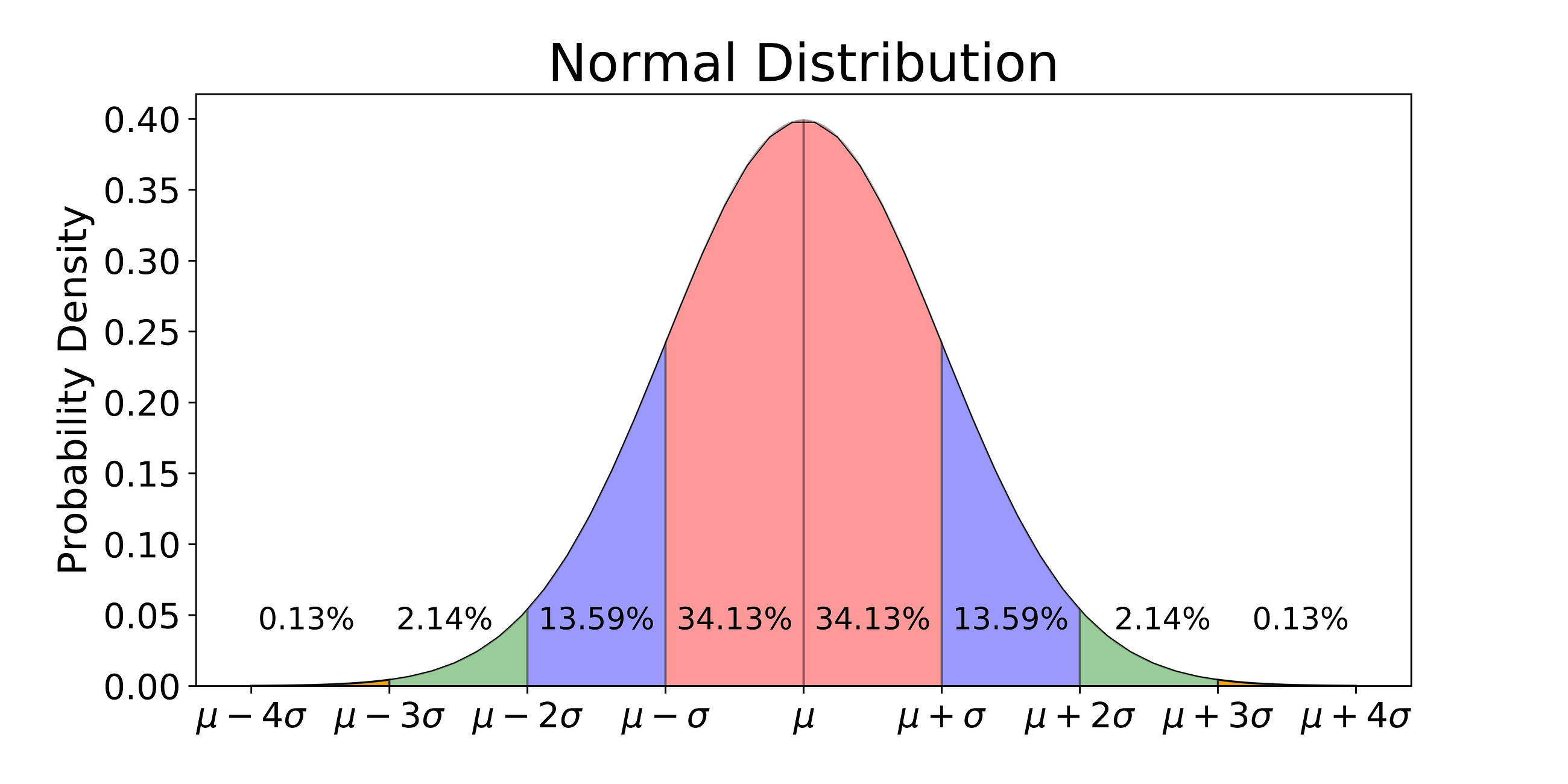
The normal distribution curve can be used to assign probabilities to values. Every data point can be condensed into two numbers, the mean of the curve which measures the average, and the variance, which measures the dispersion of the curve.

The normal distribution curve is symmetric about their mean and finds application in many areas of nature. The average height of the test scores, size of flora and fauna, life spans can all be modelled by the normal distribution curve. A very important theorem is the central limit theorem, where adding or averaging the random variables produces a normal distribution curve.

Are there different kinds of distributions ?

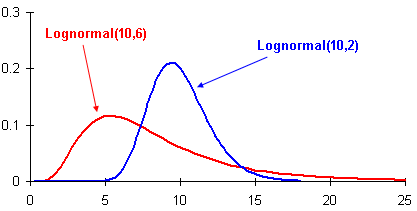
When random variables are added together, the resulting distribution curve is likely to be normal. But when random variables are multiplied together, a different distribution curve results. This is a lognormal distribution.

Image result for lognormal distribution

Salary raises are typically expressed as a percentage increment. So folks with higher salaries receive a higher increment for the same percentage raise.Because of this, the income of population tends to follow a lognormal distribution curve. Notice that larger variances in a lognormal distribution curve tends to result in fatter tails to the right.

The lognormal distribution possibly provides a better explanation as to why inequality in our society exists - increments are expressed in percentages so higher paid professionals are given higher increments. Things would be very different is increments are expressed in absolute figures - we might even end up with a gentler form of capitalism.

Financial professionals often have no choice but to express market returns as being normally distributed. When they have to work with actual stock market levels, they apply a logarithmic function before feeding it into a regression exercise.

The truth is that most of us are aware that markets generally do not follow a normal distribution, but we are often forced to because more complicated distribution functions ( possibly suggested by Nichola Taleb ) may not even have a means of defining the variance of the distribution.

You can read about how the abuse of a mathematical function was probably what almost killed the markets in 2007 here.


Sunday, January 27, 2019

On employee engagement, productivity, and the death of a Singapore Son.

One of my favourite bloggers, TACOMOB has not only made a come back after taking a long break from his blog, he showed up for my preview this week. I strongly urge you guys to read his comeback article here because it provides a lot of food for thought.

The FIRE movement is strengthened by the dissatisfaction of workers in Singapore. While we are not responsible for the poor work cultures in Singapore that lead to so many workers becoming disengaged, we derive a lot of our popularity from it.

Attaining FIRE often requires massive personal sacrifices, sometimes we spend less than 20% of our take home pay. The only impetus that can lead to such behaviour is immense dissatisfaction at work and the dysfunctional workplaces that we have.

Attached is a word cloud spontaneously generated by the preview attendees when I asked them to use one word to describe their working life.


On TACOMOB's blog article, he did not explore why we are disengaged. I thought I'd explain it in a politically incorrrect manner that, if he had done so this way, he would have gotten into trouble in thin-skinned Singapore. So it is best that a Singaporean blogger do this.

The brutal truth is this : Singapore managers, unlike their Ang Moh counterparts, are culturally immature.

Another words, Singapore managers suck.

The Singapore corporate landscape is brutal for a developed economy. Singapore workers work 45 hours a week. German workers work on about 26 hours a week. In spite of that, Germany remains one of the most successful economies in the Eurozone today.

I personally transitioned from an American corporate culture to a Hindi-speaking start-up and then out of the private sector into public organisations run by locals. I rate my experience with expat managers like TACOMOB as the most pleasant and egalitarian I ever experienced in my life. I rate my experience with local managers as one of the most unpleasant, actually worse than my time in an Indian start-up. I still remember the days when a director of mine, a control freak, would expect me to parrot his exact phrases when preparing me for a presentation to a room of senior directors. ( Even though I am way better a public speaker than him. )

Singaporean bosses are "ngiao" and very stingy with praise. I wrote a letter thanking a committee for letting me play the role of secretariat and was subtly told that I should not have done so (without reason). They are actually very entitled and are protected by our resistance to a welfare state economy. On the other hand European and US managers are trained to deal with very aggressive unions. How many local bosses ever had to negotiate with an angry union leader or even an employee who does not need his job to feed his family ?

What is the root cause of this ?

The time it takes to build a corporate culture is much longer than the time it takes for a country to leap from third world to first world. We've only had half a century of independence, so Singapore has the hardware of a first world country but we are essentially a country running third world management software. If you observe the behaviour of a top senior director in a government agency, his management methods assume that his men are going to be lazy and will ring-fence their work - sad thing is that he right, these agencies often retain the workers who are the best at doing that.

The sum total of our immature corporate culture has taken its toll on the country lately.

We've lost a prominent son of Singapore to SAF training lately. Whichever side you are in, safety in a dangerous organization like the SAF can never succeed if it is top down. It has to be maintained on the ground by the rank and file. But for safety to be bottom up, a soldier must feel that he can report a lapse without facing consequences.

In my penultimate ICT with the SAF I was in a Brigade and during an exercise, my land rover's engine stopped working in the middle of an expressway. After we pushed the rover to the side, The MT line sent a tow vehicle to our location but left us at the side of the road. In the end, we called our Signals CSM who is a cab driver to pick us up in his cab. When we finally got back, the canteen was closed and we basically ended up skipping one meal.

I wanted to complain, but there are so many impediments. First of all, no one died. Subsequently, a feedback session recorded my feedback, and there was a promise was made to update us on the next ICT. That did not occur. By next ICT, I did not want to pursue the matter because it would brand me a "troublemaker" (I was not legally trained then). As much I as liked my commander, brigade command staff were almost all chosen from powerful echelons of Singapore society. Offending them or giving them extra paperwork may have long term consequences.

After what happened to Aloysius Pang, I felt a deep sense of regret of my conduct during my days as an NSman.

The right thing to do would be to hound the powers that be until we get some assurance that land-rovers are properly maintained. I might be punished - the biggest punishment would be relegated to a  Battalion, but maybe if some other soldier were more disagreeable, maybe, just maybe Aloysius Pang would be ok today.

Unlike other folks, I'm not calling for the blood of the CDF or the COA. Once we become NSmen, we have more autonomy and power in society. Maybe some professionals who can write nasty letters and have plenty of investments can summon the courage to take a stand against safety lapse.

It is up to us, professionals, possibly FIRErs who might be financially independent, who can pick a fight and not get squashed by the military machine.


Friday, January 25, 2019

Should you buy REITs based on a "Good" Sponsor ? Part 2

Here's a nasty thought experiment.

Suppose on one hand, you have a team that is a sample of RI, ACS and Hwa Chong students. Their average PSLE score is 265.  We shall call this team A.

Team B consists of a bunch of kids from government secondary schools, such Changkat Changi Secondary or St Gabriel secondary secondary  etc... Suppose this selected sample would also have an average PSLE score of 265 ( this is a small sample size and some kids volunteer to go to ordinary schools ! )

Is there a significance in the life outcomes of these different group of students ?

This experiment was done on the outcomes of SAT candidates who enter different universities in the US and it was found that, generally speaking, the SAT score is a better predictor of wealth and success in life than the quality and brand name of the school itself.

Now suppose Singaporeans get to bid to buy a share of the earnings of this sample of students in the future. I think, given how kiasu we are, the RI boys will command a much higher price.

But because you will be paying less to get the cash flow from Team B, you should expect the folks who bet on Team B to make more money moving forward.

The last time we had a discussion about the debunking the "Good Sponsor" theory, we had a pretty good debate because I understand why some fairly experienced REITs investors got upset over my article.

Today I'm going to share with you a different experiment that basically came  up with the same conclusion.

Another well known anomaly in US is that stocks with a lower average volume tend to outperform. This can happen for many reasons. Perhaps low volume stocks present an illiquidity premium. It is also possible that low volume counters receive lower analyst attention so it may be amenable to some bargain hunting.

For the baseline, equal weighting REITs for 10 years ending on 31 December 2018 would result in returns of 18.45% with a semivariance 10.36%. Do note that I've been promoting an equally-weighted all-REIT portfolio for quite a while in my previews.

So once again, I decided to conduct an experiment, this time using the factor of average volume of the REIT over the past 6 months.

Here is a snap-shot of the ten REITs with the highest 6-month average volume as of two days ago.


So once again, we are looking at the more popular REITs in the stock market. With the exception of Lippo, any sponsor of these REITs can be subjectively agreed to be "good sponsors". I say this because I'm still not getting a firmly agreed stance as to what is a "good sponsor".

What about the ten REITs with the lowest average volume ? Well it looks like this :


The reputation of this list of REITs is not definitely as stellar as the previous screen-dump.

If you have been buying the REITs with the highest 6-month average volume for 10 years right up till 31 December 2018, you would have done well : 19.24% returns with a semi-variance of 11.55%. The problem is that you are getting higher returns for a higher downside risk.

Here's the magical finding.

If you have bought instead the REITs with the lowest 6-month average volume, you would return 20.28% with a semi-variance of 9.95%. The REITs with the lowest volumes produced a better return at a lower risk.

Here's my proposed conclusion and you are free to argue a different interpretation of these results.

Choosing a REIT with a lower average volume is a superior investment strategy to choosing a REIT with a higher average volume. To exploit this advantage, you have to do the opposite of what many investment experts and value investors say : you have to avoid or to reduce your exposure to REITs with "good sponsors". This is because these good sponsor manage their REITs so well that retirees and non-experts plough their money into these counters in the hopes of getting safe yields, many of these guys just want 6% yields.

The collective retail investor fund flows into these better run REITs counters makes it harder to derive extraordinary profit from them.


Tuesday, January 22, 2019

The Model Thinker #4 : Modelling Human Actors

Image result for vitrivius man

The first serious chapter on modelling covers human actors.

There are two general approaches to modelling a human actor.

a) The Rational Actor Model

Modelling human actors as being rational has come under a lot of criticism but no other model has the kind of consistency and elegance offered by this approach. By making an assumption that a person will act rationally, you can also come up with behaviour that approximates that of a highly intelligent player.

In the Rational Actor model, individuals choose the action that maximises their payoff. This pre-supposes that a payoff function is defined over a set of possible actions. If an investor is rational, between an investment that generates 10% and 12% but with the same semi-variance, the investor will choose the latter strategy.

Upon further inspection, you will realise that most human beings are hardly rational. One component of rationality is that ability to consider all options. All alternatives must have a preference ordering. Another aspect of rationality is transitiveness. If you like A over B, and B over C. You must like A over C. ( I am hardly rational when it comes to movies )

If you come into the financial markets assuming that all market actors are rational, you will be in serious trouble. Even I have serious quirk which I am not really willing to show the world even though Dr Wealth colleagues have asked me to give more details on my portfolio - one of the quirks I am less proud off is that I like to invest in denominations of eight... For example, I have 8800 shares of UMS.

To blunt the lofty assumptions of Rational Actor theory, economists now add theories of loss aversion and hyperbolic discounting into whatever models they have. We take larger risks when faced with losses, and we apply a stronger discount rate of our immediate future.

b) Rule-based model

Rule based models do not use a payoff function but assumes that people will behave based on specific behaviours. One possible way to model the behaviour of an average Singaporean is that, based on government  data, he is likely to set aside 20% of his take home pay.

The rules-based model may be fixed, but common sense tells us that people adapt to policy changes and changes. When the salary of a person goes up, he might be able to save a larger proportion of his income. He may have to forego savings when he gets retrenched.

The spirit of modelling is to adopt the approach that all models are wrong one way or another. One criticism of modelling the behaviour of human beings is that changes in policy or the environment will produces behavioural responses by those affected. This renders past behaviour inaccurate.

But we know this problem well in quantitative investing.

This is the problem of non-stationarity.