Saturday, July 29, 2023

There's value in doing nothing


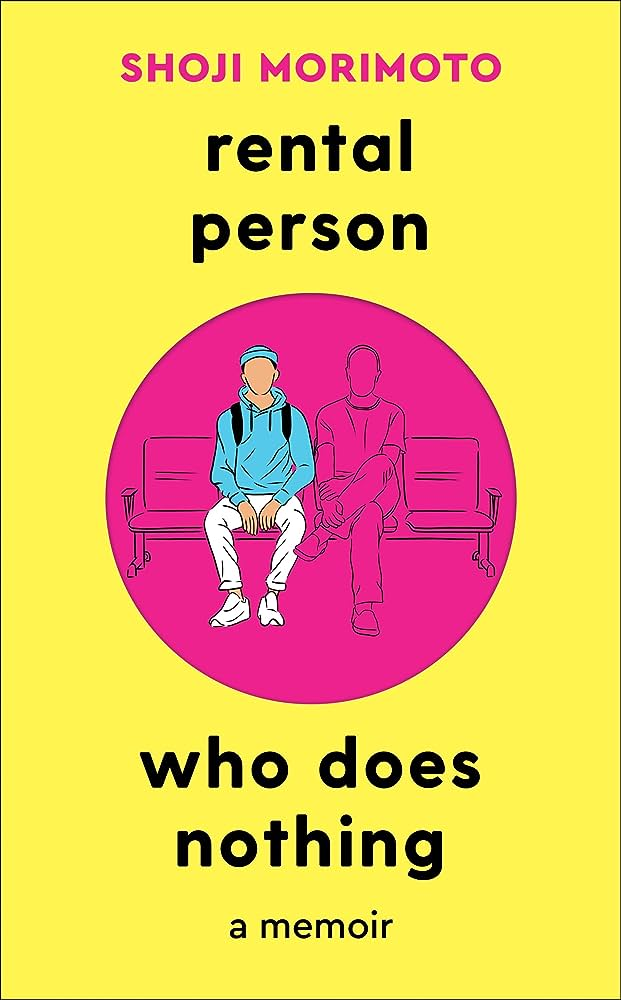
Beyond the books by Haruki Murakami, Japan has a lot to offer to personal finance readers because translated works are so rare and often untainted by Western sensitivities. I think this latest read of mine entitled Rental Person Who Does Nothing by Shoji Morimoto should find itself on every FIRE aspirant's bookshelf, I rank it at the level as books like Die with Zero which I have reviewed here.

Shoji Morimoto, a married man with kids, became an instant celebrity when he offered himself for rental. He charges nothing but whoever rents him needs to pay for his transport and food. Everything was done over Twitter, so he gets to choose which assignments to pick up. I picked a few interesting insights from this book :

a) You never really do 'nothing' when you rent yourself out for your time

This is the most upbeat message from this book. Something is always being done when someone gets rented out to do nothing. I realise that a special kind of relationship can happen where someone becomes someone who is neither a stranger nor a friend. In Japanese society, a rented person performs roles like listening to another person's writing ambitions or accompanying someone who is filing for divorce. I think Shoji, in starting this service, really landed on something like what Starbucks is. Starbucks is a third place between work and home. Shoji is a person between a stranger and a friend. 

b) You will always be compensated even if your services are free

Something interesting happens when you do not charge for your time beyond a meal and transport allowance. People actually make an effort to make the experience positive for you. It could be the sheer weirdness of the engagement, or it could be in the form of Amazon gift cards. If you offer a boring engagement, Shoji will just pick someone else. 

I have grave doubts that a service like this will not be abused in Singapore as Japan is just a more civilised society that shows concern for others. Also, over time, Shoji was able to get corporate sponsors as he became a viral sensation.  

c) This book plugs the gap when it comes to post-FIRE issues folks grapple with

What I find amazing is that throughout the book, Shoji claims that his lifestyle is unsustainable because he's living on his savings. This is not a weakness for someone who attained FIRE. What is also amazing is that someone who attained FIRE can credibly do this kind of work for fun. 

After reading this book, I can't really help being drawn to this really revolutionary approach for my own life. But for me, it's actually dangerous to hire myself out for free as I need to make disclaimers that I am not giving out financial or legal advice. My ENTJ character is also quite impatient and I might find it hard to contain my urge to solve problems or judge people as they arrive, hardly the essence of someone who does nothing. 

Finally, I already do this - for my 600+ strong ERM community, I do have lunches with some of them whenever they want to discuss something, but it's up to them to make it worth my time. I've actually gone book shopping with their kids to pick books on economics, I've also accompanied a squad of multi-millionaires to attend investment presentations where I just sit there and ask embarrassing questions. Like Shoji, sometimes this work can be tiring, I don't like rich people who get an investment trainer out just to validate their own investment ideas.  

I think there is a successful business idea out there that can come from this book. It has to be localised to the Singaporean context, and to prevent abuse, it might not be free at all. 

So I may approach a few interested readers who might be looking for something to do. 


Monday, July 24, 2023

What's your next career move : Corsair or Eunuch ?


You may notice that my writing may have adopted quite a Mediterranean flavour as I have just started planning a trip to Turkiye in September. I don't frequently travel, but I have also been deprived of it since the pandemic, so in spite of a shit year revenue-wise, I've got Turkiye lined up in September and Osaka the following month. 

But this article is really about career management. 

As I'm about to celebrate my first decade without a regular monthly paycheck in about a few months' time, I'm not really qualified to talk about the modern workplace anymore. But I've noticed that some thought leaders in the career coaching and management space were affected by the recent retrenchments so maybe I should share my two cents worth about what is happening out there.

From what I see, the tech sector is going through reorganization and given that all this is cyclical, many workers in the tech sector will face what my generation faced in the 2000s after Y2K. They are luckier in the sense that there was no CECA waiting for them in 2005, but the disruptive impact of AI is yet unknown and so the tech sector, which is famously ageist, may hire AI experts from fresh graduates instead and hiring may be at much lower numbers because a fresh graduate armed with an LLM tool can have the productivity of maye three software engineers half a generation ago. I just had a family gathering yesterday and even a very successful engineer like my cousin made doubly sure his son avoided a technology degree and studied finance instead because, in his view, the tech sector was too cyclical for anyone's good. 

Sometimes I wonder whether it's even worth reading management books and following career management coaches. Through no fault of these influencers, your real challenge is sector cyclicality. When a downturn happens, I witnessed top performers being outsourced along with poor performers. This devalues all that jockeying for position, politics and networking to get the right kind of mentor. Personally, between playing in the political field, I prefer learning new technology and picking up advanced prompt engineering. But what do I know?

So in my earlier years, I would carry a copy of the Harvard Business Review to work. Now I really regret doing that ( It was also very pretentious ). The articles were quite fluffy and a subscription never really taught me how to time my career exits in a cyclical industry. Instead, I had really bad runs in my career, like being in HP during the Carly Fiorina era. In contrast, reading just one article by Clifford Assness in the Financial Analyst Journal on dividends investing continues to impact my life and my wallet today. 

There are three useful ideas I have for my readers. 

a) It's not as risky to be a Corsair / Entrepreneur these days

If the job market starts to get too competitive when you reach a certain age like 35, then the path of running a business becomes less risky in comparison. So one option is to consider becoming a Corsair. You don't need to dive in immediately, but you can take a pay cut and learn the ropes from another entrepreneur. 

A corsair is some kind of pirate on the Barbary Coast. It's a flashy existence but your life expectancy can be short. But I think local entrepreneurs should realise that the stigma against failure is not as high as a decade before and you can start again after you fail. 

The best school for entrepreneurs is the NUS Overseas College. You can independently research how many jobs the alumni have created so far. My wish is one day my son can qualify for it. 

b) Alternatively you can join the government and be a Eunuch

As I speak from personal experience, nothing can be more emasculating than doing Government Procurement. It's really the closest thing to feeling like an eunuch without actually getting your balls cut off.

If the flashy life of a Corsair is not for you, consider the calm life of a harem eunuch. It's financially rewarding and you will be more immune to market cycles. 

But the eunuch metaphor cuts deep. I networked with many IT sales folk who tells me they mapped out all the Empress Dowagers they need to please to get revenue flowing into the companies. I can fully understand why someone lady bosses in IT are always called Dowagers. I kinda suspect Qixi was their role model. 

My experience is that very soon, you will realise that the pay is not bad for a good reason. 

c) Bend the rules and get over-employed 

If you do not want a life of a Eunuch or a Corsair, then you really need to become creative. I attempted to negotiate a profit-sharing package with a law firm because I wanted to earn multiple streams of employment income. I failed. Then I failed again to get a day job teaching in a polytechnic. In both cases, I was upfront about my existing training business which became a showstopper in the latter case.

A good software engineer is likely to do better than me. You can attempt to be hired by two employers at once. If the industry becomes too cyclical, you may wish to do more than one job at the same time to at least reach Barista FIRE within 3-5 years. Thereafter you can continue on one. I suspect a tool like Github Copilot can enable over-employment in a widespread manner.

Like anything that skirts company policy, make sure you read your employment contract carefully. 

Now employers are not so open-minded to working from home anymore, so employment contracts may be more well-enforced. 

In summary, I think that when we read about career influencers losing their jobs, I hope that it can get you thinking about why sometimes your career is really not within your control and you're really just a victim of market cycles. 

A career influencer between jobs should be accorded the same standard as a financial influencer who loses money in a bad year, so I'm inclined to be forgiving. 

I remain a huge fan of these influencers and hope that they will share the process of recovery into a new vocation.


Thursday, July 20, 2023

What lessons the current affairs hold for BBFAs.


I thought perhaps the latest events in the political space should warrant another article on some brutal lessons for BBFAs who read this blog. After all, I'm a self-styled Senator of BBFAs, which makes me some sort of unofficial (and unpaid) MP to my readers.

a) Male powers peak very late in the dating and mating game

A poet pal credits the idea that the 50s is a particular time men are very vulnerable to adultery and marriage breakdown because their wealth and power peak while their health and virility have still not begun their decline. I only partially agree with this analysis, because a day later, we're treated to a presidential candidate in his 70s with a fiancee that is younger than his elder son.

I would argue that sexual attractiveness monotonically increases with wealth and power and it is not something that can be stopped by waning health, marriage quality, or even andropause. 

BBFAs who are not getting anywhere in the mating game can just focus on their wealth and power until they eventually find someone. If my analysis is correct, there is no real need to experience any angst over a guy's singlehood. 

Single men do not exist, they are just men whose wealth and power have yet to arrive. I hope this can motivate BBFAs to be empowered in their investment journey. 

b) Marriage happens because of constraints on female fertility.

If men just keep getting better all thanks to compound interest and time, then why does marriage happen at all? 

Simple. Women need to get married because their fertility is constrained by time. I should casually remind readers that one of the fiercest advocates of egg freezing is Cheng Li Hui. 

Modern marriage happens when men are not at their peak yet and women have time constraints. That's not even enough - the government MUST toss in the BTO benefit to make marriage even viable. Will men throw their freedom away knowing that their bargaining chip gets better with time? Why should women bet on men whose real economic power has not been realised yet?

HDB and the BTO system must be the answer. If you marry at the right time and produce future taxpayers, the government can grease your palm with over $300k-$800k of real estate appreciation. 

This is how the Singapore Dream can continue to incorporate marriage and procreation. 

With this realisation, I'm no longer so eager to offer housing options to singles because bachelorhood really needs more nerfing.

c) Serial polygamy will keep happening in the Singapore political scene because of later peaks in male power.

In modern societies, polygamy is illegal, but powerful can skirt the law with serial polygamy - the art of having sequentially different spouses over different ages of their life!  

Another interpretation of what everyone is seeing in politics is the reality of serial polygamy in Singapore society. 

As male power peaks at a later age, you find that men find alternatives to enact their personal dream of polygamy. One avenue is through adultery and divorce. The other is through longevity. 

Tongues were wagging when Ng Kok Song's fiancee is 30 years younger than him, but I find it touching that he was loyal to his wife all the way until her last day on earth. Of course, he is great marriage material!

d) Serial polygamy is also enabled by women!

Women are wired to be choosier when picking a mate. This is because they are designed for higher parental investment. 

So it comes as no surprise that a lot of attractive and smart women will hold out until they find a guy worthy of them.  What is the use of having ten thousand Simps, when you can get half a slice of a billionaire?  They also know that male power peaks very late and sometimes a divorce or a death can make a powerful alpha available again. 

In modern societies where marriage is weak, supported by a housing policy, then even marriage itself is not a powerful fortress to defend a family. 

The power of True Love is something that even a Prime Minister cannot stop.

As such, my suggestion to BBFAs males does not really change. 

Continue to invest in yourself and build up your assets. We've witnessed the sheer power of an alpha male who can manage money well and I think we can learn from that. It's fine if you don't join an investment course, attempt the CFA exams to sharpen your mind. Maybe the CFA rebrand itself as the Tongkat Ali of your mind, but I think they really need to lower their passing rates.

Do not be discouraged by your lack of success on Tinder. If the only people you meet on Tinder are ugly people or financial advisors, understand that Tinder provides an advantage for beautiful people. Caring or humourous males should not have any business trying their luck there. 

Your Tinder should be the Sunday or Business Times, get yourself launching your startup or IPO there and you can still score someone soon enough.

In the meantime, keep playing Diablo IV and using your dividends to offset your monthly data bills!


Tuesday, July 18, 2023

Thoughts on charismatic men.


Recent events in Singapore politics ruined my attempt to blog about the employment space, so I thought it might be better to just talk about current affairs.

More than two decades ago, when I was an Engineering undergraduate, a girl from FASS in my Toastmasters Club consulted me on which major should she pursue. I asked her what her grades were. For Math, she got a B, but she got a D for Sociology. I bluntly told her that she needs to focus on what she was good at and pick Maths. It was not clear that Sociology had better prospects in those days so with the data I had, she should focus on her strengths, pick Maths, and I stuck with that argument.

She attempted to argue with me, but I dismissed her reasoning - It's her data. She needs to live with it.

Also listening to the conversation was the President of the Sociology Society, a dynamic and energetic speaker, he interjected and told the lady undergraduate that she should choose Sociology. He just told her to follow her dreams and let her passion take care of her grades.

Needless to say, the logic of an Engineering student was trumped by Sociology pathos on that day.

She became a Sociology major.

When it was apparent that she would not qualify for Honours year in Year 3, she started talking about not having industrial skills to tackle the workforce and started asking about Java Programming. Obviously, by then, I knew that her mind was made up and just wanted me to validate her decision. She was not hot enough for me to do that, so I just crudely dismissed whatever she had to say.

I was an engineer. 

I will tell you exactly what the numbers mean to make a great decision. 

If you want someone to sayang you, go find the humanities guy. I'm not here to win a popularity contest.

Even today, I loved relating the story of how a little bit of pathos from the Sociology dude totally trashed my calm logical analysis which would have led possibly to a better career. I really did come off looking like an asshole in that conversation, but the President of the Sociology Society oozed Charisma and I marked the lesson as to why pathos matters a lot in life if you want to be persuasive. 

But, maybe if she was hotter, I would position myself in a different way - maybe I'll stroke her hand and offer her my engineering math textbooks.

Coming back to current affairs.

PAP does not have enough charismatic men because PAP politicians actually have the hard business of keeping our nation running. As such, Tan Chuan Jin is a rare breed of politician that is very personable, appeals to emotions, and also has Christian sensitivities. 

He's the equivalent of the "humanities" guy in the PAP.

A very deadly combo.

I met a 1990s actress who admits to a teenage crush on Tan Chuan Jin and complained that every time she wanted to talk to him, she was interdicted by his wife even as they got older and met in reunions. She told me that she does not same the same feelings for the other guy Chan Chun Sing who are from the elite Illuminati class.

Charismatic men are required to shield technocrats, the Gan Kim Yong and the Lim Hng Kiangs, who can science the shit out of the numbers and make Singapore an economic miracle today. Even our founding fathers had visionaries like Goh Keng Swee, who is so severe, maybe even functionally autistic, who might need a charismatic firebrand like Lee Kuan Yew to keep them in power. 

So Tan Chuan Jin is almost indispensable and the same standards that apply to him, cannot well be applied to, say David Ong.

It's like my Aunt who said after reading about a car accident involving a good-looking man, "Wasted, leng zhai die so young." I will jokingly say, "Mmm leng zhou tak sei lah !" (Cantonese: Ugly deserve to die right? )

But Charisma is dangerous. 

With Charisma, there is less urgency to do the hard work and analysis and back things up with persuasive data. There is less need to do operational work, you just need to talk. You can live your life telling folks to just "Follow their Passion", and "Think Win-Win", frame emotional platitudes in Powerpoint slides with a picture of an eagle, use words like "Synergy", phrases like "Start with Why", and people will just forgive you for not really telling them very much. 

In my last course preview, I got slammed by a trader because my Python programme did quantify maximum drawdown. 

If you combine Charisma with virtue signalling, the price is very high if you fall. Because you are positioning yourself at a moral standard above most ordinary men, but you are Charismatic so women will beat a path to your door. I was stunned by RI's attempts to remove his picture from school and some religious groups tried to delete articles related to him.  

I admit that if I were to be subject to the same temptations as Tan Chuan Jin or Leon Perrera, I will also fall.

There is only one story I can share that may be able to prevent the dissolution of my family in such a case where maybe one day, I become really powerful and lady MPs throw themselves at me. 

I have a super-charismatic close friend who played the field before he got married, and had sex with any woman he was attracted to before marriage. Now he is in his 40s, he tells me he regrets having sex with all those women because after he stops the sexual dalliances and moves on, they usually stop being his friend, because they actually really wanted a chance to settle down with him. If he kept their friendship, by just being professional, they would become useful business contacts later in life.

In any line of work, you will encounter really capable women who get things done and are intellectually really sharp. Sometimes, but rarely, all this comes packaged with really good looks. 

Just remember that over time, they can create really good business opportunities for you, and even become great business partners. 

THIS IS PROVIDED YOU KEEP YOURSELF UNDER CONTROL.

Over time, you will definitely regret acting on your impulses or objectifying them. 


Friday, July 14, 2023

Who would have your back, a Skrull or a commissioned FA?


There have been two well-thought-out pieces on commissioned Financial Advisors. 

First Investmoolah argues that you are much better off avoiding FAs and consultants in your lives (link). Then, Woke Salaryman substack explained why FAs in particular are quite braggy (link). 

The first argument is that given how disadvantageous some instruments get sold by FAs, you are more likely to lose out if you buy some high-commissioned product from someone out to squeeze commissions out of you. The second argument is that FAs who are braggy and show off their conspicuous consumption like expensive holidays tend to get rewarded with more sales. 

The net effect is that commissioned FAs are not too different from Skrulls in the MCU. 

A lot of sacred places have been infiltrated by FAs. Now even MAS is aware that dating apps are full of FAs looking out to sell to a Simp. I also get information from students and friends that FAs are also doubling up as community organizers. Some even take on paid jobs as wine experts to fish for more clientele. Even if you do not buy anything, befriending an FA may mean being subject to their social media which will feature an aspirational lifestyle and looking at pictures that might affect your mental wellness. Let us not forget that because everything shown on social media is curated, it has the effect of making the person seeing all this feel even worse about their own lives.   

Today, this article wants to put a different spin on this issue.

I think the easy answer is to ignore, unfriend or disassociate yourself from FAs. But the finance industry is not dumb because they have an army of marketers to cast doubt on your personal finances. I mean, what are your real options if you really have been diagnosed with cancer? Over 99% of attempts to sell me critical illness and whole life insurance were not attempted by actual FAs because I hate them so much, but by well-meaning colleagues who are their customers. For me, these are the folks who are the biggest obstacles to my FIRE which in 2000, was truly a lonely road. 

I advocate the harder way to solve this FA problem. 

The first solution is internal -  to work on yourself.

You need to educate yourself about investments and set up some kind of facility that allows you to own investment assets like stocks. If you have done NS, buy the SAF term life policy to cover yourself first as it will be the one and only time anyone will attempt to sell term to you. You do not have to attend investment courses that I run, but I do recommend some investment books during my free ERM previews as a service to members of the public. The best option, in my view, unbiased by my job as an investment trainer, is to self-study the CFA, which, when combined with books on investing locally in Singapore, can be a powerful vaccine against FA indoctrination.  

This solution I advocate is tough because it can burn up the second half of your 20s as it has done so for mine.  

The second is external - to see local Financial Advisors as a problem Parliament can solve.

There are two approaches to doing this. 

For me, my ultimate legislative objective is to simply no longer allow insurance businesses to be excluded as a pyramid selling scheme. ( The law can be found here. ) But a more realistic alternative is to get MAS to do a review of the industry again as it has done in 2013. MAS wanted to outlaw commissioned sales in favour of a fee-based approach, but I hear from insiders that the industry lobbied aggressively put a stop to that. Maybe this time, a change can occur because there are actual countries running on the fee-based model and there is more diversity in product offerings locally. There are also bloggers, thought leaders and influencers to lobby for change. 

This is something you can bring up to an MP, that will relieve the middle class of unnecessary financial burden that will not plunder our reserves. 

Sometimes I really feel like Nick Fury fighting this Secret Invasion. I don't demonize every commissioned FA I meet because they update me on the more nefarious practices (like LED balloons) and give me intelligence on commissions and product updates. In return, I do work with them on some win-win initiatives I run. But the good ones are quite rare - for every Talos, you might see 20-30 Graviks waiting to show you their latest Rolex purchase on Instagram, or their latest European holidays, all paid by the ILPs you buy from them. 

I would like to think that the FAs I work with are those that will do even better under a strictly fee-based regime. 

At the very least, it would soothe their conscience. 


Monday, July 03, 2023

Are Singapore properties becoming hot potato investments ?


Right now, I am experiencing flu-like symptoms like a sore throat and a runny nose and had to cancel my ERM previews tonight, so there is some time to write something about my thoughts on property ownership in Singapore. I don't intend this article to be one where I use a lot of data, I just want to share one data point from the POV of a Singaporean who has been living in landed property for the greater part of my life.

Today, I want to address 1M65's critique of many Singaporeans who are asset rich and are not cash rich. His idea is that there is something somehow foolish about grabbing onto a piece of landed property and holding it for dear life. For the most part of his life, my dad belonged to this category of being an asset-rich/cash-poor Singaporean. In my adult life, I helped free up some cash to create a more balanced life for my dad using dividends counters, which stunned his broker, but I am now seeing the logic of being asset rich. 

Before I begin, I hope readers don't troll Mr Loo because of this article. I respect him even though I don't fully agree with his financial ideas especially the one about buying property in JB.

Let me share with you guys my story of living in an asset-rich household. After my dad sold off his shares in Pet Lovers Centre, he had lukewarm success with another pet shop. After the Pet Shop shut down in the 90s and my parents left the pet business, my dad became a production operator for a packaging factory in Sungei Kadut and my mum drove a car to clean plates for the food court proprietor and even cooked clay pot at CCK.  Her horrible boss basically paid her as and when she has cash flow. Because we lived in a semi-D, my mum was constantly fending off colleagues who wanted to borrow money from her. One colleague even asked to plunder her cash card in our car.

In spite of how all these sounds, we were a very happy nuclear family. My parents loved hanging out with their colleagues. My teenage years, I had zero travel and zero fashion, but I spent a lot of time on the beaches with some folks who hung out with my parents at the pet shop. My old pal now lives near me in Senja/Segar area in Bukit Panjang, but we both had a lot of angst that our children cannot enjoy the childhood we had. 

So you can imagine how quixotic the scene is, to support me through my first degree, my parents took up manual work roles while living in a fully paid semi-detached house. I took public transport to NUS and so did many of my neighbours. When the MP paid us a visit, we largely complained about municipal issues that affect the heartlands. Particularly painful for our housing estate after Kranji MRT was established, TIBS removed bus number 182, which allowed us convenient access to Orchard Road.

We are asset-rich, cash poor, but nowhere as pathetic as painted by 1M65. 

Eventually, we did not downgrade because we were poor, we downgraded because my dad had a stroke and moving to a flat in Woodlands provided better access to a Polyclinic. But that downgrade gave us so much passive income, it did not take long to start enjoying the HDB lifestyle. 

My parent's means of primary support for me during my Uni days was a shophouse in JB which is giving me a lot of angst right now. It currently yields 6.1%, but Malaysian property has been getting cheaper years before COVID and the ringgit has depreciated 1.7% against SGD for the past 5 years. Not getting rid of it and moving funds to say, Netlink Trust, would be financially irresponsible. Selling it is like pawning my dad's Rolex, does not feel right even if you move it into a blue-chip like DBS. This is why I'm taking steps to finalise the paperwork to press the trigger while delaying this as long as I can. 

We were so dependent on the shophouse during my Uni days. It actually burned down a few weeks after I got my degree and I has to beg Procter and Gamble to take me in a month earlier so that I can start work. 

I began to address my dad's asset-rich problem after I cleared the CFA exams. I was able to more confidently tell him to ignore his broker and start focusing on dividend stocks with his six-figure portfolio. It immediately began to have a positive impact on his cash flow. As I did not need to pay rent, I also aggressively tried to buy as many "virtual shophouses" as I could, but in the form of dividend stocks and REITs. That story of my life as an early FIRE adopter will not be repeated here.

There is some kind of logic, albeit perverse, as to why it's wise to be asset rich.

Firstly, your pals who sell landed property early in the 80s and 90s are highly likely to wind up salty and poorer than you. Only one of my dad's pals ended up with a larger net worth but he invested in a network of karaoke pubs in Orchard Plaza. Everyone else frittered their wealth away, even those with a pension. Why? The money was theirs, it was not inherited, what could take a decade to build up can be spent in about 3-5 years without investment knowledge. 

Secondly, it's a fairly safe way to use leverage. I paid $170,000 for my EC. My condo price breached $1.6M this month in SRX. For every month I have my expensive $3k mortgage (with my dividends), and my net worth goes up $20k-$40k in a bull market, at least according to SRX. The wealth gain is academic, but theoretically, I can get a home equity loan and load up on more REITs and banks and exploit the cessation of interest rate rises by the Fed. 

Thirdly, when you stick around in Singapore, you are betting on a stable government and currency. Over the short term, sure, we are making money from a construction shortfall thanks to COVID. But as I've pointed out, the SGD is ridiculously powerful because of not just the way we manage our exchange rate, we also can open and close the tap to foreign talent to keep getting ourselves richer. The government will try to stabilise prices, but they will not impoverish a generation of GenXer and Boomers because a few Millenials can't get the flat they want. 

Fourthly, a downgrade from living landed property is irreversible. It's generally very hard to amass enough funds even using an investment strategy to get back to that world. I decided not to track the value of my old home because I value my mental health.

Fifthly, prior to selling a piece of landed property, it helps to learn and already have a local stock market operation. You should be best able to understand how to generate dividends from an underlying stock portfolio so that you can instantly benefit from a spike in passive income after you achieve the proceeds of the sale. I emphasise dividends more than anything else because it is forgiving, but if you put your wealth into a fixed deposit, you are instantly destroying your wealth from inflation. 

There is the ultimate way to realise your gains. Emigrate to somewhere like Australia. You can realise all your gains and find a less stressful lifestyle. But this is irreversible. The Singaporeans who left for Australia may not have a high probability of 5x-6x investment gains from an executive condominium, this is even though Oz never had a recession for 20+ years. This is why I use the metaphor as a hot potato. As your property gains in value, you will have this urge to realise your gains by selling it and dropping it like a hot potato. 

Now I will end with a summary of my opinions on being "cash rich" vs "asset rich":

1. You should strive to have one house, preferably an EC, that can shapeshift from HDB to a private condominium. But make sure that you have the financial power to maintain it for at least 15 years, where the probability of losing money on an EC will hot almost 0%. Don't listen to your agent pals who want you to kill your golden goose.

2. Don't be greedy and try to execute the decoupling nonsense to buy two homes. It sells seminar tickets for some people, but it violates the simple policy of diversification. You can earn a lot, but a serious cost to your quality of life as a couple supporting two mortgages.

3. Our stock markers have a PE ratio of 11-12, which is a higher earnings yield compared to any property. Use the stock market to get enough cash flow to support that one mortgage you have and after that, use it to offset your simple heart lander expenses.

With an appreciating asset and dividends yielding equity, you'll get some kind of barbell those expensive bankers like to talk about. With dividends portfolios not doing well since March last year, I'm glad my net-worth is still trending higher from my residential home. 

Between your property, stock portfolio, and CPF, I'm pretty sure that at least one of them should bring you joy every year.

Sometimes in a good year, you can profit from all three. 


Friday, June 30, 2023

How to rank the wealthy show-offs in your life.


I've just completed a Youtube video with fellow Dr Wealth trainer Chris Long and decided to supplement that video with a point about wealthy show-offs in our lives. You can listen to my video segment here by clicking on this link

One of the things I talk about is that whenever someone shows off their expensive material consumption, it hurts a lot of folks around them because social media has this tendency to censor all the bad stuff and only show the good stuff. Showing off a good life can get others to ask themselves why their lives suck so bad.  It is one of the primary reasons why the mental wellness of Millenials and Gen Z is so poor. All that Instagram. 

I think showing off also hurts wealthy people, I was lunching with an ex-boss and he was telling me about an officer in an old workplace who married well and loved putting up photos on luxury holidays and watches. When she died of cancer, there was very little sympathy for her, and don't get me started on the folks who died on that tiny submarine of late. 

Some people were gloating even though I felt bad for the young man who joined his dad because it was Father's Day.

I think the best defence against people's showing off is deconstruction. In my first book, one useful lesson I teach my students was to try to categorise the kind of advertisement on TV into what kind of psychological buttons they press, once you do this, the desire to buy something will instantly fade away. 


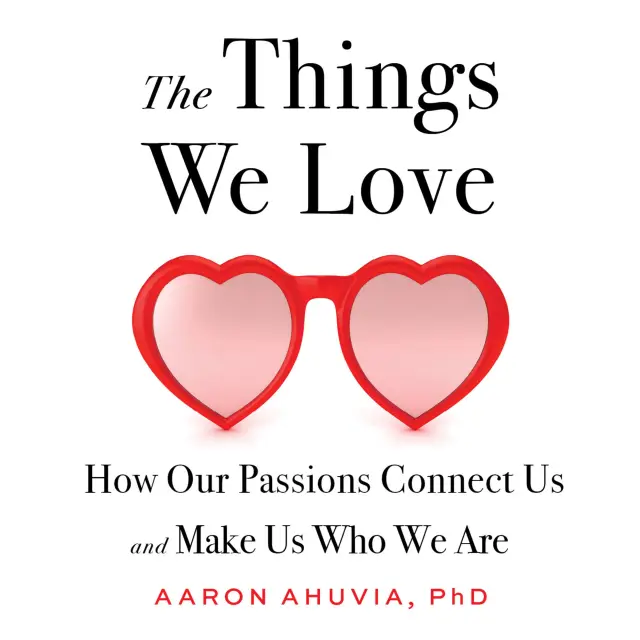
A fantastic book by Aaron Anuvia discusses the findings about how products can be designed to be loved by the consumer, it really tries to fill the gap between marketing, anthropology and various social sciences and one of the insights is what kind of products people of differing levels of wealth like to buy.

The most important insight is that at its lowest levels, the show-offs are not exactly rich at all. When people show off brand names and products with prominent logos, they are actually buying products targeted at the quasi-affluent. Maybe you came from a poor family, or lack the relevant paper qualifications but made a decent pile of cash later in life, one method of signalling would be to buy some kind of product that is really in your face and has a prominent logo, this is to signal that you have arrived. For women, there are many ways to signal new wealth, for men it tends to be luxury watches. I don't want to mention the actual brands but if you need to queue to get into the shop at Ngee Ann City, it may mean that you are at the lowest tier of affluence. 

The folks who are actually rich may not feel the need to do any signalling. Some might be born with a silver spoon so they are quite comfortable with their skin. Another way to look at old wealth is that they are actually not very rich income-wise because their wealth is locked into trust funds and structured to fight inflation over centuries. For these folks, the luxury goods they buy are sort of understated. The big loud logos disappear but certain design features make a Hermes Birkin look like a Birkin. For folks who tried to own a Birkin, do note that it's not designed to be sold but only offered to loyal customers who are probably not going to sell them off when they buy one. For these folks, you might look for very understated but expensive brands, but these days a humanities degree from a prestigious university screams old wealth because they can afford to study something that has little practical value in the modern working world which is a ridiculously huge flex. 

What is interesting about the book is that there is a tier of wealth above the understated high-cultural capital's old wealth. You can find this in shows like Bling Empire. Beyond the aesthetic of of wealth lies Haut Couture where tastes can be transgressive like the Gucci Tifosa bag I put up for this article. The truly wealthy and tasteful no longer have to conform to a particular taste but can redefine fashion in their own image. Not everyone can carry the Gucci Tifosa well, so it's actually cheaper than a Birkin, but it takes boldness and individuality to wear it.

Why is this insight useful for FIRE folks?

For folks advancing FIRE, you're going to feel deprived for quite a while. Perhaps a decade or so if you're like me. For many of us, even if we do live on dividends, our lifestyles cannot be one where we can see that we have arrived. As a psychological defensive mechanism, our first reaction when faced with these show-offs is to suspend our emotions and use our curiosity to look at the brand they are flashing at us. 

If it is very loud, you can just dismiss this as some kind of insecurity. Many of these high-wealth low-culture types were looked down upon growing up. 

I would pity them and praise them a little bit to make them feel good. ( More so if I get to bill them by the hour )

If you see someone who wears high-quality gear and is quite low-key, you might be dealing with old wealth. In this situation, they are not trying to inflict any psychic damage on you. I particularly like these guys because they feel more comfortable if you can demonstrate the same hobbies and passion as they do, you'll do ok by their book. Also, they can be very eccentric.

Right now, I definitely do not walk in circles who wear Haute Couture, I don't think they care to show off either. These are very rare encounters, so just be a good human being when dealing with them. Among folks with first-world problems, they will have bigger first-world problems.

If we understand that the loud show-offs are the lowest tier amongst the wealthy and feel pity for them, it can also help us cope with all that loud exposure from social media.  


Wednesday, June 21, 2023

When will we admit that Singapore Millenials are doing very well?


I've not been active because I'm super busy with my new product launch. The next round is where I will actually conduct one sample lesson for my ERM alumni on Saturday without a dry run just to see the kind of feedback I will get on the lesson. 

But one question weighs heavily on my mind since my last article. A very sharp reader pointed out that I can be wrong about Malaysian property not just because Malaysia straightens itself out - I can also be wrong when Singapore reverts to the mean. What are the conditions for Singapore to revert to the mean, other words become as unexceptional as our ASEAN neighbours?

This is something worth looking at. 

I'm going to digress before trying to answer this question. I attempted to do through some of Mr Loo's 1M65 videos to see what he's talking about, but without completing some of his very lengthy productions, I can only say that even if he's right about many Singaporeans being asset rich-cash poor, Malaysian property may not be the right answer. 

And I speak from experience. 

I lived in landed property almost all my life (I'm not proud of it), and my dad's Malaysian property paid my way through my first degree. Even though this was a very successful investment by Malaysian standards, the price and rentals were stagnant for the past 30 years and my dad should have extracted the capital and placed it in REITs / DBS instead. 

But don't ask me, ask the guys who got hammered by CLOB. 

Ask the folks who paid for Forest City which was backed by the Sultan of Johor.

JB is littered with the corpses of crypto-like investment ideas pitched at Singaporeans - Danga Bay, Best World Shopping Centre, etc...

I have great respect for the work of 1M65, but as he places that dollop of wonderful Nasi Lemak that he claims to be better than Selera Rasa in Adam Road which deeply affected me and made me hungry, but I invite him to predict the next election results of the six Malaysia states coming up next. 

Beyond political stability, top universities, and the usual things our Government likes to brag about, there are some features that can be quite unique to Singapore that if lost, could mean our destruction.

  • MAS's unique method of using the $NEER to control exchange rates has given us lower inflation compared to other OECD countries. This was the brainchild of Goh Keng Swee.
  • As pointed out by Leslie Yee in BT, Singapore is small but can produce more residential housing per unit of time because we don't have too much red tape to repurpose land from one use to another. We just invoke the laws on land acquisition. Places like NZ has so much land but actually lack decent housing.    
  • The Economist credits our success during the Pandemic because we are kinda utilitarian and amoral and only Miami was able to beat us in performance. In other words, fuck your feelings. This is the Singapore I love. 

Amazing, this blog threw up some answers to the question. Link:

 http://treeofprosperity.blogspot.com/2021/09/does-singapore-feel-cheap.html

Reversion to the mean can take place if Singapore feels expensive to foreigners and we end up in a current account deficit. There are two conditions for this to happen.

In this case, the whining Millenials are right. We are objectively expensive. But we've been on a current surplus so far, so I'm not duly concerned about reversion to the mean.

As you read the literature on various social sciences coming out from the States, Singaporean Millenials have all the advantages of a better education compared to those in the US, but none of the disadvantages like crippling study loans, or fentanyl abuse. Houses are not cheap in Singapore, but some Millenials are already sitting on property that has already been appreciated.

So why Millenials on social media cannot admit that they are doing fine?

  • The first reason is that the benefits almost all accrue to local degree holders, with private degree holders quite distant away.
  • The second reason is the envy arising from social media. You know you're not supposed to enjoy Naomi Neo's Instagram by gawking at her sports car or house. If you get envious of that, you're doing it wrong!

I'll tell you what I'm concerned about. 

PM-elect Lawrence Wong believes that the solution to our problems is to broadly flatten the incomes between the top and the bottom - to reduce inequality. Just remember that talented local grads can easily find jobs in places like HK and UK which is also rolling out the red carpet for foreigners. We need to do this without triggering a budget deficit and a flight of human capital. Inequality is bad in theory, but if solving it means $15 for a plate of char kway teow or $500 for someone to fix your pipes, we may have an insurrection on our hands. 

Then we will revert to the mean. 

Of course, at the end of the day, the devil is in the details. I shall leave it to the high CEP panjandrums to decide how to meet policy objectives.


Sunday, June 11, 2023

Some thoughts on whether it is wise to buy Malaysian property and retire in JB


For the past 4 days, I've been in JB to meet distant relatives who are on a business trip from China. Fortunately, a secondary school classmate was kind enough to bring me around JB for breakfast and share with me his latest property move which is to buy a piece of landed property unit at Eco Botanic Gardens.


Eco Botanic Gardens is primarily owned by Malaysians who work in Singapore and Singaporeans who want to live in Malaysia. The pricing is well above $1.5M MYR, so Singaporeans are legally entitled to own these properties. 

Of course, my classmate wants to promote his estate and suggests that I either rent/buy a unit in Malaysia there  The idea is that we can all retire in style, given that our conversations are not tainted by modern professional comparisons and tend to be more like banter between secondary school pals. On top of that, Eco Botanic Gardens looks posh with a fairly nice gentrified row of shophouses with fusion restaurants such as Marui.


My pal means well, but I am in the process of getting legal rights to all my mum's properties in JB with the eventual aim to sell them at a reasonable price. So logically, I'm doing the opposite of what my friends suggest. I'm doubling down on Singapore. I'm penning my thoughts here not to demonstrate my impeccable logic, which will have its share of supporters,  but to chronicle my thoughts on how I'm likely to be wrong. 

For some background. My property in Malaysia is currently stuck at a current yield of about 6.1% and rents have not increased for the past 30 years! Even worse, real estate agents actually believe that the rent I'm charging is relatively high for the area. I'm hesitant to sell because converting it to a portfolio of high-quality S-REITs may just give me a yield of about 5.3% but it will have the advantage of dispensing with currency risk. 

In my view there are just too many considerations to living a blissful life in Malaysia:

a) At the personal level you need to change yourself to adapt to a different environment.

First off, I'm a public transport guy from Singapore. I need to pick up a refresher to drive if I move to JB. Then I need to develop a rugged DIY kind of attitude to living in Malaysia and become some kind of handyman. These are great skills to develop for anyone, but it's not exactly what I want to build given that I'm more interested in AI, quantum computing and investing. 

Also, Singaporeans need an attitude adjustment as there are no Town Councils to complain to. 

b) We need to imagine the state of the property after 10 years to determine whether this is really the beautiful life we will be getting

The reason why Singapore is so good at what we do is that we are excellent at maintaining and sustaining things. Over the years, Singaporeans have been seduced by many real estate development projects, but often they result in becoming ghost towns like Forest City. Even if your property does ok over the years, a layer of algae will eventually grow around it. Entropy is a very powerful force in JB.

So we cannot just look at one development and see just how beautiful it is, we need to imagine what it will look like in 10 years. There is a real probability that your development will become a ghost town. I remember going to the sales office for Forest City and there were horse carriages to bring potential buyers around. I was even told that this development has the personal oversight of the Sultan. 

But look what Mahathir did to it?

Anything can happen.

c) You just need one mugging incident to change your mind about the place

If half your family is Malaysian like mine, then you will know that crime levels are not like in Singapore. There are of course terrible incidents and stories of crime and I was advised never to pump petrol or withdraw money at night in JB. But muggings are real - someone hit my late father-in-law on the head when he was doing morning exercise in Kulai.

In such cases, the solution in JB is always to wall up the estate and hire security. But in my head, the question is always who is going to keep you safe from security?

Security cannot come fully from just guards and cameras. It has to come from legal systems, procedures and swift execution of justice. Good luck with that.

d) What needs to happen for me to be wrong?

This point is more important because Singapore wants to see real change before we are happy to part our strong currency for Malaysian land. At this point in time, if you read financial planning journals from Malaysia, you will hardly be impressed with what you read. Right now a Singapore journalist (I  dunno what drugs he is on) is openly writing about comparing CPF Life being better than buying investment property. In Malaysia, they are debating whether to draw out their EPF for personal expenses. You can imagine how these two societies will evolve over time. 

As expectations are not high in Malaysia, I hope to see the RTS gets built as a baseline to consider that I might have misjudged the country. After that, the current government must survive its term in power. Beyond this one term, if the Anwar government can win an election without needing to form a coalition with UMNO, then I can consider my judgement to be incorrect, but this will only improve the probability of profiting from our investments.

What is the probability of this happening? This is something we can debate about and monitor. 

If they let Najib out of jail, this is a big negative and we gotta adjust the probability downwards, If Mahathir dies, then it's a great positive and we can adjust it in the opposite direction.

Whatever it is, I don't think it's within a Singaporean's power to come up with reasons for how things are going to work. We've been losing money on projects in JB since we've existed as a country. My relatives remember the days 1 SGD = 0.90 MYR. 

If anything, Malaysia needs to prove that it's an investable place. They need to respect the ownership of private property, ease up on currency controls, and stop penalising folks who just want to come to your country to spend money.

Finally, if you can FIRE in Singapore, it's the best scenario because you've succeeded in retiring in one of the most expensive places in the world. If anything, your assets and physical body are safe. Retiring in a place like JB makes more sense if you are somewhere in the twilight zone of retirement planning. 

Still, nothing beats coming in occasionally to JB to enjoy the power of the SGD. 

Tuesday, June 06, 2023

Bridging the mating gap between men and women


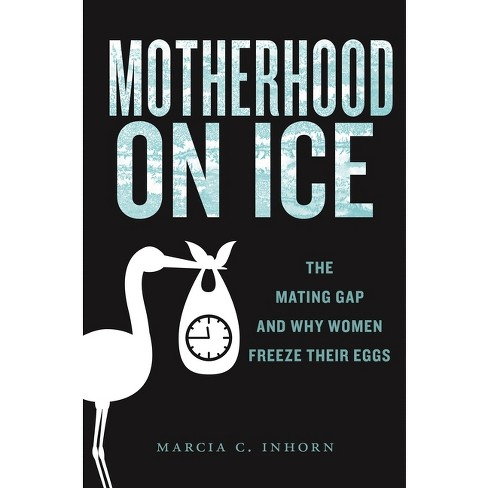
I would not ordinarily read Motherhood on Ice by Marcia Inhorn, as I have bigger fish to fry like picking up quantum programming or maybe signing up for a ChatGPT prompt engineering course but I've already written a number of articles on this blog on egg-freezing and the book came under strong recommendation from my sociologist buddy.

For a married guy who is not vested in technology, but actually has two ex-eggs running around the house, the book is too much information for a dude to process. Not only do I need to be introduced to egg-freezing technology, I have to read sob stories from very successful professional women, who lay much of their dating woes on men. Ultimately, egg freezing is not so much about single female professionals, but it is also about the fathers, ex-husbands and boyfriends who often have to pay for the procedure. However, I did come off a bit more positive about approving this technology broadly here, but it would not fulfil the wishes of many professional women in Singapore because the problem is that men have better things to do, and, thanks to dating apps, younger women to date. Egg freezing is, therefore, more akin to insurance, something that gives professional women some peace of mind. It will not arrest the decline of our fertility rate.

If egg freezing is going to be more like insurance, then we can expect the medical industry to sell it as a form of female empowerment or a passport to focus on a woman's career. This is while some branches of feminism are actually against egg freezing, and in the sample, almost no one froze their eggs for career reasons.

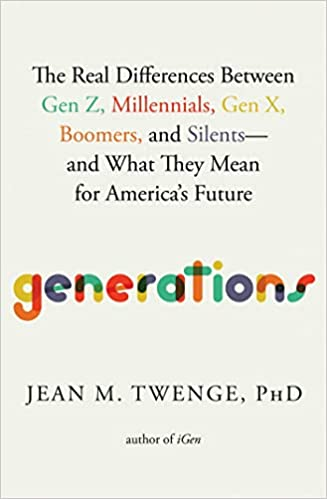
The big elephant in the room, according to anthropologists is the mating gap. The pool of eligible, educated and egalitarian men is very rare and, channelling the other book I read Generations, adults are taking a long time to get their shit together. 

This leaves two groups of people on the shelves - professional women and low-status men. 

So every society has an imperative to change the way humans mate and get professional women to marry and form families with blue-collar men. 

In this case, anthropologists are warming up to the idea of mix-collar marriages. Now we have Phds lamenting the idea that if RGS marries an ITE guy, she is labelled as "settling". 

This is something as a blogger I'm really proud of as I have been blogging about this issue for years.

Some kind of agency needs to be launched, in fact, a whole of government effort, should be launched to address this mating gap. My projection is that we have to admit men into more degree programs, failing which, we need to make viable better non-degree tradesmen paths for men. Maybe even cut NS down to 1.5 years and pay NS men's Army regular salaries. 

My money is on Singapore succeeding in this effort after a few GST rises.

I think the bigger challenge is getting white-collar women to accept blue-collar men as life partners.

The idea of a dating agency that caters to professional women and blue-collar men has been mooted by anthropologists, but when I broached the idea with friends, both men and women are disgusted by the idea as we are an Asian after all and female hypergamy / male hypogamy is still largely the norm. Even guys who, on the surface, fantasise about the great life as a househusband, they get upset when I say what if their daughters support their husbands financially. One reply from a guy is that if his daughter does this, it would mean his failure as a father. This sums up most men in Singapore, they actually want some degree of financial independence, but get angry when their daughters provide for it some another guy. 

I think this mixed-collar dating agency catering to professional women - working-class men is currently the best idea there is. It may take a generation for a mindset change to come about, but we need a catalyst to generate some positive stories about these marriages. It may take a few high-CEP scholars to succeed in coming up with a first attempt. 

How do we sell this to blue-collar men? Off the top of my head, I would sell it this way - they just need to show up for a buffet spread where some mysterious women might try to engage in conversation with them. This sounds so good, even professional men want to do this ( but they are not invited )

I leave it to fine brains who read this blog to brainstorm ideas on how to sell this to professional women. 

This is too hard for me, let me get back to my Quantum computing texts.


Tuesday, May 30, 2023

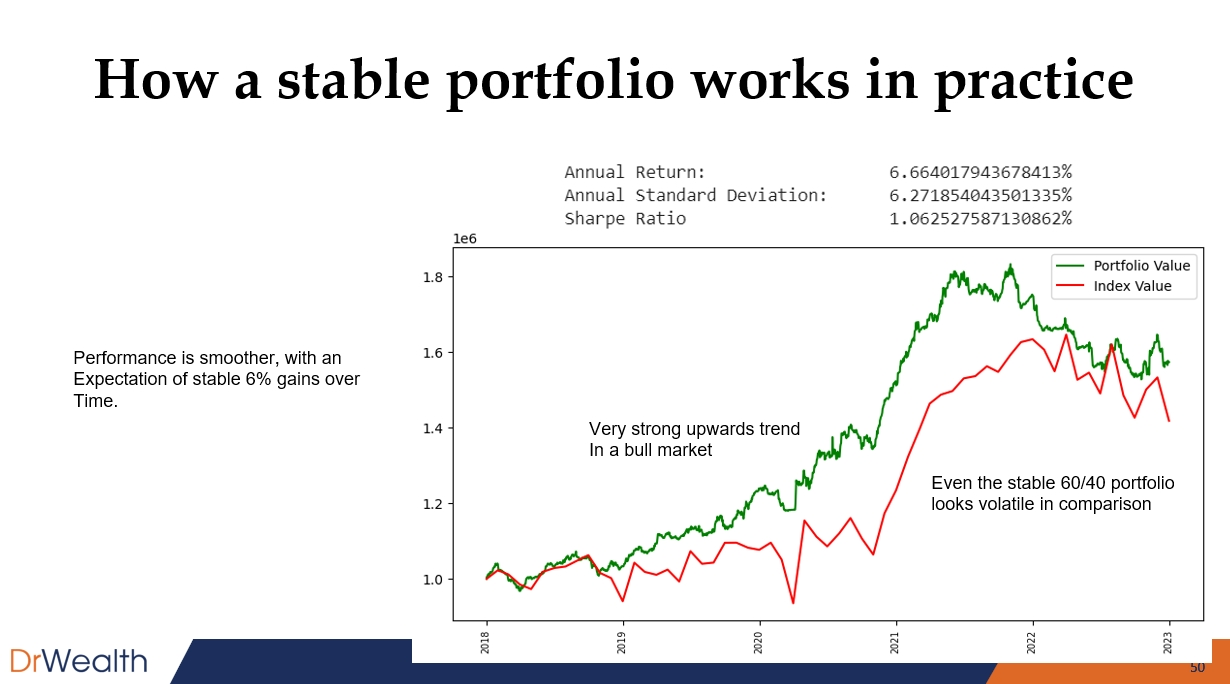
New Preview Launch : All-Weather Portfolio Masterclass

Conventional wisdom probably does not support the idea of launching a new course in such a bleak economic backdrop, but I owe it to myself to grow professionally and all that coding on Python needs to be channelled into something that benefits everyone. 


So tomorrow will be the inaugural preview for my new course entitled All-Weather Portfolio Masterclass.

This is a program where I show students how to run and operate their own robo-advisors and construct well-diversified ETF portfolios that will generally do well in all different market conditions. 


I will be sharing a little bit on :

  • My views on the macroeconomy.
  • How a great investing strategy is like a good marriage and why poor profitable strategies can turn beginners off.
  • A brief summary of four uncorrelated strategies that can be built using computer code and how you can have not just one, but four robo-advisors running on your system with no coding knowledge required.
  • How we intend to teach this program, pricing details and timings.
Like all my previews, this new preview is a free mini-course that will add value to your lives even if you don't sign up with me. We've been quite good at this freemium model for a number of years.

I guess the fun part is that I am still quite raw so my presentation will not be as polished as m ERM product. 

You can sign up by following this link :

Tuesday, May 23, 2023

Actually Gen X is more cursed than Millenials.


MissFITFI has just launched our latest collaboration on differences in Generations. You can listen by following the link here

A couple of days after doing the podcast, Jean Twenge wrote possibly the most comprehensive book on the differences between entitled Generations, and this has caused me to do a double take on the material I shared and in some cases, I cannot be more wrong. I hope that more objective readers will use this article as a guide to the podcast and if actually work in education or HR, this book is mandatory reading.

The first thing I'd like to point out is that there's an easy way to analyse all generations all at once. Generations are shaped first and foremost by technological changes that impact them. Secondly, every subsequent generation is becoming more individualistic and communitarian. Finally, adulthood for every generation is delayed further as adolescence gets stretched as it takes longer to train a person to be productive in the economy.

With this framework in mind, a few things I said in the podcast is wrong.

a) Actually Millenials are doing quite ok financially

As a highly educated cohort, Millenials actually earn well compared to Gen X by pure virtue of educational levels. The problem arises if you are an American millennial who is saddled with educational loans, for these folks their net worth is 11% lower than Gen X at the same age. The good news for Singaporean millennials is that they are not struggling to pay their educational loans, so I might venture to say that the gap in net worth may not be as bad as reported in the books. 

Gen X's biggest advantage here is that they get to buy homes when homes were well cheaper, but this cannot compare to the prices Boomers get. 

b) Millenials whine a lot because of social media 

If Millenials are doing better than Gen X or Boomers, then why are they such whiners? The answer is social media. As Millenials live in the age of Facebook and Instagram, they get hit by images of people having beautiful holidays and ridiculously picturesque lifestyles so it's harder to avoid envy. 

The fact that most folks don't share the harsh reality of life creates the impression that one's life can be better. I'm still waiting for Naomi Neo to share her household bills with us so that we will know what's required to live that kind of life.

Being bombarded by images of success (many inauthentic) create a generation with weaker mental health. 

c) Millenials do mature later and take a longer time to reach life milestones

We will definitely notice that Millenials become adults much later than Gen X. This is because it takes a longer time to train them to contribute to the economy. Take, for instance, reaching the CPF FRS. I was able to hit this target before I was 30 because the target was about $80k. Then compound interest took care of everything else. I don't think it's even remotely fair to expect a millennial to do the same.

Millennials will marry later and retire later than Gen X. I suspect over time, the sheer educational training MIllenials get will have them generate more wealth than earlier generations. 

d) If Millenials are cursed, it is because they are more individualistic than Gen X

We should expect Millenials to be more individualistic than Gen X. We should also expect the gender-fluid Gen Z to be even more so.

While it means being any gender or ay belief system, it also means the ultimate decay of religiosity and with it, avenues for building social relationships. I predict Singaporeans becoming less religious and community centres in their current form would become a waste of tax payer's money.

More millennials will die single, more will be lonely, and more corpses found next to gaming consoles.

Still, I can't argue that Millenials are cursed because Gen Z will be even worse!

All this being said, there are some harsh realities that Millenials face that Gen X does not. For one thing, most of the economic benefits for Millenials accrue to degree holders, specifically those with local degrees. Private degree holders face quite a big gap with their local degree counterparts. For Gen X, degree holders are a smaller part of the population so even if such a gap exists, it will grate on us this much.

Furthermore, as a younger generation, they could not participate in Singapore's miraculous growth into a wealthy city-state. Older generations will always seem like they are sitting pretty on the best real estate.

Still, as Gen X, we should also take a good look at our own generation. We are the CECA generation. One prominent IT professor called the technical professionals the Garbage in Garbage Out generation. We weathered the dot-com crash, the great financial crisis, and the pandemic. As our numbers are quite small compared to Boomers and Gen Y ( in the US ), we will find that businesses, pop culture and political groups will tend to ignore Gen X as we don't make the numbers.