Tuesday, February 27, 2018

The Art of the Good Life #12 : The Things that you buy leave no trace

When an experiment is conducted where researchers ask participants about how much a recently bought object brings them happiness, it was found that an expensive high-end car brings more personal satisfaction than an average vehicle. However, when the same participants were asked about how they experienced their last trip, the price of the vehicle did not affect their experience.

This chapter is really about two concepts that are commonly in the local financial blogosphere.

The first concept is that when it comes to purchases, experiences always trump things. I have tried to explore various counterfactuals but I can not come up with anything that contradicts this. My only conclusion is that some experiences lose their value when they lose their novelty. Your fourth Hokkaido trip may  be much more boring than your first. Of course, you can simply buy more and more exotic experiences. 

The second concept is that of the hedonic treadmill. After living in a landed property, there is a tendency to get jaded so it no longer brings you pleasure. In fact, losing your landed property can bring you lots of misery.

I am currently grappling the consequences of accepting these ideas as fundamental truths. They seem so powerful and almost spiritual in it's universality.

Suppose if we can retreat into a life of computer gaming and binge watching of Netflix where Internet media repeatedly comes up with novel ways of entertaining us, isn't that a life of complete and utter satisfaction ? Then why do people even bother setting up families and having children when they can defeat enemies in Warcraft, run mega corporations in Eve or explore different universes by binge watching series ?

Social science is catching on to this new reality.

The useless class in the US are lowly-educated jobless males who no longer participate in the labour markets. They started showing up in labor statistics since the Great Recession and labour participation rates never recovered. Shocklingly, social scientists are detecting high levels of life satisfaction amongst these guys. I've always attributed this to better computer games, especially RPGs, which can credible make up for the lack of achievement in anyone's lives. I would forget that moment as a 9 year old that in Dungeons and Dragon, you can have a Strength of 18 and can level and get better as you murder more monsters.

We can laugh at hikkikomori of Japan and label them as losers but the latest Economist article last week is gushing about how satisfied and happy these guys are living with their parents and having no responsibilities of their own.

I think Asia is undergoing some sort of Renaissance that sees the otaku and hikkikomori transform into a phenomenon that is  more acceptable in society. The Japanese have this new term to describe these men : The Satori Sendai or the Enlightened Generation. China has also followed suit with gentler labels like Buddhist Youth.

Right now, I don't have a grand unified theory that synthesises all these concepts but a combination of technological disruption, augmented reality and virtual worlds is normalizing the destruction of ambition on our men. I leave you to decide whether this is a good thing.

It gets more ludicrous once you include the financial perspective.  A single man may only need $150k-$200k to generate $1,000 a month to live a hikkikomori life of living with parents and playing CRPGs all day. Parents can even be given a small allowance.

So perhaps it's that little bit of financial savvy can turn a hikkikomori to a satori sendai

This way, Capitalism is the new Buddhism of the masses.


Sunday, February 25, 2018

Some quantitative characteristics of Cryptocurrency

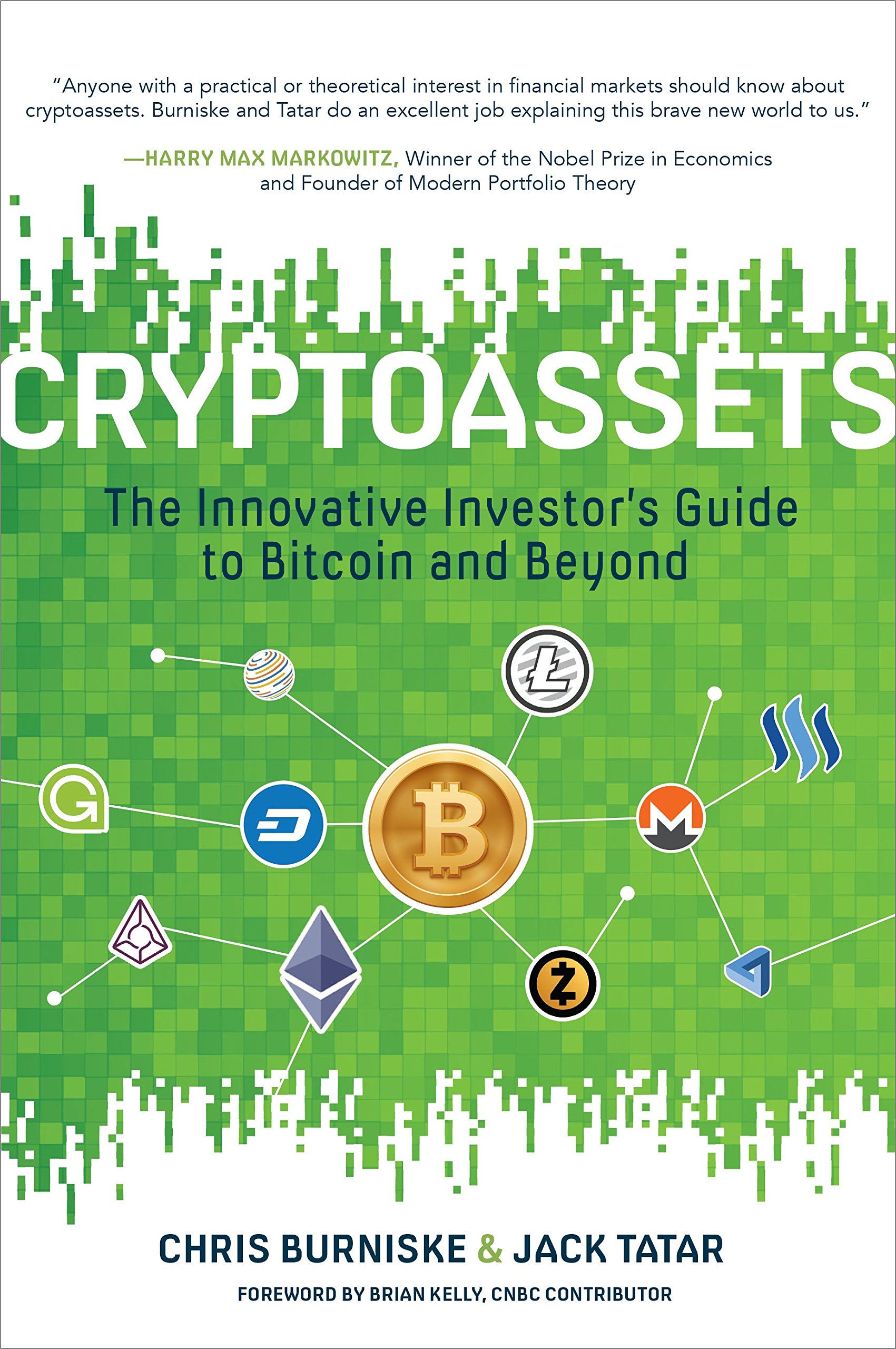
The source of this article is the Cryptassets book by Burniske and Tatar. I also draw a lot of quantitative isights from Cryptocurrency : A New Investment Opportunity by David Lee, Li Guo and Yu Wang that is published on Vol 20 Number 3 of the Journal of Alternative Investments, this article from David Lee is possibly the most objective source of information for serious crypto investors that I can think of so far.

Here are some of insights :

a) A cryptocurrency index exists in the form of the CRIX index.

The bulk of academic research is done on the CRIX index that SMU played a major role in its creation. The index is generally based on the market capitalisation and liquidity of the underlying coin and is also fairly dynamic with weights being revised on a quarterly basis.

Sadly, it would be a while before an ETF based on the CRIX index is launched in the markets. But I can imagine if that every happens, demand for such a product would be huge. For now, you may have to settle with buying the top 20 coins in market capitalization to approximate the performance of the CRIX index.

b) Superb market performance of crypto-assets is not really meaningful moving forward.

The performance of crypto-assets accounting for 2017 is ridiculously good.  The paper reports  possible annualised return with a Sharpe ratio of 11.64. Warren Buffet over his career can test around 0.76 and my own backtest REIT portfolios fare much worse.

Too much of current performance of crypto is based on mania and investor sentiment. This performance is not likely to be sustainable moving forward. In fact, my guess is  that 2018 is expected to be a bad year as a historical bull run on bitcoins has been followed by a year of tragedy for crypto investors.

c) If you hold too much crypto-currency, you will never get a good night's sleep.

Cryptocurrencies exhibit negative skewness and a high kurtosis. This means that a negative swing against an investor is drastic and happens with a much greater frequency than the normal distribution.

Bitcoin itself has a kurtosis of 8 which means that it has fat tails. The more obscure coins can have a kurtosis over 20. The normal distribution has a kurtosis value of 3.

d) Cryptoassets are uncorrelated with the markets.

Generally speaking the correlation of cryptoassets against traditional instruments is low so they are fairly effective as a portfolio diversifier. Correlation of CRIX with S&P500 is 0036, treasury notes is -0.02. Highest correlation is with Gold at 0.036.

Do note that these correlation numbers break down when the markets turn south.

e) Conclusion : Limit Cryptoassets to 1% of your total net worth. It can replace your Gold holdings.

I have chosen to follow the Cryptoassets book rather than the David Lee article and err on the conservative side to suggest an asset allocation for cryptoassets. For folks who are willing to take more risk, it may be useful to read the academic paper that has a different prescription.

Investments into cryptoassets make a lot of sense if you limit it to 1% of your entire portfolio, this 1%  should also replace your Gold holdings.

Right now, I have way less than 1% of my assets devoted to crypto-assets. This may change when I start getting a full salary in the middle of year.


Saturday, February 24, 2018

Six compelling reasons for cryptocurrency.

I've been delaying this article during the ramp up of cryptocurrencies but since the prices have sort of corrected and calmed down, it is time to look at cryptocurrencies without all that excitement from the bull market..

Fortunately, David Lee Kuo Chuen, the lecturer who taught me fund management more than a decade ago, is the invited editor for the latest Journal of Alternative Investments and articles in Volume 20 Number 3 seems to be a very objective look at this new asset class.

The next few articles on this blog will be cryptocurrency related but, hopefully, hype free.

Today we will focus on six compelling reasons why cryptocurrencies should not casually dismissed as yet another bubble like Tulipmania. Cryptocurrencies is a significant advance for humanity, much like that moment we invented the idea of limited liability in companies.

Here are the six reasons for cryptocurrency :

a) Non-correlation with traditional asset classes

The first reason is that crypto-currencies are not correlated with the equity markets in general. While this is generally true, remember that during the massive market correction, cryptocurrencies had a mini-crash of it's own. One common theme that keeps repeating itself is that in a major market crash, every asset becomes closely correlated to each other.

b) Transparency

Blockchains have a unique ability to centralise trust. This provides transparency for philanthropy and other funds. This is a very understated advantage.

c) ICOs address the problems faced by  startups

As much as I refuse to touch ICOs ( It seems that all you need is a convincing White paper ), blockchain technology finally takes the power away from a VC and puts it in the hands of an entrepreneur. This is a new form of capitalism that can make or break our personal finances. Those who can tell the good ICOs from the scams will be able to enrich themselves very quickly.

d) Decentralised exchanges resolve the issue of illiquidity

The problem of illiquidity of early startup investing instantly disappears because decentralised exchanges gives you a constant exit after you put money in an ICO. Case in point, getting an exotic alt-coin like Doge Coin is way easier than buying one lot of Global Testing on SGX.

e) Cryptocurrency as a new asset class

I think David Lee's hypothesis is that Cryptocurrency is a completely new asset class. It makes a lot of sense because one possible definition of a  commodity is a valuable input to an industrial or agricultural process. Cryptocurrencies are not inputs to any process. More interestingly lawyers are;nt even clear whether when you deposit some crypto into an exchange, you are considered a debtor or someone with full property rights. So cryptocurrency is truly a unique asset class on its own.

f) Fractional ownership

Because you can have such a small component of a bitcoin, imagine the power of fractional ownership of assets and what difference this can make to really poor economies.

More hardcore details to come over the weekend.


Wednesday, February 21, 2018

Budget 2018 discussions mirrors our journey towards Financial Independence


On the whole, we've had a fantastic 2017, which was why Budget 2018 was not a punitive one even though it was a mid-term budget.

The aftermath of the Budget is interesting because discussions about NIR returns mirror the internal discussions we have on our journey to financial independence.

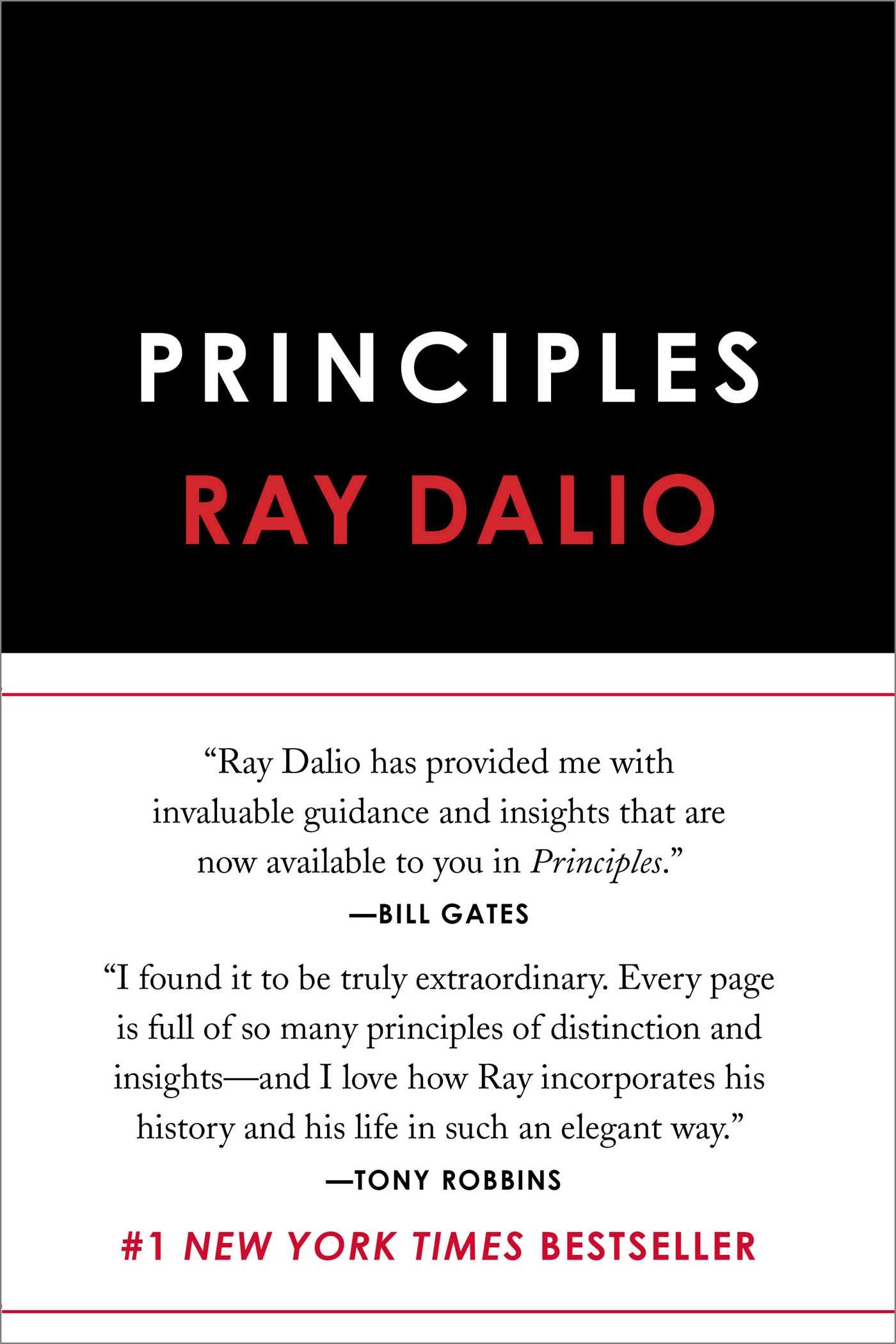
Ray Dalio in his book Principles has a very elegant way of describing what happens when someone becomes financially independent.

There are two approaches to living life post financial independence :

a) A certain portion of FI folks would want to Savor Life.
b) And yet a substantial number of financially independent folks want to make a Bigger Impact in this World. 

Personally, I started out really wanting to savor life after my failed stint in the public sector, but after tasting Law School and seeing how a little bit of knowledge can have such a profound impact in the world, I am beginning to see the wisdom of trying for a bigger impact on this world.

Because there are two ways of seeing the ultimate outcome of one's financial independence, it is not surprising to see Singaporeans divided on the issue of the 50% cap to the NIR.

One school of thought represented by academics like Donald Low is that if we can increase the cap to 60%, we would never need for a 2% GST increase in 2021. This is definitely an attractive option for many citizens. Why not spend more for ourselves and retain less for future generations ? I am confident that Donald Low's numbers are well-researched. There's no reason to doubt him here.

But my school of thought is the direct opposite of Donald Low. Why not lower the cap to 40% and raise the GST to 10% immediately? I always felt that I would like my children to have a more comfortable life although I would like them to choose to make a bigger impact on the world than merely savoring it more. My proposal will allow the government bigger surpluses in the future so that compound interest would allow us to do much more in the future. This change may even mean more assistance programmes for the disadvantaged.

So 50% is an arbitrary number chosen by the government with the support of the electorate.

Both me and Donald Low would have to accept that there are going to be different kinds of Singaporeans. Some believe that they deserve instant gratification and demand to use up more of the reserves immediately. Others like myself think that some struggle is necessary for the nation make an impact to the world at large and would always try to emulate our ancestors by taking less than future generations.

I try to justify myself by saying that my personal life is congruent with my political inclinations and views on taxation. I started saving 50% of my earned income rather early in life and spent close to a decade saving 100% of my take home pay living a simple life on my dividends. My first act upon retiring was to go back to retrain myself.

( There are certainly financially independent folks who have inherited money and put 100% into savoring life. That, to me, is the reason why we no longer have the Roman Empire. )

Of course, if you agree with me, you would also have to be aware that there are consequences to adopting our set of conservative beliefs.

One consequence is that I am willing to accept more inequality in society than Donald Low.


Monday, February 19, 2018

The Art of the Good Life #11 : The Focusing Illusion

Suppose you had a really bad day in the office. Meetings were extremely long and dwelled on unimportant matters. Your boss is also giving grief once again over small matters like the formatting of your powerpoint presentation.

After a tough day at work, you managed to crawl out of the office to attend a financial talk and the guru then paints you a wonderful picture about financial independence.

The guru, a master of failure pornography, first tells you a story of his life, how he never did well in school, how he was a dropout from the education system, and constantly underestimated throughout his entire working life. He then talks about how successful he is today, shows you nice pictures of money being credited in his bank account whether through means via MLM, internet marketing,property speculation or forex trading. He then goes for the kill... He talks about how his financial independence allowed him to give the middle finger to his boss and finally leave the rat-race.

You are inspired by the inspiring talk. The guru is a school drop-out. You are  professional with a decent degree. You start to ask yourself,  how can he be the guru and you the low-wage corporate slave? The guru then offers you a solution. With a low fee of several thousands of dollars, you can get 1-1 mentorship and can get out of the rat race.

Mai Tu Liao ! You rush in to make payment...

I liked to see myself as a finance speaker who takes the high road.

The last thing I want to do is to hijack your amygdala and paint you a wonderful picture of what to look forward to in your journey towards financial independence. Perhaps I am irrational, my gang at BIGScribe wants to serve a calm and rational crowd which is why we put such a huge premium in research and are highly evidence-driven when we make an assertion about what investments work. While we may not be as persuasive as that finance guru I spoke about,  I think deep inside we want to be seen as being intellectually superior and have a system that can be  replicated by a smart, well-informed, and educated audience.

Naturally, our business makes less money... for now.

What makes these gurus so powerful is the rampant abuse of the focusing illusion.

If I bring your focus on how inane your last meeting is, or what a nit-picker your boss is in your last encounter, I can probably make you discount the value of having a good corporate career. It is not difficult to trick you into focusing on what's the shittiest thing about your working life. For government servants, I can possibly hurt you quite badly if I talk about procurement and GeBiz. For MNC workers, I just need to talk about late night conference calls and how NA and EMEA regions just can't fucking agree and advance the meeting agenda so Asia can get some sleep.

But work is more than just conference calls and procurement paperwork. Sometimes, you get a connection with a co-worker gain access to workplace gossip. Some other time, your company takes you out for some Lou Hei ( which I have missed for the past 4 years )! You also meet like-minded people from the same economic strata at work so it's a great source of friends.

When you look at the bad and the good in totality, having a career is not as bad as when you are just focused on the negative parts of the work commute and administration.

After leaving the workplace four years ago, I definitely achieved a high degree of personal satisfaction, I no longer have senseless paperwork to do and feel unmotivated when a bureaucrat forces me back to the drawing block over a small technicality in my paperwork.

But in essence, I'm just replacing some bad experiences with other bad experiences when I left the workforce for Law school.

Some administrative work in law school can be just as bad as procurement work in the public sector. I have spent time trying to trim down the text of fellow classmates to get our research paper within word count. We still do this for Court of Appeal paperwork that is limited in number of pages. One particular fight I had with a fellow student over which discount rate to employ to price intellectual property was more violent than any work conflict I ever had in my entire life ! Don't even get me started on arguments over the Law.

I guess the most important lesson in this chapter of the book is to review your life in totality and not to let some guru hijack you emotionally so you end up helping him attain his financial independence.


Friday, February 16, 2018

Personal Update - Happy Chinese New Year of the Dogg !


I had an inkling that the Year of the Earth Dog is going to be a fairly good year for me. Based on the stem and branch Chinese horoscope system. Earth has always been an element that I am deficient in. And a Feng Shui master hired by my boss confirms that I will have a great 2018.

Of course, 2018 is a culmination of years of hard work as I try to enter into a completely new industry. Here's a quick update :

a) Legal Training Contract

I have spent 2 months on my training contract working on a few financially complex divorce cases and some smaller corporate law disputes. I'm still grappling with the lifestyle of a litigator and cannot really judge whether I am suited for this lifestyle. My largest struggle is with the amount of attention to detail required to do the job and the little autonomy I have if I decide to pursue this as a lifelong career. The intellectual challenge and strategic planning component of my work is fun but remains too small a component of my day.  Most of my life is dotting every "i" and crossing every "t" - something a guy is not really proficient at doing.

One of concerns is that it may take a decade so as not to suck as a litigator, and as a mid-career hire I might not have that luxury of time. Kudos to the 20-something year olds who qualify to do this kind of work, it's a craft that they have decades to hone, and something people will pay top dollar to.

b) Financial markets are shaping up ok and I got a "performance" bonus for my work.

As it has been a fantastic year for the financial markets, I was able to expand my father's portfolio by quite a decent amount by strategically shifting into Tech over the past 2 years. Now I'm shifting gears and moving the portfolio into counters that benefit from higher interest rates. As the portfolio is sufficiently large, there is no longer any sense of urgency to put the money into higher yielding counters anymore so I can be more thematic with my investment approach.

I also felt quite good to get a "performance bonus" for my work on the family portfolio which would be farmed into my personal margin account. With any luck, I would be able to shift back into growing my main portfolio once I re-establish an earned income which I have missed for the past 4 years.

Perhaps we're due for a major recession, and it's best be employed to farm 100% of my salary into the markets when that happens !

c) Fresh new initiatives with BIGSCribe.

I am really excited to talk about our latest initiative with BIGScribe.

In the past, BIGScribe has always been paid seminars with bloggers talking about whichever topic is hot on the minds of the readers and fans. This year, we managed to get an opportunity with an major education institution to establish our first flagship product - a regular workshop that focuses on Financial Independence. This can potentially plug our biggest weakness as a company - we need a regular source of business that people will be willing to pay us for.

Right now, we're not even done with fleshing the outline of our work but I am already picking up a lot of new stuff that I was previously unaware of. As far as I am concerned, designing the curriculum and exercises would have honed my money making skills with company revenues as an added bonus.

I expect this program to be the most erudite and well-researched product in personal finance in Singapore. We remain unbiased and focused on helping our clients achieve financial independence at a much younger age than our statutory retirement age. And this will be conducted by folks who have actually attained financial independence themselves.

The Year of the Dog is where good things must happen for me. it is time to harvest from all the hard back-breaking work I've been putting on the table.

Wang wang !


Wednesday, February 14, 2018

Happy Valentine's Day !

I try to come up with something every Valentine's Day but this year I have said everything I wanted to say so I was about to skip it until I read something really interesting about marriage and divorce in Daniel Pink's When.

So here's something for you to think about this Valentine's Day.

a) It's not a good idea to get married if you are too young or two old.

If you marry at 25 years old, you are 11% less likely to divorce than if you were to get married at 24. Divorce rates drop as people marry at an older age until age 32. After which the rate of divorce actually goes up by 5% every year.

Once you are single for too long, it's hard to let go of that kind of freedom.

b) The more education you have, the better your marriage.

Marriage satisfaction is a lot higher if you complete your education prior to getting married. At comparable age, ethnic group and income, a couple that completes school tends to stay together.

c) Do your due diligence during the dating phase.

Couples who dated for at least a year have a 20% lower rate of divorce. Couples that dated for longer than three years are even less likely to split up. This makes dating a serious investment of a guy or a girl's time. Sort of makes all those discussion about why it's so goddamn rude to pay for a date kind of trivial once you see the big picture. Guys have a few years to demonstrate their capability as husband material.

Of course, no discussion of marriage would be entertaining without some interesting analytical data on divorce. Apparently divorce rates peak on March and August. The hypothesis is that some couples try to endure a failing marriage throughout the holiday season and March is around the time people lose patience with each other. August is likely because it is the end of the school year in America.

How does it all fit into your plans for financial independence ?

Well, an alpha male graduate at age 25 who aspires towards financial independence has about 4 years of uninterrupted work where he can work overtime and slave for his first $100,000. Thereafter, he can start dating at around age 29 for three years before getting married at 32.

This is a fairly compressed schedule and you may want to consider some of my more controversial ideas of leveraging a low beta high yield portfolio to speed things up a little.

Still, I don't think there's a need to go Dutch on a first date. Just go to a hawker centre and then be gentlemanly enough to offer to foot the bill.

Your financial independence will not skip a beat.


Tuesday, February 13, 2018

The Art of the Good Life #10 : The Five Second No.

Human beings have evolved to cooperate with each other which is why our dominant rule of thumb is the rule of tit for tat.

We are wired to cooperate and help a fellow human being unless that other human being refuses to cooperate with us. In such a case, we retaliate. Tit for tat is a relatively good strategy and can be said to be optimal in some strategy games.

But there is dark side to employing this strategy. We have developed a habit of saying "yes" to a request without really assessing the opportunity cost of agreeing to do something for someone else so much so that some people can spend their entire lives just trying to please other people.

So Charlie Munger of the Berkshire Hathaway fame suggests giving the "five-second no". He would think about a random request for five seconds and then just say no. Some people might be disappointed at rejection but Charlie found that it seldom hurt him over the longer term. Instead, people knew where he stood when it comes to the use of his time.

The book does not consider the middle ground which was amply explored by Mark Manson in The Subtle Art of Not Giving a Fuck.

As a trainee in a law firm, the value of my time is negligible. As I don't have a lot of social capital in this new alien industry, I can't really say no to a lot of things. In fact, I have to say yes and then do my best to meet whatever requests that come my way. If a trainee eventually rises to the position of a partner, his time may be worth thousands of dollars per hour. His opportunity cost is so high that he would have to say no to many things unless the other person agrees to be billed for his time. ( In fact, he might even have to say not to his own family )

Whether we can say yes or no largely depends on how much we need the cooperation and support of the folks around us.

If we exist in an environment where there is a lot of interdependence, then we should always say yes in the hopes that others will help us when we find ourselves in need. In an environment where we experience a lot of independence ( much like financial independence ), it is much easier to just pause for 5 seconds and then say...

...fuck no.


Sunday, February 11, 2018

Ready for Budget 2018 ?

The good thing about not being chosen to be one of the beautiful people to promote Budget 2018 is that I am free to write whatever I feel like writing on Budget 2018.

Saltiness aside, here are two things to look forward to in 2018.

a) GST increase

My personal guess is that the GST increase will be gradual but extensive. So perhaps we may see a 1% increase every 1-2 years until it reaches 10%. This will immediately have a negative impact on the purchasing power of the bottom half of income earners in Singapore.

What I am doing is that I have started rushing to subscribe to the magazines I read. I bought a 2 year subscription to the Economist last week and might take some steps to cut down on my telco expenses.

b) More Immigration

We don't really know when the floodgates will be open again but I expect the consultation with the citizens to be just lip service. We are aging rapidly and the government WILL DEFINITELY sacrifice political capital to bring in more foreigners.

Once foreign technologists and engineers start gushing in to take up roles in our Silicon Valley, expect salaries of folks in IT and Tech to be held back once again for a decade or so. The biggest losers are Polytechnic and ITE graduates who are failing to clinch permanent jobs even when foreign workers are being curbed. Worse, during the flood of foreign workers prior to the 2011 elections, Polytechnic graduates are hardly getting any increments while University graduates just zoomed ahead. This can only make our education system more competitive and stressful. 

Still, there is reason to be less apprehensive of immigrants this time round. Our infrastructure is more or less ready for more people on this island. Landlords and investors have reason to rejoice as there will be more demand for leases as the foreigners reinvigorate the economy. Many Singaporeans with two homes can look forward to selling both to an immigrant family and settling down in Australia instead.

I expect the legal sector to benefit from immigration as well. Our numbers remained heavily under control and a higher population will always lead to more disputes and greater demand for legal advice.

c) Wealth Taxation

As we have started talking about immigration, I think wealth taxation will not be high up on the government's agenda. We're still trying to build our REIT market and startup ecosystem. This means rolling out the red carpet to International wealth.

So long as immigration can return to Singapore, the government can finally end those silly PIC credits for SMEs which opens up opportunities for cheating. This can free up more money for the aging population.

Whatever it is, I expect 2018 to be a better year for the Rentier-Supermanager. More rents, more income for those with professional skills and financial assets that command a higher value.


Saturday, February 10, 2018

AAR : Profiting from Macroeconomic Trend Shifts

We held a seminar on Macroeconomic Trend Shifts last Thursday night. I will leave it to the other bloggers Xeo Lye and Elvin Liang to talk about their respective sections. As for me, I will just provide a short review of my segment.

My official role for the day is MC. This is an unpaid role I volunteered for because I felt that I can develop a new kind of competency and contribute to BIGScribe. I also wanted to attend the other talks for free.  Also, the directors have, in the past, commented that I'm a very "Kong Hee" like on stage, so I really want to hone this ability before I have to present a client's case in Court.

Normally an MC would just introduce the other speakers, wish the audience farewell, and consider his job done. I injected a slight twist to my job role.

To introduce Xeo's speech, I first gave an overview on Macro investing and told the audience that it involved different asset classes. Then I focused the audience on the dramatic events of the past week and tried to explain why there was market downturn. This gave the audience something to think about before Xeo Lye's segment.

Because I had access to Elvin's slide, I knew that the audience may be inundated  by  the sheer amount of information on how to interpret various economic events. So I built a "cheat sheet" on the various ETFs on the SGX that investors can buy prior to Elvin's talk.

How I could have done better ?

I think I should have added two slides before the Q&A section and gave just one example on how to invest based on a leading indicator that Elvin mentioned in his talk.

On hindsight, I should spoken about the rise in the PMI and how a portfolio of dividend stocks in manufacturing can be employed to not just produce passive income, but ride on the growth trend at the same time.

Nevertheless, due to the lack of time, I might not have been able to pull that stunt without eating into Q&A further.

Well, I hope to get more MC gigs in the future !

Monday, February 05, 2018

The Art of the Good Life #9 : The Authenticity Trap


Suppose you and a Japanese food connoisseur friend go to new restaurant and order a bowl of Ramen. When the Ramen arrives, your friend is aghast !

There are fishballs in his ramen !

He says that the ramen is not authentic because fishballs are not part of Japanese cuisine. In fact, your friend declares that bowl of ramen as Chinese food and unworthy of his meticulously curated Japanese food tasting tastebuds. A few days later, you check out the Wikipedia entry on Japanese Ramen and you find out that Japanese noodles originate from China.

So is the fishball-laden ramen authentic ? Or are all Japanese Ramen dishes a shallow imitation of Chinese noodles ?

Take another example, in your Tinder profile, you declare that you would like your significant other to be an authentic guy. Closer to Valentine's Day, you manage to get a hot date with your profile. The guy, during the date, tells you that the reason he wants to meet you is because he thinks your profile picture is worth masturbating to.

You get angry and confront that creep !

But he says that he's just being authentic by revealing his real thoughts regarding why he wants a date with you. He thought you would find his authenticity refreshing because that's what you want in a guy !

In both cases, Authenticity is a trap and definitely an overrated thing to aspire to.

Instead the book suggests channeling President Eisenhower and developing a second persona as an alternative to becoming more authentic.

When you wear the mask of a second persona, you make a point to keep all promises that you make. You also develop a set of principles that you apply consistently everyday in all your professional engagements so that the folks you encounter always know where you stand on certain issues.

This idea of a second persona is a great idea.

To navigate the complexities of modern life, we take on many roles. There should be a persona for every role that we play.

It sure beats trying to be yourself and getting rejected over and over again because of that.


Saturday, February 03, 2018

Brutal truths about non-elite JC education.

First of all, my heart goes out to the students and alumni of the JCs which got merged. Years of history were flushed down the drain when the authorities decided to make it happen. What made me particularly furious is that non-elite JC students were made to memorise answers from top JC students because educators do not have the confidence that they can come up with arguments and ideas of their own. This was unheard of during my time.

The unPC reason for this merger is that the JCs were not elite enough. As much as we hate to hear this, this is a good answer.

JCs were merged because they were not elite enough. End of Story.

Here are some of my other thoughts on this matter :

a) Instead of blaming Eunoia JC, you should blame the Polytechnics instead

Certain quarters of the Web had their ire targeted at Eunoia JC and asked why Eunoia was not terminated instead. Let's get real - Eunoia is an elite JC with a specific targeted audience of IP students. It is an elite JC, why should it be shut down ?

I believe that the merger of JCs largely occurred because the recent policy is to include Polytechnic students in local universities in numbers that is lot more generous than in the past. This creates the illusion of inclusivity in our society. As such, the elite O level cohort, that in the past has almost exclusively gone into JCs,  has redistributed themselves in a 1:4 ratio across Polytechnics:JCs, this dampens the quality of intake of a non-elite JC if the total JC intake maintains its current size.

b) You need to understand the concept of the Golden Road in Singapore education

I came up with the metaphor of the Golden Road to see if things can be explained in a better way. The Golden Road is part of the education system that puts a person into a local university from primary school.

The Golden Road during my time was simply Primary School, Secondary School, JC and then University. These days the road has many splits and forks and for some really elite folks, it can now look like : Primary School, IP Program, University. The government clearly wants to build another Golden Road based on Primary School, Secondary School, Polytechnic and University.

Staying on the Golden road is crucial because it virtually guarantees a middle class existence. For most folks who succeed, it means $3,600 starting pay and a much easier time finding a spouse.

But the Golden Road has limitations. The width of the road must be kept small so that the middle class will continue to be prosperous. The government currently wants to widen the Golden Road to cover 40% of the primary school intake but widening it too much will result in an overeducated but underemployed population much like that of Japan and Europe.

So there are physical limits to the Golden Road. Personally, I doubt the Golden road can accommodate 40% of the population, I speculate that the final policy effect is that SUTD, SUSS and SIT will become second tier degree programs that will have incomes about 10% below the other universities. Let's see whether I am right in this regard.

c) The Golden Road is a Road of immense angst and unhappiness

Given the pressure to stay on the Golden Road, the pressure will be immense. On the Golden Road, emphasis will never be on education and learning.

The emphasis is on scoring and passing exams of increasing difficulty. Learning occurs as an incidental effect because of the emphasis on scoring well for exams. Teachers will be benchmarked primarily on scoring of their students. The Golden Road emphases on signalling and weighing students against one another, so don't expect to learn skills that are immediately practical in the real world.

And there will be cases of depression and suicide.

Ultimately, the brutal truth for non-elite JC students is this :

The Golden Road is brutal and inhumane. You can step off the Golden Road and attend a Polytechnic where even the top students there actually want a harder curriculum, but you obviously chose this road because you want a guaranteed middle class existence.

d) The Golden Road is a public-private sector collaboration

Why do I have so much conviction on this idea of the Golden Road ?

Professional Service Firms are starting to realise that the best path to profitably comes not from skills but from insecurity of their human capital, this pushes people to work 100 hour weeks. Year after year, thousands of students graduate into law, accounting and management consulting firms which have mastered the ability to turn this form of personal insecurity into company profits. Professionals and kept on their toes because the hours billed are benchmarked against each other.

You can work yourself literally to death, divorce or insanity under this system !

Our education system has decided to collude with this industrial complex to make Insecurity Singapore's greatest human capital export. Insecurity makes Singapore a great nation that is the envy of the International community.

I think there is a way to beat this system : Read our financial blogs and we will show you how you can be free from all this bullshit.


Thursday, February 01, 2018

[ Next BIGSCRIBE Event] Profiting from Macroeconomic Trend Shifts


My next gig will be on 8th February. However, this time things are going to be slightly different for BIGScribe, I will not be speaking but I will be emceeing the event.

You can get more details on the events here :

http://www.bigscribe.com/macro/

As I get to develop a new skill in emceeing an event, I will not just be introducing the speakers and wishing all participants a safe journey home. Instead, one of things I will be doing is to build a framework around the two speeches and address questions that investors would want answered so that they can profit from event. 

Another thing I would be doing on that day would be to conduct the Q&A panel which will occur after the talk.

So far, all I can share is that I have already mapped out the possible local moves a retail can make to respond to macroeconomic events using SGX counters.

Depending on what the speakers will say, expect at least a couple slides where I will complement the information with some research of my own.

With any luck, there might even be some trash-talking from me on that day.

Anyway, do sign up for this talk, it should be fun and I might turn up the heat on the speakers on that day !

See you there.


Tuesday, January 30, 2018

The Art of the Good Life #8 : The Introspection Illusion

The introspection illusion means that you should never let your emotions guide you because our emotions are fluid. Also you cannot contemplate your way towards a coherent meaning of life. Anotherwords, you need to take some action and stir some shit to gain some worldly wisdom.

This is especially so in trading where being swept up by the emotions of the crowds is the surest way to court financial disaster.

While we should not allow emotions to dictate us at work, being too flaky can also ruin play. Some folks I know are always chasing the latest fad in gaming that he is unable to complete major milestones in a game to fully appreciate the RPG storyline.

Because emotions are fluid, it is also hard to gauge the final effects of someone gaining financial independence. A person's conviction towards becoming free from the rat race is highly path dependent. Too much hinges on their emotions interacting with changes in their financial status.

Thus, I may have rethink my own recommendations to readers on how to attain financial independence.

In the past, I advocate accumulating $300,000 for a single person because, invested at 8% yields, you can expect about $2,000 of passive income a month. These days you might need more than $370,000 to achieve the same passive income as yields have compressed and you do not want to just have Soilbuild, Viva and Dasin in your portfolio.

Perhaps a better target would be just to attain an atomic goal of $20,000, which when invested at 6% yields, you could get $100 a month. This is easier to attain and emotionally may mean a quick win within one year of making positive change to your financial situation.

With $100 assisting in monthly payments beyond the need to live from pay-check to pay-check, you can decide later whether you have the mental resolve to accumulate a larger hoard.

It's the small things that make a difference in your lives.


Sunday, January 28, 2018

Why are female experts on personal finance so fierce ?

[ I need to make a disclaimer at this stage, while it might seem that person we are referring to is Budget Babe, the conversation is not triggered by her. So don't go trolling her because you read this article ! ]

This started as a personal conversation between a very popular finance blogger ( who will never be named here ) and myself.  He suddenly asked me "How come they are so fierce?" referring to the new wave of Millenial women who are emerging as experts in personal finance and cryptocurrency.

At that moment, I was unable to come up with a decent answer but I thought perhaps a full-blown article over the weekend will be able to address the question in a better way.

I think for a start let's arrange financial knowledge into a hierarchy. This hierarchy does not attempt to say which stage of development is better but which stage requires more reading up and learning about the markets. Some people who function at lower levels can still become rich by excelling in their businesses and climbing the corporate ladder.

Here is my proposed hierarchy :

At level 0, you are working for a living, setting aside money in cash and and spending whenever your bank account reaches a threshold number on a big holiday or a car. This is the level of Buddhist Youths, Hikkikomori and some EDMW BBFAs.

At level 1, you receive some advice from a so-called "financial advisor" so you have some insurance but you are mainly invested in commissions-heavy ILPs. To get rich, you mainly rely on the appreciation in your property. Most professionals who are not finance savvy fall into this category.

At level 2, you start to discover that there is a stock market but you do not have the time to do proper due diligence. You stick to mainly to ETFs. In the past, this level belongs to unit trusts but I think the era of the unit trust is over in Singapore.  Millenials are lucky because, at this level, it is fairly easy to use a Robo-advisor and rely on that to build a decent portfolio for themselves.

At level 3, you start to have itchy fingers and start to trade. Without a proper financial education, the lowest hanging fruit is via technical analysis because many expert trainers claim that they can divine the future by reading charts. Being impatient, you also look for ways to bet on penny stocks which have a more satisfying payoff. At this stage, discussions on options trading and derivatives come online as you may be attracted to some trainers who offer instant riches with their personalised approach to wealth accumulation.

At level 4 and above is where the rewards of study and patience kick in. You start to see stocks as underlying businesses and try to link the macro-economy to your investment performance. You start to look at stocks in the STI index.

Beyond level 4 is where all the individual quirks of financial bloggers kick in. Some of us rely on quantitative measures, other aggressively comb the news and attain thought leadership by sheer knowledge of the underlying cryptocurrencies they are buying ( which is a fascinating topic I hope to address formally next week. )

Now back to the question : Why are female financial experts so fierce ?

Simple, they get a lot of shit from guys in personal finance who outnumber them maybe 20-to-1.

Many of these women have decent careers and know a fair bit on investing and may have gone beyond level 4 in my model, but the dating world is full of guys who are at a much lower level.

Real life is no MMORPG, you can't put a mouse cursor over a date and know how much financial knowledge she has. Imagine going on a date where a BBFA keeps harping about the performance of his ETFs and why he is either already rich or will attain financial independence in about 10 years. Worse, he is some kind of future Warren Buffett with his astute ability to read tea leaves and pick the best penny stocks in the markets.

If the woman has already reached a higher level of development, why should she tolerate these testosterone driven boasts ?

Women in the financial internet space are developing new ways to tell guys to fuck off !

So, I think women need to be more assertive in the world of personal finance.

In fact, in our blogger gatherings, we still experience a severe gender imbalance in our gatherings. If we can double our female attendance in 2018, I foresee that a revolution will take place and we will be able to get the same kind of star power that is enjoyed by lifestyle bloggers and influencers.

Investors are human beings as well, they don't want to keep seeing a sausage party every year.

And perhaps the next time the government wants a Budget discussion, they will get folks who really know a thing or two about budgeting and how to really react to a 1-2% increase in GST.


Friday, January 26, 2018

Improving your life satisfaction with more "cash on hand"


There is a brief report entitled How your bank balance buys happiness: The Importance of "Cash on Hand" to Life Satisfaction by Ruberton, Gladstone and Lyubomirsky was so important that I paid $11.95 to gain access to the PDF and possibly violated my resolution not to buy books in the month of January.

This paper revises what we previously know about emergency savings. The conventional advice from financial books and bloggers is to hold 6 months worth of spending as emergency expenses. Other than ensuring that you may be able to survive for six months without a job, no one can really articulate why we put emergency cash into a savings deposit account. It hardly does any solid work to make your wealthier.

Well, social science now has fairly concrete answers.

Apparently, putting money into a bank deposit account can increase your life satisfaction. This is independent of how much debt you have and how big your investment portfolio is. This means that having cash in your savings account can make you objectively a happier person.

To what degree does this work ?

The original paper was done in the UK, and surveys were carried out on banking customer.

I will translate this paper to the Singaporean context.

If you increase your bank account savings from $0 to $2,000 you raise your life satisfaction by around 10%. After that, putting in more cash results in diminishing returns. Raising your savings deposit account from $2,000 to $20,000 only increases your life satisfaction further by around 3.5%.

How does this change the usual advice we have to folks about emergency savings ?

If you are a newbie and still waiting to invest your first dollar, you might want to target $20,000 of cash in your bank account regardless of your spending pattern or investing ambitions. This can raise your happiness by a 13.5% and gives you more confidence and self-esteem to live out your lives.

Thereafter, you can increase it further to six months of living expenses if you find that $20,000 is inadequate.

Turns out folks like me are doing it all wrong - I hold onto very little cash because I want my investment hoard to work harder for me and farm my dividends back into the markets every quarter. I seldom see $10,000 in my spending account even though I have a credit card limit of $10,000 to tap on during emergencies.

Even if you can replenish your cash account with dividends on a regular basis, you will be much happier if you have $20,000 in a savings account that can be drawn out from an ATM at any time.


Tuesday, January 23, 2018

The Art of the Good Life #7 : The Ovarian Lottery.


This week, we will discuss the Ovarian Lottery.

First of all, ask yourself...

What much of your personal success is a result of your own effort ? Most people would say about 60%-80%....

Now, consider this mental experiment...

You have two possible choices to determine which  family you are to be born into.

Choice (1) You are born to a professional couple who live at Holland Village area.
Choice (2) You are born to a single parent in a rented HDB.

Suppose you are born under (2) unless you make a sacrifice of future income, how much of your future income would you be willing to sacrifice to switch from (2) to (1) ?

The original exercise asks a person how much taxes would he be willing to sacrifice to move from Bangladesh to America.

The point of the original exercise is a good one because it tells successful folks to be humble and be more willing to help others who are born into the wrong zip-code. It does this by illustrating that less than 1% of our personal successes are actually owed to us naturally and comes largely from luck and our environment.

But the author does not consider that the ovarian lottery has a less than honourable application.

This is where a person uses the excuse that he born in the wrong circumstances to justify the wrong life choices he has made in his life and demand that others support him.

We've seen this before.

Some flake messes up and takes a business risk that makes it hard to recover from because he is too lazy to study the odds or overly focused on personal grooming than to run his company. After that he says that he failed because he's not like his successful friends who grew up in landed property and then blames them for not helping him when he needed a bail-out.

I admire the first application of the concept of the ovarian lottery, but like all concepts the idea of the ovarian lottery, like eugenics, can be abused in the wrong hands.


Sunday, January 21, 2018

Think twice before you marry the financially independent guy.


[ Kyith Ng of Investment Moats requested a fantasy themed picture to represent a financially independent person. I think a D&D Troll represents such a person best because our finances regenerate over time making us fairly resilient in a fight against adventurers. Of course, you can burn our capital away to stop that regeneration. ]


The first time I was exposed to this problem was years ago when I heard about an account of why a girl turned down a guy after one date. From the person who recounted the story, she and the guy had one date and then became evasive and came up with all sorts of excuses to avoid having a follow-up session. The person who recounted the story told me that the girl avoided that guy BECAUSE he was financially independent ! She just cannot imagine what it is like not to have a reasonable goal in life.

I refused to believe the story when I first heard it. In fact, I was so angry when I heard it, I thought I was being trolled by the person who recounted the story to me. Either the guy had other negative qualities that got him rejected, or the story was just plain untrue.

How can financial independence be a bad thing ? While the story had nothing to do with me, it felt like a personal attack and I felt slighted.

( I even offered to meet that girl to counsel her on the error of her ways. )

Because of the new exposure in my current career, I am starting to observe why financially independent or rich guys can be a really bad idea. As I cannot explain the details of my personal experience, I can only discuss the theoretically underpinings of this theory.

The question of whether you are financially independent or rich is completely independent of your intrinsic motivation in life.

There are three components of intrinsic motivation :

a) Autonomy 

This covers how independently you function in society. A rich guy on inherited wealth may lack autonomy because he does not have the means to generate more income even if he wanted to. While the wealth is enough, I have experienced rich men saying that he felt shame taking money from his family firm.  Autonomy means that either you do things that are valuable enough for others to pay you, or can find mays to make your wealth multiply. Cornelius Vanderbilt had plenty of autonomy, his grandchildren likely had less.

b) Mastery

This covers the amount of self-improvement people need to go through in life to feel fulfilled. Mastery means that somehow such a person is learning and growing. A "funemployed" scion of inherited wealth will struggle trying to decide what kind of activities to amuse himself. Very likely, folks at this level will either indulge in vices like casino gambling or prostitution, or meaningless acts of conspicuous consumption like collecting antique watches and synchronising them everyday.

c) Meaning

The final component of motivation is meaning. Within the grander scheme of things, the person must figure out what is reason for his existence. This is similar to the existential problem I spoke about in my talks on midlife crisis. If you cannot function in society and do not have meaningful things to improve upon, life automatically becomes meaningless. The rich "funemployed" man may develop a strangely controlling attitude towards his spouse or find ways to belittle his family and friends. This arises from a nihilistic philosophy that manifests when life was meaningless over a long period of time that is mixed-in with feelings of insecurity.

In summary, we need to raise our daughters differently if we want them to be happy in life.

While rich men who stand to inherit wealth are prized catches in the dating market in a materialistic society, we need to caution our daughters so as not to turn them into gold-diggers. ( Of course, matrimonial laws do have some safeguards against gold-diggers. )

When observing the behaviour of a guy who claims to be wealthy or financially independent on a first date, a savvy girl needs to ensure that this person has motivation : he needs to have autonomy, mastery and has developed a meaningful life philosophy.

This means steering the discussion towards the man's ideals, ambitions and how he sees himself in the grand scheme of things on a first date.

If the guy can only harp about his wealth, flash his expensive gear, and have nothing else to offer, it may be wiser to do what the girl in the story did.

Which is to run like fuck !


Friday, January 19, 2018

Properties of an ideal investment across history.

Sometimes lessons about money can be picked up from some of the most shameful moments of human history.

One of the hardest chapters to read in this book was about slavery. Historical records actually showed what happened at a slave auction. A 27 year old prime cotton planter could be sold for $1200. His wife $900 and young children sold for $200 because they are only productive when they reached adulthood. Slavers were wise and would not allow a slave family to be split up via an auction, but they were less kind to couples who are courting or close friends.

Interestingly, the slave trade in the US can tell us a thing or two about what an ideal investment looks like.

Slavery was lucrative because it powered the cotton economy. Owning a slave in those days was similar to owning a BMW, its a sign that a white slave owner has arrived.

Eventually, slavery became the monetary base of the US South for the following reasons :

  • Careful management of slaves led to steady dividends from the yields in the cotton fields.
  • Slaves appreciate in value as the value of cotton went up.
  • A slave can be made into a collateral for a loan. This made ownership of a slave easier because you can pay a smaller down-payment and borrow the rest. You can leverage your portfolio of slaves.
  • Slaves can breed with each other to create more slaves.
Slaves were so fundamental to the southern states that it is no longer possible to frame the issue of slavery in terms of morality. A widow may own part of the equity of slave with the rest financed by credit from bank, so it is simply not a moral decision for her to simply set her slave free. The slave was not fully hers to begin with !

Eventually, much like cryptocurrencies we see today,  a bubble was formed when slave prices skyrocketed in the 1850s. A decade later, the US Southern states were willing to start a Civil War to maintain their rights over their slave labor.

The ideal properties of an asset class has not changed throughout history.

The closest asset class to a slave in modern Singapore society is the REIT. Real estate is a scarce resource, it generates yields and can be leveraged. The only thing real estate cannot do is to breed with other real estate property but it can be argued that yields can easily be used to more units of REITs. This is especially so if you can borrow at a low rate of interest.

I think an understanding of history will allow us to really confront the lunatic fringe financial articles that has of late been very critical of REITs and its role in Singapore. There are accusations that REITs artificially inflate consumer prices and is one of the great Satans of Singapore capitalism. 

Without even getting into the debate of whether REITs or real estate ownership is right or wrong, we should remind ourselves that real estate is now too mixed up with credit and has become some sort of a monetary base itself in Singapore. Even older folks need REITs to fight inflation and maintain their standard of living in the face of perpetually increasing priuces. 

At this stage, like in America in the 1800s, only a serious class warfare or bloodshed can get investors to give up on their REIT portfolios that they fought so hard to accumulate. 

While possibly no blood will be shed over REITs, we should expect a bit of drama at the ballot box. 

Tuesday, January 16, 2018

The Art of the Good Life #6 : Negative thinking

By negative thinking, we mean to live our lives thinking about minimising the negatives rather than maximising the positives.

This makes a lot of sense because we can't really agree on the positive things we should do to achieve optimal success and happiness.

Does taking multi-vitamins work? How much sex is ideal ? Should I diet or exercise to lose weight ?

But we do know what's objectively bad for us - drugs, alcohol and char kway teow.

So instead of doing the right things, some people can do very well simply by avoiding the doing of bad things. Once I read about the "useless caste" in The Economist, I stopped playing computer games entirely because I became convinced that computer games has the power to replace a happy family and a career.

This philosophy is encapsulated in my current margin portfolio that makes an attempt to minimise the semi-variance rather than maximise the returns of a back-tested portfolio. If I can keep the semi-variance small and minimise the downside, I can catch up with the market portfolio by simply employing a reasonable amount of leverage.

Another novel application of this approach is when it comes to friends you choose to hang out with.

In the modern world, success can be lonely and successful people may be too busy building careers and families to develop a social life.

In the absence of successful role-models, it may be helpful to spend some time deconstructing the folks you hang out with and ask yourself what's preventing them from having a happy life. As our brains are wired to be quite critical and judgmental, coming up with an answer would not be too difficult at all.

Some people we know might be flaky and unreliable. Others simply lack a motivation throughout their lives.

Once you discover something about your friends, you need to ask yourself honestly whether you have that same problem. After all, you are the average of five of closest folks you hang out with.

No, unless someone asks politely, you should keep your blunt analysis to yourself.