Growing your Tree of Prosperity is an introductory investment guide written specifically for Singaporeans who wish to take their first step towards financial independence.
Wednesday, December 20, 2017
My Talk on Mid-Life Crisis #4 : Implications for Personal Finance.
All this discussion on mid-life crisis does not exist in a vacuum.
Over the next 3-4 years, there will be an unprecedented number of financial bloggers who will make their first million dollars or will become financially free. This is in deep contrast to a decade ago when I could show up on the Sunday papers all because I could save 70% of my take home pay. This financial independence will expose a new kind of crisis when my fellow bloggers start to navigate a life in Singapore beyond the need for regular employment.
Here are some ideas for people to ponder :
a) People will give up on FIRE beyond a certain stage of their lives
As we have a deep trough in personal satisfaction at age 46, it would be far better to aim to achieve financial independence by 46 because then you can muster your financial resources to attack your mid-life problems aggressively. Beyond age 46, we become mature enough to finally surrender to our personal circumstances which is why life satisfaction increases at the beginning of our 50s.
It may be possible that there is some kind of hidden deadline to achieve financial independence. It does not make sense to be 70 years old and still talking about delaying gratification.
b) Financial Independence should assist with mid-life crisis and not be a trigger for it
The main takeaway is that we really do not want financial independence to become the catalyst for our existential crisis. Imagine working day and night to untether yourself from a regular pay-check and then finding out that your workplace is your only source of friendships and affirmation.
I gave my BIGx talk because I want the really successful bloggers to start thinking about the existential problems before they finally arrive so that they can start thinking about life beyond the need for paid employment.
c) Employ the four responses to your existential crisis before you reach financial independence.
The four responses of Isolation, Anchoring, Distraction and Sublimation should be attempted when you start to save about 80% of your take home pay. The beauty of this approach is that your passive income can be really useful when you attempt Anchoring and Distraction. Someone has to pay for that beautiful sunset in the Maldives and Skyrim software license.
The response of Sublimation, while being the most rewarding, requires the most maturity and effort so it cannot be totally resolved by throwing money against the problem.
What does this finally mean ?
We are entering a Post Financial Independence era in the blogosphere. As a response, I'm setting the stage to think about a useful framework to live out our lives beyond financial independence and this requires reading up on distant fields like psychology and philosophy.
For the rest of the year, I will contemplate the end of my own financial independence as I return to the workforce as a legal professional.
Sorry, I'm not cool enough to be Luke Skywalker.
Time to leave Ahch-To and start kicking ass !
Tuesday, December 19, 2017
My Talk on Mid-Life Crisis #3 : Lessons from Existentialist Philosophy
It takes a modern affluent society to be able to muster the resources to even begin to have a mid-life crisis problem in the first place, so books on mid-life crisis are relatively new. However, existentialist problems have been around for quite a while and a Norwegian philosopher known as Peter Wessel Zapffe, in an essay called the Last Messiah, proposes four ways to cope with meaningless of life which can be easily adopted for people facing a midlife crisis.
a) Isolation
There used to be an advertisement for a radio station that say "Only hear the good stuff". The first approach is to isolate ourselves or tune out of the negativity that surrounds us.
One approach is to reduce our exposure to social media, which in December, tends to inflict a lot of psychic damage as friends fly off for their exotic holidays.
Another approach is to consider Jim Rohn's idea that you are the average of the five people that you closely associate with, so you may want to reduce your exposure to any friend who might be negative, patronising or simply have nowhere to go in life.
b) Anchoring
Our society has organisations and ideals that provide an anchor to your life. This can provide a sense of security and stability to your beliefs.
You can anchor yourself using a strong religious belief or you may wish to adopt the ideals of an NGO. You can participate in more religious activities. For atheists, humanists are becoming more and more active in Singapore. Even financial bloggers are united in the belief that, collectively, we have a better answer for your financial concerns than corporate companies.
c) Distraction
SMOL asked me why not just confine the answer to a mid-life crisis to simply Wine, Women or Song. I said this falls primary under the category of distraction. Furthermore, wine, women or song does not have the same cachet for Millennials as much as SMOL's Boomer generation.
I personally do not like this approach towards an existential crisis, although I have to admit that it is as valid as all the others. Sometimes the best approach is to simply find ways to distract yourself from the inherent meaningless of your life.
Material goods is one way of doing this which is why a Ferrari features prominently in someone's mid-life crisis. Engaging in travel or experiential goods is slightly better but it is also a form of distraction.
Distraction often costs money and you will run out of romantic sunsets eventually one day.
d) Sublimation
Sublimation is hardest approach but it is ultimately the most rewarding way to deal with an existential crisis. It is the process of converting your existential angst into art. It is a creative act that results in the greatest works of Art known to mankind.
Innovation and creativity is definitely within the reach of a modern person. Even a blog allows something to be written and shared with everybody.
In summary, while the literature on mid-life crisis may not be able to provide a concise framework to deal with a mid-life crisis, solutions to existential problems by philosophers seem to be quite up to task.
Tomorrow I will conclude with some thoughts on how all this can impact the way we provide advice for personal finance to our readers.
Monday, December 18, 2017
My talk on Mid-life Crisis #2 : Coping Mechanisms
A really good book on coping with mid-life life crisis is entitled Midlife : A Philosophical Guide by Kieran Setiya. It may be the first detailed review of the problem of mid-life crisis.
I shared 3 coping mechanisms in my talk :
a) Engaging in things of existential value
There is a typical story of a hard-driving Singaporean man who climbs up the career ladder to hit his peak and then realises that work is the only thing that he knows about. He becomes depressed wondering whether is this the only thing meaning he has in his life.
Singapore is not just a country that subscribes to credentialism. We also over-invest in things of Ameliorative value. Things of ameliorative value are things which we need. Buying a portfolio of REITs has ameliorative value because it generates dividends that pay for our meals and transport.
We can over-invest in "useful" things if we ignore other intangibles that make life worth living. Existential things include engagement with hobbies and Art. I am no fan of the local Arts scene and get bore easily, but I make it up with my life's dedication to Dungeons and Dragons.
b) Look backwards when looking forward
In about two week's time, the financial blogosphere will be predictably inundated with New Year Resolutions. Most bloggers will be in their 30s and have plenty of things to look forward to like increments and additional members to the family.
For the folks in their 40s, resolution days would be more depressing. There is a lower chance of an increment or a promotion and the years will start to look like every other year.
One way of coping with this is to look backwards as well as forwards. While there is nothing to look forward to, you would have achieved a lot more than someone 10 years younger.
Reward yourself by looking back and account for what you have done so far in your life.
c) Know the DC Flashpoint story
If you are a fan of DC comics like me. Flash wanted to undo his mother's murder so he used a Cosmic treadmill to travel back in time to prevent her from getting killed. He managed to save her but messed the timeline so badly, it changed the DC Universe. Superman was captured by the US government as a baby. Batman turned out to be Bruce Wayne's dad and Wonder Woman and Aquaman have been at war for decades.
In our 40s, there is this tendency to look back and think about our lives would have been much better if we'd not make one mistake in our lives. For me, I misread a F Maths question during my A levels which pushed my grades to a B, otherwise I would have been a straight A student who may have a better chance of getting a study award.
The thing is that, like the Flash, I might be able to undo a small mistake in my A levels, but I may also undo all the good things that happened in my life so far. My dedication towards personal finance arose because I felt such a bleak outlook for a locally trained engineer when the dot com bubble burst about a year into work. I also have a great family. All this can be lost if my life changed to the point where I could have gone overseas for my first degree.
In the next article tomorrow, I will talk about the problem of an existential crisis and how it can be used as a framework to solve your mid-life crisis problem.
Sunday, December 17, 2017
My talk on Mid-life Crisis #1 : Defining the problem.
The next few articles will be about my 10 minute talk I gave last Friday.
People typically have a mid-life crisis around their mid-40s. One manifestation of this problem is the desire to feel young again. Some men would either do something drastic like divorce their spouses or blow up a huge chunk of their savings on something superfluous like a Ferrari.
Social scientists have tried to graphically depict a person's subjective happiness and this was the result of their work :
You can see that a person's happiness starts at a relatively high level in their 20s and it begins sloping downwards and reaches a trough at around 46 years of age.
As you move from your 20s to your 40s, the possibilities of life becomes more and more limited as time goes by. Case in point, my classmates in Part B would all have a decent shot at becoming an equity partner of a Big 4 law firm. I, on the other hand, would need to be more realistic about my chances of going beyond a senior associate because I have fewer ahead of me. Another possible trigger of mid-life crisis is the spouse reaching menopause.
When I started this talk, a few friends who knew me better were giggling at me because they reasoned that I was immune to a mid-life crisis but I was giving a fairly academic treatment of it. They probably thought I was trolling fellow 40 years olds or had no "skin in the game".
I had plenty of skin in the game.
Financial independence makes a mid-crisis solvable but it generally will not allow you to avoid it.
Law School is a manifestation of my personal mid-life crisis. The opportunity cost of 4 years of study plus school fees is about half a million dollars for me which is possibly more expensive than a Maserati. As I doubt it would result in any increase in future salary, I did it because I just wanted to convince myself that I can still compete in a tough academic environment with dudes almost half my age.
Next, I will discuss about various means to cope with a mid-life crisis.
People typically have a mid-life crisis around their mid-40s. One manifestation of this problem is the desire to feel young again. Some men would either do something drastic like divorce their spouses or blow up a huge chunk of their savings on something superfluous like a Ferrari.
Social scientists have tried to graphically depict a person's subjective happiness and this was the result of their work :
You can see that a person's happiness starts at a relatively high level in their 20s and it begins sloping downwards and reaches a trough at around 46 years of age.
As you move from your 20s to your 40s, the possibilities of life becomes more and more limited as time goes by. Case in point, my classmates in Part B would all have a decent shot at becoming an equity partner of a Big 4 law firm. I, on the other hand, would need to be more realistic about my chances of going beyond a senior associate because I have fewer ahead of me. Another possible trigger of mid-life crisis is the spouse reaching menopause.
When I started this talk, a few friends who knew me better were giggling at me because they reasoned that I was immune to a mid-life crisis but I was giving a fairly academic treatment of it. They probably thought I was trolling fellow 40 years olds or had no "skin in the game".
I had plenty of skin in the game.
Financial independence makes a mid-crisis solvable but it generally will not allow you to avoid it.
Law School is a manifestation of my personal mid-life crisis. The opportunity cost of 4 years of study plus school fees is about half a million dollars for me which is possibly more expensive than a Maserati. As I doubt it would result in any increase in future salary, I did it because I just wanted to convince myself that I can still compete in a tough academic environment with dudes almost half my age.
Next, I will discuss about various means to cope with a mid-life crisis.
Saturday, December 16, 2017
After-Action Review : Financial Bloggers Meet-Up
The tradition of having blogger gatherings was started by the folks of BigFatPurse who took the first step in getting the financial bloggers together to have gatherings to discuss key issues affecting them. A much stronger alliance came into being when we found that many marketing firms are trying to pay financial bloggers in "exposure" in exchange for influencing the investing public towards their corporate goals.
The work of organising such gatherings has now been passed onto BIGScribe, which is really a company incorporated by financial bloggers with the mission to monetise their knowledge and effort. Yesterday, we had a meet-up amongst financial bloggers and for months, I have been hatching a scheme to go beyond just catered food and gossiping about lifestyle bloggers.
Financial bloggers are one of the most motivated and learned folks on the Internet. Their ideas are valuable to corporate companies and their talks consistently sell out because of their willingness to give straight talk that is untainted by corporate interests. As I had over a decade of public speaking experience, I always believed that we can create a model that can surpass that of the Toastmasters because we have more substance and more willing to critically evaluate someone's content. I was also betting on the idea that financial bloggers would be happy to share 10 mins of their time to talk about any topic in an informal setting.
I will leave each individual blogger to expand on their talk but for this blog's readers, here are the topics we discussed yesterday:
There was no investment talk last night. We even had a special treat when SMOL sang a song for us.
Broadly speaking, six speeches was quite a good result for a first trial run.
But the weakest link was me as the MC. I should have controlled time slightly better, so we may have to use a bell if we were to coordinate another event and I surprised that chair placement in the room can really help us with crowd control. These are rookie mistakes if you do not have event management experience.
It's now back to the drawing board where I try to convince the directors to carry this idea forward for a paid event involving around 10 speakers, some preliminary ideas include the following :
- We have to curate each speech proposal.
- We have to aggressively limit each talk to 10-12 minutes.
- There should not be no more than 6 slides including the introductory page.
- Each speaker will limit himself to discuss ONE investment idea / philosophy.
- Of course, speakers will be given a small gift of vouchers for participation but the real reward is to attend the talk for free. ( 10 investment ideas is a lot for one event ! )
There are some crazier ideas I may borrow from the Barcamp Unconference but I really got to have some coffee with the company directors to push them through.
Eventually, this may even be a new way for us to discover some new public speaking talent that investors would be willing to pay for in future conferences.
In the next 2-3 installments, I will talk about Mid-Life Crisis and how it affects a person's approach towards his Personal Finances.
Eventually, this may even be a new way for us to discover some new public speaking talent that investors would be willing to pay for in future conferences.
In the next 2-3 installments, I will talk about Mid-Life Crisis and how it affects a person's approach towards his Personal Finances.
Wednesday, December 13, 2017
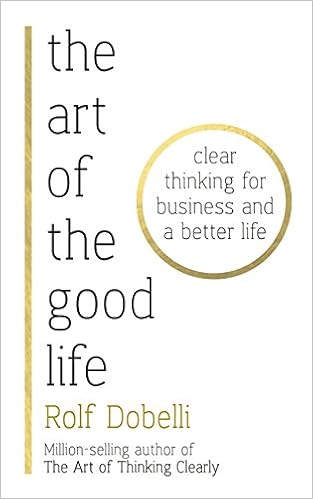
The Art of the Good Life #1 : Mental Accounting and the "Tai Ko Kia" fund.
Let's move onto the next book. This is great book that has so many tools, it is best digested slowly.
Mental Accounting is supposed a bad thing to do in finance because it creates inconsistency in the way we handle money. This happens quite a bit for folks who have inherited money versus earned money.
For most of us normal human beings, inherited and earned money are placed in separate buckets. Earned money belongs to us because of the personal exertion we made to earn that money. Inherited money is a lot more complex, we might just want to preserve it because it is something given to us by a loved one. This is why, when a person develops a margin account, I bet he is more likely to invest his earned money into the margin account. Inherited money may be put into something safer, like a broad based ETF or bonds.
A similar argument can be make for a lot of crypto currency fans who read financial blogs. I acknowledge that cryptos has had a really good year, but it's best to use just your spare change to buy them.
( Ok Ok, I know that many of you are now sitting on a heck of a lot of spare change )
This book views mental accounting as a good thing. We evolved to create mental accounts to protect ourselves from psychological pain.
The author sets aside a sum of money to make donations to charitable organisations every year. When he gets a traffic fine, he will deduct from that account so he does not feel that its cutting into his hard earned money.
Singaporeans can benefit from this idea from instituting a "Tai Ko Kia" fund.
You might ant to consider setting aside perhaps $2000 every year to deal with bad luck like fines or, in my case, when my son decides to break some of my equipment at home. If there is some amount left in your Tai Ko Kia fund after the new year, you can have a Tee Kong Kia barbecue celebration or simply buy more toys for your kids.
Monday, December 11, 2017
How did 2017 pan out ?
We have less than a month to go until 2018, so I decided to look at my first post in 2017 to see whether I managed to fulfil all the promises I made to myself as well as review whether my predictions were accurate.
Here's what I missed out on :
a) Predictions on financial markets were thankfully quite wrong.
It's obviously better to be rich than to be right.
I wrote that 2017 would have been a flat year. I was glad that I was wrong, and I was able to emerge from 2017 with a lot more assets than when I took my last pay-check. My investment performance could have been better over the past 4 years, but considering that my family needs at least $60,000 a year to maintain, to be able to emerge in a better shape than before is a decent feat.
Moving forward my portfolio has developed some capabilities for leverage and I was personally hopefully to introduce a small amount of short-selling in 2018.
b) Career in portfolio management did not materialise... so far.
Another example of making all sorts of bets against myself. I was feeling quite down in January this year and thought my grades would not make me an employable lawyer by the time I graduated which was why I tried to hedge by considering a career managing money.
I am in firmer ground with my legal career now since I am done with my bar exams, things can still go wrong but I am a lot more optimistic than before.
Here's what worked out so far :
a) Less drama at home
2017 had much less drama although my parents are still not getting any younger and I need to be careful as we've just lost our domestic helper.
b) So far there's still hope of becoming a lawyer in 2018
My legal career is gaining more momentum and I have a lot more confidence with my skills now that I have gone through the bar preparations. The actual legal work is a lot more interesting because it is practical and can impact people's lives in a dramatic way. I did not enjoy some aspects of university schoolwork because academic work can sometimes be too distant from reality.
I also have much fewer hang-ups about being older and slower than my peers. What I lack in mental agility, I make up with experience. Thanks to a short internship I am more confident about using my engineering and financial skills to assist in dispute resolution.
c) That satisfying work with BIGScribe
Lastly, the work with BIGScribe has been the single most satisfying work I have done for the past 2 years. I have made around 7 or more speeches and thanks to the coordination of the directors of the company, we've managed to sell out all the tickets for these events. I also enjoy being a fanboy when some other person is giving his talk.
I think that interacting with readers and other presenters who are smart and have some really great investment ideas of their own is the real pay-off when I make my prepared events. As you guys might already know, I don't sit still when presented with a good investment idea, I will backtest it and add a personal twist to it before using real money to back these ideas up.
My margin portfolio was first inspired by Brian Halim's idea that sometimes it is better to invest in higher quality REITs rather than stick to risky high yielding counters, it was modified again after I attended Marubozu's talk in the middle of year after I tried to backtest and formalise his claims. The leverage came after I became much more confident of taking risks after becoming much more comfortable with the lower volatility of higher quality real estate assets.
In 2018, I will provide some further directions on how my career and investment portfolio will pan out.
Here's what I missed out on :
a) Predictions on financial markets were thankfully quite wrong.
It's obviously better to be rich than to be right.
I wrote that 2017 would have been a flat year. I was glad that I was wrong, and I was able to emerge from 2017 with a lot more assets than when I took my last pay-check. My investment performance could have been better over the past 4 years, but considering that my family needs at least $60,000 a year to maintain, to be able to emerge in a better shape than before is a decent feat.
Moving forward my portfolio has developed some capabilities for leverage and I was personally hopefully to introduce a small amount of short-selling in 2018.
b) Career in portfolio management did not materialise... so far.
Another example of making all sorts of bets against myself. I was feeling quite down in January this year and thought my grades would not make me an employable lawyer by the time I graduated which was why I tried to hedge by considering a career managing money.
I am in firmer ground with my legal career now since I am done with my bar exams, things can still go wrong but I am a lot more optimistic than before.
Here's what worked out so far :
a) Less drama at home
2017 had much less drama although my parents are still not getting any younger and I need to be careful as we've just lost our domestic helper.
b) So far there's still hope of becoming a lawyer in 2018
My legal career is gaining more momentum and I have a lot more confidence with my skills now that I have gone through the bar preparations. The actual legal work is a lot more interesting because it is practical and can impact people's lives in a dramatic way. I did not enjoy some aspects of university schoolwork because academic work can sometimes be too distant from reality.
I also have much fewer hang-ups about being older and slower than my peers. What I lack in mental agility, I make up with experience. Thanks to a short internship I am more confident about using my engineering and financial skills to assist in dispute resolution.
c) That satisfying work with BIGScribe
Lastly, the work with BIGScribe has been the single most satisfying work I have done for the past 2 years. I have made around 7 or more speeches and thanks to the coordination of the directors of the company, we've managed to sell out all the tickets for these events. I also enjoy being a fanboy when some other person is giving his talk.
I think that interacting with readers and other presenters who are smart and have some really great investment ideas of their own is the real pay-off when I make my prepared events. As you guys might already know, I don't sit still when presented with a good investment idea, I will backtest it and add a personal twist to it before using real money to back these ideas up.
My margin portfolio was first inspired by Brian Halim's idea that sometimes it is better to invest in higher quality REITs rather than stick to risky high yielding counters, it was modified again after I attended Marubozu's talk in the middle of year after I tried to backtest and formalise his claims. The leverage came after I became much more confident of taking risks after becoming much more comfortable with the lower volatility of higher quality real estate assets.
In 2018, I will provide some further directions on how my career and investment portfolio will pan out.
Sunday, December 10, 2017
Upcoming BIGScribe Financial Bloggers Moot
This coming week, a select group of extremely elite and exclusive financial bloggers will be meeting up for a friendly gathering. Over the months leading to this event, I have been trying to sell the idea of a financial blogger's "Unconference" or TEDx like conference to the directors of Bigscribe.
I can't really say that I have been successful, because it is quite a counter-intuitive idea.
Why would financial bloggers, generally wonky introverts, be willing to speak for about 5 min to 10 min on one investment idea for almost negligible pay? The resulting event would also lack a central theme because folks may talk about anything under the sun so we cannot even predict how much value add this would bring to paying customers.
While I have difficulty understanding why others might be motivated to do this, I do know that I will happily jump into any speaking opportunity given that I'm possibly one of the rarer "flaming extroverts" in the finance blogosphere and having more than a decade of public speaking experience helps too.
But here are some reasons why another blogger should consider making a 5 min pitch:
I can't really say that I have been successful, because it is quite a counter-intuitive idea.
Why would financial bloggers, generally wonky introverts, be willing to speak for about 5 min to 10 min on one investment idea for almost negligible pay? The resulting event would also lack a central theme because folks may talk about anything under the sun so we cannot even predict how much value add this would bring to paying customers.
While I have difficulty understanding why others might be motivated to do this, I do know that I will happily jump into any speaking opportunity given that I'm possibly one of the rarer "flaming extroverts" in the finance blogosphere and having more than a decade of public speaking experience helps too.
But here are some reasons why another blogger should consider making a 5 min pitch:
- First of all, if you speak in an "Unconference", you get to participate for free and you get to home with 20+ new ideas from the other speakers.
- Secondly, this is a great opportunity to get new fans of for your blog.
- Thirdly, some of my ideas are incomplete and instead of talking about back-testing or quantitative alpha, a 5-10min talk can only accommodate perhaps just one new concept. So I need audience participation to shape your ideas further.
So this Friday, we are doing this at a super-miniscule scale so only four of us have volunteered to speak on a pet topic of our own so far.
My topic is something I have been promoting since my bar exams ended last week. I created a minor stir suggesting that financial independence could not preclude someone from becoming a loser and I will be building up this subject matter into something bigger. I can tell that this issue is something other bloggers are deeply vested in.
I will be talking about "Mid-life Crisis and how it impacts Personal Finance" :
- An overview about mid-life crisis and some science behind it.
- What coping mechanism are there for mid-life crisis.
- What it means for folks who are planning our finances.
Rest assured that there will be an AAR after the talk and I am guessing the other bloggers will probably not give me an easy time for this.
I do not know the full list of invited bloggers for this Moot, but I do hope that if you are invited, you can volunteer to speak on a pet topic that can be shared with fellow financial bloggers. This is not a formal event, even if it's just sharing a formula for a new facial cleanser or a book review, it will be very much appreciated.
Monday, December 04, 2017
Can you be financially independent and be a loser at the time ?
Personal Finance is to Finance the same way English Literature is to the English Language. While financial problems may be resolved by mathematical formulas or a backtesting exercise, there are many ways to interpret problems in Personal Finance. Some might be right and some might be wrong but most are somewhere in between.
I always find value in interpreting someone’s situation in a novel or unexpected way, because let’s face it, looking at it from many points of view is probably better than just looking at it from one. In English Literature, I’d like to give a D7 answer in Secondary School ( although it might well give me an expulsion or A+ answer at the Univerisity level. ) Needless to say, I try to avoid the Humanities when studying for anything after secondary school.
Recently, someone shared a story of a financially independent single male in his 40s and I kicked the hornet’s nest by declaring that he is weak. Some folks supported my thesis but quite a few disagreed with me. I thought I would pen some thoughts on financial independence and argue that it is completely possible to be a big fat ass loser in spite of your financial independence.
A) Honesty and Deceit
I think this is a genuine problem FI folks face. This FI dude has to lie about his status because people either do not understand him or might take advantage of him. I think honesty is not the best solution as well because very few people may understand how the process works and some folks do come from families where there are relatives who are always out to take advantage of you.
There are some answers that are not completely honest that does not involve deceit.
Calling yourself a private investor is one. Another is saying that you are on a sabbatical but do not know when you can recover from mid-life crisis or burnout.
My solution is to go to law school, which eliminates not just this problem but the other two which I will explain below.
B) Loneliness
This section deserves a philosophical lesson of its own.
Some things have ameliorative value - they meet crucial needs in society. An engineering, finance or law degree has amerliorative value, it earns you a living and performs a crucial service to others. Society just needs legal advice even though I expect a lot of executives to hate dealing with lawyers in
the workplace ( I know, because I studied law because I want to give myself legal advice and stop being led on a wild-goose chase at work ). Some things have existential value - they do not meet crucial needs but may provide meaning to a person’s life. A degree in the Arts, Philosophy or Literature or some personal hobbies have immense existential value.
Your financial know-how and discipline are skills with ameliorative value, but they not contain very much existential value. You can derive existential value from Hobbies, Great literature and Art but getting into the right cryptocurrency at the right time will not make your life meaningful or deal with your intense loneliness.
To deal with loneliness, you need to hang out with other people. But more importantly, you need to be interesting enough for others to want to hang out with you, which comes back to appreciating things with existential value.
And in my portfolio of existential assets, a large part of it is invested in Dungeons and Dragons. I should add that fantasy role-playing is on a huge bull run all thanks to Stranger Things and live-streaming.
C) Lack of structure in your life
I think this problem does not plague those who FI-ed by personal exertion because you need to lead a pretty structured life to attain your independence at a reasonable age. It is a serious problem for those who inherited their money because they simply do not understand what it means to accumulate wealth on their own so they drift endlessly from moving into one silly and pointless project to another.
It is this point that hits FI losers the hardest.
You have already won a battle that perhaps 95% of the population would lose in Singapore, and yet you have no structure in your life, might even have problems engaging with other people, and boring as fuck.
But unlike 95% of the population, you can’t blame it on lack of wealth, networking contacts or family support.
The problem lies genuinely with you.
Anyway, I just want to impress upon the FIRE community in Singapore that in light of our successes in Personal Finance, we can still become losers so a does of humility will be helpful when we deal with those who have yet to complete the FI journey.
Perhaps, with our newfound financial resources we can double up and put in more effort into promoting our hobbies. And achieve the next step in our personal evolution - Existential Independence.
Sunday, December 03, 2017
Before Happiness #5 : Positive Inception
In this last article on Shawn Achor's Before Happiness, we talk about scaling happiness.
This is also a very practical chapter and I think fresh law graduates should pay attention to this article as they are going to very possibly end up in a fairly negative workplace. There has always been reports that the depression rate amongst lawyers are one of the highest amongst all the professions. I remember visiting a fairly prominent legal outfit and one grizzled associate got us all into one room, and when none of her colleagues are within earshot, whispered to us :" You know all those horrible stories you have heard about this place ? It's all true. "
a) Scale your positivity
Managers might be able to create simple rules of thumbs to create a more energized workplace. The books proposes a really nifty 10/5 rule - When a customer is 10 feet away, achieve eye contact and smile. When a customer is 5 feet away and not engaged with anyone else, greet him.
I still find the courts rather intimidating, but I think I will try to smile every time I am there to do my traineeship.
I just hope that this will not be interpreted as a weakness.
b) Power Lead
The first loud mouth who talks is always perceived to be more credible.
This is why being an extrovert amongst mostly introverted financial bloggers is fun even though most of them are better investors and smarter than I am.
Be the first to lead a conversation and make sure that it always begins in positive territory. Start the conversation with a compliment to the other side and talk about something positive that have occurred in your life lately.
I think the second part will be a struggle in the Asian context because it might be misconstrued as bragging.
Still, do it anyway.
c) Create a shared narrative
Perhaps among ourselves as trainees and associates, it might be helpful to start thinking about the kind of help we are providing for our clients and what our advice means to them. We need to construct a story of why we do what we do. But I know myself to be of a fairly cynical bent and will find it hard to see beyond billable hours when I start work next year.
( For quite a while, I kept thinking that engineers exists to cut operational costs, so I think the problem lies with me rather than the environment I work for. )
But the practical benefits of having a shared narrative are astronomical - Salespeople who find meaning in what they do can increase sales by 700% !
This principle can be used in reverse. I now believe that the grand mission of unbiased financial bloggers is to band together to put up truthful articles on the problems with ILP investing and shed light on unrealistic financial products because the finance industry has found to way to motivate their personnel through expensive motivational programs.
The psychological truth is compelling - An insurance salesperson who sells products just to earn a commission can harm society in small ways. A salesperson who is motivated to believe that his work is helping others and is meaningful in the grand scheme of things can do seven times more harm to society !
Thus, we need to have a shared narrative to disrupt the shared narrative of others !
This is also a very practical chapter and I think fresh law graduates should pay attention to this article as they are going to very possibly end up in a fairly negative workplace. There has always been reports that the depression rate amongst lawyers are one of the highest amongst all the professions. I remember visiting a fairly prominent legal outfit and one grizzled associate got us all into one room, and when none of her colleagues are within earshot, whispered to us :" You know all those horrible stories you have heard about this place ? It's all true. "
a) Scale your positivity
Managers might be able to create simple rules of thumbs to create a more energized workplace. The books proposes a really nifty 10/5 rule - When a customer is 10 feet away, achieve eye contact and smile. When a customer is 5 feet away and not engaged with anyone else, greet him.
I still find the courts rather intimidating, but I think I will try to smile every time I am there to do my traineeship.
I just hope that this will not be interpreted as a weakness.
b) Power Lead
The first loud mouth who talks is always perceived to be more credible.
This is why being an extrovert amongst mostly introverted financial bloggers is fun even though most of them are better investors and smarter than I am.
Be the first to lead a conversation and make sure that it always begins in positive territory. Start the conversation with a compliment to the other side and talk about something positive that have occurred in your life lately.
I think the second part will be a struggle in the Asian context because it might be misconstrued as bragging.
Still, do it anyway.
c) Create a shared narrative
Perhaps among ourselves as trainees and associates, it might be helpful to start thinking about the kind of help we are providing for our clients and what our advice means to them. We need to construct a story of why we do what we do. But I know myself to be of a fairly cynical bent and will find it hard to see beyond billable hours when I start work next year.
( For quite a while, I kept thinking that engineers exists to cut operational costs, so I think the problem lies with me rather than the environment I work for. )
But the practical benefits of having a shared narrative are astronomical - Salespeople who find meaning in what they do can increase sales by 700% !
This principle can be used in reverse. I now believe that the grand mission of unbiased financial bloggers is to band together to put up truthful articles on the problems with ILP investing and shed light on unrealistic financial products because the finance industry has found to way to motivate their personnel through expensive motivational programs.
The psychological truth is compelling - An insurance salesperson who sells products just to earn a commission can harm society in small ways. A salesperson who is motivated to believe that his work is helping others and is meaningful in the grand scheme of things can do seven times more harm to society !
Thus, we need to have a shared narrative to disrupt the shared narrative of others !
Saturday, December 02, 2017
Personal Update - Just Finished the Bar Exams
Wow ! I am finally free ! For the next one month, I have no obligatory readings that I have to do and papers I need to prepare for. Beyond some projects which I have promised myself that I would do, I am practically free to game role-playing games the entire month.
A) Bar Exams
Completing the Part B exams is not as euphoric as I thought it would be. This was a tough but enjoyable series of papers because it was set by pretty cool geeks. I had to crack cases inspired by characters in Futurama, Rick and Morty and even Wonder Woman. It made doing a tough paper much more enjoyable. My regret is that my answer could have contained pop culture references of its own. One answer should have said “In contravention of ethical guidelines, Rick could have gotten himself into a Pickle” But 16 hours of exam over 4 days is stressful. I hope I will pass.
I made my contacts with the LLB folks and really enjoyed engaging with them. The young and upcoming lawyers to be have one thing we Gen X folks lack - a future life that is full of possibilities. While they will be entering a hyper-competitive marketplace that has, in my opinion, has too much talent, there is at least a possilbility that they will become industry leaders one day. For us Gen X folks in our 40s we’re more likely to be stuck at our current life circumstances.
This closing of possibilities is one of the reasons why many of us get a mid-life crisis. I will not say anymore because...
B) Bloggers Moot
BIGSCribe is still arranging a closed-door affair for the creme de la creme of the financial blogosphere. If you are not in the know, you are not likely to receive an invitation. For this event, I proposed the idea of a TED like conference for us to speak for about 5-10 minutes on any topic we think bloggers would like to hear. I will be sharing some the latest on mid-life on mid-life crisis and will working out with the expert crowd what this means for our personal finances.
For those who are not invited, rest assured that I will share as much I can about the event when I do an AAR here.
C) Special Projects
Just because I no longer exams does not mean that I no longer have projects. My first priority is to get put some SEO magic into this blog and try to push for more book sales. More will come later.
Beyond serious stuff, I expect to be doing as much gaming as possible.
D) Travel and Leisure
This exam season has been psychologically draining. For some strange reason stretching exams to early December is painful because a lot of folks are travelling and putting smiling pictures on Facebook while I am trying to figure out how to help a hypothetical guy ensure that his mistress can get something in the event that he dies.
This year it’s particularly bad because we had a good 2017 and folks have some disposable cash to burn. I will be going to Johor Legoland next Monday with my family but so far, it’s only to Malaysia for me.
E) Financial Markets
My portfolios are not doing all that well because of the correction in local Tech counters. Fortunately I have built my margin account to minimise the damage as hospitality trusts are still doing ok. There will not be too many market movements in December.
F) Books
I will be shifting my focus to fictional works. During Part B, I completely missed out Dan Brown’s Origin and Brandon Sanderson has released his next book in the Words of Radiance series called Oathbringer.
As the year comes to a close, in another personal update, I will talk about leaving retirement. On January I will begin my training contract and will likely find ways to survive in the legal industry moving forward while keeping my mind open to any interesting offers from the IT industry.
Sunday, November 26, 2017
Before Happiness #4 : Increase Signal to Noise Ratio
Ok, managed to squeeze in some time to post on this blog. Exam preps are really insane this week.
This section of the book is the hardest to achieve for me because I take on a lot of information sources and, combining my blogging hobby with my legal career switch, I am almost always swamped with information or crazy ideas.
a) Identify the signal from the noise
Noise is unusable, untimely, hypothetical and distracting. I consider The Independent a website dedicated to noise.
Otherwise, I struggle with this section a lot because the book explicitly says that a lot of financial predictions are noise and Jim Cramer was even singled out as one of those information sources that an investor better off without. The more important differentiator between the signal and noise in investing is that, for me, I am more interested in the working than the answer. I read a lot of broker reports and what is important is the reason why someone is recommending whether we buy or sell.
As I have been generally profitable after reading these reports, I doubt they can be classified as noise. Macro-economic predictions are also hardly noise since the justification of the predictions make interesting reading and highlight important trends investors can follow.
For non-investors, I think if you tune out the motivational bullshit that always say that you will succeed if you put your mind to it, it should save enough bandwidth for you to really figure out techniques to help you achieve you goals.
b) Reduce noise by 5%
Once you identify the signal from the noise, you can reduce the noise by 5%. This comes from reducing the intake of TV and Radio. On the internet, installing an Ad Blocker will also help. If you are me and rely on an RSS feed, maybe you may want to trim the blogs that you are subscribed too.
The author has also managed to convince me to start considering the purchase of Bose noise cancelling head phones.
The hardest part about making this work is the fear of missing out. I subscribe to almost every financial blogger because I am so worried about losing out on a great investment idea.
But these days, I just read the headlines and then decide if it can improve my bottomline.
Otherwise I move on.
c) Eliminate pessimism
This last idea is very useful and I urge you guys to try it. Pessimism is something that we've adapted in our brains due to millions of years of evolution but too much of it can prevent you from achieving greatness. You can reduce it my adopting the following three maxims :
a) Keep your worries in proportion of the likelihood of the event.
b) Don't deny yourself 10,000 good days just to be right a few times when the days turn bad.
c) Worrying should not be equated to being loving or responsible.
I think there is too much pessimism after my talk about leverage but if you were a PAYING CUSTOMER, you will know that I advocate responsible leverage with a view of always being aware that there is a chance you can go completely bust. ( In fact, I even show my working to everyone. )
But if the projected chance of going bust is going to be less than 2.5% and the extent of the bust is capped at 60% of the margin account, I doubt it's rational to refuse leverage at all considering that I already limit the margin account to below 20% of my total net worth.
Of course, markets being hardly normal, critics may one day be right, but I will not ruin the possibility of many good years ahead just to feel smug when there is a rare market collapse.
Maybe by then, I may have already pre-paid my mortgage and no longer have a margin account.
Thursday, November 23, 2017
After Action Review : Supercharge your REITS investments.
Ok, as I am preparing for my bar exams next week, I would only start writing about yesterday's session only after I am done with all my revision work today.
Here are some points of interest from last night's "non-debate" between myself and Teck Leng :
a) The lack of real debate last night.
The event was promoted somewhat as a debate between an ETF-driven approach versus a DIY approach to REITs investing. When we did the event on the ground, Teck Leng and I probably had much more points in common than actual disagreements. This is what happens when put engineers together, we're more keen to cooperate to find better ways of making money for everyone. Also I really liked his guts because he is quite an earnest guy.
[ If you really want a fight, put me against a legally-trained or marketing-trained ETF fund manager because I know the gloves can get off without things becoming too personal - then I'll thrash him with my superior numbers. ]
You can definitely leverage the Phillips S-REITs ETF and my current Maybank broker offers it at the lowest rate.
b) That 17% tax on REIT ETF dividends.
Even if there was a debate, the biggest elephant in the room that is in my favour is the 17% tax that is levied on trust income. This effectively lowers the dividend yield of the REIT ETF from 5.5% to around 4.6%.
But, let's be reasonable here, it's not the fault of REITs ETF issuer. I was told some readers of this blog forwarded what I wrote about these taxes to some bigwigs at Philips Securities and accused them of pocketing 17% of dividends. This is really unfair to these guys who created a relatively cheap product for investors who want to spend less time micro-managing their REITs investments.
Readers should be glad to know that the industry is lobbying hard to waive these taxes so that less sophisticated investors can benefit from higher yields.
c) Someone shared with me a better way of obtaining leverage.
The cool thing about unbiased bloggers giving talks is that some attendees may have better ideas on investing. After the talk, one cool dude came up to me and proposed a superior approach to getting margin financing from a broker.
He proposed using proceeds from a home mortgage instead to buy equity.
According to him, you can get funding at less than 2% (my current home loan is SIBOR +0.68%). After some thinking, I figure out that if the funding came from the mortgage bank, you can practically buy any stock you want or even buy cryptocurrency with the proceeds. The downside is that you will end up servicing a bigger mortgage instead of trying to pay a mortgage down like me.
I need every reader's help to verify whether this strategy would work or might even be legal in the first place. Banks, for sure, would not give a mortgage above the market value of the property and employing home equity as collateral actually attract higher interest rates towards the tune of 4-5% based on what I know.
But I think this is a good share regardless.
Thursday, November 16, 2017
Before Happiness #3 : Goal Accelerators
The third section of the book is also the most practical component of the written work because it summarises in one chapter what most motivational books would take entire volumes to do. Tips offered in this chapter are useful and backed by heavy-duty research. If you can practice this on a daily basis, you would save thousands of dollars on motivational seminars and get ahead much further in life than your peers.
The first strategy is to get as close to your target at the earliest opportunity. Once people perceive that they are closer to their goal, they work faster and harder to wards achieving it. In your quest for financial independence using the dividends approach, one way to push closer to your goal immediately would be to take your upcoming year-end bonus and start buying dividend counters with it. Just begin with a bang and don’t wait for the new year to set your new year resolution. If you can immediately attain 30% of your first financial objective, it would be easier for you to save your next paycheck to hit your target of financial independence.
The second strategy would be to find ways to convince yourself that it is easier to attain your target. In fact, it is recommended that you shape your goals to have at least 70% chance of success within a resonable period of time. One way of doing this would be to break your financial goals down into micro-goals. Financial independence is a daunting goal that takes decades to achieve, but attaining $100 per month of dividend income is fairly easy. At 7% yield, you will only need a portfolio size of $17,500 to get $100 a month to offset part of your utility bills. This is something that can be achieved within one year of graduation for most local graduates. Having $100 coming into your bank account will create the motivation to save more and attaining the next $100 per month would be very much easier.
The third strategy is to manage your personal energy so that you can focus on attaining your goals much faster. This is powerful approach towards achieving greater focus on goals that truly matter in your life. We are all limited by our willpower that gets sapped when we are forced to make decisions. The key is to routinize as many decisions as you can and focus only on a few important decisions every day. One advantage of my new vocation is that men have really one work uniform and I have already started wearing only black and white for my lectures and tutorials. I do not have to agonize over what to wear everyday. Amazingly, uniformity in the way lawyer’s dress is more extreme than in IT. We had one day when all WINTEL engineers in my team came to work in a blue shirt and the admin staff can’t stop harping about it. Great engineers think alike, get over it !
Similarly, I try to use simple heuristics for food, such as choosing vegetarian for every breakfast whenever possible and plain black coffee.
This third strategy can get really complicated in practice. Some issues like minimizing regret when searching for a home to buy can be resolved quickly through an algorithm like the solution to the Secretary’s Problem. Other issues can be resolved via economic Tit for Tat strategies. The more mental models you develop and internalise, you reduce the mental burden required to process the issue.
Anyway, my willpower is saved for decisions that only matter - like whether to unload my Religare Health Trust in light of the discussions of asset disposal that was announced today.
After a day of painful consideration, I decided that there is some way to go for the counter if the negotiations succeed and we our well deserved exit.
And what a tiring decision that was !
Saturday, November 11, 2017
Before Happiness #2 : Mental Cartography
[ I am slowing down my blogging as I am 2 weeks away from my Bar Exams. It is quite harrowing as we have to complete 8 papers within 4 days. It will be a struggle to have one update a week with an exception made when I complete my next talk with BIGScribe. ]
The mental cartography component of this book also composes of three strategies.
First, you need to find your true meaning markers which is just another way of figuring out what your goal are in life. In my own example, a lot of engineers start out in their career wanting to solve interesting technical problems because this is something they are passionate about. Others may simply be hedonists and want to extract as much pleasure out of life as possible.
Second, you need to reorientate your map around these meaning markers. For this same engineer, this creates an interesting dilemma in Singapore because if he focuses on a meaningful career solving interesting technical problems, he would not be able to take on better paying roles in project management or leading teams. Singapore is just not a place for interesting technical problem solving although genuine effort is being made to correct that. I actually believe that if you solid coding skills, hedge funds may be the place to develop programming expertise because you might be able to work on issues like network latency when co-locating servers with those of the exchange.
If money is also one of his priorities, every engineer needs to ask himself whether it is worth sacrificing doing something meaningful and interesting to make more money. For me, I'd just go for the money because financial freedom is more meaningful to me than hammering out cool programming code. The books advises that you set your priorities right before you look at nitty gritty of career planning. Maybe I can hammer all the programming code I want after I retire from the work-force.
Thirdly, you should map your success routes before your exit routes. It just means that a person should be trying to live a life to attain their success and should not live their lives trying to avoid failure. While the scientific evidence is that people who more motivated and aligned with their personal goals get fatter pay-checks and promotions, things would not be as simple as it seems in a conservative Asian society. The books still has a point - a lot of older project managers or team leads eventually regret their career choices as taking on a management role meant no longer working on interesting technical problems as they get used to higher pay after a couple of pay-checks.
Singapore exacts a huge penalty on a person when he fails - A failed startup can cost a technical engineer about 7-8 years of his life as he pivots to a more stable career. Even if he can accept such an unpredictable lifestyle, the question is whether his parents will support him. Thereafter, there will be concerns from potential spouses and girlfriends who may just choose someone more stable financially. Even if the girlfriend is willing to make a sacrifice, his potential in laws will have concerns.
If you are a risk-taker, you have my full respect. Just don't underestimate the influence that an Asian society can exert on your penchant for risk-taking.
The mental cartography component of this book also composes of three strategies.
First, you need to find your true meaning markers which is just another way of figuring out what your goal are in life. In my own example, a lot of engineers start out in their career wanting to solve interesting technical problems because this is something they are passionate about. Others may simply be hedonists and want to extract as much pleasure out of life as possible.
Second, you need to reorientate your map around these meaning markers. For this same engineer, this creates an interesting dilemma in Singapore because if he focuses on a meaningful career solving interesting technical problems, he would not be able to take on better paying roles in project management or leading teams. Singapore is just not a place for interesting technical problem solving although genuine effort is being made to correct that. I actually believe that if you solid coding skills, hedge funds may be the place to develop programming expertise because you might be able to work on issues like network latency when co-locating servers with those of the exchange.
If money is also one of his priorities, every engineer needs to ask himself whether it is worth sacrificing doing something meaningful and interesting to make more money. For me, I'd just go for the money because financial freedom is more meaningful to me than hammering out cool programming code. The books advises that you set your priorities right before you look at nitty gritty of career planning. Maybe I can hammer all the programming code I want after I retire from the work-force.
Thirdly, you should map your success routes before your exit routes. It just means that a person should be trying to live a life to attain their success and should not live their lives trying to avoid failure. While the scientific evidence is that people who more motivated and aligned with their personal goals get fatter pay-checks and promotions, things would not be as simple as it seems in a conservative Asian society. The books still has a point - a lot of older project managers or team leads eventually regret their career choices as taking on a management role meant no longer working on interesting technical problems as they get used to higher pay after a couple of pay-checks.
Singapore exacts a huge penalty on a person when he fails - A failed startup can cost a technical engineer about 7-8 years of his life as he pivots to a more stable career. Even if he can accept such an unpredictable lifestyle, the question is whether his parents will support him. Thereafter, there will be concerns from potential spouses and girlfriends who may just choose someone more stable financially. Even if the girlfriend is willing to make a sacrifice, his potential in laws will have concerns.
If you are a risk-taker, you have my full respect. Just don't underestimate the influence that an Asian society can exert on your penchant for risk-taking.
Tuesday, November 07, 2017
The past is not dead; it is not even past.
[ The title of this post is actually Q1 of this year's AO level General Paper. It has been long time since I have written a GP essay so it's high time that do one given that I am also preparing for the Bar Exams. ]
The past is not dead; it is not even past.
The past is persistent.
It shall forevermore, be embedded in the present.
It will always influence the future.
This is not merely a metaphysical assertion for if you, dear marker, have a case of herpes. You should know this fact very well.
The past can be like a herpes infection from your last unprotected sexual encounter - it just keeps coming back. In fact, for herpes, the past is not even past, because herpes is like a trust fund that keeps giving, vital parts of your body that had stopped itching would periodically itch again in the future. Herpes will never die, it is not even past.
Also, no debate on the idea of the persistence of the past should be without the discussion of economic ideas which, also like venereal diseases, are spread between people who don't really know any better. As in turns out, the idea that the past is dead is subject to decades of debate by economists.
Proponents of the Efficient Markets Hypothesis argue that the past is irrelevant. The act of looking at technical charts ,which encapsulate historical price movements, do not lead to extraordinary profits. Entire erections of a theoretical nature were dedicated to the Efficients Markets Hypothesis in academic institutions. It is almost as if the older economists were on a permanent course of Viagra. Phds in economics must have felt their egos masturbated with with each additional citation they receive from another freshly published research paper. In fact, if you found a market anomaly and argued that historical prices can be used to achieve extra profits, you would in for a smear campaign. You would given more tongue lashings than a gimp in BDSM sex orgy if you revivify the past in a thesis defence.
But the past does make fools out of even our greatest economic minds.
People eventually discovered many market anomalies that do exploit past data and they were able to establish very successful hedge funds by exploiting these anomalies. One example is that momentum trades do result in extraordinary profit. A stock that has increased in value for the past 12 months has a propensity to keep on increasing in the markets. This results in a profitable strategy of going long on a basket of stocks which has done well in the past 12 months and going short on a basket of stocks which had done badly. This anomaly is likely to have arose due to the nature by which market agents react to the news. A first, a lot of people under-react to fresh news, but subsequently they overreact to it.
Whether it concerns money or venereal diseases, objects in the rear view mirror may always appear closer to where they are. The past is not dead; it is not even past. Those who do not remember the lessons of history, are doomed to repeat.
Those who remember the lessons of history, will have plenty of great stories to tell in the VD clinic.
The past is not dead; it is not even past.
The past is persistent.
It shall forevermore, be embedded in the present.
It will always influence the future.
This is not merely a metaphysical assertion for if you, dear marker, have a case of herpes. You should know this fact very well.
The past can be like a herpes infection from your last unprotected sexual encounter - it just keeps coming back. In fact, for herpes, the past is not even past, because herpes is like a trust fund that keeps giving, vital parts of your body that had stopped itching would periodically itch again in the future. Herpes will never die, it is not even past.
Also, no debate on the idea of the persistence of the past should be without the discussion of economic ideas which, also like venereal diseases, are spread between people who don't really know any better. As in turns out, the idea that the past is dead is subject to decades of debate by economists.
Proponents of the Efficient Markets Hypothesis argue that the past is irrelevant. The act of looking at technical charts ,which encapsulate historical price movements, do not lead to extraordinary profits. Entire erections of a theoretical nature were dedicated to the Efficients Markets Hypothesis in academic institutions. It is almost as if the older economists were on a permanent course of Viagra. Phds in economics must have felt their egos masturbated with with each additional citation they receive from another freshly published research paper. In fact, if you found a market anomaly and argued that historical prices can be used to achieve extra profits, you would in for a smear campaign. You would given more tongue lashings than a gimp in BDSM sex orgy if you revivify the past in a thesis defence.
But the past does make fools out of even our greatest economic minds.
People eventually discovered many market anomalies that do exploit past data and they were able to establish very successful hedge funds by exploiting these anomalies. One example is that momentum trades do result in extraordinary profit. A stock that has increased in value for the past 12 months has a propensity to keep on increasing in the markets. This results in a profitable strategy of going long on a basket of stocks which has done well in the past 12 months and going short on a basket of stocks which had done badly. This anomaly is likely to have arose due to the nature by which market agents react to the news. A first, a lot of people under-react to fresh news, but subsequently they overreact to it.
Whether it concerns money or venereal diseases, objects in the rear view mirror may always appear closer to where they are. The past is not dead; it is not even past. Those who do not remember the lessons of history, are doomed to repeat.
Those who remember the lessons of history, will have plenty of great stories to tell in the VD clinic.
Saturday, November 04, 2017
Before Happiness #1 : Choosing the most valuable reality
The first skill in the book Before Happiness by Shawn Achor is the skill of choosing the most valuable reality.
This skill is broken down into three specific strategies.
- The first strategy is to understand that there are many alternative realities you can have.
- The second is to keep shifting your vantage point so that you generate alternative realities.
- The final strategy is to pick the most valuable strategy.
This is useful in finance.
Many academics adopt the reality that markets are efficient and there is indeed a lot of academic literature that reinforce the efficient markets hypothesis. This effective rules out Technical Analysis as a means of earning extraordinary profits from financial markets. But somewhere along the way hedge fund managers like Victor Niederhoffer and Kenneth Griffin found objective evidence that the contrary is true and they took steps to build a fund to exploit these inefficiencies in the markets. By shifting into a more profitable reality, it became possible to find new and interesting ways to make money from financial markets.
Similarly, you can notice that the realities of some people around you can certainly be improved.
During my reservist days, I met a lawyer who claimed that saving money was impossible because of his ridiculously high family expenses. He probably makes twice as much as what i made in those days. Even during my Part B training, I was stunned when a very senior lawyer told my class with a straight face that it is impossible to become a millionaire doing legal work. Ideologically, he must come from a different planet from me. If I accepted his reality, the situation would have been hopeless for an engineer who is facing a low pay and the risk of getting outsourced on a daily basis.
So I choose a different reality - I believe that making a million is not only possible but may be easier if you do not have a five figure monthly income. An engineer has nothing to prove about his economic status and can wear Decathlon from head to toe and dumpster dive for free organic food. Other professions have to keep up with personal appearances.
Some realities I adopt are admittedly hard to accept and this is especially so if you lean to the political left.
For example, I believe that Singapore is a very generous welfare state.
If you make $100,000 in dividends annually and dividends are not taxed at a personal level, isn't that some form of welfare for people who train themselves to save and invest money well? ( Feel free to disagree, tax professionals ! )
There are certainly some points which I felt are interesting and should have deserved deeper exploration in the book.
The book exhorts the reader to choose a reality - this is in essence an objective evaluation. The question as to what reality is available is should be determined empirically. We have to constantly remind ourselves that the book does not ask the reader to choose their own delusion, which is what other books like The Secret and various religious texts seem to espouse.
The other point I wish to make is that powerful people and public policy can warp your reality - that's why we have laws. Some bosses and corporate environments can be so oppressive that even if you try your best to put a positive spin on things, it would be hard not to be depressed by the happenings around you.
It is probably not realistic to think that the choice of reality is something completely within your control.
Sometimes you just have to work for in a horrible environment because you need to pay your bills.
Thursday, November 02, 2017
New Series : Before Happiness by Shawn Achor
Starting tomorrow, I will start talking about this book called Before Happiness by Shawn Achor. The last series of articles on Efficiently Inefficient was rather complicated and, as a result, attracted attention from fewer (but more hardcore) readers.
I thought it might be appropriate to not just shift to a lower gear and discuss issues which are a lot more accessible to readers of this blog but to also try to interpret Shawn's ideas from the perspective of someone who is trying to seek financial independence. After all, I'm quite sure that the freedom to pick and choose what you want to do with your life that is unfettered by financial obstacles could result in a much higher level of happiness.
Of course, the other reason why I chose this book is that Shawn Achor is a Harvard-trained researcher and whatever he says is backed by research. This is vastly superior to majority of motivational books that tend to have dubious support or, worse, rely very much on the wishful thinking of their readership.
I thought it might be appropriate to not just shift to a lower gear and discuss issues which are a lot more accessible to readers of this blog but to also try to interpret Shawn's ideas from the perspective of someone who is trying to seek financial independence. After all, I'm quite sure that the freedom to pick and choose what you want to do with your life that is unfettered by financial obstacles could result in a much higher level of happiness.
Of course, the other reason why I chose this book is that Shawn Achor is a Harvard-trained researcher and whatever he says is backed by research. This is vastly superior to majority of motivational books that tend to have dubious support or, worse, rely very much on the wishful thinking of their readership.
Monday, October 30, 2017
Titles Culture : A Demon of our own Design.
I think it's going to be quite vogue to talk about "Titles Culture" in Singapore today. "Titles Culture" happens when Singapore yuppies get together. The first thing they try to probe are the schools that you have attended. In this other article on Today, this is repositioned as an act of probing for weaknesses.
Like many things about Singapore society, it's easy to point out our problems and then try to appeal towards a "mindset" change. This always sets off alarm bells for me because it smacks of not really trying to solve the problem at all. Mindsets will only change if there are underlying socio-economic reasons for reform - otherwise the status quo remains.
I did not experience "Titles culture" when I became an engineer 20 years ago. The idea of a JC/University student doing tech willingly was sufficiently rare in the face of IT Outsourcing and the usual Senior IT engineer was an NCC Diploma holder or someone with a Private degree. There is also no need to probe for any weaknesses when any degree holder can volunteer to leave IT to get a better paying job in Banking or even Real Estate.
The "Titles Culture" really started to hit me when I tried to enter the legal sector.
Law students are cows.
Law students are really graded like Kobe Beef in the workplace, a summa cum laude or First Class can be as expensive as grade A4 Kobe beef with A5 grade reserved only for the Oxford BCL or Cambridge tripos graduate. I found myself probed right up to the subject level and my interviewers were really interested in my JC and secondary school experience.
[ A classmate just corrected me. An Oxford BCL is the equivalent of a Masters. A tripos is an exam name. I will leave the mistake here for the reader's edification. Cambridge Law degree is a BA Tripos Law. I also need to get my knowledge of beef right. Only Wagyu is graded like what I described. ]
Being probed did not annoy me, but here are some uncomfortable thoughts about "Titles Culture".
a) What if this is really a better system of meritocracy in Singapore ?
One of the things I picked up in Part B is that Law Students are actually quite well-rounded and smart.
I tried to start a negotiation session by asking my opponent when he did A level maths and then worked with him on turning the legal case into a maths problem involving the Binomial distribution and was pleasantly surprised that he understood the maths perfectly. At the end of the session, I felt a tinge of sadness because my opponent would have made a decent engineer and could have created quite a number of jobs in Tech. In fact, every single decent engineering student who could have build a unicorn in Blk 71 have gone to Law or Medical school because of our society's priorities.
You can hate Titles culture but what if it is really what we have been working towards in the past 20 years ? If 40% of the population can enter Universities and there is already a route to the top from Polytechnics and ITEs, then there are fewer excuses for not getting a degree in the first place. Furthermore, as more late bloomers no longer find themselves disadvantaged, people no longer feel elitist when they probe the schools you come from.
It becomes culture. A habit adopted by everyone.
It might actually be a fair and objective benchmark.
b) It begs the question as to what can replace Titles Culture ?
As much as I dislike Titles Culture, I'm not sure what can possibly replace it.
Older European cultures still have aristocratic titles like Duke, Viscount or Baron. Is this the kind of culture we want ? What if like some countries we want to know whether someone is related to someone in the ruling party ? Twenty years ago, the status symbol is the company you worked for. You get a lot more credibility if you worked for a international bank or an oil firm.
The major question for any reformer is how should HR change its practices in the future ? I agree in part with the Startup community that a skills based meritocracy is what we really need to build a vibrant ecosystem but is this realistic? If the startup community wants to do this, it has to actually pay for skills and get their HR to set an example by not using paper qualifications.
Why is this not being done? Why are our startups not trying to headhunt our Poly and ITE graduates ?
If you you pay a top flight programmer from Poly the same as a CS grad from NUS, we will get the skills meritocracy we deserve.
c) So should we make your net worth your report card ?
The issue at the end of the day is how to really stop feeling like shit if you don't meet up to other people's benchmarks. I don't have a comfortable solution as well.
As far as I know, markets don't look at your qualifications when they decide to give you a dividend. Perhaps your net worth can become your report card.
Personally, I don't really like this approach as well because most ACS alumni start out with much more than I do. Some financial bloggers struggled with a working class existence before becoming financially independent, I think they deserve more credit than those who have a push from a posher background.
d) Maybe we really need a mindset change after all - specifically, yours.
Our education system, being Asian, does not really put an emphasis on self-esteem. There has to be science behind building a set of beliefs that allow us to keep our confidence up when some asshole starts asking you what school your come from and how many H3 subjects you took during your A levels.
( Although in my opinion, the last thing you need is to have someone in a school or government to bestow a "title" on you to make you feel like a human being. In the US, you can get a trophy for coming in at 6th place - we should not build a culture that celebrates mediocrity. )
I'm not a trained psychologist but I recommend that we seek a "confidence target", a major win in life that can form a bedrock to buttress our personal esteem. This can be running a successful business. Becoming famous for a worthy social cause. Making a big social contribution. Being a champion in a sub-culture. ( Like being a Grand Prix Champion for Magic the Gathering although many of them are pretty big assholes too ! )
Unfortunately, many will go through their lives without ever winning a major milestone to give them enough self-esteem to resist a Titles Culture.
But we owe it to ourselves to give it a try.
Just don't let the assholes win.
Like many things about Singapore society, it's easy to point out our problems and then try to appeal towards a "mindset" change. This always sets off alarm bells for me because it smacks of not really trying to solve the problem at all. Mindsets will only change if there are underlying socio-economic reasons for reform - otherwise the status quo remains.
I did not experience "Titles culture" when I became an engineer 20 years ago. The idea of a JC/University student doing tech willingly was sufficiently rare in the face of IT Outsourcing and the usual Senior IT engineer was an NCC Diploma holder or someone with a Private degree. There is also no need to probe for any weaknesses when any degree holder can volunteer to leave IT to get a better paying job in Banking or even Real Estate.
The "Titles Culture" really started to hit me when I tried to enter the legal sector.
Law students are cows.
Law students are really graded like Kobe Beef in the workplace, a summa cum laude or First Class can be as expensive as grade A4 Kobe beef with A5 grade reserved only for the Oxford BCL or Cambridge tripos graduate. I found myself probed right up to the subject level and my interviewers were really interested in my JC and secondary school experience.
[ A classmate just corrected me. An Oxford BCL is the equivalent of a Masters. A tripos is an exam name. I will leave the mistake here for the reader's edification. Cambridge Law degree is a BA Tripos Law. I also need to get my knowledge of beef right. Only Wagyu is graded like what I described. ]
Being probed did not annoy me, but here are some uncomfortable thoughts about "Titles Culture".
a) What if this is really a better system of meritocracy in Singapore ?
One of the things I picked up in Part B is that Law Students are actually quite well-rounded and smart.
I tried to start a negotiation session by asking my opponent when he did A level maths and then worked with him on turning the legal case into a maths problem involving the Binomial distribution and was pleasantly surprised that he understood the maths perfectly. At the end of the session, I felt a tinge of sadness because my opponent would have made a decent engineer and could have created quite a number of jobs in Tech. In fact, every single decent engineering student who could have build a unicorn in Blk 71 have gone to Law or Medical school because of our society's priorities.
You can hate Titles culture but what if it is really what we have been working towards in the past 20 years ? If 40% of the population can enter Universities and there is already a route to the top from Polytechnics and ITEs, then there are fewer excuses for not getting a degree in the first place. Furthermore, as more late bloomers no longer find themselves disadvantaged, people no longer feel elitist when they probe the schools you come from.
It becomes culture. A habit adopted by everyone.
It might actually be a fair and objective benchmark.
b) It begs the question as to what can replace Titles Culture ?
As much as I dislike Titles Culture, I'm not sure what can possibly replace it.
Older European cultures still have aristocratic titles like Duke, Viscount or Baron. Is this the kind of culture we want ? What if like some countries we want to know whether someone is related to someone in the ruling party ? Twenty years ago, the status symbol is the company you worked for. You get a lot more credibility if you worked for a international bank or an oil firm.
The major question for any reformer is how should HR change its practices in the future ? I agree in part with the Startup community that a skills based meritocracy is what we really need to build a vibrant ecosystem but is this realistic? If the startup community wants to do this, it has to actually pay for skills and get their HR to set an example by not using paper qualifications.
Why is this not being done? Why are our startups not trying to headhunt our Poly and ITE graduates ?
If you you pay a top flight programmer from Poly the same as a CS grad from NUS, we will get the skills meritocracy we deserve.
c) So should we make your net worth your report card ?
The issue at the end of the day is how to really stop feeling like shit if you don't meet up to other people's benchmarks. I don't have a comfortable solution as well.
As far as I know, markets don't look at your qualifications when they decide to give you a dividend. Perhaps your net worth can become your report card.
Personally, I don't really like this approach as well because most ACS alumni start out with much more than I do. Some financial bloggers struggled with a working class existence before becoming financially independent, I think they deserve more credit than those who have a push from a posher background.
d) Maybe we really need a mindset change after all - specifically, yours.
Our education system, being Asian, does not really put an emphasis on self-esteem. There has to be science behind building a set of beliefs that allow us to keep our confidence up when some asshole starts asking you what school your come from and how many H3 subjects you took during your A levels.
( Although in my opinion, the last thing you need is to have someone in a school or government to bestow a "title" on you to make you feel like a human being. In the US, you can get a trophy for coming in at 6th place - we should not build a culture that celebrates mediocrity. )
I'm not a trained psychologist but I recommend that we seek a "confidence target", a major win in life that can form a bedrock to buttress our personal esteem. This can be running a successful business. Becoming famous for a worthy social cause. Making a big social contribution. Being a champion in a sub-culture. ( Like being a Grand Prix Champion for Magic the Gathering although many of them are pretty big assholes too ! )
Unfortunately, many will go through their lives without ever winning a major milestone to give them enough self-esteem to resist a Titles Culture.
But we owe it to ourselves to give it a try.
Just don't let the assholes win.
Sunday, October 29, 2017
Next BIGSCRIBE Talk #2 : The fear of leverage.
I was supposed to be pushing for my next talk but ticket sales picked up over the weekend and we're down to almost single digits worth of tickets left. If you have not bought your tickets, this is your last chance. Click here.
As I'm reading Andrew W Lo's Adaptive Market, I will begin this post by talking about an mental experiment that some of you might be familiar with.
Which pay-off would you choose ?
Would you prefer a $240,000 pay-off with 100% certainty or a 50% chance of making $500,000 ?
Intuitively speaking, most readers will choose the 100% payoff of $240,000 even though the expected payoff of the second option is $10,000 higher. We are much more interested in a guaranteed $240,000 because we cannot stand the idea of risking a 50% chance of winning nothing. Loss aversion is a natural part of human evolution.
For years, I refused to touch leverage because, even though I was aware that my gains can be multiplied, the idea that an event that could wipe me out completely made me afraid of committing my funds into a margin account. During the depths of the Great Recession, I walked into Maybank's branch in Shenton Way and then walked out without doing anything because I just did not have the guts to go ahead with my plans to start playing with a margin account. Even then, I had information that recessions seldom last longer than 1.5 years and we've almost facing a downturn of 2 years. That could have been my millionaire (or multimillionaire) moment.
I finally got into leverage recently only after I convinced myself that my financial independence would not be threatened by an event that would wipe out my entire margin account. From this safe vantage point, I have recently created a small account that is designed just to help me pay-off my mortgage.
For my next talk, I will imagine what it is like to use leverage to speed up the attainment financial independence. I am backed by a brilliant and controversial work by Ian Ayres called Lifecycle Investing who was also behind some legal papers I had to read when I was a law student. I then took the approach in Lifecycle Investing and adapted it to be used locally in the REITs sector.
Like all my talks, they are focused on how you can attain financial independence with all the mathematical backing I can muster from my Bloomberg backtesting.
Even if you fail to conquer to your fear of loss aversion, you will find my very conservative approach of matching leveraged assets to personal liabilities ( With yields possibly reaching beyond 10+% ) refreshingly novel.
Subscribe to:
Posts (Atom)