In the final 2016 issue of the Economist, Vienna was declared the city of the century for its intellectual and cultural accomplishments. Vienna was the city which won the accolade because it could employ the diversity of its population to create new ideas and philosophies so much so that writer Stefan Zweig commented that "There was sperm in the air. "
Singapore can potentially become an intellectual capital of the world with its world class PISA scores, cultural diversity and strong governance, but something is clearly holding us back. There is still very little "sperm in the air".
To try to examine this issue further, I spent a month in Ayer Rajah which aspires to become the Silicon Valley of Singapore.
a) Ayer Rajah Tech Cluster needs a gathering point every week.
The role of gathering engineers and investors used to be borne by an accelerator in Block 71. It is very expensive and unfair that this be sustained by the private sector. It may be worth using tax payers money to get everyone together for a networking session and showcase the latest government e-services or upcoming tenders to everyone. Not to mention allow the private sector to talk about their tech offerings for an advertisement fee.
b) Free internship systems should be encouraged.
I had a great time doing my free internship. Not getting paid gave me the freedom to choose the technology I want and I was able to get myself exposed to the MeteorJS Framework and Solidity smart contracts programming by exchanging a small part of the my legal research skills. The rest of the time, I hung out with BFP folks and swapped investment ideas which was located next door. The only thing lacking was that I did not have lawyer friends to exchange ideas with.
One idea at the back of my head is that if I were to insist on a small stipend for an internship, I might have spent a month doing PHP programming or Ruby on Rails ( Or god forbid, .NET, the framework for dinosaurs ! ), great technologies which pay but may not be the cutting edge technologies I want more exposure in.
One idea I have is that it will be great if someone consolidates a list of start-ups and share their technology expertise to give one-month stints to folks who complete, for example, a specialisation course in Coursera for students to continue working on a real-world project. Start-ups get free labour and interns get to network with each other.
( In such an arrangement, there is always fear of exploitation, but I did manage to use my new-found technical expertise to share it with my latest law firm interview and got one step closer to a training contract for the future. In asking for a free internship, I was also exploiting my Employer )
c) Rethink the relationship between technology professionals and food.
Food matters in creating intellectual capitals. If you work at Ayer Rajah, you will find out that Timbre+ is greatly overrated.
Business at Timbre+ is good in the afternoon with folks getting access to relatively cheap hawker food but the foot-fall does not come close compared to the Foodcourt at Blk 69, where I could get a plate of vegetarian bee-hoon at $2.70. The pragmatic engineers from India and China likes to gather and queue in such a zone to get access to cheap food.
If you ask around, most of the folks miss that old hawker centre and the prata shop in that area.
Policy makers should not underestimate the magical effects of cheap sarabat stalls and affordable prata. Vienna's intellectual strength arose partly due to its coffee culture. And intellectuals are not exactly money-minded individuals.
Engineers will alway be realists. Looking hip and appealing to poseurs may work in the short term but never will work in the long term.
Right now, Singapore is hardly the city of the century and intellectually, we are probably light years behind Vienna during its prime.
But who knows, Ayer Rajah might be tweaked in such a way that there will be indeed sperm in the air as our economy restructures. However, too much control and over-engineering the tech sector might cause this segment of the economy to go limp.
Or worse, there might be premature ejaculation.
Saturday, December 31, 2016


Friday, December 30, 2016
Tools for Titans #18 : Doing something you're unqualified to do.
Dan Carlin is the host of the podcast Hardcore History.
a) Don't be afraid to do something that you are not qualified to do
Unless you are looking at legal or medical work, there are very few things that require an actual qualification to do.
This suggestion makes sense because life is too short to seek permission to do something.
It is often the only way to get promoted sensible manner. Most companies do not promote a person so that he can start doing work of a higher grade, this almost leads to everyone being promoted into incompetence (Peter Principle). It is more likely that you will need to find ways to start doing work of a higher grade before you are considered fit to be promoted.
Ambitious folks are better off seeking forgiveness rather than permission. But please don't do this in the civil service.
b) Copyright your faults
There is no such thing as bad publicity. If you have a glaring flaw, it will be used against you so you might as well turn it into a calling card that reinforces your personal brand.
If you observe our so called famous influencers in our local blogosphere, this would almost always be certainly true.
People have consistently been able to monetise their bitchiness.
c) Listen to Hardcore History
The idea that an amateur historian can come up with a great podcast intrigues me.
All that is left for me to do is to listen to it.
a) Don't be afraid to do something that you are not qualified to do
Unless you are looking at legal or medical work, there are very few things that require an actual qualification to do.
This suggestion makes sense because life is too short to seek permission to do something.
It is often the only way to get promoted sensible manner. Most companies do not promote a person so that he can start doing work of a higher grade, this almost leads to everyone being promoted into incompetence (Peter Principle). It is more likely that you will need to find ways to start doing work of a higher grade before you are considered fit to be promoted.
Ambitious folks are better off seeking forgiveness rather than permission. But please don't do this in the civil service.
b) Copyright your faults
There is no such thing as bad publicity. If you have a glaring flaw, it will be used against you so you might as well turn it into a calling card that reinforces your personal brand.
If you observe our so called famous influencers in our local blogosphere, this would almost always be certainly true.
People have consistently been able to monetise their bitchiness.
c) Listen to Hardcore History
The idea that an amateur historian can come up with a great podcast intrigues me.
All that is left for me to do is to listen to it.
Thursday, December 29, 2016
Tools for Titans #17 : Specialisation is for insects.
Chase Jarvis is the CEO of CreativeLive and a highly decorated photographer who emphasises on dynamic shots and sports. While Chase is undoubtedly a creative, I find his ideas quite interesting.
a) Going premium on day one.
I am very familiar, and quite sympathetic to the systematic abuse of design and creative professionals in Singapore having worked ( and paid on time ) with book cover designers and web page UX experts. Our local SMEs still adopt the mindset that creative professionals or artists can be paid with "exposure".
One defence, which I hope to teach my kids (which includes my artistically inclined daughter) against this is to simply not to become a creative professional. You can pursue artistic interests as a hobby.
Another approach is to simply go premium from day 1. Be good enough so that you don't need to work for exposure. I guess the trick is to skip the stingy SMEs and start working for the MNCs and big companies immediately.
Same goes for real life. You've got to have some standards.
Don't date or associate with people flagged by your craydar.
b) Different, not just better
I am not surprised that this is the rallying cry for creatives everywhere. Being better is not enough, you need to be different so that people will notice you. Its hard to disagree with this.
Strangely the business world is in agreement with the creatives. Management strategists talk about product differentiation. Marketers talk about Unique Selling Proposition. There is even a business book on this theory called The Blue Ocean Strategy which puts in detail how to be different.
The funny thing is that this idea itself, fails the "Different, not just better" test.
Just sayin...
c) Specialisation is for insects
Robert A Heinlein was the original author of this statement. His opinion is somewhat romantic. As a human being you must be able to do many things, butcher a hog, plan an invasion, build a wall. Specialisation is for insects.
It's really easy to come up with pithy statements which people will buy into. The problem is that these statement can come with dire consequences.
While I certainly aspire to have multiple skill-sets myself, I would like to remind the reader that your time and capabilities are not infinite. You can be a generalist and go for broad based skills but they will never be as deep as a trained specialist. Scott Adams mentioned in a previous article actually proposed a powerful strategy which works for ordinary people - be top 25% in two fields.
In a changing economy, generalist skills may allow you to adapt better, but it is the specialist skills of the future which bring in the bacon and give you your financial security.
As such, I propose that the generalists-specialist divide is a false dichotomy.
To survive we will often need to be both.
a) Going premium on day one.
I am very familiar, and quite sympathetic to the systematic abuse of design and creative professionals in Singapore having worked ( and paid on time ) with book cover designers and web page UX experts. Our local SMEs still adopt the mindset that creative professionals or artists can be paid with "exposure".
One defence, which I hope to teach my kids (which includes my artistically inclined daughter) against this is to simply not to become a creative professional. You can pursue artistic interests as a hobby.
Another approach is to simply go premium from day 1. Be good enough so that you don't need to work for exposure. I guess the trick is to skip the stingy SMEs and start working for the MNCs and big companies immediately.
Same goes for real life. You've got to have some standards.
Don't date or associate with people flagged by your craydar.
b) Different, not just better
I am not surprised that this is the rallying cry for creatives everywhere. Being better is not enough, you need to be different so that people will notice you. Its hard to disagree with this.
Strangely the business world is in agreement with the creatives. Management strategists talk about product differentiation. Marketers talk about Unique Selling Proposition. There is even a business book on this theory called The Blue Ocean Strategy which puts in detail how to be different.
The funny thing is that this idea itself, fails the "Different, not just better" test.
Just sayin...
c) Specialisation is for insects
Robert A Heinlein was the original author of this statement. His opinion is somewhat romantic. As a human being you must be able to do many things, butcher a hog, plan an invasion, build a wall. Specialisation is for insects.
It's really easy to come up with pithy statements which people will buy into. The problem is that these statement can come with dire consequences.
While I certainly aspire to have multiple skill-sets myself, I would like to remind the reader that your time and capabilities are not infinite. You can be a generalist and go for broad based skills but they will never be as deep as a trained specialist. Scott Adams mentioned in a previous article actually proposed a powerful strategy which works for ordinary people - be top 25% in two fields.
In a changing economy, generalist skills may allow you to adapt better, but it is the specialist skills of the future which bring in the bacon and give you your financial security.
As such, I propose that the generalists-specialist divide is a false dichotomy.
To survive we will often need to be both.
Wednesday, December 28, 2016
Tools for Titans #16 : The Value of Stupid Goals.
Shaun White is a professional snowboarder and skateboarder. He is also a two time Olympic Gold medalists.
This section is rather short so I only have two points to make.
a) Self-talk
Shaun adopts self-talk which Andre Agassi used which goes like "I'm here. I'm going to try my best and I'm going to go home and my family's there." It's a great way to keep calm in a stressful situation.
Maybe I should try it before a critical exam.
b) The value of "stupid" goals
Shaun decides on two goals every year. One goal is serious and involves winning a major competition. Another goal is "stupid". One example he gave was to win as many cars as possible that year as automotive companies were really focusing on his sport so they were quite generous with sponsorship that year. Shaun ended up winning 9 cars.
Not too obvious in the book is why "stupid" goals worked for Shaun ?
First of all, the term "stupid" is a misnomer. A goal like to win as many cars as possible a year is to an attempt to gamify an aspect of a person's life. Turning the goal of winning cars into a game can encourage harder and more inspired work.
Imagine if a salesman were to have an app which lets him track the number of rejections he gets and aims to be rejected 100 times a day. It is not difficult to imagine that playing this game can lead to increased sales.
Something worth trying if you intend to build up your wealth or go on a diet.
This section is rather short so I only have two points to make.
a) Self-talk
Shaun adopts self-talk which Andre Agassi used which goes like "I'm here. I'm going to try my best and I'm going to go home and my family's there." It's a great way to keep calm in a stressful situation.
Maybe I should try it before a critical exam.
b) The value of "stupid" goals
Shaun decides on two goals every year. One goal is serious and involves winning a major competition. Another goal is "stupid". One example he gave was to win as many cars as possible that year as automotive companies were really focusing on his sport so they were quite generous with sponsorship that year. Shaun ended up winning 9 cars.
Not too obvious in the book is why "stupid" goals worked for Shaun ?
First of all, the term "stupid" is a misnomer. A goal like to win as many cars as possible a year is to an attempt to gamify an aspect of a person's life. Turning the goal of winning cars into a game can encourage harder and more inspired work.
Imagine if a salesman were to have an app which lets him track the number of rejections he gets and aims to be rejected 100 times a day. It is not difficult to imagine that playing this game can lead to increased sales.
Something worth trying if you intend to build up your wealth or go on a diet.
Tuesday, December 27, 2016
Tools for Titans #15 : Systems, not goals.

Scott Adams needs no introduction to most readers because he is the creator of everybody's favourite engineer and corporate drone Dilbert. I find that Scott's section is one of the best sections in the entire book because which introduces elegant and effective tips on how to have a better life.
If Scott were to stop drawing cartoons, I'm pretty sure his self-help books will end up being best-sellers or classics. As such I strongly encourage readers to pick up Scott Adam's How To Fail At Almost Everything And Still Win Big which I did feature on this blog some time ago.
a) Systems, not goals.
Goals have been all the rage since the 90s and we were lapping up books by the likes of Tony Robbins and Stephen Covey. Scott takes it a step further and proposes that systems are more important than goals. The example he gave was his blogging which had a negligible effect on his revenue but functioned as an R&D platform for his writing and led him onto bigger things.
It's good to have dreams and aspirations but far better to design daily rituals which make a you a better and more effective person day by day.
b) The odd effectiveness of affirmations.
Scott seems to be able to sell the idea of Affirmations even to a skeptical person like myself.
Like many folks who are into personal development, I paid a princely sum to buy Tony Robbin's Personal Power II tapes and over a decade ago and spent quite an amount of time telling myself that "Every and every way, I'm getting better and better." The question for me as I get older was whether successful folks tend to enjoy listening to affirmations instead of whether listening to affirmations were able to make a person successful.
Eventually, as I figured out more effective ways to develop hard-core skills like investment finance, I quit the Toastmasters movement which I spent more than a decade with. Everybody was spouting affirmations, making motherhood speeches, but no one was really getting ahead in life. I met many Toastmasters who were washouts from the corporate world who are looking for a place to maintain their self-esteem. I also got bossed around a lot by people who called themselves Governors.
If you are starting out on your journey of self-improvement, affirmations are a great way to bootstrap yourself for more success. The grandmasters look for academic papers on affirmations written by psychology PhDs and use it to advice trainers instead.
c) Diversification to manage stress
This is easily my favourite part of the Scott Adams section. The benefits of diversification on investment portfolios has won some folks the Nobel prize. Diversification, at a broader level according to Scott Adams, is a great way to manage your stress and can benefit non-financial areas in your life .
If you can hold onto two jobs at once, you would definitely feel enjoy more job security than hanging onto one. If you have several cliques of friends, you are definitely more secure than just having one group to hang out with on weekends.
If you look at the best financial ideas, most can adapted and abstracted to non-financial areas in your life. The Black-Scholes theory is another example of such a theory. An education in a new skill or language can be modelled as a real option. Real options tend to increase in value when the situation is very volatile or chaotic.
The more uncertain we are about the economy, the more valuable are the investments we make when we are learning a new skill or language.
The trick is to accumulate these options when times are stable rather than wait for retrenchment to start a new course.
Monday, December 26, 2016
I am 42 years old ! Personal Update.
I became 42 years old yesterday and received a lot of well-wishes from social media. This is a good time to summarise the year for me before I talk about what to look forward to in the new year in a week's time.
a) Year started out quite rough.
2016 has been a fairly bad year for me. The year started out rough with my mum's cancer diagnosis which was about the same time my second child was born. Fortunately, things stabilised sometime the first quarter of 2016 and things started to get better for me.
b) School
It was also a very ho-hum year for me in school. I probably made my worst academic mistake last semester when I went out of my comfort zone to take subjects I was not completely equipped to deal with and got my ass-kicked for one lone subject.
Nevertheless, you only live once.
c) Career
While I lacked a career at this time, yesterday was the day I decide to start taking steps to change my career strategy.
While I will continue to pursue a training contract for 2018, I will start looking for jobs based on my previous degree skill-sets. This means that I will have start to seriously consider work outside the legal sector and postpone the bar-exams for a year or two until the over supply of overseas law students winds down.
My first interview for a non-lawyer work will actually be in two days ! Wish me luck !
d) Financial markets
Dividends investors probably had a bad year in 2016. But bad years are never that bad if you are an income investor.
I mark my third year without dipping into my investment reserves and managed to even prepared my bar exam money this month by withholding some reinvestments into the stock market.
My "sense of urgency" to find a job after my final exams in April next year is not so much driven by my expenditure needs but my desperation to catch the downturn in the market for dividend income stocks. As interest rates keep re-adjusting, the time to accumulate income stocks at 8% with every pay-check is now.
e) Maintaining tech skills and leaning new Legal tech ones
The most enriching thing I did in 2016 was to find unpaid internships with start-ups with technology which I an personally interested in. I have been working for a tech startup Attores for the past few weeks and have unlocked some really interesting achievements.
i) Using the MeteorJS framework, I deployed by own web application. Even wrote something to make my D&D games better. It's great to re-acquainted with Javascript again after more than decade since I got myself the Sun Certified Java Developer qualification. Sun Microsystems does not even exist anymore !
ii) I actually wrote a smart contract to notarise a document and committed it into the test Ethereum network by completing a tutorial on the Solidity programming language. This is my major milestone for the year given that I want to be at least the first law graduate in 2017 to actually code out a smart contract which can potentially disrupt notaries in the industry.
I did it all with minimal supervision downloading my own IDE, employing Github, hosting on Galaxy and setting up a MongoDB on the cloud.
For the rest of the year I will be wrapping up my internship and then I will begin my last semester in SMU.
a) Year started out quite rough.
2016 has been a fairly bad year for me. The year started out rough with my mum's cancer diagnosis which was about the same time my second child was born. Fortunately, things stabilised sometime the first quarter of 2016 and things started to get better for me.
b) School
It was also a very ho-hum year for me in school. I probably made my worst academic mistake last semester when I went out of my comfort zone to take subjects I was not completely equipped to deal with and got my ass-kicked for one lone subject.
Nevertheless, you only live once.
c) Career
While I lacked a career at this time, yesterday was the day I decide to start taking steps to change my career strategy.
While I will continue to pursue a training contract for 2018, I will start looking for jobs based on my previous degree skill-sets. This means that I will have start to seriously consider work outside the legal sector and postpone the bar-exams for a year or two until the over supply of overseas law students winds down.
My first interview for a non-lawyer work will actually be in two days ! Wish me luck !
d) Financial markets
Dividends investors probably had a bad year in 2016. But bad years are never that bad if you are an income investor.
I mark my third year without dipping into my investment reserves and managed to even prepared my bar exam money this month by withholding some reinvestments into the stock market.
My "sense of urgency" to find a job after my final exams in April next year is not so much driven by my expenditure needs but my desperation to catch the downturn in the market for dividend income stocks. As interest rates keep re-adjusting, the time to accumulate income stocks at 8% with every pay-check is now.
e) Maintaining tech skills and leaning new Legal tech ones
The most enriching thing I did in 2016 was to find unpaid internships with start-ups with technology which I an personally interested in. I have been working for a tech startup Attores for the past few weeks and have unlocked some really interesting achievements.
i) Using the MeteorJS framework, I deployed by own web application. Even wrote something to make my D&D games better. It's great to re-acquainted with Javascript again after more than decade since I got myself the Sun Certified Java Developer qualification. Sun Microsystems does not even exist anymore !
ii) I actually wrote a smart contract to notarise a document and committed it into the test Ethereum network by completing a tutorial on the Solidity programming language. This is my major milestone for the year given that I want to be at least the first law graduate in 2017 to actually code out a smart contract which can potentially disrupt notaries in the industry.
I did it all with minimal supervision downloading my own IDE, employing Github, hosting on Galaxy and setting up a MongoDB on the cloud.
For the rest of the year I will be wrapping up my internship and then I will begin my last semester in SMU.
Saturday, December 24, 2016
Tools for Titans #14 : You may not have a single purpose in your life.
James Altucher is hedge-fund manager who founded more than 20 companies. He is a polymath as over a decade ago, I remember reading a book on Algorithmic trading on Visual Basic written by him. These days his books tend to be more like self help books.
a) What am I embarrassed with ? What am I doing about it ?
This might be secret formula to be a top blogger.
Think about what embarrasses you or what you are struggling with right now and then proceed to write articles on your struggle and what you are trying to do about it.
I believe that this formula works because people can relate to the personal struggles of others. Sharing your approach to dealing with it also helps readers solve problems of their own.
b) Easier to generate 20 ideas than 10.
The second idea basically says that its easier to generate 20 ideas than 10 ideas because we tend to be a harsh judge to ourselves. There is an overarching theme to this book that creative ideas are generated when you are less judgemental about it and one recommendation is to generate daily lists of ten items as a ritual.
I have another tip on creative idea generation. Do it alone - and if you can't help doing it in a team, do not generate ideas in the presence of smart people. Some smart folks like those I met in Law School can't help but use their critical thinking skills to kill off ideas before they can be fully formed. You need to protect your crazier ideas and allow them to be developed before you send them into the firing squad.
c) You may not have a single purpose in your life
I struggle with this statement because I do not come from a culture that make it so important to have a purpose in life. While I consider myself quite driven, I have always met with people with no real purpose to their life or existence.
Based on my personal observation, the downside to not having a purpose in life is that you end up having a dull existence which is moderated by computer games and material consumption. Another side-effect is that I notice that people in general respect folks who lack a life purpose less.
But it's a liveable life and no big deal.
There are worse people out there in society today.
Friday, December 23, 2016
Tools for Titans #13 : Don't retreat into a story.
Seth Godin is one of the most well-read blogs today although I can't seem to be able to appreciate why.
I guess this is the power of one of the best direct marketers today. In my opinion, Seth Godin's write-up is quite long compared to the others but it is full of folk wisdom which people reading it are already inclined to agree with so I could not find any real insight into how to succeed in life. Also I tend to be skeptical of people who are fans of Zig Ziglar.
Nevertheless, here are my choice picks :
a) First, ten people.
One way to start anything new is to present your ideas to ten cheerleaders who already like you. This is powerful because it is motivating and functions as a boost to morale. More importantly, if you get negative feedback from those who love you, you better correct it before you present it to those who hate you or are ambivalent towards you.
Ten is also quite a big number of fans. I can generate ten fans from asking around on this blog to test out my next book because it is non-fiction and about making money. People give a shit about making money. It is much harder to find someone if I am a fiction writer or a poet I mean, in a world full of narcissistic assholes, who gives a shit unless the poem is about them ?
But even if you wish to impose on your ten biggest fans, be open to feedback and change accordingly.
And sooner or later, you would have to expose your goods to people who are more inclined to kick your ass.
b) Don't retreat into a story
Another point which I really like is the idea that we are too inclined towards a narrative of ourselves. It's actually great to create some meaning in our lives to get us to motivate ourselves further but there is a risk of retreating too far into a story.
This section is too short on specifics but I've seen people who live their lives as if they are some protagonist in their Wuxia series. It's always their struggle and how the world conspires to make them fail in their lives.
Another problem is that a story is just one perspective and one point of view. I prefer to employ models to explain the things around me - the more models backed by research, the merrier.
c) Honey Oat Vodka
The Seth Godin's section contains a vodka recipe which may justify the price of the entire book.
Not sharing it here because I think folks should just buy the book.
I'm actually gonna try this out for my class party next year.
I guess this is the power of one of the best direct marketers today. In my opinion, Seth Godin's write-up is quite long compared to the others but it is full of folk wisdom which people reading it are already inclined to agree with so I could not find any real insight into how to succeed in life. Also I tend to be skeptical of people who are fans of Zig Ziglar.
Nevertheless, here are my choice picks :
a) First, ten people.
One way to start anything new is to present your ideas to ten cheerleaders who already like you. This is powerful because it is motivating and functions as a boost to morale. More importantly, if you get negative feedback from those who love you, you better correct it before you present it to those who hate you or are ambivalent towards you.
Ten is also quite a big number of fans. I can generate ten fans from asking around on this blog to test out my next book because it is non-fiction and about making money. People give a shit about making money. It is much harder to find someone if I am a fiction writer or a poet I mean, in a world full of narcissistic assholes, who gives a shit unless the poem is about them ?
But even if you wish to impose on your ten biggest fans, be open to feedback and change accordingly.
And sooner or later, you would have to expose your goods to people who are more inclined to kick your ass.
b) Don't retreat into a story
Another point which I really like is the idea that we are too inclined towards a narrative of ourselves. It's actually great to create some meaning in our lives to get us to motivate ourselves further but there is a risk of retreating too far into a story.
This section is too short on specifics but I've seen people who live their lives as if they are some protagonist in their Wuxia series. It's always their struggle and how the world conspires to make them fail in their lives.
Another problem is that a story is just one perspective and one point of view. I prefer to employ models to explain the things around me - the more models backed by research, the merrier.
c) Honey Oat Vodka
The Seth Godin's section contains a vodka recipe which may justify the price of the entire book.
Not sharing it here because I think folks should just buy the book.
I'm actually gonna try this out for my class party next year.
Thursday, December 22, 2016
How the financial blogosphere does good for ourselves and our readers.
Ok, I'm going to stop my usual Tools for Titans programming to just quickly talk about some of the good stuff coming out from the financial blogosphere in Singapore.
While I do not have a direct business relationship with Big Fat Purse, I am grateful for the the work that they have in put in to unite financial bloggers under one informal grouping. The gatherings and networking sessions conducted by BFP ( with food duly paid by them ) was very beneficial because, at least for me, I was allowed to befriend other financial bloggers and tap their brains when I face some investing dilemmas of my own. It's also not easy to get a group of introverts to get out to share investing ideas with each other.
A couple of months ago Alvin Chow shared a paper with me by Dr.Fong Wai Mun on the Novy-Marx Gross Profitability approach modified with a dividends investing methodology and was kind enough to reveal that he wants to develop a new approach to investing in local stocks.
The paper was very interesting so I brought it one step further to use SMU's Bloomberg terminals to backtest the strategy to see what would have happened if I applied this form of investing for the past 10 years.
The result is that I would have made 19+% per annum with a fairly impressive Sharpe ratio.
Not revealed in BFP's article is that the minimum dividend yield of this approach is 4.57% which makes it fairly attractive to a dividends investor as well.
I will not steal the thunder from BFP but I think whatever they intend to do has been independently verified by me using a Bloomberg terminal.
This means that there is a compelling reason for an intermediate investor to listen to what BFP has to say about investing in the local stock market in 2017.
I hope to reinforce the idea that we financial bloggers are the good guys in this industry and we are rapidly evolving into a serious counter-weight to the financial advise industry in Singapore.
You may find the link to the BFP annual letter here.
( No, I am not paid to write this article or do research for BFP. )
While I do not have a direct business relationship with Big Fat Purse, I am grateful for the the work that they have in put in to unite financial bloggers under one informal grouping. The gatherings and networking sessions conducted by BFP ( with food duly paid by them ) was very beneficial because, at least for me, I was allowed to befriend other financial bloggers and tap their brains when I face some investing dilemmas of my own. It's also not easy to get a group of introverts to get out to share investing ideas with each other.
A couple of months ago Alvin Chow shared a paper with me by Dr.Fong Wai Mun on the Novy-Marx Gross Profitability approach modified with a dividends investing methodology and was kind enough to reveal that he wants to develop a new approach to investing in local stocks.
The paper was very interesting so I brought it one step further to use SMU's Bloomberg terminals to backtest the strategy to see what would have happened if I applied this form of investing for the past 10 years.
The result is that I would have made 19+% per annum with a fairly impressive Sharpe ratio.
Not revealed in BFP's article is that the minimum dividend yield of this approach is 4.57% which makes it fairly attractive to a dividends investor as well.
I will not steal the thunder from BFP but I think whatever they intend to do has been independently verified by me using a Bloomberg terminal.
This means that there is a compelling reason for an intermediate investor to listen to what BFP has to say about investing in the local stock market in 2017.
I hope to reinforce the idea that we financial bloggers are the good guys in this industry and we are rapidly evolving into a serious counter-weight to the financial advise industry in Singapore.
You may find the link to the BFP annual letter here.
( No, I am not paid to write this article or do research for BFP. )
Wednesday, December 21, 2016
Tools for Titans #12 : Failure is Overrated.
Today's section is a real treat to me for I have always been a big fan.
Peter Thiel is one of the members of the Paypal mafia and is the founder of Palantir, which in my opinion, is one of the most important new companies in the world because it employs data analytics to make the world a safer place. Peter Thiel is special because he came up with this brilliant idea to pay off top-performing undergraduates to drop out to start businesses. He is also famous for funding Hulk Hogan in a lawsuit to destroy Gawker ( for outing him as gay ) and amongst the first people to support Donald Trump in his bid for Presidency.
It is no surprise that Peter's section is chock-full of wisdom :
a) Failure is overrated, but more importantly, overdetermined.
It's actually good that folks in start-up world paint a more realistic picture about failure because failure is a tragedy that robs company founders of a good life and a youth which should have been lived more fully.
More valuable is the idea that failure overrate is that idea that failure tends to be overdetermined. It's too easy to reduce failure to just a few mistakes or reasons. Failure is often multi-dimensional and just because you did avoided a misstep from a failure in the past does not mean that you have avoided other missteps.
I love failure, only when other people fail. This led me to take a difficult Insolvency module which may cost me a better degree classification. ( Irony right ?)
b) Become less competitive to become more successful.
A large part of my own personal struggle is trying to live up to this ideal of becoming less competitive but more successful.
Admittedly, I am failing in this regard.
My portfolio bothers me even though its private. My law degree grades really irk me every semester even though it should not as I have my own portfolio of skills.
I really have no idea how I can make my kids see the big picture over things like the PSLE because even if we really want to break out of this cycle of KPIs for all Singapore citizens, its easier said than done. This is why I believe in portfolio building in lieu of paying expensive tuition expenses so that my kids can win/succeed in the future.
But this just means taking my competitiveness to a whole new level against other Singaporean parents.
Like Oberstgruppenfuhrer John Smith of A Man in the High Castle, I can't seem to beat the system.
c) Three questions for start-ups or individuals
As I am still interning in a start-up, this section has three questions every startup founder needs to ask himself.
But I think it can be generalised for an individual :
i) Do you have a large market share in a small market ? Are you a big fish in a small pond ?
ii) Do you have a secret that others do not know ? Do you have a special X factor that others don't ?
iii) Do you have a way not just to create but to deliver the product ? Can you act on your dreams ?
Peter Thiel is one of the members of the Paypal mafia and is the founder of Palantir, which in my opinion, is one of the most important new companies in the world because it employs data analytics to make the world a safer place. Peter Thiel is special because he came up with this brilliant idea to pay off top-performing undergraduates to drop out to start businesses. He is also famous for funding Hulk Hogan in a lawsuit to destroy Gawker ( for outing him as gay ) and amongst the first people to support Donald Trump in his bid for Presidency.
It is no surprise that Peter's section is chock-full of wisdom :
a) Failure is overrated, but more importantly, overdetermined.
It's actually good that folks in start-up world paint a more realistic picture about failure because failure is a tragedy that robs company founders of a good life and a youth which should have been lived more fully.
More valuable is the idea that failure overrate is that idea that failure tends to be overdetermined. It's too easy to reduce failure to just a few mistakes or reasons. Failure is often multi-dimensional and just because you did avoided a misstep from a failure in the past does not mean that you have avoided other missteps.
I love failure, only when other people fail. This led me to take a difficult Insolvency module which may cost me a better degree classification. ( Irony right ?)
b) Become less competitive to become more successful.
A large part of my own personal struggle is trying to live up to this ideal of becoming less competitive but more successful.
Admittedly, I am failing in this regard.
My portfolio bothers me even though its private. My law degree grades really irk me every semester even though it should not as I have my own portfolio of skills.
I really have no idea how I can make my kids see the big picture over things like the PSLE because even if we really want to break out of this cycle of KPIs for all Singapore citizens, its easier said than done. This is why I believe in portfolio building in lieu of paying expensive tuition expenses so that my kids can win/succeed in the future.
But this just means taking my competitiveness to a whole new level against other Singaporean parents.
Like Oberstgruppenfuhrer John Smith of A Man in the High Castle, I can't seem to beat the system.
c) Three questions for start-ups or individuals
As I am still interning in a start-up, this section has three questions every startup founder needs to ask himself.
But I think it can be generalised for an individual :
i) Do you have a large market share in a small market ? Are you a big fish in a small pond ?
ii) Do you have a secret that others do not know ? Do you have a special X factor that others don't ?
iii) Do you have a way not just to create but to deliver the product ? Can you act on your dreams ?
Tuesday, December 20, 2016
Tools for Titans #11 : Which Philosopher to Start with ?
Reid Hoffman is co-founder and executive chairman of Linkedin. After covering 10 sections from Tools of Titans, I am starting to sense that I have an inherent bias for start-up business leaders and against folks who made it doing creative work. Hopefully readers will be mindful of this bias as we walk through the rest of the book together.
a) One philosopher to start with.
I spent more than a decade being a big fan of philosophy and even spent a lot of time attending philosophy cafes. All these years, no one has bothered to answer the question as to where to start if a layperson is interested in Philosophy. Philosophy undergraduates begin with Logic 101 and legal philosophy has a tendency to give a person really horrible nightmares.
As such, Hoffman's suggestion to begin with Ludwig Wittgenstein is highly refreshing.
For the layperson, the first step is to realise that a lot of problems we face in the practical world comes from limitations in the logic of language. For example, flame wars have erupted on Facebook over the concept of "Rule of Law" with many opposition supporters claiming that our government does not follow the rule of law. Studying these arguments, we will realise that the government and opposition groups have a different definition of rule of law. The government adopts a thinner and more formalistic definition which puts a premium on clarity as part of rule of law but the opposition supporters tend to infuse that definition with socio-democratic values adopted from the West.
How can language be used more effectively in work and communications ?
One possibility is to have a common vocabulary. Too many technical arguments between engineers over matters over matters which may be disagreements in jargon use but not in substance.
b) Keep your subconscious busy
Another excellent suggestion from Reid Hoffman is to use your sleeping time to work on an important problem. To do this, simply write down a problem that you need to solve before going to bed. Upon waking up, spend an hour or so trying to tackle the problem while you are alert.
I have experimented with idea on and off for the past 3 years and it is relatively effective. I guess the key is to do it regularly in a disciplined manner.
c) Blended reasons are inferior to a single reason to drive an expensive decision
I can't verify this idea and I think there is enough merit to test this hypothesis out.
Hoffman's belief is that when a decision is backed by many small reasons, it tends to turn out to be bad decision. Conversely, when there is one big reason to do something, the decision generally turns out to be the right one.
This is intuitively attractive to me because even in spouse hunting, men rarely look at the many small things which look good on paper to decide who to marry ( like education levels, wealth of the family, religion ). Men tend to only go for that one big reason to marry some : They find their future spouses attractive.
a) One philosopher to start with.
I spent more than a decade being a big fan of philosophy and even spent a lot of time attending philosophy cafes. All these years, no one has bothered to answer the question as to where to start if a layperson is interested in Philosophy. Philosophy undergraduates begin with Logic 101 and legal philosophy has a tendency to give a person really horrible nightmares.
As such, Hoffman's suggestion to begin with Ludwig Wittgenstein is highly refreshing.
For the layperson, the first step is to realise that a lot of problems we face in the practical world comes from limitations in the logic of language. For example, flame wars have erupted on Facebook over the concept of "Rule of Law" with many opposition supporters claiming that our government does not follow the rule of law. Studying these arguments, we will realise that the government and opposition groups have a different definition of rule of law. The government adopts a thinner and more formalistic definition which puts a premium on clarity as part of rule of law but the opposition supporters tend to infuse that definition with socio-democratic values adopted from the West.
How can language be used more effectively in work and communications ?
One possibility is to have a common vocabulary. Too many technical arguments between engineers over matters over matters which may be disagreements in jargon use but not in substance.
b) Keep your subconscious busy
Another excellent suggestion from Reid Hoffman is to use your sleeping time to work on an important problem. To do this, simply write down a problem that you need to solve before going to bed. Upon waking up, spend an hour or so trying to tackle the problem while you are alert.
I have experimented with idea on and off for the past 3 years and it is relatively effective. I guess the key is to do it regularly in a disciplined manner.
c) Blended reasons are inferior to a single reason to drive an expensive decision
I can't verify this idea and I think there is enough merit to test this hypothesis out.
Hoffman's belief is that when a decision is backed by many small reasons, it tends to turn out to be bad decision. Conversely, when there is one big reason to do something, the decision generally turns out to be the right one.
This is intuitively attractive to me because even in spouse hunting, men rarely look at the many small things which look good on paper to decide who to marry ( like education levels, wealth of the family, religion ). Men tend to only go for that one big reason to marry some : They find their future spouses attractive.
Monday, December 19, 2016
Tools for Titans #10 : Hope is not a strategy.
The next person to be featured in Tools for Titans is documentary filmmaker Morgan Spurlock who was nominated for an Oscar for his work in Super Size Me.
a) Once you get fancy, fancy gets broken
The book does not go into any detail on this idea but it does mention that this applies to a person's gear.
I see potential in this idea. As we live in a consumerist society, everything we buy gets successively more sophisticated as time goes by. Another words, our gadgets becomes progressively more complicated and fancy over time. A setup with many components gets broken more easily.
One example is in photography, amateurs are getting more equipment which is progressively used by professionals. Having more equipment means that individual components like a lens or a stand may break while the camera is in use. Another interpretation is that progressively more time is required to use the equipment competently.
At a personal level, I have been tinkering with using a Raspberry Pi as a media player. I always encounter problems using this setup because of the minimalist hardware of the Raspberry Pi. My windows desktop does not give me the same problems.
This idea is likely to tie in with minimalism which may become a more popular movement in the future.
b) The Kanye West strategy
Apparently Kanye West has a big portrait of himself on his wall. His justification is that he should cheer for himself before anyone else can cheer for him.
While I agree with the book that this idea is logical, this is also the kind of shit narcissists do. You know, the kind of folks who want a great body just so that they can admire themselves in the mirror.
Why can't Kanye West put a picture of his family on his wall to remind himself of what's driving him to do what he does ?
I can't say anymore because I am not Kanye West.
c) Hope is not a strategy, luck is not a factor, fear is not an option.
I'd like to digress and just talk about Rogue One. The movie expresses the idea that "Rebellions are built on hope." A nice rallying cry for many readers because it gives everyone a warm fuzzy feeling for the Christmas holidays. But in A Man in the High Castle, rebellions are not built on Hope but on exploiting the suffering of other people.
"Hope is not a strategy" is a much better message than those being hawked by MLM and Internet Marketing people.
Once of the central ideas on this blog is that success over passive income and financial independence does not come from motivation but on strategy, self denial and hard work.
There is no point talking about investing your money if you cant save it.
There is no point talking about saving your money if you can't earn it.
There is no point talking about earning money if you do not have the relevant skills and qualifications to hold onto a job.
a) Once you get fancy, fancy gets broken
The book does not go into any detail on this idea but it does mention that this applies to a person's gear.
I see potential in this idea. As we live in a consumerist society, everything we buy gets successively more sophisticated as time goes by. Another words, our gadgets becomes progressively more complicated and fancy over time. A setup with many components gets broken more easily.
One example is in photography, amateurs are getting more equipment which is progressively used by professionals. Having more equipment means that individual components like a lens or a stand may break while the camera is in use. Another interpretation is that progressively more time is required to use the equipment competently.
At a personal level, I have been tinkering with using a Raspberry Pi as a media player. I always encounter problems using this setup because of the minimalist hardware of the Raspberry Pi. My windows desktop does not give me the same problems.
This idea is likely to tie in with minimalism which may become a more popular movement in the future.
b) The Kanye West strategy
Apparently Kanye West has a big portrait of himself on his wall. His justification is that he should cheer for himself before anyone else can cheer for him.
While I agree with the book that this idea is logical, this is also the kind of shit narcissists do. You know, the kind of folks who want a great body just so that they can admire themselves in the mirror.
Why can't Kanye West put a picture of his family on his wall to remind himself of what's driving him to do what he does ?
I can't say anymore because I am not Kanye West.
c) Hope is not a strategy, luck is not a factor, fear is not an option.
I'd like to digress and just talk about Rogue One. The movie expresses the idea that "Rebellions are built on hope." A nice rallying cry for many readers because it gives everyone a warm fuzzy feeling for the Christmas holidays. But in A Man in the High Castle, rebellions are not built on Hope but on exploiting the suffering of other people.
"Hope is not a strategy" is a much better message than those being hawked by MLM and Internet Marketing people.
Once of the central ideas on this blog is that success over passive income and financial independence does not come from motivation but on strategy, self denial and hard work.
There is no point talking about investing your money if you cant save it.
There is no point talking about saving your money if you can't earn it.
There is no point talking about earning money if you do not have the relevant skills and qualifications to hold onto a job.
Sunday, December 18, 2016
Tools for Titans #9 : On Anger and Doing What You Hate.
This section is on Casey Neistat who is a film maker and Youtuber. His online movies have been viewed 300 million times which is not bad for someone who ran away from home at age 15.
I really enjoyed ripping apart this section of the book. In my view, Casey Neistat does not deserve an entry in this tome. ( But what do I know ? )
a) Anger as a motivation
Casey's first advice is use your anger to motivate you to create things and inspire your creative projects. One of his most viral videos was made over an unpleasant incident from receiving summons from a traffic cop. The video was so successful it forced Mayor Bloomberg to take a question during a press conference.
In my view, anger has a mixed record in personal development. A lot of what I achieved in my 20s and 30s was driven by some kind of anger about the rich, undeserving brats from select schools along Bukit Timah road. As I get older, I have met folks who claim to wield their anger and dissatisfaction towards their personal goals but with absolute no results to show except their bitterness.
What I know is that you should not combine anger with perfectionism. You will never launch anything of use within a reasonable time and your anger will eat you up from within.
b) What is the most outrageous thing you can do ?
Just don't.
Because of Casey's personal experiences and track record, he was able to take on money from an investor and waste it on a personal vacation while making a viral video over that process. It's not something anyone can get away with.
One aspect of personal development is that it generally comes from America which does not penalize the lack of conscientiousness as much as other societies.
This is one of those things which a person can try to do at his own personal risk. Casey's action was a bad idea because it could have been construed as a contract breach and an investor with no sense of humor could have destroyed him over that breach.
This is one of the most negative effects of having Millenials who read Tim Ferriss. They start thinking that they can get away with outrageous shit and do irresponsible things to destroy their lives.
c) It's about how little time you spend doing the stuff you hate.
On first inspection, this really sounds wise and something you can employ in your next Toastmasters meeting - It's not about how much time you spend doing what you love but how little time you spend doing what you hate.
Upon closer inspection, it is selfish ethos. No one adopting this philosophy would enjoy starting a family and having kids because more time is spent on unpleasant tasks than those which are pleasant. And don't me started on commuting to work, scientifically proven as one of the most unpleasant tasks of the day.
Casey ran away from time at 15, at 17, he's already a dad because he is then entitled to welfare payments so i am not surprised that he lives by this code.
It's not always about yourself.
I really enjoyed ripping apart this section of the book. In my view, Casey Neistat does not deserve an entry in this tome. ( But what do I know ? )
a) Anger as a motivation
Casey's first advice is use your anger to motivate you to create things and inspire your creative projects. One of his most viral videos was made over an unpleasant incident from receiving summons from a traffic cop. The video was so successful it forced Mayor Bloomberg to take a question during a press conference.
In my view, anger has a mixed record in personal development. A lot of what I achieved in my 20s and 30s was driven by some kind of anger about the rich, undeserving brats from select schools along Bukit Timah road. As I get older, I have met folks who claim to wield their anger and dissatisfaction towards their personal goals but with absolute no results to show except their bitterness.
What I know is that you should not combine anger with perfectionism. You will never launch anything of use within a reasonable time and your anger will eat you up from within.
b) What is the most outrageous thing you can do ?
Just don't.
Because of Casey's personal experiences and track record, he was able to take on money from an investor and waste it on a personal vacation while making a viral video over that process. It's not something anyone can get away with.
One aspect of personal development is that it generally comes from America which does not penalize the lack of conscientiousness as much as other societies.
This is one of those things which a person can try to do at his own personal risk. Casey's action was a bad idea because it could have been construed as a contract breach and an investor with no sense of humor could have destroyed him over that breach.
This is one of the most negative effects of having Millenials who read Tim Ferriss. They start thinking that they can get away with outrageous shit and do irresponsible things to destroy their lives.
c) It's about how little time you spend doing the stuff you hate.
On first inspection, this really sounds wise and something you can employ in your next Toastmasters meeting - It's not about how much time you spend doing what you love but how little time you spend doing what you hate.
Upon closer inspection, it is selfish ethos. No one adopting this philosophy would enjoy starting a family and having kids because more time is spent on unpleasant tasks than those which are pleasant. And don't me started on commuting to work, scientifically proven as one of the most unpleasant tasks of the day.
Casey ran away from time at 15, at 17, he's already a dad because he is then entitled to welfare payments so i am not surprised that he lives by this code.
It's not always about yourself.
Saturday, December 17, 2016
Tools for Titans #8 : Awaken the Giant Within
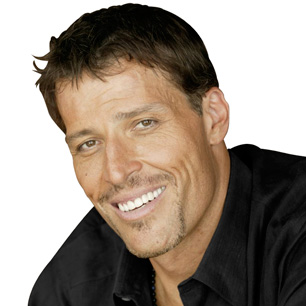
Anthony Robbins needs no introduction on this blog. I'm quite sure many readers are already big fans of him and have followed him from his NLP days until his latest book on Money, which I felt, was a very credible read.
Anthony Robbins is a one-man motivational army who has been credited with many successes today. In fact, I constantly try to compare Tool for Titans against Anthony Robbin's latest epic Money. And so far, Tools for Titans comes up short.
Regardless of his epic status as a first class self-improvement coach, a critique of Anthony Robbin's ideas is in order :
a) State -> Story -> Strategy
At a personal level, Tony Robbins has a great point about the management of a person's state. You need to be in an elevated state before you can craft a narrative to give your life any meaning. Only after these steps are taken can you proceed ahead to plan your strategy.
At a broader level, I think this is a fundamental problem with the West. The West is constantly trying to build up the self-esteem of their youths before they can start to figure out how to master something. You have overly-confident folks who can't do shit.
( How do I know ? Exchange students from EU who come into SMU always project confusion when they witness how Singaporeans get into their schoolwork.
As such, I do have classmates who are quite reluctant to have European students in their teams. )
Putting self-esteem before mastery is wrong. Trying to master something is always painful and frustrating. In my opinion. self-esteem needs to come as a result of mastery, not the other way round.
I would re-position the process differently as a feedback loop.
A minimal state can be reached where you can just barely give yourself the motivation to carry onto the stage where you develop the strategies and skills for success, Thereafter, small successes will be fed back to your personal state to reinforce your self-esteem as you go through the frustrating process of mastering something. This feedback loop often fails because your level of mastery cannot sustain your state. I learnt this the hard way during my International Moots class this semester.
At least you will understand why there are truly few masters and experts in this world.
b) Four commonalities across the world's best investors.
This is a nice section on investing that is a great lesson for readers because it has been so abstracted that it no longer has any utility.
Nevertheless, they are :
Best investor always cap the downside. Details on whether this comes in the form of put options, a cash hoard or diversification was missed. I might even argue a great career is a cap on the downside.
Asymmetrical risk and reward is also obvious but useless because they need to be discovered and exploited. Nevertheless arbitrage always wins for the best investors in the world. Sometimes the risk rewards comes from politics like betting on a Trump victory. I think the best businessmen use regulatory barriers and natural monopolies to attain this. It's not something that anyone can do by reading a self-help book.
Best investors keep a mix of assets because they know they will be wrong. I am pretty sure all investors understand diversification but also notice that it is not really mutually exclusive from the two earlier points.
The last point on Contribution is excessively hypocritical and politically correct.
Tony Robbins has been consistently talking about giving back to society in all his books stretching back to Unlimited Power. While giving back is good, a realist will give back only because he does not want to be persecuted for being wealthy. This also does not reflect the reality in Asia when billionaires avoided Bill Gates when he showed up to convince them to give to charity because we Asians are fundamentally dynastic in nature and want our children to have comfortable lives.
( I am not arguing against charity here, I am arguing against conflating charity with a wealth building strategy which Tony Robbins tends to encourage. )
The best lesson from reading this section of Tools of Titans is this :
If we keep abstracting how people get rich and build wealth for the sake of becoming more easily understood or pandering to "ordinary people", what will happen is that we will end with a set of fundamental principles which will not be useful in wealth building at all.
You will just end up with some maxims that you can toss around in an Internet marketing or MLM seminar.
Friday, December 16, 2016
Tools for Titans #7 : Nicholas McCarthy
Nicholas McCarthy is a pianist who was born without a right hand but proceeded to graduate from the Royal College of Music in London.
As this section is really short, there is only one significant lesson to share today which is about :
Playing the Long Game
Nicholas could have made a fast buck using his malformed right hand to play the piano as a gimmick, but that would have given him a very short time in the limelight. Instead, he focused on serious playing with his left hand which led to a long lasting career.
This lesson may have implications for many of us here in Singapore.
When you latch onto a new technology by attending some bootcamp ( in my case its MeteorJS ), are you looking to make a fast buck in a start-up or trying to build a long term career ?
Same goes for investing.
You see a lot of guys getting tricked or scammed by people who claim to make a lot of money via binary options. In fact, I would like to think that the same goes for the folks who sell TA trading courses. It's about making a fast buck and not about long-term wealth generation at all. In a world where people write algorithms to trade forex and stock counters, it would be ludicrous to think that it's possible to use your trader instincts to outwit an AI.
I know of some folks who peddle TA seminars who are now switching to dividends investing after many years who suddenly realise that anything value investing related requires a different and more involved skill set of reading financial statements and following the business news.
The attraction of TA has always been that you can get rich quick and can develop the ability to get started without investing time in serious study of finance as a discipline. This allows ordinary people to get started in investing.
As such, I recommend the reader to avoid any course or seminar which claims that something is "easy" and a panacea to rescue "ordinary people".
This is an age where being average is barely enough. In finding a job, developing a career, or investing your money for above average returns.
No one can develop an investing approach which can save someone mediocrity.
As this section is really short, there is only one significant lesson to share today which is about :
Playing the Long Game
Nicholas could have made a fast buck using his malformed right hand to play the piano as a gimmick, but that would have given him a very short time in the limelight. Instead, he focused on serious playing with his left hand which led to a long lasting career.
This lesson may have implications for many of us here in Singapore.
When you latch onto a new technology by attending some bootcamp ( in my case its MeteorJS ), are you looking to make a fast buck in a start-up or trying to build a long term career ?
Same goes for investing.
You see a lot of guys getting tricked or scammed by people who claim to make a lot of money via binary options. In fact, I would like to think that the same goes for the folks who sell TA trading courses. It's about making a fast buck and not about long-term wealth generation at all. In a world where people write algorithms to trade forex and stock counters, it would be ludicrous to think that it's possible to use your trader instincts to outwit an AI.
I know of some folks who peddle TA seminars who are now switching to dividends investing after many years who suddenly realise that anything value investing related requires a different and more involved skill set of reading financial statements and following the business news.
The attraction of TA has always been that you can get rich quick and can develop the ability to get started without investing time in serious study of finance as a discipline. This allows ordinary people to get started in investing.
As such, I recommend the reader to avoid any course or seminar which claims that something is "easy" and a panacea to rescue "ordinary people".
This is an age where being average is barely enough. In finding a job, developing a career, or investing your money for above average returns.
No one can develop an investing approach which can save someone mediocrity.
Thursday, December 15, 2016
Tools for Titans #6 : Matt Mullenweg
Matt Mullenweg is the original lead developer for WordPress and is currently the CEO of Automattic, a company that is worth more than $1b USD.
a) Words that Work
Matt is obsessed with a person's choice of words. Unfortunately the book does not have any examples which illustrate this point about Matt and instead directs the reader to a book called Words that Work by Frank Luntz which I purchased immediately. The books is probably about interpersonal communication and possibly a compulsory read for law students.
b) Productivity tools and hacks.
The best part of this section are the productivity tools and hacks which is great for any middle aged professional because tools change so quickly, we can't keep track of what the cool kids are doing. I'm only going to list three hacks here, the book has more :
i) Install the Momentum Chrome extension
Someone thought of creating a new front page for Google Chrome which makes the user reflect upon what he will do today and includes a nifty to-do list as well.
ii) Install Telegram as a replacement for Whatsapp
This tool is rapidly achieving mainstream use as a Whatsapp with better encryption and allows use from all devices.
iii) Use a DVORAK keyboard as a replacement for the QWERTY keyboard
I have been meaning to consider switching since the 1990s except that I have never seen a DVORAK keyboard for sale in Sim Lim. Any reader suggestion is welcome. I do have doubts about this suggestion as getting used to DVORAK means bringing your own keyboard to work.
c) 104 McNuggets
There is this strange story about how Matt ate 104 Chicken McNuggets all thanks to McDonalds sweet and sour sauce during the Superbowl. Reading the story several times, I have no idea what is the intention of sharing this anecdote to readers.
I hope readers with a clue would explain this to me.
This is random shit which should have been taken out by the book editors. But by this time, Tim Ferriss would be so famous that no sane editor would risk challenging his writings for fear of losing access to the revenues it would bring.
a) Words that Work
Matt is obsessed with a person's choice of words. Unfortunately the book does not have any examples which illustrate this point about Matt and instead directs the reader to a book called Words that Work by Frank Luntz which I purchased immediately. The books is probably about interpersonal communication and possibly a compulsory read for law students.
b) Productivity tools and hacks.
The best part of this section are the productivity tools and hacks which is great for any middle aged professional because tools change so quickly, we can't keep track of what the cool kids are doing. I'm only going to list three hacks here, the book has more :
i) Install the Momentum Chrome extension
Someone thought of creating a new front page for Google Chrome which makes the user reflect upon what he will do today and includes a nifty to-do list as well.
ii) Install Telegram as a replacement for Whatsapp
This tool is rapidly achieving mainstream use as a Whatsapp with better encryption and allows use from all devices.
iii) Use a DVORAK keyboard as a replacement for the QWERTY keyboard
I have been meaning to consider switching since the 1990s except that I have never seen a DVORAK keyboard for sale in Sim Lim. Any reader suggestion is welcome. I do have doubts about this suggestion as getting used to DVORAK means bringing your own keyboard to work.
c) 104 McNuggets
There is this strange story about how Matt ate 104 Chicken McNuggets all thanks to McDonalds sweet and sour sauce during the Superbowl. Reading the story several times, I have no idea what is the intention of sharing this anecdote to readers.
I hope readers with a clue would explain this to me.
This is random shit which should have been taken out by the book editors. But by this time, Tim Ferriss would be so famous that no sane editor would risk challenging his writings for fear of losing access to the revenues it would bring.
Wednesday, December 14, 2016
Tools for Titans #5 : Alexis Ohanian
Alexis Ohanian is the co-founder of Reddit and Hipmunk. This is a very short section of the book and has at most two major ideas for the reader.
a) You are a rounding error.
Alexis was once told by a Yahoo executive that their traffic was so small, they are just a rounding error. This is a lesson for us in taking some of the negatives being thrown at us and turning it into a motivation to push ourselves forward in our lives.
The less obvious lesson is that you should avoid wanting to talk trash and act like a dick to other people because you might wind up becoming the reason of their success.
b) You've got to give a damn.
Part of Hipmunk and Reddit's success is that they craft cool error messages which people still tweet about. This is a lesson about caring enough about your business to give attention to the small details which makes customer want to give you more revenue. A more important lesson is that sometimes, these small things takes up only a few minutes of a person's time.
The thing I noticed about some folks around me is that many can't even get to the point where they can even give a damn. Businesses can't even generate revenue. People don't even get out of bed. People want results but refuse to put in any effort then come up with excuses on why they are such failures.
Most of us are not even at the stage to find this advice helpful yet.
a) You are a rounding error.
Alexis was once told by a Yahoo executive that their traffic was so small, they are just a rounding error. This is a lesson for us in taking some of the negatives being thrown at us and turning it into a motivation to push ourselves forward in our lives.
The less obvious lesson is that you should avoid wanting to talk trash and act like a dick to other people because you might wind up becoming the reason of their success.
b) You've got to give a damn.
Part of Hipmunk and Reddit's success is that they craft cool error messages which people still tweet about. This is a lesson about caring enough about your business to give attention to the small details which makes customer want to give you more revenue. A more important lesson is that sometimes, these small things takes up only a few minutes of a person's time.
The thing I noticed about some folks around me is that many can't even get to the point where they can even give a damn. Businesses can't even generate revenue. People don't even get out of bed. People want results but refuse to put in any effort then come up with excuses on why they are such failures.
Most of us are not even at the stage to find this advice helpful yet.
Tuesday, December 13, 2016
Tools for Titans #4 : Derek Sivers
I used to shut myself down when I read about Derek Sivers because I hear about him all the time from Internet Marketers. Fortunately, thanks to Tools for Titans, I was able to acquaint myself with this person properly. Derek Sivers started a CDBaby, a business selling music CDs online and made $22 million from the sale.
I think Tim Ferriss is more excited about this section than I am.
But nevertheless, we can learn quite a bit from Derek Sivers:
a) What I like - Don't be a donkey
Will an upcoming M&A succeed ? What going on with Fintech ? Do they code this Ruby of Rails ? I wonder how they deploy this application ? Did they consider IP rights when they launched this product ?
This section resonates with me a lot because even if I was not a donkey, I am very likely to become one. With skills in IT, Finance and Law, I get more distracted these days because I can get my hands dirty looking underneath the hood of any piece of news I read.
This section reminds me not to become Buridan's Ass and become so inundated with choices, I get starved to death. If there is a generally good idea with a great pay off just go with it and don't get distracted along the way.
b) Of questionable value - Be more open to opportunities when you are new to something, you can be more selective later
This is too intuitive but there might be number of folks who get it wrong.
When you are starting out in something, you might have to be very open-minded and say yes to any gig you get. Subsequently, after you succeed at something, you might want to raise your standards a little so that you only do the stuff with a higher pay-off.
Maybe a reader can explain to me why this is such a fabulous idea.
c) What I dislike - Always choose options which maximise flexibilities
The third idea is to always choose to maximise your flexibility, preferably options which produces more options for you.
I would be careful with advise which is so general in nature.
Of course, having an option is better than having no option. But doing something with the expectation of a certain payoff can beat merely buying an option with a probabilistic pay-off. For example, a general degree opens many doors and provides many options but is worth less than a medical degree which locks you down for many years and only provides one solid career path upon graduation.
Underlying the decision tree is a probabilistic payoff equation and cannot be reduced a simple heuristic.
I think Tim Ferriss is more excited about this section than I am.
But nevertheless, we can learn quite a bit from Derek Sivers:
a) What I like - Don't be a donkey
Will an upcoming M&A succeed ? What going on with Fintech ? Do they code this Ruby of Rails ? I wonder how they deploy this application ? Did they consider IP rights when they launched this product ?
This section resonates with me a lot because even if I was not a donkey, I am very likely to become one. With skills in IT, Finance and Law, I get more distracted these days because I can get my hands dirty looking underneath the hood of any piece of news I read.
This section reminds me not to become Buridan's Ass and become so inundated with choices, I get starved to death. If there is a generally good idea with a great pay off just go with it and don't get distracted along the way.
b) Of questionable value - Be more open to opportunities when you are new to something, you can be more selective later
This is too intuitive but there might be number of folks who get it wrong.
When you are starting out in something, you might have to be very open-minded and say yes to any gig you get. Subsequently, after you succeed at something, you might want to raise your standards a little so that you only do the stuff with a higher pay-off.
Maybe a reader can explain to me why this is such a fabulous idea.
c) What I dislike - Always choose options which maximise flexibilities
The third idea is to always choose to maximise your flexibility, preferably options which produces more options for you.
I would be careful with advise which is so general in nature.
Of course, having an option is better than having no option. But doing something with the expectation of a certain payoff can beat merely buying an option with a probabilistic pay-off. For example, a general degree opens many doors and provides many options but is worth less than a medical degree which locks you down for many years and only provides one solid career path upon graduation.
Underlying the decision tree is a probabilistic payoff equation and cannot be reduced a simple heuristic.
Monday, December 12, 2016
Tools for Titans #3 : Conan the Barbarian !
It is interesting that the section on Arnold Schwarzenegger is parked under the wealth section and not the health section, but this is the best section so far. Here are the key learnings :
a) Arnold was already a millionaire before his first movie break
Arnold was already a millionaire prior to his breakthrough in the movie business. He already had a great business selling seminars, courses on bodybuilding before becoming a movie star. Having calculated that given the rate of inflation in those days, Arnold bought and held onto as much real estate as he could.
b) Arnold never auditions for his role
Another great lesson is that Arnold never auditions for his role. All of his roles were made for him. The reason he was a break-through was because he was a beefcake in an era where Hollywood was dominated by actors like Al Pacino and Dustin Hoffman. This made him different and unique.
The fact he was already a millionaire allowed him to patiently to wait for a role which only he could play.
c) Arnold's most profitable film was Twins.
This is a really teachable lesson. As no one thought that a comedy starring Arnold Schwarzenegger would make it big in Hollywood, Arnold negotiated a unique revenue-based pay-off for himself and did not ask for a salary for that acting gig. As the movie eventually did very well, Arnold was able to take a huge cut of the box office sales.
Collectively, this section showed that life is not fair. The fittest folks who excelled in athletics are also the top scholars.
The biggest lesson for me is that simply being financially independent can be a great asset to a person's future career. You can custom make a career which provides you to niche to perform well and you can take your time to structure a pay-off which gives you a big advantage compared to your peers.
Sunday, December 11, 2016
Tools for Titans #2 : Marc Andreessen
Marc Andreessen is the living legend who co-founded Netscape. Due to his godlike status, it is almost impossible to disagree with some of his points. Here are some which I think deserves further discussion :
a) Don't Fetishize Failure
I am really glad Marc said this. Failure is failure. It's a fuck-up which destroys the value of investors who placed their trust in you.
The Singapore Tech Community is guilty of this sin. In a country where some kids will commit suicide if they have Bs in their PSLE scores, I was truly disgusted when so many people rushed forward to pat an accelerator on its back when it closed down for good.
b) "Nerds at Night" Test
This is a really great idea. The value of the person is not judged by what his day job consists of but what he does at night. What you do at night goes beyond what you do for a living. It's something you are passionate about and tells us more about your potential.
When I was an IT Professional by day, I was a dividend investor and studied finance at night.
c) Study the Opposites
This idea is particularly fun. Marc studies value investors like Warren Buffett but reminds himself that he will always be a different creature. The example he cited is See's Candies which is a Warren Buffett portfolio mainstay. While See's Candies is a great value investment, a bet on it is a bet against change. Marc wants to know what a high tech candy company would look like because he is betting for change.
This one of my favourite ideas so far.
In my view, the smartest guys in law school are going to make a lot of money because they are, in essence, betting against change and for the status quo. We IT-inclined JDs need to think differently and rethink the legal sector because we are betting for change - and betting against the smartest kids in our class.
A daunting prospect.
a) Don't Fetishize Failure
I am really glad Marc said this. Failure is failure. It's a fuck-up which destroys the value of investors who placed their trust in you.
The Singapore Tech Community is guilty of this sin. In a country where some kids will commit suicide if they have Bs in their PSLE scores, I was truly disgusted when so many people rushed forward to pat an accelerator on its back when it closed down for good.
b) "Nerds at Night" Test
This is a really great idea. The value of the person is not judged by what his day job consists of but what he does at night. What you do at night goes beyond what you do for a living. It's something you are passionate about and tells us more about your potential.
When I was an IT Professional by day, I was a dividend investor and studied finance at night.
c) Study the Opposites
This idea is particularly fun. Marc studies value investors like Warren Buffett but reminds himself that he will always be a different creature. The example he cited is See's Candies which is a Warren Buffett portfolio mainstay. While See's Candies is a great value investment, a bet on it is a bet against change. Marc wants to know what a high tech candy company would look like because he is betting for change.
This one of my favourite ideas so far.
In my view, the smartest guys in law school are going to make a lot of money because they are, in essence, betting against change and for the status quo. We IT-inclined JDs need to think differently and rethink the legal sector because we are betting for change - and betting against the smartest kids in our class.
A daunting prospect.
Subscribe to:
Posts (Atom)