Tuesday, March 22, 2022

Blog taking a short break !


This is a critical period for my business as I launch my Cryptocurrency for Conservative Investors programme this Saturday, so I'm not exactly in a state to write an article. 

The nervousness of doing something totally new and the risks are also starting to get me right now. Crypto is highly dynamic and I was frazzled trying to decide whether to incorporate changes when a better approach comes by. 

I should be more relaxed next week so I'll see you then.

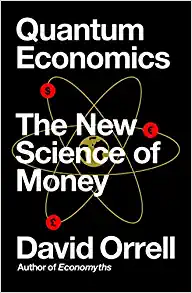
( Picture of the latest book I'm reading, not that I really understand what the author is driving at right now. )

Sunday, March 13, 2022

Garbage IT professionals and Institutes of Continuous Learning


Recently, a highly regarded professor of Computer Science that I greatly admire commented that the Computer Science department had low cut off scores and basically had a Garbage In Garbage Out problem. IT professionals who studied just enough to get a paper qualification so did not make a consequential impact on the industry.  

Actually, I would have been proud to come from a garbage faculty, but Engineering was quite decent during my time and I was AAA/B and the Dean of Engineering told me that Honours classification was generous for my batch of electrical engineers because it had students with fairly good A level grades. I understood quite deeply the tradeoff of studying Computer Science during my time. I was a Computer Science A level student and even spent time (as the dumbest guy) in the IOI Olympiad training team in NUS, but we were very concerned about our employment prospects and most of us then would not choose a Science degree over an Engineering degree 25 years ago.  

The consequence is that NUS did graduate CS grads who I felt, were a joke, the Honours class was excellent and can hold their own, but there plenty of jokers who thought coding was hard. I did two modules on Information Systems there and some CS students actually felt database programming was challenging.  The stories of girls who took CS was particularly unflattering. A pal from CS who was quite good said his grades were excellent because he basically had to tutor his girlfriend so he did every programming assignment twice. The girl even dumped him after graduation.

The NUS CS folks now have a few "outstanding" alumni. In particular, someone from their much admired Talent Development Program and Honours class is now a prominent enabler for "intelligent vaxxers" in Singapore and has had some run-ins against the law at the moment, providing hours of entertainment on the mainstream news.

 Anyway, I hope folks will not cancel this professor. Sometimes, we benefit from candid truths. Even if you do not agree with him, we should not scare elites into clamming up so that I can't read their mind. 

We should be asking ourselves what are the ramifications if the professor is right?  

In my generation, only 25% of my cohort went to a local university. Those who got into CS in the past are not the worst from my batch. These days, we happily admit 40% with the education minister trying to push it up to 50% with Institutes of Continuous learning. From this understanding, there's a lot of garbage floating around in this country if the professor is right. 

If anything, I think the professor is censuring himself because he did not share what he thinks about students from other NUS faculties or the newer universities, some with a primary Poly intake. It is not too difficult to use the Pareto principle when looking at each cohort. As economies become more specialised, volatile and knowledge-driven, 20% of the cohort contribute to 80% innovation and growth. In the future, we can end up with something more extreme, where 10% contribute to 90%.

What happens then?

The education minister has a huge problem in his hands. He thinks that we can maintain our employability with micro-credentials. 

I see some obstacles in his way :

a) HR departments will not change their practices.  

HR departments will still use the first degree as a signalling mechanism to hire staff. The best MNCs function as schools so they prefer aptitude and malleability, they can provide the training.  

The most competitive jobs will still go to the local uni grads with the best grades. Unless there is a gap in the labour market, I don't expect this to change. HR professionals are human beings, they will use a filter if only to reduce their workload.  

Personally, I do the same for stocks, I won't even look at the stock if there are no dividends. Of course, I miss out on growth, but I leave that to other investors. 

b) The top students of each degree program will grab all the best certifications

I think once folks understand that they are not built to learn stuff, the last thing they want is to learn more stuff and stay longer in school. Top students who have high morale from their academic pursuits will end up pursuing micro-credentials the most aggressively because it was a place they are used to winning in. I don't even need a resume anymore and I still pursue courses on Coursera!

The professor has already predicted what will happen. Some folks will do the minimum micro-credentials and use the paper to get a professional job. After a while, HR departments begin to flag folks with micro-credentials as garbage-in-garbage-out. 

Micro-credentials will then become the new private degree certificates.

There are a couple ways for policymakers to make Institutes of Continuous Learning work.

One approach is to cut down the intake for first degrees drastically. Down to 30% of the intake, so the industry must confront students who have ICL micro-credentials. This will reduce the stigma attached to studying in ICLs when the student can be top 31st percentile. This will be politically painful as I expect SIM, SIT, SUTD and SUSS to be shutdown or combined to form a mega-ICL. 

Another approach is for the civil service to eat their own cooking and hire ICL grads and put them on the same track as degree holders. Hiring criteria may be a basic degree or a specific microcredential. If I'm still a public servant today, I will definitely sign up for courses on balls-carrying and ring-fencing of work which is the real micro-credential we all need!

Finally, micro-credentials can be relevant if they come with a ridiculously high failure rate. The CFA, Cisco Certified Internet Expert of the 1990s, the Part A bar exam are all highly sought after because so many fail taking it. If you have enough folks in the industry who attempted it and failed it before, the credential will automatically be respected.  


Wednesday, March 09, 2022

How the Dalbar study gets abused by commissioned Financial Advisors


I had a secondary school classmate that I will call Mushroom. He was not known to have a scintillating personality and I found that he had a personal nature that was quite grasping and "kiasu" in nature. For some strange reasons, my friends in Engineering school turned out to be close to him because they did NS together and I was able to catch up with his dating life as an undergraduate in NUS. Mushroom is, after all, an old classmate. 

According to what I learnt as an undergrad in Engineering school, Mushroom had issues with dating women in spite of a decent paying job. I thought, in my arrogance then, that maybe he was boring and lacked the ability to communicate. 

A few years after work, I was flabbergasted to learn that Mushroom managed to not only find a girlfriend, he was on the way to getting married. This is a few years before I even met my wife and it definitely led me to suffer some amount of cognitive dissonance in those days.

SO I WAS BEATEN TO THE DATING GAME BY MUSHROOM! 

SOMETHING MUST BE WRONG WITH ME! 

I found out from a pal that Mushroom had a specific and powerful strategy to trap his girlfriend in his grasping appendages.

He met her in SDU and the moment he got his first date, he kept telling her that future events are a waste of time and they were going to be very unpleasant. According to my pal who provided the intelligence, he dominated so much of her time that she was unable to review other better matches in SDU which was why he ultimately won.

Commissioned Financial Advisors also find success in utilizing the Mushroom Strategy, basically covering their clients in so much shit and keeping them in the dark so that they can't achieve any financial agency on their own.

One mechanism to do this is the Dalbar study. The idea is that while low-cost ETFs may outperform actively managed unit trusts,  in practice, retail investors do not have the willpower to buy and hold to realise these gains. So according to Dalbar, the Average Equity Fund Investor underperforms the market indices. 

I would not want my daughter to be smothered by human fungi when she reaches dating age, so I'd like to share some ideas on how to disarm the Dalbar study.

a) What is the extent of this underperformance?

The most obvious answer is the question of what this gap is. According to this link. The gap is around 1.11%. So one counterargument is that even if an investor underperforms, the underperformance is lower than the difference in management fees of ILPs and unit trusts compared to ETFs.

This argument is good, but the gap changes over time and your FA may pick a study where the gap exceeds the management fee.  

b) Underperforming the index on your own does not directly mean that you have to buy from this FA. 

Mushroom will try to convince his girlfriend that the SDU outings suck and she won't get a better deal, but SDU is not the only game in town. She can visit a matchmaker or she can follow my approach by signing up for multiple language classes to find a mate. 

Similarly, robo-advisors are killing it in the markets with some quasi-active portfolio plans. There are also services provided by non-commissioned FAs.  

c) Bayesian Inference can still show that you can still win in a DIY game.

The Dalbar study shows the outcomes for an average investor, but you really know where you actually stand in a population. There are possible factors to suggest that you can potentially do better such as a higher intelligence and a higher conscientiousness.

If you have a degree, you already exceed the minimum requirements to become a financial advisor. If you read investment forums, you already know more than the average person. If you are crazy enough to invest time to follow an investment talk. If you own and have read a copy of The Intelligent Investor. If you read my blog, even more so! 

All these factors may suggest that you will do well when dealing with your own investment.

If readers encounter more strategies used by FAs please share them with me and I will happily work towards debunking them. 

One of the saddest developments in the financial blogosphere is that my source of research ideas is down at the moment.


Saturday, March 05, 2022

Personal thoughts on having expiration dates for degrees

Recently a local politician kicked a hornet's nest by suggesting that degrees have an expiration date. If he is right, I will have no degrees by the end of this year. I am actually cheesed that some really smart folks actually agree with him arguing that people tend to forget what they learn within a few years after graduation. 

I have a different crypto-based argument.

Imagine you've accumulated a number of NFTs in your wallet. Some dickwad who collected enough governance tokens start proposing that all NFTs minted more than 5 years ago can no longer be moved out of any wallet.  

Would you be angry if you've paid good crypto for your NFTs? 

Invalidating someone's expertise is not the job of a government, it's the job of HR and the reality is that we already face a virtual expiry given the kind of degrees we earned. The worse case, maybe no one wants to buy your NFT because no longer fashionable to own, but you still need the right to be able to sell it off. 

But are our old degrees really worthless?

Let's talk about the business of cryptocurrency course creation. My program, as it stands, does make money to feed some mouths not just for myself, but indirectly for some really capable folks of Dr Wealth. As a new entrant to Cryptocurrency courses, I know that I have weaknesses like a lack of testimonials from students because I've yet to teach my first batch, but let's look at how my "useless expired degrees" played a pivotal role in creating a unique program.


a) Bachelor in Engineering from NUS in 1999

An engineering degree should be worthless after 22 years, but I still need to adopt the beginner's attitude when I learnt how to code in C++ MFC 22 years ago which was unsupervised. I picked up OOP without a course on it so it was a real mess. Learning windows events driven programming from scratch without guidance was way harder than picking up data science and invoking libraries in Python. 

I'm now able to write Jupyter Lab documents, share them with my students so that they can do their own market timing. 

b) Master Science in Applied Finance from NUS in 2002

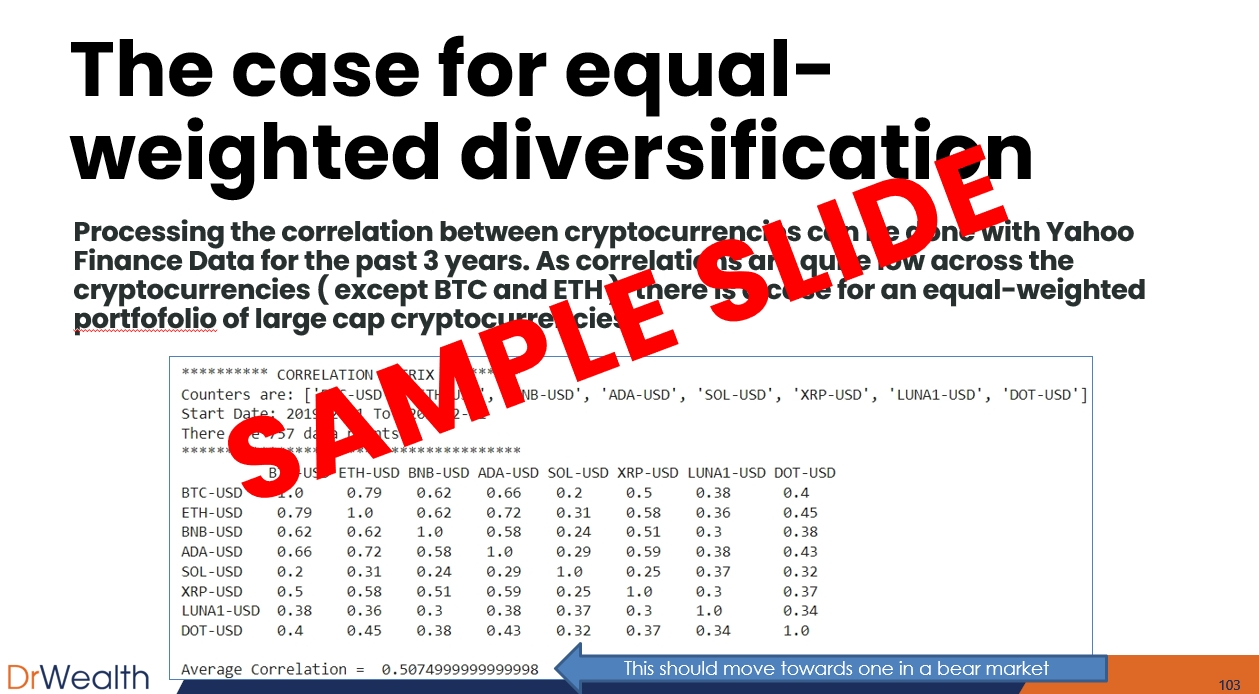
I actually spent a lot of time studying CDOs in NUS before the Great Recession of 2008, they were hilariously such a big deal in those days. But one of things I learned in my fund management class is that when shit hits the fan correlations all go up and diversification between stocks and bonds becomes worthless.


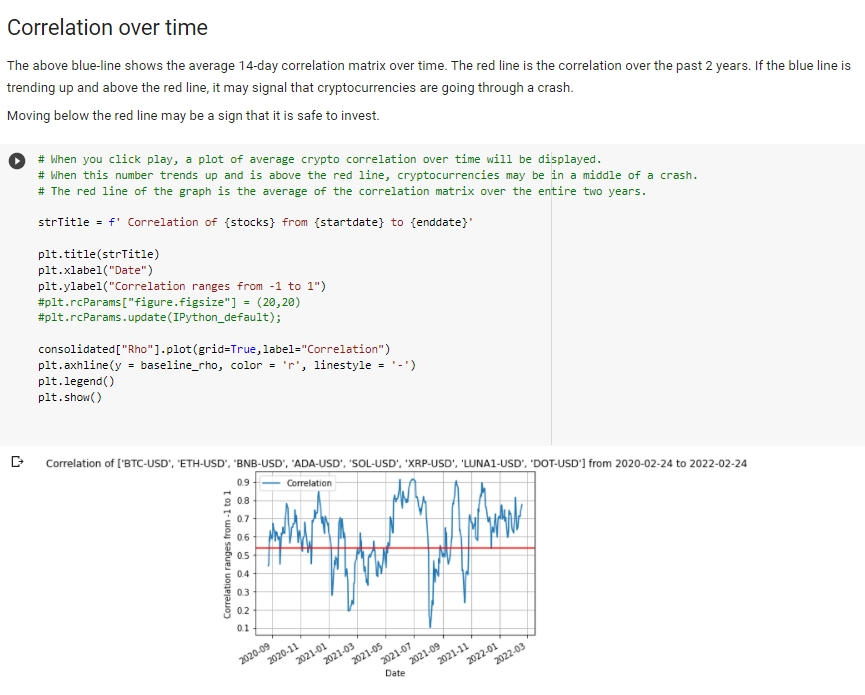
These days I can generate correlation matrices using Python and I've written code to track correlations between the largest pairs of cryptocurrencies and average them up in a time series. With this, my students have an alternative means of measuring the amount of fear in cryptocurrency markets which have indeed trended up since the invasion of Ukraine.

c) Juris Doctor from SMU in 2017

Until last night, my legal training played a minimal role in course creation but something dramatic happened in the crypto-space, the Singapore High Court made it supremely clear that crypto is property. 

In English, this means that folks can go to jail for CBT if they steal people's crypto. You can also establish a trust relationship over crypto assets. Spouses who try to convert matrimonial assets into stablecoins before the divorce had better be careful an associate is not trained to track money flowing into crypto exchanges.

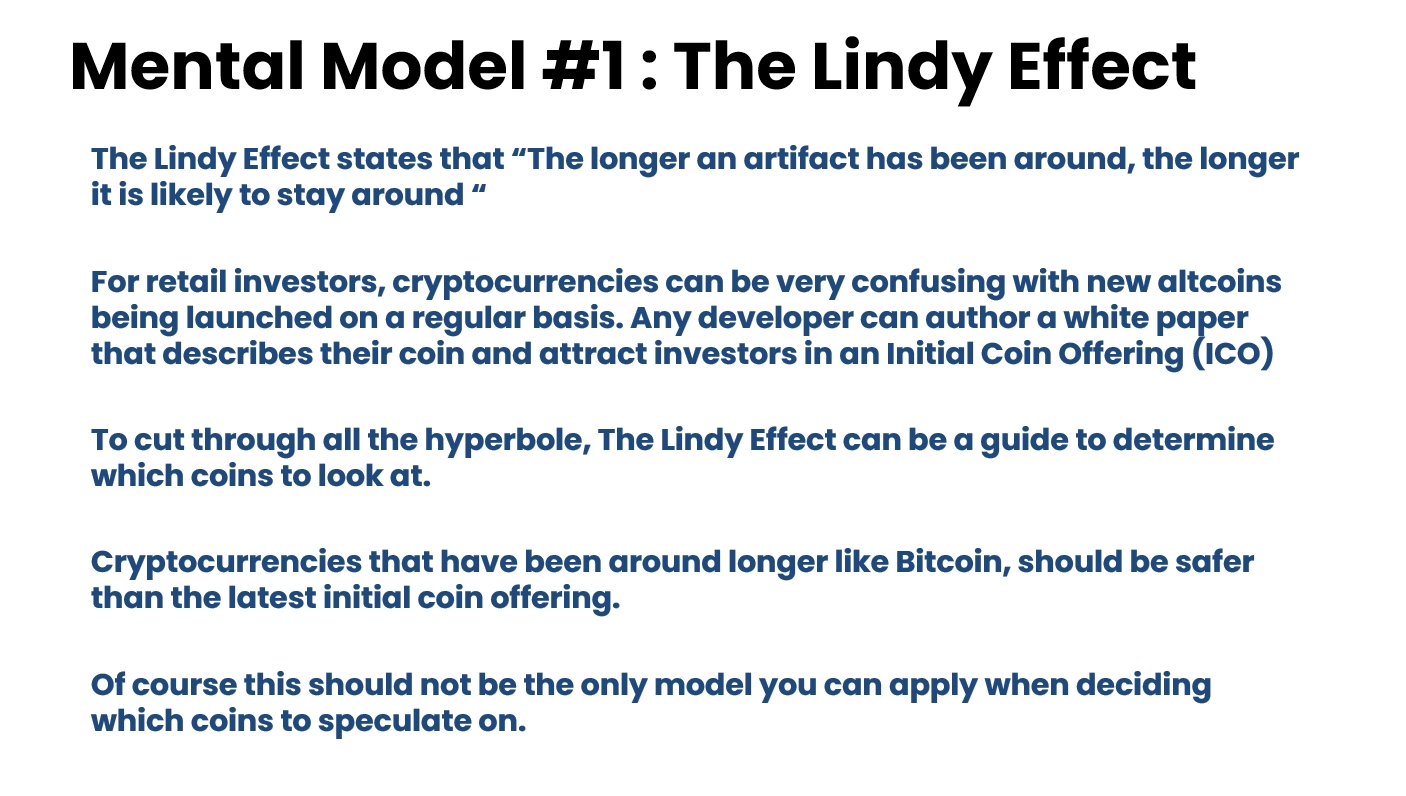
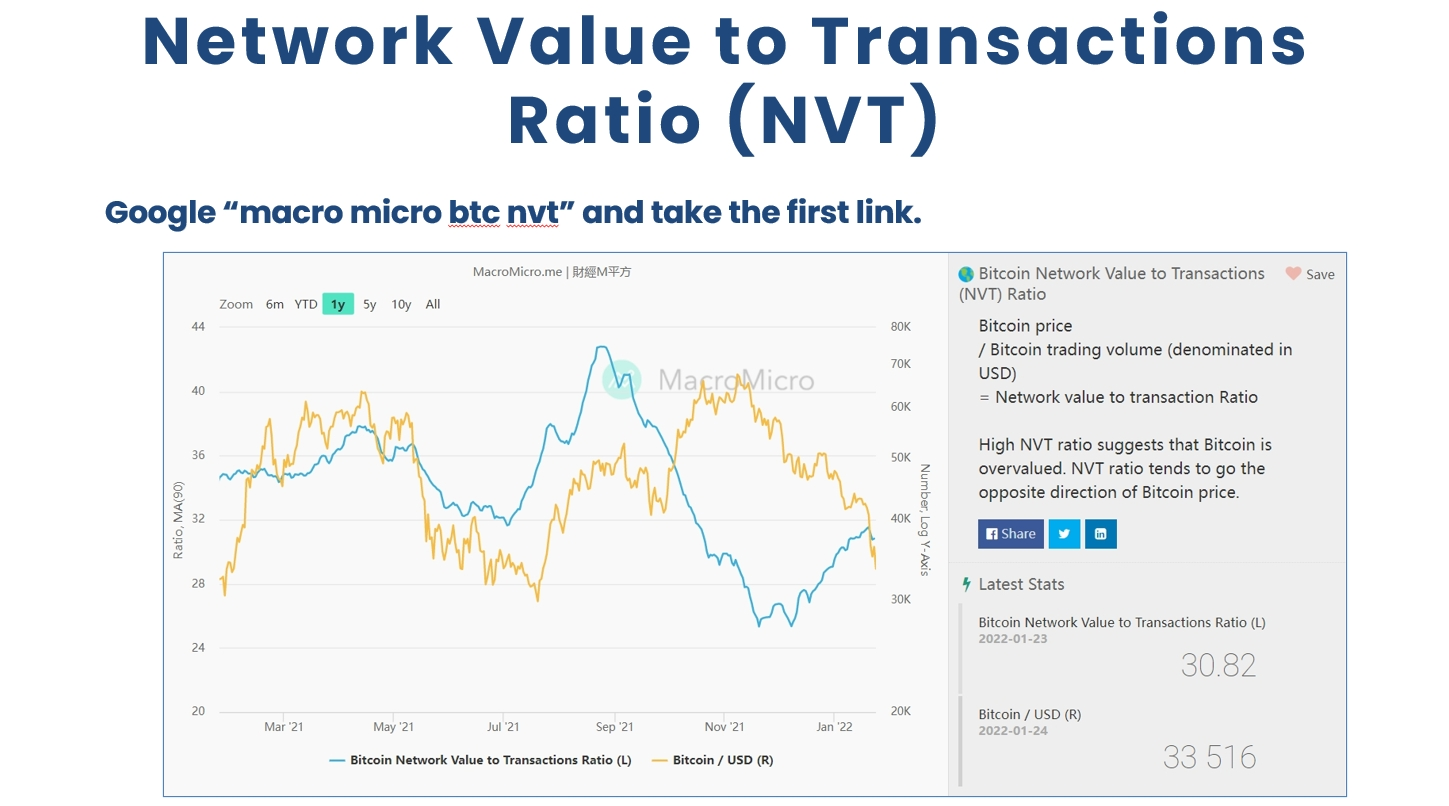
So this slide happened : 


As far as I'm concerned, I think my old degrees are as good as they were when I first got them, but I suspect that they have been upgraded over time because I was obsessive about applying them into any domain that I get myself into. It happens that the domain I am obsessed with always involve money.

The trick is to gain a sufficient degree of financial independence so that you can design a vocation that leverage all your strengths, which includes your eclectic mix of degree qualifications. There is no job in Singapore that will allow me to leverage all my qualifications at the same time but I can invent one on my own. 

I call my combination a horizontal Phd, I prefer three degrees in disparate fields than having all three in one narrow expertise. 

What I lack in tenure, I get from my dividend payouts and stablecoin yields. 

Feel free to join me for a chat in my next preview : 

https://us02web.zoom.us/webinar/register/8216444863739/WN_VKnu5nn8SWClzksXbU3TEA


Sunday, February 27, 2022

My Path to Immortality


I think the question of immortality is an important one in personal finance because we do not know the time when we will leave the earth. That inability to predict when we will die forces academics to rely on mathematical models to simulate safe withdrawal rates. 

One standard idea I don't subscribe to is the concept of consumption smoothing, a futile modelling exercise that determines your standard of living given multiple variables like your income, your portfolio size and risk appetite. In my worldview, if you can establish a standard of living assuming that your lifespan is infinity, then that should be the way you should live - the excess should go into FIRE.

So I'm actually very interested in Longevity and the idea of living forever. Adding years to my life gives me a bigger incentive to load more money into CPF Life and take on the Basic plan that produces more monthly income every year. 

Sadly, in practice, I probably would live a life much shorter than most readers because I am a type II diabetic. Worse, thanks to CNY and poor discipline, my HBA1C leapt from 7+ to 8+, which means that I need to act quickly to bring it down again. 

The hikes I have with my young friends are not really helpful (but it is still fun) because the highlight of these events is often the food, and there's nothing to erode your willpower to resist good food more than a 12km hike.   

So I'm creating some lifestyle changes this week :

a) Bringing back intermittent fasting

I have tried IF on and off in the past but could never muster the willpower to sustain it. This is complicated by the cocktail of drugs I eat because it drives me ravenously hungry. Still, I have attempted to bring it back and so far reduced the number of meals I take to two a day.

b) Some swimming and hiking will be maintained with some resistance training

The moment I get comfortable on IF, I need to find a way to bring some resistance training back into my life which means that somehow, in addition to swimming, I have to start planking which is something I dread. I can barely plank 30 seconds but, according to my new physiotherapist friend from SIT and some googling, this is the best way to do resistance exercise. 

c) Added Resveratrol to my daily cocktail of nutraceuticals.

My drug cocktail is almost maxed out and my specialist now encourages me to do my own research into nutraceuticals. I discovered Resveratrol which is made from grape skin which has anti-aging properties and can improve my insulin sensitivity. 

The problem is that resveratrol is super expensive. $70 a month from GNC and my doctor pal tells me that my dosage is not as high as dosage researchers use in their experiments. If any reader has a cheaper way to get more of this, do let me know. 

d) Added Rybelsus into my drugs cocktail

This is the big one. Rybelsus is the latest and greatest diabetic drug that works on a new vector and can lower my weight further. It is also free because manufacturers are offering it to Singaporeans as a trial to convince hospitals to stock it. 

Right now I expect results in about 3 months and my doc explains that even if it works, the drug may not appear in government pharma for a while so I have to buy them from Guardian. 

I expect this to cost a bomb later, but then again, it may not even work for me. Maybe I should worry about the finances later. 

Sometimes, I wish that my fiscal discipline and savvy can transcend boundaries and make me fitter and healthier, but who am I kidding right? If this is easily applied to other domains, physical trainers can also become top hedge fund managers. 

There should be new content from me coming up on the Dr Wealth Blog this week. You can also sign up for my previews this week by clicking the links on my blog sidebar. 


Monday, February 21, 2022

Making new friends from SIT


A long-time reader contacted me a few weeks ago and invited me to speak in SIT in an event conducted by a breakaway public speaking club that splintered off the Toastmasters movement. We spent some time trying to make the event a reality until SIT bureaucrats wrote to me seeking acknowledgement on three sets of rules that I had to follow during the event. 

One rule which I cannot abide by was that I am not allowed to disparage SIT as an institution during my talk. 

I felt that this rule infringed on my freedom to express candid points which, if I'd executed the talk, would ultimately do SIT students a lot more good than ill. It is also unfair that a tenured professor can flout this rule without threatening his career.   

So let me give you an idea of the speech I intended to give :

  • I hoped to open with a comparison of salary and employment data on the latest graduate employment survey. Although the data is not in yet, I believe that there is a salary gap between NUS and SIT if current trends from last year persist. 
  • I will also review the apprenticeship results and compare that with papers written by government economists to build up my case further. If what I read is correct, apprenticeship numbers are too low to move the needle at the moment to even justify sending my own kids to a polytechnic.
  • What I will attempt to draw from my data is to support the conclusion that an SIT graduate would need more than just their degree paper to compete against the Big 3 Universities. Life is unfair.
  • I will propose "qualifications laundering" to resolve the issue - SIT graduates can trawl through Coursera to "graduate" with Ivy League or MIT credentials based on topics of their interest. This is a signal that they are truly passionate about their career.
  • They should also supplement their resume with a CCA leadership record.
  • Finally they will search for jobs that they only a rare few would enjoy. ( Eg. Embalmer )

In my planned structure, there will be multiple points where I can be seen as disparaging not just SIT but also some government policies. Even if my reader would enjoy my presentation, I doubt he can guarantee that I would not hurt the feelings of some of his classmates. The likely outcome may be getting cancelled like Jordan Peterson. 

So I made the decision to cancel the talk.

 If I'm going to acknowledge a set of rules, I should sincerely abide by them. In this case, I know I can't.

I think both myself and the students have worked hard but could not come up with a program and there was wasted effort on both sides, so I got them out and bought them some coffee. I also suggested a few names who can replace my speaking slot.

SIT students turned out to be great ambassadors who spent time explaining to me their coursework. I was informed of many misconceptions I have about SIT - there are actually A level students in the program. 

It was also a great learning opportunity for me. The valuable ideas I got from them is how young people look at their personal finances and it's very DeFi and crypto-centric, I promised that what I learnt from them would influence the training I am about to conduct. 

Overall what is my impression of SIT? Actually, it's always been positive because Dr Wealth sales staff are products of the program and I am a beneficiary of their excellent work ethic. 

But I did make a disclaimer - I have been super candid about polytechnic graduates and private degree holders on this blog, given what I read I doubt I'd even spare NUS Science grads in a future article - so it would not be fair to talk glowingly about SIT simply because I really like their graduates. 

I would like to review the graduate survey numbers before I set out a concluding article on SIT. 

The NUS and NTU survey numbers are out, I'm still waiting for SUTD, SUSS and SIT.


Wednesday, February 16, 2022

New Product Launch - Cryptocurrency for Conservative Investors !


Yesterday, we've just finished a practice session of my new product launch and, boy am I grateful to have business partners. As the creation of sales materials and the product is simultaneous in my industry, the material I built meant for tonight was somewhat inadequate with quite a number of flaws, so I spent the past two days improving it for the mainstream audience.

But tonight I am ready. 

At 7.30pm, 16 February 2022, I will be conducting a preview of my second product Cryptocurrency for Conservative Investors. This product is designed for investors who are thinking of taking up a fresh position in cryptocurrency but are sceptical of the ridiculous push that cryptos have been getting in social media.


My course offering has a unique number of strengths. We've already built a network of partners and a library of tools in the ERM program that can readily be deployed to analyse and manage a portfolio of cryptocurrencies. On top of reading voluminous tomes on crypto investing, we're ready to challenge existing orthodox views on crypto investing. 

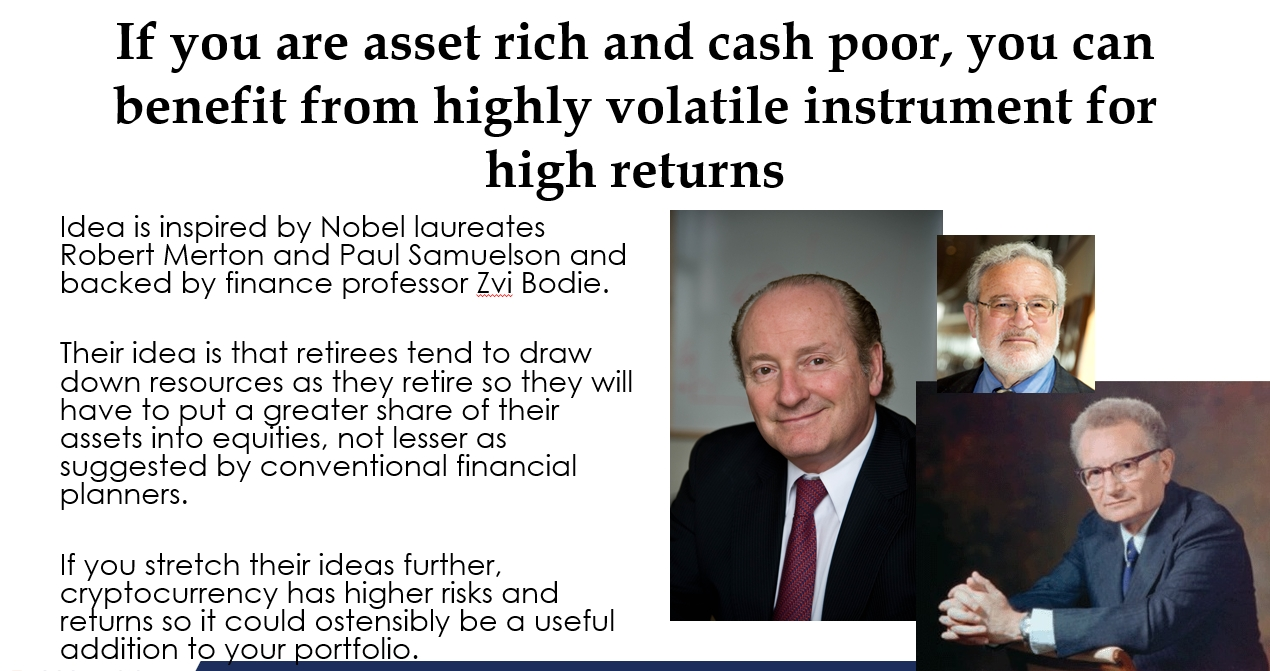
We've also got the backing of some older academic ideas. 


This is a discussion that will bring different generations of investors together. We will attempt to unify the prudence of Boomer and Gen X along with the dynamic optimism of Gen Y and Gen Z. 

Mor specifically, I will discuss the following :

  • Generational considerations when it comes to cryptocurrency.
  • What a conservative investing profile for cryptocurrency should look like.
  • What precautions need to be taken before starting a journey in crypto investing.
  • How to complement an existing portfolio with a position in the cryptocurrency
You can sign up by following the link here :


As it is almost a trial run, we have yet to ramp up marketing efforts, so it should be a cosy meeting later. If you are free, why not come along to have a discussion with me. 


Monday, February 14, 2022

Valentine's Day thoughts in 2022


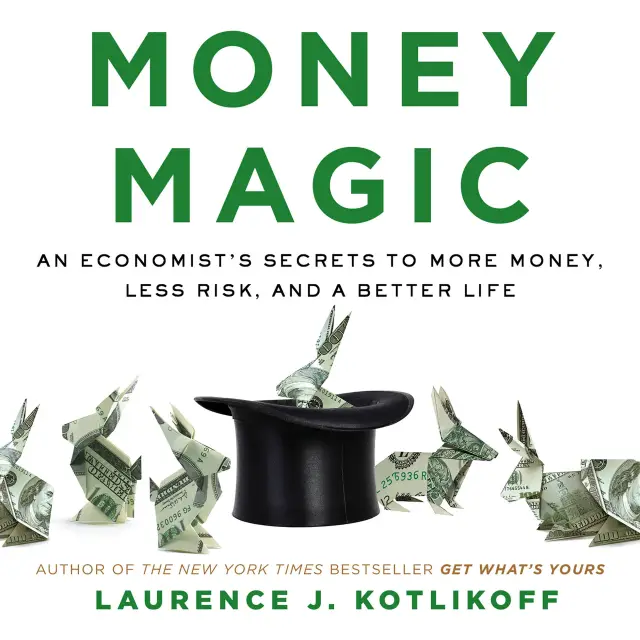
In spite of a busy schedule, this blog should say a few words for readers every year on Valentine's Day (VD). This year, I've decided to borrow some heavy firepower from Laurence Kotlikoff who is an economics professor who wrote this wonderful book called Money Magic. The book is kinda hard to read as it focuses a lot on the US context, so quite an amount of work is required to re-contextualise it to Singapore and I must say that it has changed the way I think about personal finance and these changes do percolate into my training materials.

I'm just going to focus on some main points made by Kotlikoff on marriage. I think marriage has taken a hit in Singapore as young folks have much better options to settle down. For guys, they can farm their crypto coins at double digits yields to live a carefree life playing Lost Ark all day. For girls, well there's plenty of literature to convince them that it's no fun to be married and have kids. 

I still think that there is ample evidence to support marriage in modern societies even though major issues like divorce and kids increase the risk of going through the process. Here's what Kotlikoff have to say in his book :

a) Marriage is about economies of scale within a household.

Romantics prefer Shakespeare Sonnet 116 when it comes to marriage. Even I included lines of it in my marriage album. 

In practice, I prefer to use economic data. 

A single person aged 65 needs $1,768 a month to live a dignified existence. A couple of the same age needs only $2,419. The rule of thumb across societies is that marriage cuts expenses for each party by about 20%, so much so that US levies a marriage tax penalty when rich people shack up. Singapore actually gives you HDB benefits as a couple. This should offset nerf single living.

The main issue with this argument is that young folks live with parents so they won't feel the premium associated with coupling, but the numbers become very clear after age 65.

b) Ceteris Paribus, you should marry someone rich  

I had lunch with a doctor pal and ask him what happens to single women who become medical specialists. He said they struggle a lot because they are always looking for someone better than them. One of his colleagues is dating some CFO of a company who is in his 50s even though he is triple-divorced. He even said he can introduce them to me but they might be twice my size, conveniently ignoring the fact that I am married with kids. ( Maybe these doctors don't mind. )

But if I'm single, why not? 

On first inspection, it looks like advice for gold-diggers but Kotlikoff meant for the advice to apply across different genders. If you marry rich, you can raise your standard of living and you can do this without penalizing the other party because of point (a). Kotlikoff argues that wealthy people can provide just the same amount of care and love, poor people can give. 

I agree with Kotlikoff, but he should account for psychological studies. Some folks are rich because they're disagreeable. I can't make a pile if I listen gullibly to a commissioned financial advisor. But rich people are hedgehogs. 

We're spiky on the outside but we're soft underneath. 

I think the only difference is that rich people can't complain publicly about anything because of "first world problems". 

If your Lambo develops a flat tire, go ahead and cry me a river. 

c) Divorce happens, but plan for it.

Western societies have high divorce rates, Kotlikoff has really great but unpalatable advice for folks planning to get married. 

One approach is to use a prenup but there are simply too many complications to make it work here with the Woman's Charter. But the best advice squares with my short stint in Family Law. Divorce only if it is profitable to do so. In other words, ask yourself whether you hate the other party so much, you have to lower your standard of living by, say, 35% Another tip is to agree on the standard of living post marriage. then work towards that number involving as few lawyers as possible. 

I don't see warring couples doing this in practice, so good luck to you.

Anyway, I noticed that singles have been too quiet on VD. If you have nothing else to do, better don't visit a watering hole, they are playing a lot of sad songs by Air Supply today according to my single friends. 

But this book and read it!  


Thursday, February 10, 2022

Spinning the Wheel of Misfortune


Some readers may notice that there's a certain radio silence coming from me. The first reason is that I don't have to market my next ERM course until March 2022. The second reason is that I'm busting my ass trying to complete building my cryptocurrency course that is targeted at conservative investors. You can expect the first preview in about a few days on 16th February 2022 and I must say that if you want to catch me while I am still raw and may cock-up a course preview, there is really no better time to catch me. 

( Sign up in this link ! )

Today I'm going to talk about two scenarios. Which scenario do you prefer?

A) You earn a bit, other people earn a lot, and get in your face about the whole matter.
B) You lose a bit, other people lose a lot, and you have the option of getting into their face.

If you have been doing local stocks focused on dividends, then for the past 10 years, you are experiencing (A). But recently, because of the Tech Rout, you may be going through (B). 

My recommended single stock United Hampshire REIT  in a Dr Wealth event last year did not do well since the recommendation was made when it was $0.75 and it is now only $0.625. But since putting up that position,  it earned about $0.03 US cents in dividends, so it's a 13% loss. But another stock recommended in the same panel was Palantir which was a Tech crowd favourite that got a recommendation at $24 and it's now trading at $14. 

That's a 42% drop. And I am elated. 

The truth is, for most dividends investors, our characteristic portfolios have a heavy dose of mean reversion, we do bounce back, short-term is fine and I'm even leveraged above x2.

As dividends counters recover with leverage, something interesting happens, your collateral increases while technology stocks drop. This is compounded more aggressively if you received leveraged dividends at the same time. 

I call this The Wheel of Misfortune. 

Imagine a wheel with different investing possibilities: Cryptocurrencies, US Tech stocks, Chinese Tech Counters, local Tech, local data centre REITs. When SG Banks began to climb this year, leveraged investors get to Spin the Wheel of Misfortune. 

I think some of us are playing this game wrong. I'm seeing more messages congratulating dividends investors for their wisdom and no one seems to be rubbing it into the STI recently. I think trying to emulate dividends investors is the dumbest thing to do right now - I have millions of dividends counters accumulated over the past 15 years and it produces an MP's allowance every month. 

To play the Wheel of Fortune, you need to see who is bleeding the most. Who is the quietest on social media after months of non-stop flexing and bragging on social media with their magical ability to find growth stocks or alt-coins. The kind of beta males who go on a Tinder date and then, with no career to speak of, spend hours regaling their dates with stories of their cryptocurrency trades, earning a blacklist from the ladies.

Now is the hard part.   

As much as you may disagree with their flexing and self-aggrandisement, you need to take this latest round of dividend payouts and shop for counters that are producing the biggest amount of hurt for their investors.

I've got a lot more collateral on my Interactive Brokers account and after spinning the Wheel of Misfortune, I think Palantir seems to be hurting the most. I went in on IPO day and I paid $10.50. Now it is trading within $12-$14. I did overpay sometime ago for $24 so my average price is only $15. 

So I've been buying Palantir up throughout this week, from $12 to $14. I've quadrupled my position so far and I'm likely to go further over the next few days. These days, I'm less afraid of a margin call - I have enough stablecoins farming yields that I can withdraw to avoid liquidating my leverage portfolio. I'm also supplemented by dividends from an unleveraged portfolio. Do note that I know very little about PLTR, IMHO, it's impossible unless you've handled their Gotham or Foundry software yourself. I doubt the gurus know anything about the counter.

I think it's time the reader spins the Wheel of MisFortune too. Other candidates for me include ETH or HK Tech ETF 3067.  

At least when the kuailan comes back in a few months ( and you know it will happen), I've got a credible tech and cryptocurrency portfolio to share the joy of these flex bros. 

This blog will reduce its update frequency until I complete my work to launch my Cryptocurrency for Conservative Investors programme.

Wish me luck !


Friday, February 04, 2022

Your attention is an asset that needs to be allocated well


Even as you attain FIRE, you will still have 24 hours a day. If you are unable to manage your time, you will spend the rest of your life drowning in Netflix series and computer games which will never end. This makes Indistractable by Nir Eyal relevant self-help for folks who don't really need self-help books anymore. Ultimately, your attention is your most valued asset and needs to be allocated with a lot more care than maybe even your financial capital.

I will share three ideas that can make an immediate impact on your lives.

a) Timeboxing your day

The first idea is to timebox your day and allocate your hours to perform specific tasks. Because we get interrupted quite easily, allocating your time to a specific appointment or job, would not only make you more efficient, it can also make time for tasks that involve rest and relaxation.  The author even has templates, but I think Google Calendar should suffice.

b) Turn off desktop/tablet/mobile notifications

 I was beating myself up for not figuring this out earlier. Notifications can be a time drain we don't appreciate how annoying they can be until we realise that your life is being run by them. You can get more stuff done if you disable notifications on your desktop, but this should extend to messages and Whatsapp on your mobile phone. I'd also like to point out that if you need to be notified of the price level of your investments, you're not investing right.

c) Use Pocket or Instapaper to read an article later

I actually don't use this hack because I read RSS Feeds with Feedly so I'm ahead of the curve. But sometimes a friend sends me an article to read and I should have a system to push it offline so that I can read an article in batch. This is probably a worthy investment of money to get an app to do this. 

To wrap up all the tips and tricks in the book, the author proposes a fairly effective idea to make these interventions stick. One way is to create a personal identity and see yourself as someone who is 'indistractable'. 

But I think crafting your identity this way lacks ambition.

I think if we can accept that crafting an identity can make positive and permanent changes in our lives, I would prefer to see myself as an "expert in asset allocation". We are not just good at putting our money into different securities to earn a good return, we are also really good at allocating our time. If you extend this idea that financial capital is just the tip of an ice-berg and there are other forms of capital like social and cultural capital, then this expands the power of your new identity quite dramatically and you can think of some tips beyond just reading this book.


Tuesday, February 01, 2022

虎 cares ? I do ! Because Grand Duke of Jupiter !


If I believe the Feng Shui Masters, I'll be experiencing a tough year as those born in the year of the Tiger will come under the influence of the Grand Duke of Jupiter, which is sort of like having a very fierce celestial auditor looking over your shoulder for the entire year. The year is not totally a disaster, and Joey Yap even said that this is not the year to be passive and low key. By taking bold action, the year can pay off for folks like me for years to come. 

It is no accident that things are already shaping up to be rough. As the lockdowns get more sustained, we find that investment training has gone online and it has attracted a lot of newcomers who want to give this career a try which creates a larger supply. This has turned the entire industry into a red ocean with my own revenues dropping over the past two years. 

So this has to be the year things turn around. I will launch an online programme to show conservative investors how to incorporate cryptocurrencies into their existing portfolios. I hope to bring the quantitative framework and candid approach to cryptocurrency investing that will be different from other programs. 


To make this happen, the articles on Dr Wealth will change slightly and will be pivoting to more crypto content and my ERM previews will cease until around March 2022 after I complete designing the new course. 


I suspect I have a different way of creating training material. I start with a skeleton of my slide deck and add material whenever I find something useful in my readings, I have read quite a number of cryptocurrency books already, but naturally, slides need one more level of refinement to capture the current state of the crypto markets. 


Right now the material I will include in the programme is still fluid as I'm still in the business of slide building. I also have no idea how pricing will be done because this is designed to be very much hands-off.


I'm also facing multiple challenges getting this programme out, while there is enough material to get things up and running for an older investor who wants to get into crypto, I think my personal reputation as a trainer will not survive if customers conclude that it's possible to google everything I teach which is why I treat this almost like a final year thesis to write my stuff.  Another question is whether I will hard fork or soft fork my ERM community, which I treat like my closer pals. 

Finally, I won't launch a course without a real portfolio of my own. Right now, I'm still building my own cryptocurrency reserves and a significant amount of dividends will be channelled in that direction based on the materials I build. In this sense I am lucky - the crypto crash opened up the possibility of bargain hunting and I'm definitely not buying at ATH.

Anyway, enjoy the preview of my personal notes, they are not ready to be lecture slides (yet) and you decide for yourself whether the opening GIF made by the trolls of Dr Wealth accurately portray the lives of their trainers. 


Sunday, January 30, 2022

Do you trust our education system?


This is something I want to write about recently. My wife went to a meeting between parents and teachers and was really shocked at how vicious and unreasonable parents can get when they handle their teachers. 

Two specific events show that things may have gotten too far in favour of parents :

  • An old math teacher was attacked because she wrongly marked her scripts, this is bad but, in her defence, she marks her script until close to midnight. 
  • A Higher Chinese teacher was attacked because her Chinese was too 'cheem'. At least this teacher fought back, if you can't hack Higher Chinese go back to Lower Chinese. Also, because this teacher was PRC, I suspect some amount of xenophobia played into this.
In both cases, this would not have happened in my era.

I'm not going to defend the parents, but I explained that complaints will continue authorities will put a stop to this to protect the sanity of their public servants. 

If more VPs and Principals grow a pair of balls, we will not lose our best teachers to the private sector.

That being said, I do think my generation has reasons to be like this :

a) Complaining works in Singapore

The first reason is that Singapore is probably the rare country where complaining works. Our bureaucracy has a tendency to overcompensate when things go wrong so complaining is highly profitable. 

It's not surprising that Singaporeans grow up thinking that complaining is a great solution. Sadly complaining often fails or backfires in other countries ( like in Malaysia )

b) Some Gen X do not trust their educators

The second reason is that Gen X does not trust their educators. We were taught to be industrial drones while the economy transitioned into an information economy. There are still regrets of rote learning and memorization even though schoolkids do less of that these days.

I have my own tales of woe :
  • In secondary school, I had a Physics teacher who set an MCQ question and got 10 out of 50 answers wrong in a paper she set herself! I went to the library, got an A level text, got another physics teacher as referee and argued my case in the principal's office until the teacher relented. After that incident, there were rumours that the paper was copied from Nanyang Girls and the answer key was taken from her own daughter's answers. I suspect my legal training started then. I traumatised the teacher so badly my class had no physics teacher for 2 months and it was an O level year. Staff who remember the incident still ask after me today.
  • My secondary school refused to start a triple-science class because the principal believed that we were not good enough to become doctors to take a triple science workload. I don't understand why an entire generation of students must suffer to be underestimated this way.
  • Polytechnics sent lecturers to speak to us to tell us half of us will not qualify for university if don't get single-digit O level grades. I asked my RI pals whether they got the same delegation and apparently, they did not.
My own bitterness against my teachers only faded after I arrived in JC, then I was more accustomed to teachers who knew what they were talking about. Sadly that lasted only 2 years.

c) Parents also get slammed by their bosses and customers at work

I think the final reason is that parents are also human and underperform at the workplace so they get picked on as part of their work, so when they see teachers making mistakes, they get to pounce on it.

When I was working with that government agency, my supervisor, the same lady who asked an Indian contractor whether he was participating in the Little India Riots, once bragged to me how she and a bunch of parents nailed an underperforming teacher in NJC. She used to get so stressed at work from her boss who was known as the Invertebrate of the office.  

Most of the unhappiness is just what was being passed around.

I think the Ministry needs to put some brakes on all this abuse of teachers. Some of them are being abused for things done by seniors decades ago. If 500+ lawyers can just walk away from the legal profession, I fail to see why teachers cannot reinvent themselves as tuition teachers to get a semblance of sanity back. 

Let's see whether The Great Resignation will affect the teaching profession next.

If you are a burnt-out teacher, why not google the "FIRE movement" and learn how to rebel the smart way.


Thursday, January 27, 2022

On FIRE, investing and suffering


This is a very good time to talk about suffering because most of our portfolios are down. 

Tech stocks in both China and US are probably experiencing the most pain and this is likely to sustain as interest rates begin to rise and we're starting to see threats of war in Ukraine. REIT investors have also been battered as of late as investors treat them like bonds although I must say that the effects on my portfolio are minimal given that my banking stocks allocation is currently holding up to minimise my damage.

Although I'm losing money every day and feeling some pain, I'm really enjoying this because the cockier Tech investing bros are absolutely getting thrashed, currently licking their wounds, and hiding at the moment. I also expect to relish the idea of commissioned FAs who brought focused tech-based portfolios to their hapless clients trying to explain their strategies to them. This is the moment we see commissioned salesmen begin to talk about long term investing, long term annualised returns, and dollar-cost averaging. 

This brings me to this book The Sweet Spot by Paul Bloom, which talks about the centrality of suffering in our search for meaning. If you enjoyed reading The 50 Shades of Grey and long for the non-fiction equivalent, you should look no further than reading this book that actually has dedicated sections on the pleasures of BDSM.

The key idea of this book is that seeking pleasure is not enough for human beings. Beyond pleasure, human beings want satisfaction and meaning in life. This is why people volunteer to perform acts that may seem uncomfortable at first but contain a long term payoff. Acts include mountain climbing and childbearing. As a dad to two kids, I can never understand why my wife would volunteer to create kid no. 2.
 
But as we think about pain, we should take note that satisfaction only comes from voluntary pain. If you pay a dominatrix to shave your balls, you may obtain pleasure and find it money well spent. But if your client kidnaps you to shave your balls because you asked him to put all his money into a US Tech-focused unit trust, it's probably not even half as fun.

I suspect this book really provides hints on how to succeed in FIRE.

FIRE can be painful but it is really a process that is totally voluntary. 

You have to work hard, forgo enjoying your income, and then study how financial markets work. We cannot expect everyone to really rave about doing this for about 8-12 years of your life. I think for FIRE to work, people need to let it give added meaning to their lives. 

Maybe the process of FIRE leads to a higher net worth compared to your peers so that makes you feel good. FIRE also secures your family's financial future. Maybe for me, FIRE is totally going against the commission financial advisory industry, to show that I can thrive doing the opposite of what financial advisors often say. It is also an active rebellion against corporate life because I am not working to put food on the table and can make moves most employees would not be able to. 

If you examine FIRE through the lens of a search for meaning amidst suffering, then you may conclude that many of us in this community are masochists at heart.


Tuesday, January 25, 2022

[Part 2] Building financial capabilities of vulnerable households


I've finished the book and must say that the most relevant bits are the first and final sections which contain information that is useful to audiences outside the US.

Becoming a financial advisor/coach for the poor is a job that is a lot more complex than advising the wealthy. If the textbook is right, most social workers would not have the sophisticated finance skills to sort out the personal balance sheet of their charges. Folks with a finance background may not understand the ground issues that need to be resolved before they can even review a person's financial institution. At the backdrop we've got a host of legal issues - maybe the person seeking help is an illegal immigrant. Finally, there will always be the probability that the recipient of the aid may not even be grateful for it. 

So helping the poor to build up their financial capability is a multi-disciplinary issue that has just received its first textbook.

I'm just one guy, but strangely reading this book has gathered a strange collection of interested parties who would be happy to assist because they feel really strongly about this. 

This is what I think can be done at the grassroots level :

  • For any impact to be felt, we subject matter experts can't even focus on the poor directly - That remains the job of the social worker.
  • It is possibly easier to assess what a social worker knows about personal finance. So I think I may actually be able to design a 5 question quiz to assess the level of financial proficiency of social workers.
  • With the survey results, we can design a personal finance course for social workers. This can be done by the FIRE community or a pro-bono trainer for free. Maybe a social enterprise or NGO can provide a venue and cater some food.
  • When the caregiver is taken care of, some would be open to assisting to create a variant program for their personal charges. 
  • This second program will be delivered by the social workers with the help of the subject matter experts. It cannot be done by either party alone.
Sadly for me this year, I have my hands full with media appearances and the launch of a new course, but this serves as a guide for future action. If folks want to take this plan and run ahead of me, I'm happy to lend some assistance, but I can't take the lead. 

Some folks suggest visiting a Family Service Center to ask around. 

That may be the first step.


Sunday, January 23, 2022

Letter to Batch 24 of the Early Retirement Masterclass


Dear Students of Batch 24,

It’s been a great honour and privilege to be able to conduct a 5-Day Early Retirement Workshop for you.

It is pretty surreal to conduct the class in the middle of a Technology stock crash in the US. The NASDAQ fell 2.72% on the previous trading day. Cryptocurrencies fell across the board as well. As fears of an interest rate rise begin to infect financial markets, the Singapore stock market is starting to look pretty tame, with banks forming a large part of the STI. 

Course-wise, I’m personally glad that the Early Retirement Masterclass would finally have a coherent set of slides on investing in cryptocurrencies that is tailor-made for conservative investors. It was also rewarding to see the strategies taught to hold up against massive losses in the price of major cryptocurrencies like ETH and BTC. I look forward to your feedback on how to improve my materials further. 

There is never a better time to participate in building a portfolio of Singapore stocks as it has always been priced reasonably. Our batch of students has witnessed a return of traditional value investing factors to guide our stock selection on this batch. We’ve also decided to cycle out our technology stock picks with two small-cap counters that are relatively safe and well-liked by local retail investors.

One point to note is that we’ve made a stock pick for a recent IPO counter that has not acquired enough data to be placed meaningfully in our report generator. Please refer to our FB community discussion to get information on this counter.

Lastly, I hope that Batch 24 will participate actively in the FB group. In March 2022, we should be meeting up for an online webinar. At the time of writing, I have yet to determine the subject matter of this discussion.

Hope to see you then!

Christopher Ng Wai Chung

Tuesday, January 18, 2022

Putting gaming front and centre in my latest video.

As I'm conducting Batch 24 of the Early Retirement Masterclass this week, you have to wait a week before some content reappears on this blog.  

But I have a special treat for you today :


For this video, my objective is to pay homage to my gaming roots. 


I made a special point to highlight to iFast that I really want to talk about the Alpha Black Lotus card which last traded for $500,000+ at an ebay auction. Considering this is a trading card I used to play within the 1990s, it has the potential to make TSLA stock look like a money market instrument.

Hopefully this can humanise retirement planning and it gives gamers something to shout about.

We will resume regular articles this weekend as by then I should have finished the book on helping vulnerable families by then.


Saturday, January 15, 2022

[Part 1] Building financial capabilities of vulnerable households


I found an interesting textbook for social workers in Kinokuniya a week ago and decided to buy it because it discusses issues that have bugged me for more than a decade. 

When I just published my first book, I attracted my first bunch of critics. They challenged me to see whether a non-degree worker can also be made to retire early on a salary below $2,000 in today's dollars. 

Faced with such a question, I retreated immediately because my salary was actually quite good when made my first $100,000 ages ago. Also, I enjoyed living like an ascetic. The idea then was that most of Singapore cannot be helped. Even if some kind of magic formula were to exist, most citizens would lack the IQ or conscientiousness to implement a multi-decade plan for retirement. Government understand this well which is why they have CPF - it's a system to save Singaporeans from themselves.  

I'm not the kind of guy who retreats from fight, so the incident stung me for many years. 

Even if Financial Capability and Asset Building in Vulnerable Households is unable to address that challenge, it's worth plunking down $100 to read a book that highlights the difficulties of vulnerable families so that we can at least understand what obstacles stand in their way. To further this end, I made the immense personal sacrifice to stop reading the Economist to focus on finishing this textbook book. 

I'm halfway through and find this a pleasurable read. Way more pleasurable than certain sections of The Economist. 

Before I begin, I'd just like to point out that if you are that unfortunate social worker who reads my blog, the book will be useless to you because it is totally US-centric, I had to wade through information on 529 college plans and welfare schemes available to Native Americans. I also baulked at how shameless US textbooks are at giving suggestions on how to lobby and protest against unfair regulations. The book is written by the political left. And we don't need that kind of shit here in Singapore. 

On the other hand, the book may be useful for some local bodies to develop a framework to help vulnerable families, the key is to wade through all the chapters and find the equivalent social programs to document for Singapore. Whoever succeeds in doing this, is a saint, it may make commissioned financial advisors matter less in society, and I'm happy to volunteer my personal time to help. 

Here are some things I have learnt from 50% of the book:

  • It's hubristic to jump in to look at the expenses of the vulnerable immediately. If someone looks for a social worker, they have a specific problem they need to be solved. Solve it first before getting into processes to clean up a person's finances. Eg. An abused wife may need a PPO before addressing the lack of a bank account as all her money is shared. 
  • Banks can be very oppressive with deposit account charges and ATM fees. Social workers need to be armed with alternatives or find ways to top up to avoid service charges. Sadly, if you have a savings account that is less than $500 with DBS, you will have to pay $2 a month. But $500 is kinda manageable.  
  • Because vulnerable families often work for the gig economy, one area that needs to be looked at are earnings volatility. A poorer family can expect 25+% drop in monthly income every few months from illness or other events. So social workers in the US are always finding ways to get their charges to find more sources of income. 
  • A three-month emergency income kitty is ridiculously hard to achieve for vulnerable families and suggesting this can make you lose credibility. $200-$300 standing by for sudden visits to the doctor or malfunctioning appliances is a simpler and quicker win. I would say $500 to minimise service charges from DBS is a good confidence target.
  • Eventually, a social worker needs to build a map of the family finances. Prioritise the income statement first because there may be some bleeding to stop. Constructing a balance sheet can only come later once they are ready to build better financial capabilities. I don't even know how many can even reach the balance sheet stage.
To go through the volume, I have also wasted a lot of time figuring out how to game withholding taxes and massaging a person's credit report. I really think that the US is really not helping their citizens with a complicated system that makes our CPF policies look like a colouring book.   

In part 2 of my review, I may propose what this means for Singaporeans and what we can do for vulnerable families here.

Tuesday, January 11, 2022

On The Status Game in Singapore


One possible reason why I turned to the FIRE movement was that I was never the star employee of the department. I do ok at work and get decent ratings, but someone else will always take pole position. FIRE was a way of creating something which I am good at. While my increments were lower than top-rated colleagues in my 20s, it would be quite hard to beat my income if you account for salary, overtime pay and dividend payouts. 

One powerful way of reframing anything in Singapore is to see it as status games. In the book The Status Game, Will Storr discusses and illustrates with examples how jockeying for status is something really fundamental that human beings really do. If you think about it, the field of financial advice is basically taking folks with minimum A-level qualifications and bestowing upon them high-status labels like MDRT, COT or TOT and then convincing them that their wonderful advice is as valuable as that given out by doctors when, in essence, they are commissioned sales people. 

This book is one of my better reads this week and I think it is time to look at the kind of status games we have in Singapore because the first step is identifying the kind of status game we are really playing.

a) Games of Dominance

These are status games people play in the past and largely evolved from the games where physically dominant males coerce others to do what they want. Games of Dominance can arise from violence and threats of physical harm. Expect games of dominance in the Mafia, but I found a game of dominance in NUS Engineering School - a classmate who was a specialist in the Commando Battalion told me that punching someone up is often a great method of resolving disputes in his unit. According to him, a fight is often the best way for men to respect you. 

I always found this guy unsettling and I'm glad he was not my sergeant. 

b) Games of Virtue

If you cannot physically overcome someone, maybe you can position yourself as being holier. A Game of Virtue is all about attaining a higher rank based on morality. Obvious examples are hierarchies within a religious organization. In Singapore, games of virtue are often played on social media when an angry self-righteous mob cancels someone. 

2021 was a great year for the cancel crowd as folks like Kenny Leck of Books Actually and Sylvia was targeted by angry Singaporeans. 

c) Games of Success

Games of Success is a more modern invention where you can attain a higher status based on personal achievements. Climbing the corporate ladder is a game of success. If you think about it, labelling someone BBFA is basically a humiliating appellation to lower the status of an EDMW denizen to imply that they are not successful in their lives - which is why they are fat, undesirable and hide behind their keyboards all day. You will find that in every society there is some kind of incel or hikikomori who are folks, often male, who is at the bottom of the Games of Success - incels may fight and actually kill women, but hikikomori usually takes flight.

Personally, one of the best insights from the book is that a person cannot avoid playing The Status Game. 

But he might be playing a different game from you. 

In the FIRE movement, we play the game commonly as a Game of Success where we measure our dividends and calculate what it takes to attain a lifestyle without utilising our monthly paychecks. However, there are groups of folks who play FIRE as a Game of Virtue, where they attack capitalism and promote a more freegan lifestyle that is more environmentally friendly. 

You may be wealthier than the dumpster diver, but he's holier than you. 

If we cannot avoid playing some kind of Status Game then everyone benefits if we have access to more diverse games in society. Maybe I can't qualify to take H3 subjects in JC, but I am charismatic enough to lead the Student Council. If society insists on academic excellence, then there is little room to manoeuvre and no one, especially single males, will willingly accept a low status in the environment they are in - some will migrate, and others will turn to violence. 

At a personal level, to protect our mental health, we should also cultivate multiple interests to play multiple status games simultaneously. Young lawyers quit in droves because it is simply not feasible or logical to play that one status game where lawyers race towards becoming an equity partner.  

So the book does have a self-help dimension - Maybe there is a status game or some subculture out there that we can do well in so that we can bolster our self-esteem and not have to be tortured by the idea of being at the bottom of the shit heap.

When I hit 50, I will qualify for Golden Age Talentime! 

Maybe they'll accept a heavy metal entry.