Monday, April 27, 2020

CB Prosperity Diaries #6

By this time, I am getting the hang of the circuit breaker. My day is normally broken down into three segments - morning, afternoon and night-time.

  1. Breakfast followed by digesting all the news.
  2. Coding exercises that do not end until I create something substantially useful for my course or my own investment purposes. 
  3. Lunch
  4. In the afternoon I either blog, work on my lesson slides or read my Kindle books.
  5. In the evenings, I will either run or do some circuit training before I get a shower and have dinner.
  6. After dinner, I get to chill slightly more, so if there is no work to do I get to paint some miniatures, watch Jojo or start clowning around with my kids.
As I have to run errands for my family and juggle my work tasks, my day is starting to shape up into a fairly busy one. If I can remain productive and busy throughout the day, I can sustain this lifestyle if the CB gets extended to July, which makes sense if you look at the simulation from SUTD that is being shared on the web. 

The question that remains after this is how to make life even better than pre-COVID days. 

For today, I just have one book review :

Company of One: Why Staying Small Is the Next Big Thing for ...

My business partner, Alvin Chow,  wrote an interesting article which can be found here. He asked whether you should start a business or invest your money. Company of One by Paul Jarvis considers the middle-ground which is more or less what I am trying to do with my life.

There are things that Dr. Wealth does very well that I really hate to do like build an elite sales team to communicate with potential customers or do email marketing. For me, even getting a payment gateway is painful and a waste of time. 

For me, I just want to build a product that is disruptive and engage a vibrant community. This takes up almost all my energy, trying to improve my product in response to the latest market trends and competitor movements. I don't like to go back to the good old days when I have to let go of people I manage or terminate their contracts. 

My problem with the book is that it is too focused on being anti-growth. The central thesis is that businesses can thrive if it focuses on customer relationships and quality at the expense of growth. You can build a business and then relax once you get decent profits. I think that idea is highly limiting because growth can be parlayed into a better offering to create more customer delight. By charging a premium, I get to reinvest some excess profits into better tools that make customer engagement even better. 

Student fees generate investment income for me to afford better slide designs and the time to plan more free public webinars - which I hope can get me more sign-ups. To enable this, revenue has to grow. 

If one day, I can put a designer on a retainer basis, the quality of my materials goes up even more. If I can pay for cleaner fundamental data from Quandl, my analysis and charts become even more useful to my community members.  

Anyway, your reading of the book may turn out to be very different from mine.


Saturday, April 25, 2020

Write some code, improve your life

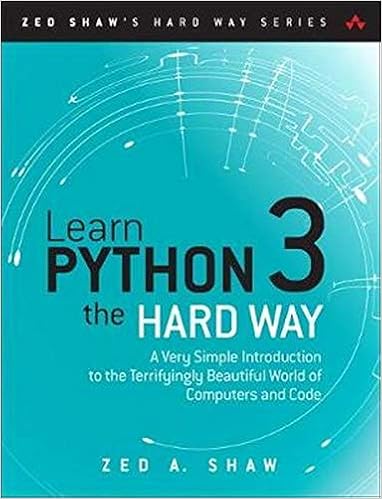
Learn Python 3 the Hard Way: A Very Simple Introduction to the ...

I thought I should do an article on my adventures with Python programming.

This CB is a great time to develop new skills, so I decided to pick up some Python programming. I took the following steps to pick up my skills :

  • To get the basics right, I used Learn Python 3 the Hard Way by Zed Shaw. The book was fairly detailed and coding about 90% of the exercises gave me the proper foundation to get started.
  • The second book I used was Python for Finance by Yuxing Yan. This was challenging as some APIs no longer worked and I had to use some web surfing to correct the code contained in the book. Still, it was great as it tied Python programming to real-world finance problems.
  • Finally, I signed with Data Camp and paid for a year's subscription. I completed a 4-hour program on Introductory Python for Finance module and now undergoing training on Data Frames which is a foundation for further Python data science problem-solving. 
For the engineers who are curious, I installed Python 3.8 on my PC and use the ATOM IDE to do my coding. 

As I have some legacy C++ and R background, picking up Python was fairly straight-forward but I had to contend with some difficulties many new developers face at work :
  • New age programming has a lot of problems with versions. Some old code I used worked for Python 2 would not work for Python 3 and my Mac has both versions installed. This is a serious obstacle for beginners. 
  • Worse, the data science packages also get obsolete quickly so learning from a physical book is painful as your code needs an added level of troubleshooting even if you copied the lines properly. Even after getting my code working, my program is always warning about the deprecation of code meaning that my code will fail one day. 
  • The online documentation has too much information and sometimes you just want a piece of code that solves the problem you are facing. Fortunately, there is Stack Overflow but it is a crapshoot as to whether you can find the code you want.
  • Sadly, I spent more time positioning data on a chart to make it look good than to process numbers to come up with excellent financial insights.
After a short week or so, here's a great result I can add this to my training slides. 

Image may contain: text

Right now, I figured out how to fetch some data from Yahoo Finance and reduce it to daily stock gains. With that information, I can build a histogram to compare the volatility of local stock ETFs and put up some serious information on correlations. 

The above slide allows a student to visualise risk-returns and illustrates why correlations matter in portfolio design. 

What this slide tries to demonstrate is that for the past 2 years or so, the ABF Bond ETF is negatively correlated to the STI ETF and correlation between REITs and blue-chips is approximate 0.7 which makes both ETFs excellent diversification tools for STI ETF investors. You can also, by visual inspection, observe just how stable a bond ETF can be when stacked against an equity ETF. 

Image may contain: text

This slide illustrates the yield to maturity corresponding to different AstreaIIV bond prices and outputs the price-level that is feasible for leveraged investors. You can see that the visualizations closely mirror my course objectives.

Both code fragments are not too complex, all of which are about the length of just one page. With a little bit of coding skill and domain knowledge, a trainer can jazz up with slides to improve his pedagogy. 

For the folks who know a bit more finance, you should be able to guess that machine-driven asset allocation should not be too far from reach, once I attain this level of programming. 

You can expect my future webinars to be influenced by Python Matplotlib visualizations. The question is how hardcore can my presentations become before people start complaining that it has become too difficult or technical. 

My next major project beyond my previews is based on the cancelled Seedly Talk on the FIRE movement. I fully intend to exploit my Python programming skills to jazz up my slides which will be expanded to a one-hour discussion. 

I guess to remain relevant, we have to keep pushing the boundaries to maintain an edge over our competitors. 

Thanks to CB,  I can now bring three edges to the competitive training landscape: 
  • I have my finance domain knowledge;
  • visualization and data science skills with Python which can be upgraded to machine or deep learning. 
  • and a decade of public speaking.


Thursday, April 23, 2020

CB Prosperity Diaries #5

No photo description available.

Ok, time for another update.

a) Last night's webinar was successful

Our first community engagement was a relatively successful endeavour with over 350+ attendees, most of which are curious members of the public. I have enough data points and feedback to adjust the community engagement program to make it better in mid-May where I will be doing the speech that was supposed to be presented in the cancelled Seedly event.

I know folks will struggle with some concepts I tried to teach last night, which is about Z-scoring to build a multi-factor metric to do stock screening. I just want to see how far I can stretch the mind of a retail investor. My survey results showed about a one-third felt that the material was too difficult. 

For my business partner to warm up to future events beyond the CD period, last night's events must be monetizable. I hope that within a week I will find out whether this is feasible from a profit perspective.

b) Financial matters - Deferring my Mortgage

Deferring my mortgage payments were relatively stress-free. I took a bus to town to a CIMB Bank branch and was told that there is no need for physical presence. Bank staff made me fill an online form. Three days later someone called me to ask whether I wish to defer the entire payment or just the principle. As I have ample cash reserves, I decided to continue to pay my interest payments. At least for the rest of 2020, I can devote my income to buying more stocks.

c) Financial matters - Compulsory Medisave contribution

Let's just say that with my income taxes declared for last year, the government will not let me get through 2020 on Easy mode. I was asked to contribute a decent amount into my Medisave within the next 30 days. I just contributed the lump sum on the CPF website but it was an unexpected black hole on my cash reserves.

A see a lot of self-employed folks getting the same letter as me these few days. Better brace yourselves for a hit to your cash reserves.

If you have a great 2019 but now stuck with no revenue, good luck to you.

d) Python coding

I am starting to get a hang of Python coding so much so as I can start writing scripts to build visualizations to enhance my course materials. I am taking both a text-book and online learning approach to picking up bits and pieces of Python coding.

I paid $200 USD to Data Camp to get a year's access to an unlimited amount of Python training materials. It even provides me with an online interface to run my code and corrects me based on my mistakes.

Doing this completely blew my $600 payout from the Singapore government.


e) Readings

I had to give up reading at least 2 books because the material was shallow and writing was quite bad. I dd manage to complete Book 2 of the Black Company.


Tuesday, April 21, 2020

CB Prosperity Diaries #4

Ok, here's another personal update.

a) Catch you guys at tomorrow's webinar

We've just had a dry run yesterday and I am seeing some potential problems juggling multiple presenters for a talk. It can be a technical problem at any presenter node that ranges from stuttering audio to video cameras not showing. As we managed to iron out the kinks last night, I still have a bad feeling about tomorrow's session because I used to run IT projects.

I know that if we face an issue, very likely we would not have seen such an issue before and we've even got two backup plans to keep things running.

Anyway, we are seeing more than 500 registrations today and the cost of letting folks down will be quite high tomorrow.

b) Back to coding in Python

Python for Finance - : Yuxing Yan : 9781787125698

Maybe it is my age, but not programming in Python is making me forget about Python code. I am now onto my next Python book which puts more focus on financial applications. I will be doing a little bit of coding every day with the pandas and numpy packages just to keep myself updated.

This will take up my crafting slot every day.

At home in Bukit Panjang, I will code. In Woodlands, I will paint my miniatures.

Should take me all the way until the end of the CB.

c) Readings

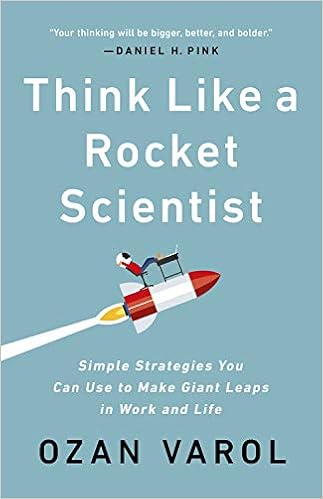
Amazon.com: Think Like a Rocket Scientist: Simple Strategies You ...

I did not enjoy Think like a Rocket Scientist. Ozan Varol is a rocket scientist and also a JD who ended up becoming a law professor. His illustrations tended too much on the rocket scientist side but I was more intrigued by his number of legal examples.

At the end of the day, the concepts he illustrated are too general to be useful. Concepts like how having a high number of failures lead to bigger successes and why a backup plan is often a good idea.

Maybe I secretly wanted to figure out how he transitioned from a rocket scientist towards a legal career. That should be about his next book.

d) Jojo's Bizarre Adventure

Pillar Men | JoJo's Bizarre Wiki | Fandom

Despite the horrible fashion sense of characters of this anime, I am starting to enjoy the over the top violence and cheesiness of this series. I am apparently almost 30 years late into this anime franchise.

For reasons that elude me, Jojo has a lot of Gen-Z fans. Maybe to the younger people, dressing up a pimp is the in-thing these days.


Sunday, April 19, 2020

Webinar : Investing in the Post-COVID-19 Era

On Wednesday 22nd April at around 7.30pm, I will be conducting my next webinar entitled "Investing in the post-COVID-19 Era", it will highlight my opinion on how a future strategy would look like (with a slight emphasis on REITs).

This talk will last about 45 minutes to 1 hour.

This is a significant business risk for me as this webinar will be a one-shot, dedicated to alumni and members of the ERM Facebook group, and designed as an extension of my usual lessons on Early Retirement. As the talk will not be repeated, the only way to access this talk is to attend future classes as I incorporate a better version of the slides into my regular ERM course.

When I discovered that Webinars can easily scale during the COVID-19 crisis, I decided to no longer keep postponing a graduates gathering and, instead, conduct an experimental session for everyone while the costs of a webinar is incrementally very low. The consequence is a shorter presentation done in a language that may not be fully understood by an audience that has not attended my lessons.

I read recently that to really do well in life, you may have to stop following the money and start following where the value is, my programme is also shifting its stance and we are now trying to reinforce the community as our most powerful and valuable resource in a student's journey towards financial independence. My tribe is now over 400 is size, the discussions are more focused and we've successfully built a forum where we currently are free from over-enthusiastic FAs fishing for more sales commissions.

A paid audience naturally gravitates towards better behaviour.

Once we admit a member, we also take a lot of pride in not asking for more membership fees and as of now, I have yet to create an advanced class to upsell to them. I believe that my students can provide more value beyond money. Many are investors who bring an independent view of their investment portfolios.

For this Wednesday, I managed to convince two students to give a 15-min talk about a topic that is related to financial independence.

  • One will speak from a layman perspective about his own adventures in investing to demonstrate how real investing look like. 
  • Another will be a controversial talk where the speaker has agreed to speak about marriage and singlehood in relation to his financial goals. Blog readers might want to look out for this particular segment of the program.
This webinar is free. My students speak to the public for free. I hope in time, I can provide a platform for more of my students to speak in the future. We eventually want to become a self-help organization where members look out for each other and share some insights within the community.

As this was meant to share with the public how I see my community evolving, I will limit my slides to promote my program into an even smaller section in my talk. There will be sales being carried out but this will be toned down even further. So much so that interested parties may have to attend my regular preview on 1st May 2020 to get more information.

We already have 180+ sign-ups last time I checked

You can sign up here: https://www.drwealth.com/ermintro/


Friday, April 17, 2020

CB Prosperity Diaries #3

KLASK 4 | Quality fun toys and educational games

So I am now back in Woodlands again to help my mum with some evening errands.

Yesterday I felt possibly depressed and unhappy the first time since the CB period started largely because the number of infected grew so fast. I cheered up again when I figured out that this is because our testing regime is possibly more aggressive than other countries. I am worried that our healthcare resources will reach a breaking point and we won't know how the government will prioritise our needs against that of foreign workers when things hit a critical point.

Here is my latest update :

a) Spent a third of my $600 pay-out.

Warhammer 40k Citadel Essentials Paint Set Factory for sale online ...
I did not want to wait to spend some of my government hand-outs. I have chosen not to do charity because, in a market crash, the person that needs charity the most are leveraged investors like us and I'm not keen to experience a W-shaped recovery that non-investors like to harp about without any real skin in the game. 

(I also think that folks who do charity with $$$ but not effort, then harp about it on a blog can be a little smug. Giving money is almost effortless)

Instead, I did stuff that mattered to me and affected my life as a gamer - I selectively bought from local game-shops that are closed during this period. The first I did was buy some paint from Gamersaurus Rex, then I found a game called Klask (above) that all four of my family can play together and bought it from an online game shop called Toy Tag.

As an adult tabletop gamer with earnings, I've always felt bad that we gamers let Comic Mart down. Even worse for me, it was rumoured that they were destroyed because of margin trades in the stock market! The old-timers can confirm that here.

b) Readings

Edge eBook by Laura Huang - 9780525540823 | Rakuten Kobo

I am pleasantly surprised that an organization behaviour professor can write such a practical book. If you look at Laura Huang's resume, you will find a tenuous link with Singapore. It's bitter-sweet to read this book though because it is also about the discrimination a really smart Asian lady has to go through to be taken seriously in the US. I would read it for the fantastic stories and illustrations.

The broad lessons are not particularly counter-intuitive on the surface - work hard, add value, delight others, but make sure that you can control the narrative people have about you. The intricacies of doing this in a hostile environment are.

I have decided to continue with Book 2 of the Black Company as well as The Malazan. My FB has many rabid fans of the Malazan Series who made an appeal for the series even though I disliked the lack of character development and ridiculous complexity of the world-building in the first book. But I realised that epic fantasy needs time to get into, and you need about 3 books into a series to start getting a hang of it. 

c) Physical Exercise

The latest rulings on face masks during exercise is making it hard for me to continue with my regime. I can take off my mask when I am running but often can't sustain it so I have to wear my mask back when I slow down to take a walk.

I still get breathing difficulties when I walk in a mask after a brief run. So I am doing my exercise in the house.

There is no way I am risking a $300 fine when I can "contribute" to the local gaming industry.

For now, I will skip talking about the training business this round because I will do a full article on my next webinar on Sunday.


Wednesday, April 15, 2020

Hermeneutical Analysis of the FIRE Wars.

9 facts about hermeneutics | OUPblog

I doubt I can come up with such an article if not for the creeping cabin fever during this CB season. This article requires some explanation for the usual layman audience.

Most readers of this blog know what FIRE is. Financial Independence Retire Early - it is basically what many financial bloggers preach. As COVID-19 started creeping in, there is a schism in the ranks of FIRE aspirants.

  • Non-FIRE folks took the opportunity to at FIRE aspirants who are likely to see dividends getting cut. I'm sure some readers have to deal with a lot of "well-wishers" as I have in the past few months.
  • The FATFIRE guys also took a chance to challenge FIRErs. They assert that FIRE is too soft a target and cannot withstand a full-blown recession. Only FATFIRE is the one true way of achieving bliss. FIRErs are losers who should really be aiming to FATFIRE.
As COVID-19 rages on the Financial Wu Lin has fallen into chaos. With YOLOs and FATFIRERs both attacking the FIRE community and challenging their beliefs. In short, a war to determine the Soul of FIRE in the Finance Wulin has begun.

So why use the term Hermeneutics? This term is guaranteed to turn some readers off.

Hermeneutics is a branch of knowledge that deals with interpretation normally reserved for Biblical texts. I think the FIRE Wars arise because of differences in interpretation. 

These differences arise from the way the various factions interpret the meaning of Freedom. 

Let's review the players in this game :

a) YOLO faction ( Non-FIRErs )

The YOLO faction could be that trader who is not invested in the markets but wants to find out how you are doing, that insurance agent who gets a mental orgasm from seeing your investments fail because you did not buy ILPs for them. YOLOs have this one chance to push a wooden stake into a FIRE Vampire's heart. It is supremely rare for REIT dividends to be savagely cut this way. 

YOLOs define freedom differently from the other factions. YOLOs see freedom as being able to do whatever they want so long as money is in their hands. To spend such a large fraction of their lives earning then being forced to save more than 50% of their income is not freedom. It is self-imposed imprisonment. 

Freedom is using sales commissions to buy a flashy car and then showing it off, something a FIRE adept will be unwilling to do. 

A lot of my critics do not understand is this - I belong to the YOLO faction. I have a job I really enjoy training people on basic tenets of FIRE. My jobs pay throughout COVID season. I also show off my hobbies like painting miniatures, my disdain for expensive goods is because I walked the FIRE path for 15 years before I attained this YOLO state.  

b) FIRE faction

The middle ground FIRE faction is suffering now because of the horrible effects of the virus on our investments. I think this downturn is short-lived and personally, have re-imposed leverage on my investments. 

FIRE seems to be attacked on all sides. One side finally has it's day and is mindlessly attacking the investment methodology. Another side accuses them of lacking ambition and they should be accumulating more before quitting their jobs.

I am very sympathetic to FIRE aspirants. In fact, I teach their interpretation of freedom. Not every Singaporean has a job that they enjoy looking forward to given how obsessed we are about paper qualifications. Some corporate cultures are just so dysfunctional that freedom means being able to get out of them. This could be endlessly toiling for an SME if you are a private degree holder or being promoted to a point where you can only work for assholes (like me). 

It takes a lot to make a person want to stop earning a salary. A lot of wealthy individuals don't understand that for a large part of our populations, work is a form of cruel imprisonment with Singaporeans working 44 hours a week which is 33% more than their global counterparts. 

Work was fun for me for a decade in IT, after I joined the public sector, it stopped being fun. Now as a trainer it is fun again, but I have three degrees and a multi-million portfolio to design my lifestyle - most of my students don't so they need to get their investment income right to wean off the bitter-tasting milk coming from their corporate teats. 

c) FATFIRE Faction

In psychology, the FATFIRE faction suffers from two things. They believe in systems justification theory - they believe that our Singapore system is good, fair, and legitimate. This leads them to develop advantage blindness. They fail to see how the system that gives them such a huge advantage can be altered in any way, especially with regards to the systems that allowed them to FATFIRE in the first place.

It is not easy to FATFIRE. 

I am trying to get there right now and I am somewhere between FIRE and FATFIRE. I think it is a major achievement for any individual to attain this. But this creates a sense of entitlement and invincibility that makes them totally unable to understand what the middle class is feeling.

Freedom for FATFIRE is a combination of both forms of freedom for FIRE and YOLO. FATFIRE want to answer to no one, but they also want as many toys as they desire. You need a net worth in the mid-7 digits to even begin to do this. 

FATFIRE's problem is that they have this belief that everyone can bootstrap their way to success and that the only prison is a person's limitations. I can admire that but as I work with many individuals who are trying to attain FIRE, I know that most will not attain the basic FIRE that can pay all their compulsory bills at home. 

I have a lot of personal advantages, upper-middle-class upbringing and above-average academic ability. But I am still a failed mid-career changer and public servant. 

FATFIRE need to know that, unless you are really exceptional, you need to first attain FIRE, then you need to volunteer yourself to work harder to attain FATFIRE which can be a decade later. 

This is delaying gratification beyond that is normally possible. Personally, I think you need a vocation that you really enjoy to even contemplate that. Very lifely, this will not involve having a reporting line to anyone. 

While I seem the harshest to FATFIRE, do note that I am trying to attain that status myself. 

So there we have it. The most ridiculous and necessary warfare in the financial blogosphere that arose from a different interpretation of what Freedom means to each faction.







Monday, April 13, 2020

CB Prosperity Diaries #2

Image may contain: food

I am slowly settling into my Circuit breaker schedule.

These days I sleep pretty early at around 10pm so I get up wake up fairly early as well. My first order of the day is to do some exercises and then make myself breakfast. Thereafter, I read the newspapers and will read some hardcore finance before the market opens. Before mid-morning, most of my work is done and I can spend the rest of the day watching TV with kids, painting miniatures (see above) or reading fiction. At night, I either refine my training materials or prepare for the next webinar.

a) The second webinar was relatively successful so we are going to double-down our webinars

By the second webinar, we ironed out the technical difficulties and we managed to get over 170 people attending the talk. The business outcome was a lot more successful than I anticipated so I have to ramp up our risk-taking for my next event.

My next event's primary objective is no longer about selling tickets (I know how much you guys hates salespeople). It is a community event for my ERM alumni and features an actual lesson for folks who have already attended my class. There will be an extra 15 minute segments presented by alumni for my own program.

In short, I am trying to evolve my previews into a Financial TED talk platform which had always been my personal vision for any successful community.

You can sign up for it here: https://www.drwealth.com/ermintro/

The talk will be much shorter and, more importantly, feature totally new material not featured in previous webinars for if you are free, you are welcome to sample the common lingo my community uses when discussing investment opportunities.

Once again, we are at the edge of the training business and have no idea whether this will work in reality. I am betting that one day, the community will become so powerful and valuable relative to the course, folks will see the course as a small step to gain membership in this group.

More details to come this weekend on the topics covered.

b) Attended an uncle's wake 

My uncle passed away a few days ago from non-COVID related reasons and I just came back from a wake. Just a reminder that funeral directors will arrange for temperature screening and social distancing in such events and only 10 pax can participate at the same time. During this COVID season, a lot of elderly will not be present to send off their loved ones so it falls to us Gen-Xers to pay their respects.

In all cases, keep it short and brief. I feel bad that I cannot spend too much time interacting with my cousins.

c) Readings

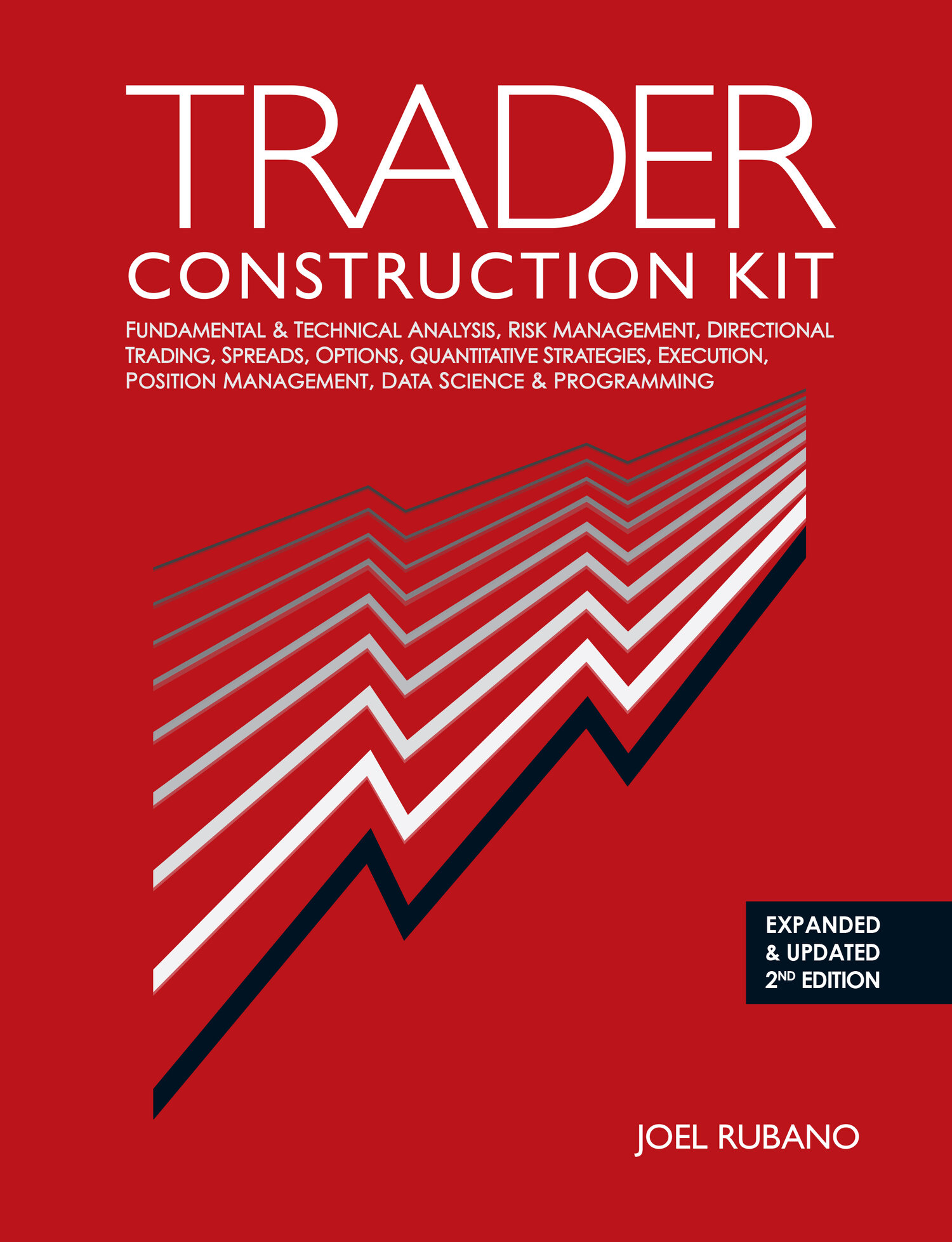
Trader Construction Kit

I am about to complete this tremendous volume on the basics of trading and I recommend it for all investors regardless of whether you are interested in TA or trading.

The final chapter on navigating the politics of a trading firm itself is worthy of the price of the textbook. Will share more insights on my next post.

d) Netflix Anime binge-watching. 

I am late into the game of watching Jojo's Bizarre Adventures and right in the middle of season 1. This is probably decades late and I really appreciate the campiness of the series.


Friday, April 10, 2020

CB Prosperity Diaries #1

Bulette | Forgotten Realms Wiki | Fandom

So right now I spent 50-50 shuttling between Woodlands and Bt Panjang, my plan is to write a short series on how I am keeping up during CB season.

a) Webinar glitches and other shenanigans.

My first preview webinar was a disaster!

It was mitigated but it could have turned out better. Webinar Jam was probably facing heavy traffic and it could not allocate a server VM on time for my room so I was stuck outside while frustrated webinar attendees waited for me to arrive. At this point of time, there is nothing we can do as organizers except switch providers.

The situation was saved by the audience and we migrated to Google hangouts. I the end we still managed to perform to a 130+ crowd.

A apologize if there is no Q&A from me. With such big crowds, questions were fast and furious and I need to focus on finishing on time. Q&A was conducted by Dr Wealth staff and likely to stay this way until I can figure out how to do this better.

That which does not kill me will make me stronger, so my next talk will be on Sunday afternoon and I will be speaking from a different slide deck so folks who attended on Wednesday can log in again!

I've basically stopped tracking my sales - they will arrive over time, my commitment now is to gain a loyal following.

You can book a slot here: https://www.drwealth.com/ermintro/

After Sunday, I will be trying to come up with a shorter 30 min to 1-hour talk to keep things fresh and maintain a regular audience. One item on my plate is the cancelled Seedly talk. I might be the only speaker to have a full deck before the talk got postponed and subsequently cancelled so there's no point wasting a good slide deck.

We will have multiple backup plans for the next talk. I hope to get a loyal following over time for my webinar adventures and I see this as a permanent fixture to my offerings even after lockdown is over.

b) Books I am reading

I am still reading the The Malazan Epic and it is quite a struggle. I find my finance texts easier and more engaging but I am doing it to see whether it pays off later. I have given up on fantasy books before, quitting The Silmarillion after falling asleep too many times.

It's still a toss-up between Malazan and The Black Company for CB season.

c) Shows I am watching

As I am now living with my mum until Saturday, I am watching Channel 8. At 9pm, they show this drama that is really annoying.  Zoe Tay plays a bankrupt MILF who is pretending to be rich and buying bitcoins from her daughter's useless and under-educated boyfriend.

I think Channel 8 has really the rock bottom, they should hire me to consult on a drama on the FIRE movement. I will create a Wu Xia Epic where BBFA's fight over whether Lean FIRE or FAT Fire is better, act like jerks to each other while competing to see who can extract more value from credit card and shopping apps.

You can guess what the villain in my series does for a living.

d) Will start painting my miniatures today

There is this idea initially that I can paint minis in front of my kids but I think my son will find a creative way to ruin my paint job or distract me while I paint. My daughter has already stolen my Bullette (pic above) and gave it a sickeningly blueish color.

My next blog update should be Monday following my talk. After which I might just pivot from these pointless leisurely works to planning unique and one-shot webinars, all designed to lead to an advanced investing course in the future.

Let me know if there is something you want me to speak about. 


Wednesday, April 08, 2020

CB Times... CB Life...


CB leaves - YouTube

Ok, I have survived one day of the Circuit Breaker.

It seems that my entire life routine has been upended. Now I sleep early at around 10.30pm and wake up at 5am to make breakfast, read the news and then exercise.

Here is what I intend to do to survive over the next 4 weeks :

a) Still fighting to see whether I can work during this period.

I am moving on from course webinars to preview webinars where I will be attempting to sell courses online. This is new to me and I am not even sure whether I will succeed. In this case, I will let nature take its course - folks who listen in should learn something and be entertained. If I do sell tickets, I will have plenty of work this month. If I don't then I get a month to enjoy all the things I was unable to do when I was working on my business. You can register for my talk tonight at 7.30pm by following this link: https://www.drwealth.com/ermintro/.

b) Probably will pop in to defer my mortgage loans

I've already set aside a year of mortgage payments but there is no disadvantage to a six-month deferment, I can put my funds in Astrea IV, collect two coupons then sell when times get better to pre-pay my loan.

I will be heading to my bank this week and see whether I will succeed in my application. 

c) Daily exercise routine

Without a physical trainer, I feel much weaker already, so I try to make it up by running and exercising every day. I don't have a personal gym but the public exercise machines seem to still be available.

I have too many friends who go to gyms, lose weight, then gain it all back in months after stopping. I will try to maintain a regime so that I can get back to physical training with a trainer after the CB ends.

c) Try to be at two locations in a week - if it remains legal to do so. 

My work infrastructure will be at my regular home and this will be where I will do the bulk of my work and run errands for my wife but I will also be spending my time at Woodlands with my mum who lives alone. I will be moving my miniatures and paints over to Woodlands to start painting my minis.

Prior to the lockdown, I was worried that I will have nothing to do so I did the unusual act of buying paints to paint all my unpainted fantasy miniatures. It will not make me an artist but I think it beats watching Korean dramas the whole day.

d) Watching Netflix

I am trying to avoid binge-watching Netflix as it is just too easy to do this and it does not add much value to my life. So far, I've limited myself to just movies like Once Upon a Time in Hollywood and completing Season 1 of Star Trek: Picard.

Picard's pacing was sooooo slow, I think I understand why Star Wars fan hates Trekkies. I cannot imagine hanging out with folks from the Dr Who sub-culture. Must be even worse than Trekkies. Sci-fi fans should do themselves a favour and watch The Expanse which is a whole lot better.

e) Reading Non-fiction

Without an Economist subscription, I am reading a lot more non-fiction but I am really forcing myself to go slow here, currently going through a book on Trading chapter by chapter. After which I will return to doing some Python coding focused on simple website building with Flask.

I hope to do some serious data science finance-related coding before this month ends.

f) Reading Fiction

Since I do have all day, I can also read fantasy fiction. As I am decades behind most fantasy fans, I can read the classics that have a strong influence on my RPGs. I am deciding between to major series : The Book of Malazan is a 14 book epic and The Black Company is not very much smaller in scope.

I am reading Book 1 for both epics to determine which series to complete. If the Book of Malazan is chosen, I probably won't have to worry about being bored this CB season.

g) Play PC games and TRPGs online

I try to avoid playing computer games but restarted Divinity: Original Sin just in case I get too bored. As a bonus action, I will try to see whether I and my usual group can play D&D online. It should not be significantly different from conducting a webinar. I will be reviewing paid software tools to make this feasible over the week. If I succeed, I should highlight my gameplay here.

I prefer to play rather than DM though.

Ok, so I think that's my plan to survive this period.

Monday, April 06, 2020

Letter to Batch 12 of the Early Retirement Masterclass.

Dear Students of Batch 12,

It’s been a great honour and privilege to be able to conduct a 2-Day Early Retirement Workshop for you.

Batch 12 is all about discontinuities.

On the one hand, we’ve had a break in our normalcy when COVID-19 struck, forcing us to consider back-testing two economic eras to determine the best way forward with our investments. On the other, we had to rapidly pivot ourselves from an ordinary classroom into the webinar format.

The result of a discontinuity is compromise.

We’ve chosen a strategy that worked when the economy was healthy, but we also wanted a plan that will minimise losses when the current condition remains status quo. What we ultimately may miss out on is an alpha strategy that will exploit the return to a bull market when all this over. This alpha strategy will be the subject of a future class that you will no doubt be able to benefit from if you hang around within our community.

Webinars are not my ideal form of instruction as I need to look at facial expressions while I teach to react to facial expressions. Webinars are also not sustainable. As such, we will conclude our training when we are allowed to conduct classes again with a full day practice session when we can work in teams and look at investments in greater detail.

There are some upsides to this crisis. As even bonds have cheapened, we see the return of fixed income instruments in our portfolio. We also see a current yield of over 10% for REITs, if these yields were to halve itself, it would still produce 5% of dividends. It is no wonder that the alumni group is eagerly waiting for this Batch to finalise the portfolio before jumping in with new investments.

The final portfolio is extensive, though, with a total of 18 investments.

I look forward to investing in every counter that has been shortlisted by the class.

As we have already lost 30% from the peak of the markets, patient accumulation without taking on too much risk will allow a beginner to buy the market at rock bottom prices. Sustaining this through this recovery may be how hundreds of new millionaires will be made in about 5-8 years.

But make no mistake – short term there will be loads of pain.

Long term, there will be gains.

I will see you folks at the Facebook group and lab session.

Thursday, April 02, 2020

COVID-19 can put a nail in FIRE's coffin and what you can do about it

Ghost Rider: Spirit of Vengeance Concept Art by Jerad S. Marantz ...

It may well be that COVID-19's real damage is economic in nature and a lot of folks around the world may die as a result of lockdowns and the destruction of businesses.

A major phenomenon I am seeing at the very least is that all of the traditional advantages of FIRE living have been nullified by the COVID-19 crisis. Employees are working from home so that is not significantly different from those who leave the rat race. And no one has the freedom to travel at all.

Things can get worse from here.

I know my personal expense has been cut by half, so my vendors are definitely earning less. If folks are given temporary relief from mortgages, then banks can't collect interest or principal payments. Businesses that can't pay rent will affect the landlord. SPH REIT even slashed dividends by 80% risking corporate taxes to shore up for bleaker future. I suspect many other REIT managers will take their lead.

For folks recently financial independent, they may have to either go back to work or start drawing down on their cash cushions which are probably one of the best things to come up from the FIRE movement to cope with the sequence of return risk.

This is what I am doing for the next few months beyond just deleveraging:

a) Take on extra work if you can

In my case, I have been working and reporting taxes for the past two years. We've moved into webinars so my work schedule has not changed at all.

For the rest who have FI-ed, there are plenty of jobs what you can do to get out of the house. If you do temperature scanning, it is an added $1,900+ that can be farmed into buying more discounted stocks. The best thing is that a short-term contract will allow you to go back to your old FI life later on.

b) Don't take on new expenses. Instead, reduce them aggressively

One major improvement in my life is better health from having a personal instructor. I just had my last session and expressed an interest to continue but only if I can somehow get more financial security over the next few weeks. If payments get delayed, then I have to insource my physical training and switch to exercises which are less beneficial.

But that's a first-world problem.

I also believe that there is no reason why a homeowner should not defer mortgage payments. Even if you have money set aside to do so, you can always pay in one lump sum after the market recovers. The money is useful to deal with emergencies over the shorter term.

c) Will assume that March dividends will be the last ones I will get for the next 1 year.

Any dividends I receive from now on is a bonus and I should be reinvesting it anyway. Analyst reports are reporting at least a 20% cut in DPU in retail REITs and I expect things to be much worse in practice.

The upside of all this is that more bargains will appear in the markets and nibbling stocks is what I will be doing over the next year once I secured my family's personal expenses.

In summary, I think that if FIRE folks suffer, doing the alternative is worse. If you have been following Kristy Shen's variant of FIRE, you should actually be still quite comfortable this crisis because of your cash cushion and yield shield. Even if a lot of nay-sayers come after you at this time, your position should still be many times stronger than your critics.

I don't think the YOLOs have very much to say at this stage because they are losing jobs and may not have enough to last through the crisis. Gig economy workers are looking at 30% cuts in revenue and corporate workers will have to be let go soon if their corporates struggle for too long. Also, those over-leveraged in the physical property asset class will face a reckoning next.


Monday, March 30, 2020

Brave new world of Webinar training

Dua Lipa: Critics rate Future Nostalgia as the best album of 2020 ...

After the government announced that gathering of more 10 persons banned, we've been trying to pivot into Webinars, so I have spent the greater part of the weekend trying to translate my training program into a webinar. 

The work to pivot was much harder than I thought and other trainers may want to read this before going ahead.

(Why do I want to share my training intelligence with other trainers? Simple, I believe one-day investment trainers will be asking me to train them! BWAHAHAHA !)

a) Webinars are labour intensive

My biggest fear was that webinars are so easy to run, there will be thousands of competing training programs in the near future. As it turns out, this is farther from the truth. While I proceed with my training at a much slower pace, my colleagues spent the entire time troubleshooting connection issues.

Their work is worse than IT operations because even if a server fails we have an hour to get it back up. My trainees miss one hour, it is as good as not attending the course.

Make sure there is a team working when a webinar is happening.

b) Better for the team to be located together during the webinar

As a webinar is a performance to a large remote crowd, don't make of the mistake that you can do the webinar remotely vis a vis your teammates. A lot of coordination takes place real-time.

In my case, there is a time delay between my narration and the time my students receives the message. Without another teammate logging in as a virtual student, I can't estimate what that time is.

I also received an urgent call from health authorities halfway while conducting a quiz ( SHIT! ). My teammate took over. Turns out they just want to arrange to delivery of medication.

Anyway, this may be unavoidable as we lock down further. I now have all the infrastructure to conduct the next session from home. I need to cordon my kids off if I have to do that.

c) Attention span is different in a webinar

We took the decision not to risk the quality of the training by stretching the training from 2 days to 4 days. This gives more time for Q&A, which comes in a greater volume in a webinar format and prevent students from losing focus. I can definitely rush through investment training, but I am unique in that I invest in my student's portfolio. This forces us to put a premium on quality.

d) IP issues take centre stage

It is much harder to defend your IP when you go webinar. We rushed into this without much forethought (unforgivable, as I am legally trained). You need a web of NDAs and physical measures to protect your IP. My material changes each lecture but trainers need to spend more time on this.

In can introduce my professor to anyone who is interested in such matters.

Just contact me privately, even if you are a market rival.

e) Never go full 100% webinar no matter how bad the situation is

It never ceases to disturb me when I see an ad slashing a $1,800 course into a $19 webinar. The decision to go online will kill most legitimate businesses, including my own. So right now I am willing to add one day of face time to all my students when lockdowns are over.

It will be one full day of practice sessions I intend to model after this Software Development school called 42.

While I am not Dua Lipa, I am pretty sure my physical presence nets my business partners more than simply just downloading my disembodied voice.

This blog continues to post with lower frequency as I put renewed focus on my ERM FB community.

I will see you guys probably one more time this week where I post a personal update.

More next week when my class is over.


Thursday, March 26, 2020

Riding the COVID-19 roller coaster ride

Image result for roller coaster hell

The past few days were horrendous. I thought once I squared off my margins, I would have a few days of peace but the COVID-19 situation grew so bad, I was no longer allowed to conduct my class this weekend, ruining months of marketing and sales of tickets.

While these restrictions are very much needed in Singapore, I just can't let my planning all go to waste. So I had been working on turning the class into a Webinar and had to learn the use of webinar software from scratch.

The harsh truth about training programmes is that if it can be made into a webinar so easily, then it will be too easy to take the instructor's lunch because all it takes is a series of Youtube videos with the same content to get the job done. This parallels the work from home effort going on in Singapore - if you can totally work from home without missing a beat, your work can be outsourced and your employer will remember that when the economy recovers.

I will be converting my course into a two-weekend webinar, but once this is all over, students will be invited for a full-day meet-up to run through the practice sessions again with a new data-set. Hopefully, they can appreciate that they will get more than any previous batch of students.

Of course, my anxiety is not over yet. We're still not in full lockdown mode, so I can still conduct the webinar from an office location. If there is a fullscale lockdown, I may need to retreat further to conduct the webinar from home.

We are basically operating from instinct, trying to stitch different web-tools together to make learning a superior experience. As in all things IT, a little bit of lag and all hell can break loose on the day of the performance. The upside is that I can now conduct web seminars so I will expand my reach and community engagement over the next few months while COVID-19 rages in Singapore.

And just as things are about to get worse, investors received a significant amount of dividends today and this will go on until 31st March. At least the rents have not stopped arriving for this month.

Another pleasant surprise is that I may even be classified as a freelancer under the Budget announced today, so I am actually entitled to $1,000 for nine months!

I will not invest it away because the economy needs me to put it into circulation as soon as I receive it so it goes to my wife to buy groceries for my family. I have plenty of ways to pick up more investment securities.

Make no mistake. The response to the COVID-19 will hurt my training business. But whatever I experience, it will be nothing compared to the rest of the gig economy who suffer tremendously over the next few months. I'm glad for them that we've announced the Mother of all Budgets to help them for the next few months or so.

This blog will not receive a lot of updates in the meantime as I struggle with the fluid situation.


Saturday, March 21, 2020

Invitation to Gloat and a Personal Update

Image result for rakdos

I miss this blog.

I don't know 99.99% of you guys but I am sure folks read what I put up.

The reason why I took a short break was that market changes forced a rethink of my course slides and I was suddenly asked to submit the slides for printing by this weekend. Couple that with adjusting my portfolio to avoid margin calls, it was a shitstorm for the past few days.

a) Death of the Leveraged REITs strategy

Risking sounding too dramatic,  the Leveraged REIT Strategy died a horrible death last week. I have been selling for weeks and informed all my students of my change in investment approach but my selling was still too slow to mitigate the damage to my leveraged portfolio. I think a series of articles on Dr Wealth would be more appropriate and I expect readers to look forward to it.

You guys should know I don't do the "I knew it all along"  kind of articles, I prefer to think about what went wrong for me and I promise to showcase the stupidity that got me to this stage. My advice to critics is to gloat now and be as public about it as possible. I mistimed the market even though I documented everything on how my own strategy could fail in my older slides.

On the brighter side, I no longer owe my brokers money and, unless a miracle V-shaped recovery occurs, I can make my kids millionaires with the bargains we are getting in the markets.

The wealth exchange between one generation and the next generation has begun.

b) COVID-19 and lifestyle adjustment

Removing margin also has a strong psychological dimension. I am now free to think about things that matter.

As an extrovert, I have been too focused on life outside my home. Now it is time to look at the large volume of books and games and finally, find a way to play them. I will see whether I can teach my kids to play The Fantasy Trip, an old retro game only the oldest fogeys will know about. Each character sheet is the size of a credit card.

c) Impact on training business

Make no mistake - COVID-19 will hurt the investment training business. Attendance is down as a proportion of registrations and registrations is also down. As a response, I am adding a lot of COVID-19 related investment analytics into my presentation to spur demand.

My fear is that classes cannot continue. We have changed venues once yesterday to ensure the 1-metre safety distance and I will be experimenting with webinars once my course prep is complete.

The upside to all this is that I get to interact with my 370+ community.

d) Sharpening the Saw

At least two areas in my life is not a total shitstorm. My Python programming is moving along fine and I managed to get some leeway building websites with flask.

The best progress is my exercise. As gym sessions continue, my body has stopped aching after an aggressive workout. I also have developed an unholy breakfast concoction using yoghurt, blueberries and granola that does not taste like shit so I can sustain it. Today I even managed to make avocado edible by adding lemon juice, salt and yoghurt.

Yoghurt is very key because the acidophilus bacteria helps with controlling my blood sugar. Problem is that this class of yoghurts are very sour and needs some bit of hacking.

e) Reading

I am torturing myself by reading Playing at the World by Jon Peterson. It is more boring than legal cases I used to read but it is a painstaking description of my D&D hobby. I learnt about the kind of wargames Prussian generals played 300 years ago and mythical roots of elves and dwarves.

Anything to get me out of overthinking about the markets.

f) Hobbies and entertainment

So far I have held back from taking the easy way out buy playing computer games or binge-watching anime. This is probably not sustainable. Right now, anything can happen as I try to stay indoors. Maybe I'll watch Star Trek Picard. Maybe I'll buy a PS4 or Nintendo Switch.

I've also reduced my workload to focus on leisure this weekend.

Anyway, without the weight of a margin account, I am actually much happier than before COVID-19. Bargains galore in the markets for those who can hold indefinitely and I am forced to think about my hobbies and leisure.


Sunday, March 15, 2020

MBTI - Astrology for HR Professionals !

Image result for I'm not crazy MBTI

A big market downturn is also a time for personal reflection. After the Friday 13th panic where I unloaded stocks to shore up my margin account ratio, I had to distract myself. This time around, I chose to read a book on the Myer-Briggs Type Indicator, a personality profiling system largely dismissed by the academic community but generally quite successful in the business world.

In my view, when a system does not have the firm backing of the scientific community, it belongs to the same class of belief systems as Astrology. My opinion is that technical analysis, the capital assets pricing model and the efficient markets hypothesis, all fall under this category. Consequently, I do not like to dismiss Astrology, being a huge fan of good and somewhat random advice in many Astrology columns. Up till today, I have yet to see an astrologer advise Capricorns that this week would be a good week to murder an insurance agent or commit money laundering. In a similar vein, technical analysts do have a respectable approach to risk position sizing and emotional management.

I will not really explain what the MBTI is. I think readers should try to find some online test and figure it out yourselves - there are plenty of tools on the Internet for this purpose. I was aware of the weaknesses of this system - I tested ESTJ in JC but recent online assessment have tested ENTJ. The context of an engineering career makes a person highly practical and data-driven., a luxury a lawyer might not be able to enjoy. Legal training tends to teach us to be more strategic and think about the big picture. I probably am neither ESTJ or ENTJ, I am likely E*TJ.

This book by Pearman and Albritton takes the MBTI further and delves deeper into the model by considering alternative modes of behaviour and personal weaknesses. You may not believe in MBTI yourself, but you will come off feeling that the authors really drink their own kool-aid.

The first insight is that beyond our primary processes, we have auxiliary functions. My primary mode of behaviour is Extraversion-Thinking and this shows across both my engineer, a law student and trainer personas. So I take in information best when interacting with team-mates and crowds.

A person's auxiliary function balances the Extraversion with the Introversion axis. As such to make a decision, I often have to reflect internally upon the information I get from conducting classes. At this stage, it's get confusing because I can't tell whether my auxiliary function is IS or IN. An IS prefers to reflect upon hard facts and have a bias for the practical. An IN prefers to intellectualise and loves dealing with broad concepts and theories.

I am neither a sensing or intuitive person. I generally find myself dealing with back-testing data and trying very hard to reconcile them with theories about market outperformance. There is no escape from tying the hard facts to the broad concepts to determine the action an investor has to take. I think it is this full-stack approach to investing that makes it so hard for me to pin down my current MBTI profile. Sometimes the most practical way to take on huge amounts of data is to start with great first principles.

Of course, the hardest part of the MBTI is to know your weakness. In my case, my biggest problem is coded IF. Getting in touch with my internal feelings. Even the remediation steps are really hard to contemplate given my current work situation.

In situations when I deal with people I should focus more on their emotional state and the personal values they bring to the table. This is a horrendous idea to me given that, logically, people come with so many contradictions that dealing with it means arriving at sub-optimal results. Also, I think culturally, this can be viewed as a weakness.

The hobbies I should adopt is less vomit-inducing. I was advised to spend more time making art. In this case, I am grateful for my RPG background which is amateur theatre with lots of dice and mass murder. With my financial independence, I have attempted musical composition and improv classes. I think they all ended in unpleasant disasters.

This should not stop me from trying shit that I don't understand - I need to set an example to my kids.

Even with the lack of scientific rigour, readers should make it a point to know your MBTI. This will at least prevent you from being stuck doing work you hate. Imagine an INFP studying data science. That would be suicide-inducing.

Knowing your MBTI also helps in understanding a lot of business books that seem to be hell-bent on adopting MBTI over the better frameworks used by academics. I once had an economics professor who asked a group of zombie public servants whether they like more entrepreneurs DNA in their organization which was, predictably,  met with a resounding yes. Then he pulled the rug under us, saying that entrepreneurs tend to be ENTPs, one of the flakiest and least conscientious types who are likely to the worst fit for my organization.

That moment of one of the most pleasant ones I had when I was in government. Broccoli had more personality than some of my colleagues.


Friday, March 13, 2020

Beyond Anger and Frustration...

Image result for atrocitus

This morning Dr Wealth CEO Alvin Chow asked me to pen my thoughts on the context of the Great Recession of 2008 against our current economic back-drop. I decided not to do so yet because I am in the middle of aggressive back-testing on this new bear market, what I want to know is to get a real-time understanding of investment factors that fail when the market is in free-fall. The results will probably be available next week before my next preview.

But Alvin said that this is a good time to demonstrate some pathos to the investing public. I don't think the Dr. Wealth blog is ready for any pathos from me yet, like many investors I am shellshocked by recent market moves, but this blog can accommodate my more random musings.

The truth is that I'm really angry today.

This is nothing like the Great Financial Recession. During the GFC, I had one simple unleveraged portfolio and a ridiculously low expense rate. Now, while I have a substantial unleveraged portfolio supporting my family, I do have a leveraged portfolio that is almost facing a margin call this morning.

I have a personal rule to react when my margin account ratio reaches 150% - I sell away enough counters to get some breathing space regardless of my personal feelings of how the market might turn in my favour later.

Today my margin account ratio hit a low of 147%, so I took a significant number of my legacy investments (before I started using Bloomberg) and sold it off to push up the margin ratio to a more reasonable number. The result is that I took some losses and only gave myself breathing room to take in a further 18-20% drop. Doing this lifted the psychological burden on me, but not the possibility of further drops when Western governments were found to be unable to cope with COVID-19.

My personality is that I hate selling my investments. The broker takes a cut, and the guy buying from me is certain to make a huge profit if he can hold onto it for 2 years. But selling now is better than selling everything when a margin call occurs.

Naturally, when an investor sells shares, magically, the markets will rebound. As of this moment, the DJIA futures are trending up. Selling stocks is almost like making a sacrifice to some Pagan God by killing your firstborn child.

Once the margin accounts are secure and I am not going insane and thinking whether the broker will margin call me, the next thing to do is to distract me from compulsively looking at the markets. At least for today, teaching myself Python paid off as I was able to write a nice webpage using the flask library and even picked skills on Python project skeletons. After that, I even forced myself through a fairly technical book on the MBTI personality framework.

If this market event is a repeat of history, then those with strong holding power who can farm their salary into the financial markets without breaking a sweat will be almost assured a straight path to becoming a millionaire when all this is over.

As to how much leverage to take and which strategies to follow, this is something I have to explore over the next few days. There is a delicate balance, make a portfolio too defensive and it can protect you against further downturns, but defensive portfolios will not do that well in recovery.


Wednesday, March 11, 2020

MBA in a Nutshell #28 - Accounting and Finance : Investment Appraisal

Today we will look at various ways to internally appraise projects in a company. These frameworks are more appropriate for business administrators but they can be modified for use by some investors.

Let us begin with common metrics :

a) Net Present Value (NPV)

NPV =  Cash Outflow - Present value of incoming cashflow

This is the most basic of all investment appraisal techniques. Where the NPV is a positive number ( such as +$10,000 ), the project is viable. Where it is negative, you are likely to be throwing good money after bad projects. This can be manipulated by projecting a different future incoming cashflow and lowering the discount rate in the calculations.

b) Internal Rate of Return (IRR)

This measure calculates the proper discount rate that would set the NPV measurement of zero. On a spreadsheet, the IRR() and XIRR() functions can perform this calculation separately. When you use IRR you no longer have the ability to manipulate the discount rate. Companies often set a hurdle rate when assessing projects using this framework. Many years ago in P&G we were told that IT projects that do not have an IRR of 15% should not be carried as P&G is better off farming the money to branding campaigns.

c) Payback period

The final measure is based on the number of years a project needs to break-even. This simply takes the investment outlay and divides it by the yield of the investment project in absolute dollars. A $100,000 project that returns $20,000 every year will reak even in 5 years. If you use this approach, projects are chosen based on how quickly they can pay you back your original investment.

The text-book goes beyond these standard measures with a scathing critique of measures created by the consulting industry. Measures like EVA and MVA are designed to distinguish consulting offerings from each other and introduces biases in measurement. For example, EVA tends to be biased towards managers who milk their companies and focuses less on growth.

The author suggests that, instead of following the latest management fad, simply using operating income divided assets into an ROI measure works best.


Saturday, March 07, 2020

How to think about Skills Future, educational courses and future proofing your lives

Image result for iron man

I was thinking about this question when someone on BIGSCRIBE decided to ask around on how to future proof ourselves and determine which Skill Future course to take.

This is a question I have been grappling with myself for decades. I entered the workforce when some people still believed in loyalty to the firm you work for. When I joined P&G, there was this rare moment in my life where I actually aspired to have a lifestyle like my managers and bosses, so I upskilled based on what I thought were tech skills a manager should have to look after an IT infrastructure properly.

As IT managers tend to look after an entire IT platform, I took every certification exam I could on Windows, UNIX, AS/400, Novell, Cisco, IT Security.

I wanted to rise, and I needed to rise really fast.

Taking two to three times the number of exams compared to an undergraduate did not accelerate my career progression, but it did accelerate my ability to take a lot of exams. This may seem sort of worthless at first, but I found that I could take the CFA, CAIA, and FRM almost simultaneously when I realized that my company is not that loyal to me as compared to my stock investments. So, inadvertently, I unlocked the most important future-proofing skill in my 20s - the ability to pick up deep technical skills almost real-time on my own, with negligible costs, without the need for instruction. 

I think doing what I did would be a waste of time for younger people today. Instead, I will provide a framework on how to think about investing in personal skills.

Here is what I think you should approach your education :

a) Being job-ready does not make you future proof

Being job-ready means you have something an employer wants. It can rapidly put food on the table. If you do not have a job right now, you better find a way to be job-ready. The constellation of courses on specific skills like how to be a security guard or a private investigator falls into this category. If you are jobless, you better rush towards one of these certifications.

Future-proofing courses are generally not as practical as job-ready courses. A course on statistics and linear programming will not land you a job immediately but it will pave the way for a deep learning programming course that will in turn land you a better job placement in the future. The goal of future-proofing is to download as many mental models into your head as possible, but you can only afford to do this when you are not hungry because developing mental models need patience.

The consequence of understanding this will change the way you look at education. As the government drives for more adoption of polytechnic diplomas, that's just trying to get Singaporeans to be job-ready. If you really want to future proof yourself, only a series of advanced degrees will give you the myriad of mental models to do that. But advanced degrees may not directly land you a job unless it also teaches job-ready skills.

b) There are some skills that make you job-ready and can future proof you.

In fact, these can be categorized into four categories.

  • Interpersonal skills involve public speaking and selling.
  • Creative skills involve writing and design. 
  • Technical skills like programming, investment management, and marketing funnel design.
  • Physical skills like personal hygiene, yoga, and organization consulting (Marie Kondo ?)
To monetize these skills, my experience is that focusing on one is not enough. I know folks in the Toastmasters for decades who hardly make money from their public speaking skills which win them trophies every year. My current job involves at least three skills: Selling, public speaking and investment management. 

I just need to hone each skill to the top 30% of the cohort and I should do ok.

c) You need a learning 'exoskeleton'

I'm still developing this new idea which I think has merit. As investors, we have no idea how much alpha has already been extracted from financial markets before the profits come trickling down to us. 

As a trainer, I can't simply present myself as a person people would pay money for, I see myself now as a combination of tools with my personality to do my job - sort of an Iron Man character. The exoskeleton places me quickly up the rankings in an interpersonal, creative or technical skill for a small investment on my part. Also, unlike the good old days of corporate loyalty, my tools ow travel with me from project to project. 

My exoskeleton looks like this :
  • High-end laptop and presentation clicker. 
  • Bloomberg terminal to backtest investment ideas and empirically make investment decisions.
  • Mentimeter presentation tools to crowdsource insights in real-time from students.
  • Pre-built graphics for slide and infographic creation.
  • Grammarly subscription to proof-read all articles and generate a better style. 
  • Books summary subscription sites to keep me at the edge of business fads in the corporate world.
  • Online cloud storage to bring my lecture materials wherever I go.
  • I'm not even done. I hope my Python programming skills will lead to a few customized modules to answer some hard questions investors cannot answer even with current skills.
To keep above the crowd, I pay a fee every month to maintain my tools so that my tools will always be slightly more sophisticated than someone who gets the tools for free. My dividends and fees make paying for these tools a piece of cake ( except the Bloomberg terminal, that I wish I can afford one day ). 

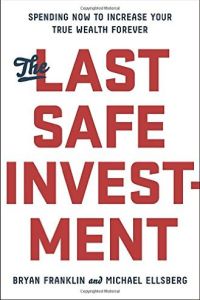
For a complete treatment to answer this question go read The Last Safe Investment by Michael Ellsberg and Bryan Franklin. I will be integrating the concepts of the book to the local context and likely presenting part of it in the Seedly festival in June. 


Wednesday, March 04, 2020

Why are young people so jelly about my Financial Independence ?

Image result for michael ellsberg

If you read financial blogs but have just started out, you would probably be shocked that it is possible not to work in Singapore and have everything paid for by dividend payouts. A decent number of these readers will then hunker down to figure out how the capitalist system in Singapore works.

It is of no surprise to me that many readers will feel jelly or salty about financially independent folks - to these guys, we must somehow be crooks!

I think my own success is actually quite conventional.

The basic framework even has a name - Financial Advice Commonly Delivered or FACD based on the excellent book shown above by Michael Ellsberg.

Here is how FACD works :

a) Earn money from a job.
b) Save a large chunk of it, delaying gratification for the next 2 decades.
c) Invest (and reinvest) in various instruments with an emphasis on stock equity.
d) Retire when dividend income/capital gains begin to exceed basic expenses. ( 4% withdrawal rate )
e) Be happy because you've won the game. ( Maybe at the expense of family and relationships )

Almost every FIRE initiates to grandmasters employs some kind of variant of FACD to meet their financial goals.

If financial success can be so cookie-cutter, then how do we explain that young readers, upon reading about my six-figure dividend income becomes so traumatized that they need other financial bloggers like Budget Babe to console them and make themselves feel better? (link)

Actually, there are many structural weaknesses of this FACD model that renders it useless to many Singaporean.

Take earning money for instance. Not all degrees are recognized the same way by the industry. A better local degree qualification can mean more than $1,000 per month in earnings. This means that FACD has a bias towards above-average academic ability.

On the other extreme, savings require a lot of willpower. Most American books on personal finance talk about saving 10% of your pay every month. To get comfortably retired, I needed to save about 60-70% of my take-home pay in my late 20s.

There is clearly a bias in FACD and it does not account for recent developments like the gig economy and the disruptive effects of AI on the ability of an average person to hold a day job. Even as this book addresses the issue by advising readers to develop the right skills, I think it does not have a full solution to the problem.

Because of the inadequacies of FACD, the industry has spawned multiple advisors and trainers in an attempt to fill this gap. As finance is a wicked problem, you will notice a significant variation in things that are taught and advice that is given.

Like the martial arts schools in Wu Xia novels, contradictions and conflict can arise.

As a content provider myself, I believe that the problem of financial independence can be tractable if you believe that a partial solution can make a positive difference in your life. In other words, if you cannot attain $10,000/month of dividend payouts, what about just aiming for $100 a month.

At $100 a month, at least your data plan is free.