The introspection illusion means that you should never let your emotions guide you because our emotions are fluid. Also you cannot contemplate your way towards a coherent meaning of life. Anotherwords, you need to take some action and stir some shit to gain some worldly wisdom.
This is especially so in trading where being swept up by the emotions of the crowds is the surest way to court financial disaster.
While we should not allow emotions to dictate us at work, being too flaky can also ruin play. Some folks I know are always chasing the latest fad in gaming that he is unable to complete major milestones in a game to fully appreciate the RPG storyline.
Because emotions are fluid, it is also hard to gauge the final effects of someone gaining financial independence. A person's conviction towards becoming free from the rat race is highly path dependent. Too much hinges on their emotions interacting with changes in their financial status.
Thus, I may have rethink my own recommendations to readers on how to attain financial independence.
In the past, I advocate accumulating $300,000 for a single person because, invested at 8% yields, you can expect about $2,000 of passive income a month. These days you might need more than $370,000 to achieve the same passive income as yields have compressed and you do not want to just have Soilbuild, Viva and Dasin in your portfolio.
Perhaps a better target would be just to attain an atomic goal of $20,000, which when invested at 6% yields, you could get $100 a month. This is easier to attain and emotionally may mean a quick win within one year of making positive change to your financial situation.
With $100 assisting in monthly payments beyond the need to live from pay-check to pay-check, you can decide later whether you have the mental resolve to accumulate a larger hoard.
It's the small things that make a difference in your lives.
Tuesday, January 30, 2018


Sunday, January 28, 2018
Why are female experts on personal finance so fierce ?
[ I need to make a disclaimer at this stage, while it might seem that person we are referring to is Budget Babe, the conversation is not triggered by her. So don't go trolling her because you read this article ! ]
This started as a personal conversation between a very popular finance blogger ( who will never be named here ) and myself. He suddenly asked me "How come they are so fierce?" referring to the new wave of Millenial women who are emerging as experts in personal finance and cryptocurrency.
At that moment, I was unable to come up with a decent answer but I thought perhaps a full-blown article over the weekend will be able to address the question in a better way.
I think for a start let's arrange financial knowledge into a hierarchy. This hierarchy does not attempt to say which stage of development is better but which stage requires more reading up and learning about the markets. Some people who function at lower levels can still become rich by excelling in their businesses and climbing the corporate ladder.
Here is my proposed hierarchy :
At level 0, you are working for a living, setting aside money in cash and and spending whenever your bank account reaches a threshold number on a big holiday or a car. This is the level of Buddhist Youths, Hikkikomori and some EDMW BBFAs.
At level 1, you receive some advice from a so-called "financial advisor" so you have some insurance but you are mainly invested in commissions-heavy ILPs. To get rich, you mainly rely on the appreciation in your property. Most professionals who are not finance savvy fall into this category.
At level 2, you start to discover that there is a stock market but you do not have the time to do proper due diligence. You stick to mainly to ETFs. In the past, this level belongs to unit trusts but I think the era of the unit trust is over in Singapore. Millenials are lucky because, at this level, it is fairly easy to use a Robo-advisor and rely on that to build a decent portfolio for themselves.
At level 3, you start to have itchy fingers and start to trade. Without a proper financial education, the lowest hanging fruit is via technical analysis because many expert trainers claim that they can divine the future by reading charts. Being impatient, you also look for ways to bet on penny stocks which have a more satisfying payoff. At this stage, discussions on options trading and derivatives come online as you may be attracted to some trainers who offer instant riches with their personalised approach to wealth accumulation.
At level 4 and above is where the rewards of study and patience kick in. You start to see stocks as underlying businesses and try to link the macro-economy to your investment performance. You start to look at stocks in the STI index.
Beyond level 4 is where all the individual quirks of financial bloggers kick in. Some of us rely on quantitative measures, other aggressively comb the news and attain thought leadership by sheer knowledge of the underlying cryptocurrencies they are buying ( which is a fascinating topic I hope to address formally next week. )
Now back to the question : Why are female financial experts so fierce ?
Simple, they get a lot of shit from guys in personal finance who outnumber them maybe 20-to-1.
Many of these women have decent careers and know a fair bit on investing and may have gone beyond level 4 in my model, but the dating world is full of guys who are at a much lower level.
Real life is no MMORPG, you can't put a mouse cursor over a date and know how much financial knowledge she has. Imagine going on a date where a BBFA keeps harping about the performance of his ETFs and why he is either already rich or will attain financial independence in about 10 years. Worse, he is some kind of future Warren Buffett with his astute ability to read tea leaves and pick the best penny stocks in the markets.
If the woman has already reached a higher level of development, why should she tolerate these testosterone driven boasts ?
Women in the financial internet space are developing new ways to tell guys to fuck off !
So, I think women need to be more assertive in the world of personal finance.
In fact, in our blogger gatherings, we still experience a severe gender imbalance in our gatherings. If we can double our female attendance in 2018, I foresee that a revolution will take place and we will be able to get the same kind of star power that is enjoyed by lifestyle bloggers and influencers.
Investors are human beings as well, they don't want to keep seeing a sausage party every year.
And perhaps the next time the government wants a Budget discussion, they will get folks who really know a thing or two about budgeting and how to really react to a 1-2% increase in GST.
This started as a personal conversation between a very popular finance blogger ( who will never be named here ) and myself. He suddenly asked me "How come they are so fierce?" referring to the new wave of Millenial women who are emerging as experts in personal finance and cryptocurrency.
At that moment, I was unable to come up with a decent answer but I thought perhaps a full-blown article over the weekend will be able to address the question in a better way.
I think for a start let's arrange financial knowledge into a hierarchy. This hierarchy does not attempt to say which stage of development is better but which stage requires more reading up and learning about the markets. Some people who function at lower levels can still become rich by excelling in their businesses and climbing the corporate ladder.
Here is my proposed hierarchy :
At level 0, you are working for a living, setting aside money in cash and and spending whenever your bank account reaches a threshold number on a big holiday or a car. This is the level of Buddhist Youths, Hikkikomori and some EDMW BBFAs.
At level 1, you receive some advice from a so-called "financial advisor" so you have some insurance but you are mainly invested in commissions-heavy ILPs. To get rich, you mainly rely on the appreciation in your property. Most professionals who are not finance savvy fall into this category.
At level 2, you start to discover that there is a stock market but you do not have the time to do proper due diligence. You stick to mainly to ETFs. In the past, this level belongs to unit trusts but I think the era of the unit trust is over in Singapore. Millenials are lucky because, at this level, it is fairly easy to use a Robo-advisor and rely on that to build a decent portfolio for themselves.
At level 3, you start to have itchy fingers and start to trade. Without a proper financial education, the lowest hanging fruit is via technical analysis because many expert trainers claim that they can divine the future by reading charts. Being impatient, you also look for ways to bet on penny stocks which have a more satisfying payoff. At this stage, discussions on options trading and derivatives come online as you may be attracted to some trainers who offer instant riches with their personalised approach to wealth accumulation.
At level 4 and above is where the rewards of study and patience kick in. You start to see stocks as underlying businesses and try to link the macro-economy to your investment performance. You start to look at stocks in the STI index.
Beyond level 4 is where all the individual quirks of financial bloggers kick in. Some of us rely on quantitative measures, other aggressively comb the news and attain thought leadership by sheer knowledge of the underlying cryptocurrencies they are buying ( which is a fascinating topic I hope to address formally next week. )
Now back to the question : Why are female financial experts so fierce ?
Simple, they get a lot of shit from guys in personal finance who outnumber them maybe 20-to-1.
Many of these women have decent careers and know a fair bit on investing and may have gone beyond level 4 in my model, but the dating world is full of guys who are at a much lower level.
Real life is no MMORPG, you can't put a mouse cursor over a date and know how much financial knowledge she has. Imagine going on a date where a BBFA keeps harping about the performance of his ETFs and why he is either already rich or will attain financial independence in about 10 years. Worse, he is some kind of future Warren Buffett with his astute ability to read tea leaves and pick the best penny stocks in the markets.
If the woman has already reached a higher level of development, why should she tolerate these testosterone driven boasts ?
Women in the financial internet space are developing new ways to tell guys to fuck off !
So, I think women need to be more assertive in the world of personal finance.
In fact, in our blogger gatherings, we still experience a severe gender imbalance in our gatherings. If we can double our female attendance in 2018, I foresee that a revolution will take place and we will be able to get the same kind of star power that is enjoyed by lifestyle bloggers and influencers.
Investors are human beings as well, they don't want to keep seeing a sausage party every year.
And perhaps the next time the government wants a Budget discussion, they will get folks who really know a thing or two about budgeting and how to really react to a 1-2% increase in GST.
Friday, January 26, 2018
Improving your life satisfaction with more "cash on hand"

There is a brief report entitled How your bank balance buys happiness: The Importance of "Cash on Hand" to Life Satisfaction by Ruberton, Gladstone and Lyubomirsky was so important that I paid $11.95 to gain access to the PDF and possibly violated my resolution not to buy books in the month of January.
This paper revises what we previously know about emergency savings. The conventional advice from financial books and bloggers is to hold 6 months worth of spending as emergency expenses. Other than ensuring that you may be able to survive for six months without a job, no one can really articulate why we put emergency cash into a savings deposit account. It hardly does any solid work to make your wealthier.
Well, social science now has fairly concrete answers.
Apparently, putting money into a bank deposit account can increase your life satisfaction. This is independent of how much debt you have and how big your investment portfolio is. This means that having cash in your savings account can make you objectively a happier person.
To what degree does this work ?
The original paper was done in the UK, and surveys were carried out on banking customer.
I will translate this paper to the Singaporean context.
If you increase your bank account savings from $0 to $2,000 you raise your life satisfaction by around 10%. After that, putting in more cash results in diminishing returns. Raising your savings deposit account from $2,000 to $20,000 only increases your life satisfaction further by around 3.5%.
How does this change the usual advice we have to folks about emergency savings ?
If you are a newbie and still waiting to invest your first dollar, you might want to target $20,000 of cash in your bank account regardless of your spending pattern or investing ambitions. This can raise your happiness by a 13.5% and gives you more confidence and self-esteem to live out your lives.
Thereafter, you can increase it further to six months of living expenses if you find that $20,000 is inadequate.
Turns out folks like me are doing it all wrong - I hold onto very little cash because I want my investment hoard to work harder for me and farm my dividends back into the markets every quarter. I seldom see $10,000 in my spending account even though I have a credit card limit of $10,000 to tap on during emergencies.
Even if you can replenish your cash account with dividends on a regular basis, you will be much happier if you have $20,000 in a savings account that can be drawn out from an ATM at any time.
Tuesday, January 23, 2018
The Art of the Good Life #7 : The Ovarian Lottery.

This week, we will discuss the Ovarian Lottery.
First of all, ask yourself...
What much of your personal success is a result of your own effort ? Most people would say about 60%-80%....
Now, consider this mental experiment...
You have two possible choices to determine which family you are to be born into.
Choice (1) You are born to a professional couple who live at Holland Village area.
Choice (2) You are born to a single parent in a rented HDB.
Suppose you are born under (2) unless you make a sacrifice of future income, how much of your future income would you be willing to sacrifice to switch from (2) to (1) ?
The original exercise asks a person how much taxes would he be willing to sacrifice to move from Bangladesh to America.
The point of the original exercise is a good one because it tells successful folks to be humble and be more willing to help others who are born into the wrong zip-code. It does this by illustrating that less than 1% of our personal successes are actually owed to us naturally and comes largely from luck and our environment.
But the author does not consider that the ovarian lottery has a less than honourable application.
This is where a person uses the excuse that he born in the wrong circumstances to justify the wrong life choices he has made in his life and demand that others support him.
We've seen this before.
Some flake messes up and takes a business risk that makes it hard to recover from because he is too lazy to study the odds or overly focused on personal grooming than to run his company. After that he says that he failed because he's not like his successful friends who grew up in landed property and then blames them for not helping him when he needed a bail-out.
I admire the first application of the concept of the ovarian lottery, but like all concepts the idea of the ovarian lottery, like eugenics, can be abused in the wrong hands.
Sunday, January 21, 2018
Think twice before you marry the financially independent guy.

[ Kyith Ng of Investment Moats requested a fantasy themed picture to represent a financially independent person. I think a D&D Troll represents such a person best because our finances regenerate over time making us fairly resilient in a fight against adventurers. Of course, you can burn our capital away to stop that regeneration. ]
The first time I was exposed to this problem was years ago when I heard about an account of why a girl turned down a guy after one date. From the person who recounted the story, she and the guy had one date and then became evasive and came up with all sorts of excuses to avoid having a follow-up session. The person who recounted the story told me that the girl avoided that guy BECAUSE he was financially independent ! She just cannot imagine what it is like not to have a reasonable goal in life.
I refused to believe the story when I first heard it. In fact, I was so angry when I heard it, I thought I was being trolled by the person who recounted the story to me. Either the guy had other negative qualities that got him rejected, or the story was just plain untrue.
How can financial independence be a bad thing ? While the story had nothing to do with me, it felt like a personal attack and I felt slighted.
( I even offered to meet that girl to counsel her on the error of her ways. )
Because of the new exposure in my current career, I am starting to observe why financially independent or rich guys can be a really bad idea. As I cannot explain the details of my personal experience, I can only discuss the theoretically underpinings of this theory.
The question of whether you are financially independent or rich is completely independent of your intrinsic motivation in life.
There are three components of intrinsic motivation :
a) Autonomy
This covers how independently you function in society. A rich guy on inherited wealth may lack autonomy because he does not have the means to generate more income even if he wanted to. While the wealth is enough, I have experienced rich men saying that he felt shame taking money from his family firm. Autonomy means that either you do things that are valuable enough for others to pay you, or can find mays to make your wealth multiply. Cornelius Vanderbilt had plenty of autonomy, his grandchildren likely had less.
b) Mastery
This covers the amount of self-improvement people need to go through in life to feel fulfilled. Mastery means that somehow such a person is learning and growing. A "funemployed" scion of inherited wealth will struggle trying to decide what kind of activities to amuse himself. Very likely, folks at this level will either indulge in vices like casino gambling or prostitution, or meaningless acts of conspicuous consumption like collecting antique watches and synchronising them everyday.
c) Meaning
The final component of motivation is meaning. Within the grander scheme of things, the person must figure out what is reason for his existence. This is similar to the existential problem I spoke about in my talks on midlife crisis. If you cannot function in society and do not have meaningful things to improve upon, life automatically becomes meaningless. The rich "funemployed" man may develop a strangely controlling attitude towards his spouse or find ways to belittle his family and friends. This arises from a nihilistic philosophy that manifests when life was meaningless over a long period of time that is mixed-in with feelings of insecurity.
In summary, we need to raise our daughters differently if we want them to be happy in life.
While rich men who stand to inherit wealth are prized catches in the dating market in a materialistic society, we need to caution our daughters so as not to turn them into gold-diggers. ( Of course, matrimonial laws do have some safeguards against gold-diggers. )
When observing the behaviour of a guy who claims to be wealthy or financially independent on a first date, a savvy girl needs to ensure that this person has motivation : he needs to have autonomy, mastery and has developed a meaningful life philosophy.
This means steering the discussion towards the man's ideals, ambitions and how he sees himself in the grand scheme of things on a first date.
If the guy can only harp about his wealth, flash his expensive gear, and have nothing else to offer, it may be wiser to do what the girl in the story did.
Which is to run like fuck !
Friday, January 19, 2018
Properties of an ideal investment across history.
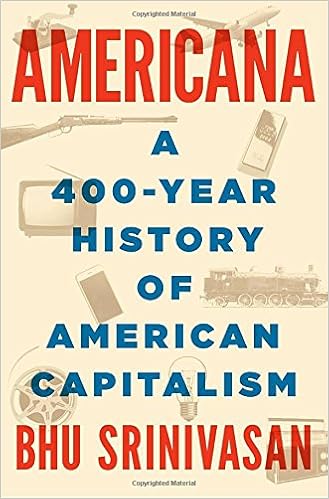
One of the hardest chapters to read in this book was about slavery. Historical records actually showed what happened at a slave auction. A 27 year old prime cotton planter could be sold for $1200. His wife $900 and young children sold for $200 because they are only productive when they reached adulthood. Slavers were wise and would not allow a slave family to be split up via an auction, but they were less kind to couples who are courting or close friends.
Interestingly, the slave trade in the US can tell us a thing or two about what an ideal investment looks like.
Slavery was lucrative because it powered the cotton economy. Owning a slave in those days was similar to owning a BMW, its a sign that a white slave owner has arrived.
Eventually, slavery became the monetary base of the US South for the following reasons :
- Careful management of slaves led to steady dividends from the yields in the cotton fields.
- Slaves appreciate in value as the value of cotton went up.
- A slave can be made into a collateral for a loan. This made ownership of a slave easier because you can pay a smaller down-payment and borrow the rest. You can leverage your portfolio of slaves.
- Slaves can breed with each other to create more slaves.
Slaves were so fundamental to the southern states that it is no longer possible to frame the issue of slavery in terms of morality. A widow may own part of the equity of slave with the rest financed by credit from bank, so it is simply not a moral decision for her to simply set her slave free. The slave was not fully hers to begin with !
Eventually, much like cryptocurrencies we see today, a bubble was formed when slave prices skyrocketed in the 1850s. A decade later, the US Southern states were willing to start a Civil War to maintain their rights over their slave labor.
The ideal properties of an asset class has not changed throughout history.
The closest asset class to a slave in modern Singapore society is the REIT. Real estate is a scarce resource, it generates yields and can be leveraged. The only thing real estate cannot do is to breed with other real estate property but it can be argued that yields can easily be used to more units of REITs. This is especially so if you can borrow at a low rate of interest.
I think an understanding of history will allow us to really confront the lunatic fringe financial articles that has of late been very critical of REITs and its role in Singapore. There are accusations that REITs artificially inflate consumer prices and is one of the great Satans of Singapore capitalism.
Without even getting into the debate of whether REITs or real estate ownership is right or wrong, we should remind ourselves that real estate is now too mixed up with credit and has become some sort of a monetary base itself in Singapore. Even older folks need REITs to fight inflation and maintain their standard of living in the face of perpetually increasing priuces.
At this stage, like in America in the 1800s, only a serious class warfare or bloodshed can get investors to give up on their REIT portfolios that they fought so hard to accumulate.
While possibly no blood will be shed over REITs, we should expect a bit of drama at the ballot box.
Tuesday, January 16, 2018
The Art of the Good Life #6 : Negative thinking
By negative thinking, we mean to live our lives thinking about minimising the negatives rather than maximising the positives.
This makes a lot of sense because we can't really agree on the positive things we should do to achieve optimal success and happiness.
Does taking multi-vitamins work? How much sex is ideal ? Should I diet or exercise to lose weight ?
But we do know what's objectively bad for us - drugs, alcohol and char kway teow.
So instead of doing the right things, some people can do very well simply by avoiding the doing of bad things. Once I read about the "useless caste" in The Economist, I stopped playing computer games entirely because I became convinced that computer games has the power to replace a happy family and a career.
This philosophy is encapsulated in my current margin portfolio that makes an attempt to minimise the semi-variance rather than maximise the returns of a back-tested portfolio. If I can keep the semi-variance small and minimise the downside, I can catch up with the market portfolio by simply employing a reasonable amount of leverage.
Another novel application of this approach is when it comes to friends you choose to hang out with.
In the modern world, success can be lonely and successful people may be too busy building careers and families to develop a social life.
In the absence of successful role-models, it may be helpful to spend some time deconstructing the folks you hang out with and ask yourself what's preventing them from having a happy life. As our brains are wired to be quite critical and judgmental, coming up with an answer would not be too difficult at all.
Some people we know might be flaky and unreliable. Others simply lack a motivation throughout their lives.
Once you discover something about your friends, you need to ask yourself honestly whether you have that same problem. After all, you are the average of five of closest folks you hang out with.
No, unless someone asks politely, you should keep your blunt analysis to yourself.
This makes a lot of sense because we can't really agree on the positive things we should do to achieve optimal success and happiness.
Does taking multi-vitamins work? How much sex is ideal ? Should I diet or exercise to lose weight ?
But we do know what's objectively bad for us - drugs, alcohol and char kway teow.
So instead of doing the right things, some people can do very well simply by avoiding the doing of bad things. Once I read about the "useless caste" in The Economist, I stopped playing computer games entirely because I became convinced that computer games has the power to replace a happy family and a career.
This philosophy is encapsulated in my current margin portfolio that makes an attempt to minimise the semi-variance rather than maximise the returns of a back-tested portfolio. If I can keep the semi-variance small and minimise the downside, I can catch up with the market portfolio by simply employing a reasonable amount of leverage.
Another novel application of this approach is when it comes to friends you choose to hang out with.
In the modern world, success can be lonely and successful people may be too busy building careers and families to develop a social life.
In the absence of successful role-models, it may be helpful to spend some time deconstructing the folks you hang out with and ask yourself what's preventing them from having a happy life. As our brains are wired to be quite critical and judgmental, coming up with an answer would not be too difficult at all.
Some people we know might be flaky and unreliable. Others simply lack a motivation throughout their lives.
Once you discover something about your friends, you need to ask yourself honestly whether you have that same problem. After all, you are the average of five of closest folks you hang out with.
No, unless someone asks politely, you should keep your blunt analysis to yourself.
Sunday, January 14, 2018
What is a "Civet Cat" friend ?
So it's been about 2 weeks of work. I'm getting a lot of very interesting exposure and personal growth from the problems I face at work. Naturally, these problems are very human and is therefore something most engineers have never faced before.
Over the next six months, I will be trying to distill the essence of what I am learning into generalised principles because I am forbidden to talk too much about the actual work that I do. One thing I can share is that I grapple with issues faced by very rich and very unhappy people, some are so rich, even if you add the net worth of the top 3 financial bloggers that you know, their wealth will come up short compared to the folks I am given the opportunity to investigate.
A lot of things I learnt fly in the face of what I have learnt studying for the three degrees I have. The world has become a much stranger place to me.
This Sunday, let's learn about what a "Civet Cat" friend is.
We deal with a lot of dubious financial products in everyday life. Some of these products are aggressively sold because commissions are ridiculous and sometimes even half of the selling price of the product . They can be some land-banking oriented product or fractional ownership of foreign property. Some might be rights over timberland and if you are not too careful, you might end even up with some product related to Gold-backed guarantee as well.
Most of the time, you get scammed if you buy these products. We financial bloggers fight an uneasy battle with scammers all the time but sometimes we are slow because someone invents a new product an unleashes it against unsuspecting members of the public.
But what is a civet cat ? A civet cat processes coffee beans and because of his sense of smell can pick the best beans to be processed. This is why the best coffee beans are found from civet cat droppings.
Here's a funny thing - The "Civet Cat Friend" is a benign version of these scammers.
Such a friend can tell amongst these scams, which products can still yield a profit and which don't so they only sell the best products to a select group of wealthy individuals. Over time, having gained the trust of rich friends, Civet Cats can become very rich by earning ridiculous commissions by ensuring that their friends get into products that have pretty solid returns which are uncorrelated with the financial markets.
The existence of the Civet Cat throws a monkey wrench into people who rail against these exotic and borderline illegal products because there are people who have made consistent money out of buying them from a trusted friend. Civet Cats also seem to be nice guys. The richest ones, being those who make the most of their allies the most money.
How do we discover a Civet Cat? I do not know of one personally but I guess it is someone who not only sells, but has a network of wealthy people they have on a first name basis. There must be evidence that he or she will only sell a few products even though he has a universe of products that he can tout. Also, a Civet Cat must also be well-loved and be constantly consulted and fawned over by these wealthy people. They can't be the guy who owns a flashy Maserati (even though many may own one), they need to be the guy who talks about the Maserati their clients bought after listening to his good advice.
Sadly, most of us, myself included, will not sought by Civet Cats because we do not belong in that league to be included in their circles so it is still better to remain skeptical of dubious financial products.
Naturally, the fake Civet Cats will out number the real ones, constantly proclaiming that they are the real McCoy and the path to riches lies through the products that they sell.
I know a real one will never approach me now, so I can wear my CB face and ask them to talk to my hand.
Saturday, January 13, 2018
How I coped with my shitty O level results
[ The original title of this article would have been tasteless in light of the latest news on social media about the teen who committed suicide over his O level results. I have amended the title as soon as I could after hearing the news and corroborating it from different sources ]
Sec 4A from the 1987 intake of Swiss Cottage Secondary was the only Pure Science class in the school. The administration felt that their students would not have what it took to enter medical school so Pure Science meant taking only pure Physics and Chemistry. In spite of this, entry into the class was relatively competitive because, for some arcane reason, it was just cooler to be in Pure Science in the 1980s.
The other distinguishing feature of Sec 4A was that it was arrogant. Possibly the most arrogant class ever produced in the history of the secondary school.
We were the rare forty or so Pure Science students, we thought we were like the Aryans, the Master Race, of the school. We never had a formal classroom, the school ran out of space and gave us science lab which was crazy by today's standards.
We were indignant and we overcompensated.
We won the Drama competition and when Sec 4D challenged us to soccer match to curb our arrogance, we thrashed them as well. We formally complained to the school administration when we felt that the Pure Physics questions were too easy and did not reflect the level difficulty in other schools. We banded together to complain again when the Physics preliminary exams were riddled with errors.
We did all this on our own without parental support, I remember going to the National library to research on A level texts to prove why the teacher's answers were wrong. And we were so terrifying, there was a period of time where we never even had a Physics teacher because teachers expressed reluctance to teach us because we self-studied so aggressively.
But Sec 4A had one weakness which blindsided us and made us fall.
We were mostly Chinese helicopters. The Ang Mo Tua Kees went into 4B because 4B offered English Literature. Sec 4A were basically kids with mathematical aptitude that came from Chinese speaking families. We thought we could do EL1, but we were woefully inadequate for the actual exam.
For the O levels, the mightily arrogant Sec 4A was given the biggest thrashing it ever had experienced as a class. 4 out of 5 top O level students eventually went to Sec 4B. The English Literature teacher, who actually refused to give the class our drama trophies because we were such arrogant fuckers, was jubilant.
Naturally, my O level showing was the most humiliating showing in my entire my life.
I got B4 for English, B3 for Geography. My total score was 11 and scraped through NJC likely because I took a rare combination involving Computing and Further Maths. The idea of leaving a JC after 3 months of bonding with your classmates is a terrifying one, some of my classmates were crying when their appeals to stay in NJC failed. One, who is a Phd in Engineering today, even contemplated monk-hood.
Many years later, Sec 4A alumni had a gathering. On the whole, we had done rather well in tertiary education.
One of things we spoke, and had great memories of, is how much we hated doing so badly for our O levels and losing to Sec 4B and why the bulk of us who became professionals really did not want the experience of humiliation to repeat itself.
We drive ourselves hard.
I think this humiliation continues to drive me until today.
At the back of my mind, I think that perhaps Sec 4A of 1987 cohort would be able to produce a lawyer trained for the Singapore Bar in 2018.
But looking back, I think being scarred by my O level showing turned out be quite ok for me on hindsight.
So to the folks who had a shit O level showing....
Not letting that failure define you is a lost opportunity.
Let the anger and humiliation consume you.
Take it personally if a teacher laughs at you or puts your down.
For subsequent rounds, it will be payback time !
Sec 4A from the 1987 intake of Swiss Cottage Secondary was the only Pure Science class in the school. The administration felt that their students would not have what it took to enter medical school so Pure Science meant taking only pure Physics and Chemistry. In spite of this, entry into the class was relatively competitive because, for some arcane reason, it was just cooler to be in Pure Science in the 1980s.
The other distinguishing feature of Sec 4A was that it was arrogant. Possibly the most arrogant class ever produced in the history of the secondary school.
We were the rare forty or so Pure Science students, we thought we were like the Aryans, the Master Race, of the school. We never had a formal classroom, the school ran out of space and gave us science lab which was crazy by today's standards.
We were indignant and we overcompensated.
We won the Drama competition and when Sec 4D challenged us to soccer match to curb our arrogance, we thrashed them as well. We formally complained to the school administration when we felt that the Pure Physics questions were too easy and did not reflect the level difficulty in other schools. We banded together to complain again when the Physics preliminary exams were riddled with errors.
We did all this on our own without parental support, I remember going to the National library to research on A level texts to prove why the teacher's answers were wrong. And we were so terrifying, there was a period of time where we never even had a Physics teacher because teachers expressed reluctance to teach us because we self-studied so aggressively.
But Sec 4A had one weakness which blindsided us and made us fall.
We were mostly Chinese helicopters. The Ang Mo Tua Kees went into 4B because 4B offered English Literature. Sec 4A were basically kids with mathematical aptitude that came from Chinese speaking families. We thought we could do EL1, but we were woefully inadequate for the actual exam.
For the O levels, the mightily arrogant Sec 4A was given the biggest thrashing it ever had experienced as a class. 4 out of 5 top O level students eventually went to Sec 4B. The English Literature teacher, who actually refused to give the class our drama trophies because we were such arrogant fuckers, was jubilant.
Naturally, my O level showing was the most humiliating showing in my entire my life.
I got B4 for English, B3 for Geography. My total score was 11 and scraped through NJC likely because I took a rare combination involving Computing and Further Maths. The idea of leaving a JC after 3 months of bonding with your classmates is a terrifying one, some of my classmates were crying when their appeals to stay in NJC failed. One, who is a Phd in Engineering today, even contemplated monk-hood.
Many years later, Sec 4A alumni had a gathering. On the whole, we had done rather well in tertiary education.
One of things we spoke, and had great memories of, is how much we hated doing so badly for our O levels and losing to Sec 4B and why the bulk of us who became professionals really did not want the experience of humiliation to repeat itself.
We drive ourselves hard.
I think this humiliation continues to drive me until today.
At the back of my mind, I think that perhaps Sec 4A of 1987 cohort would be able to produce a lawyer trained for the Singapore Bar in 2018.
But looking back, I think being scarred by my O level showing turned out be quite ok for me on hindsight.
So to the folks who had a shit O level showing....
Not letting that failure define you is a lost opportunity.
Let the anger and humiliation consume you.
Take it personally if a teacher laughs at you or puts your down.
For subsequent rounds, it will be payback time !
Wednesday, January 10, 2018
The Art of the Good Life #5 : Productivity and counter-productivity
As I have just started working again for a prolonged period of time, it has become worth my time to start thinking productivity. The book I have chosen to read this week is entitled The Productivity Project by Chris Bailey. I will list out three outstanding life hacks here.
a) Drink water first thing in the morning
This simple hack is something worth trying out immediately. Drinking plain water can boost your metabolism by 24%.
b) Maintenance Day
Another useful hack is to institute a Maintenance day to do all your personal stuff in one batch. Designate a single day to perform routine personal tasks like clipping your nails, doing your hair and other acts of personal maintenance. This frees up the rest of your time to do more important projects.
c) Learn to day dream and focus your attention on a single task
Imagination pays its own dividends and you should devote some specific time just to daydream. This can be a great use of travel time. If you are not being deliberately distracted, avoid multitasking. Perform one task in short bursts of 25 minutes while taking a short break between each burst of concentrated effort.
The book contains a lot more hacks that are simple and elegant.
Coincidentally, The Art of the Good life has a very different chapter called counter-productivity which should have filled a much needed complementary chapter in The Productivity Project. There is this prevailing idea that technology will increase our productivity but we should be mindful that in reality, a lot of technology is counter productive. A car will allow you to match speeds above that of a public bus, but driving to work requires attention and you will end up wasting a lot of time looking for parking space. You will find in practice that folks with vehicles are not the most punctual folks to have around. Similarly, email just makes mailing so cheap that you end up sifting through tons of FYI emails in your workplace.
This makes simple productivity hacks more significant and meaningful.
Technology is not always the answer.
Sunday, January 07, 2018
Personal Update - Training has begun.
It's about time to provide a personal update.
a) Training
Training has commenced for a week. I spent the first two days working until around 9pm. Comparing notes against my fellow trainees who are spread over other firms, I consider myself to be very lucky as some of my peers are finishing the first day of work at 2am in the morning. For the sake of the rookie lawyers reading this blog, I will begin pinging my classmates and sharing the consolidated data on this blog throughout this six months.
Some of the advantages of being a financially independent mid-career hirer is starting to bear out as we get into the workplace. The training stipend is a very small component of my income. The same cannot be said for a young professional trying to make his way within the industry.
I will be trying to get a bigger lead on my competitors and will be researching what local small firms can recover from government bodies for giving a fighting chance to a 40-something year old who has been unemployed for the past 4 years. Hopefully, hiring me will ultimately be virtually free thanks to the latest government incentives.
Yes, my peers are younger, sharper and more energetic. But I hope to have government subsidies backing up my candidacy.
b) Financial Markets
It has been a fantastic first week for my portfolio.
This January, we're seeing a very strong Capricorn effect. The market upswing in January seems to be much stronger if December has been a flat month. I am seeing some upside to my core portfolio but the real winner is my margin portfolio which has been up 5 out of 5 days. If I see similar performance over the next two weeks, my margin portfolio would be complete before Chinese New Year.
I need to get out of Tech firms and pick up higher yielding counters early 2018.
c) Crypto-currency markets
At the tail end of December, I started messing around with my cryptocurrency holdings because it has burgeoned up to about $2500 over the past 1 year from a spare change of around $100. As exchanges are limiting the amounts I can put into crypto, I can only play with what I have but I made one good move to plough half of my holdings in Ripple.
The resulting effect is that I now have around $5000 spread somewhat equally over 7 different coins. I don't have a methodology to trade cryptocurrencies because I think we're riding on a temporary mania. I am also not likely to make a lot because I have no intention to sell so I expect to see a crash before the year is over. However, for me to lose money, my entire crypto currency would have to crash around 80% though.
I see all this as the latest MMORPG that I am playing with.
d) Moratorium on book buying
My moratorium on book buying is off to a good start. The first week, I have already identified >$200 of books which I would have wanted to buy. John Naisbitt launched a new Megatrends book and Paranoia RPG just arrived in Singapore. SMU has just launched a new book on bitcoins and inclusiveness.
The $200 I saved was immediately committed to LTC.
e) Upcoming talks
I do have an upcoming investing talk at the end of January but I was told not to market it yet as the sponsor wants to give priority to their own customers. Maybe I can talk about it in about two weeks.
a) Training
Training has commenced for a week. I spent the first two days working until around 9pm. Comparing notes against my fellow trainees who are spread over other firms, I consider myself to be very lucky as some of my peers are finishing the first day of work at 2am in the morning. For the sake of the rookie lawyers reading this blog, I will begin pinging my classmates and sharing the consolidated data on this blog throughout this six months.
Some of the advantages of being a financially independent mid-career hirer is starting to bear out as we get into the workplace. The training stipend is a very small component of my income. The same cannot be said for a young professional trying to make his way within the industry.
I will be trying to get a bigger lead on my competitors and will be researching what local small firms can recover from government bodies for giving a fighting chance to a 40-something year old who has been unemployed for the past 4 years. Hopefully, hiring me will ultimately be virtually free thanks to the latest government incentives.
Yes, my peers are younger, sharper and more energetic. But I hope to have government subsidies backing up my candidacy.
b) Financial Markets
It has been a fantastic first week for my portfolio.
This January, we're seeing a very strong Capricorn effect. The market upswing in January seems to be much stronger if December has been a flat month. I am seeing some upside to my core portfolio but the real winner is my margin portfolio which has been up 5 out of 5 days. If I see similar performance over the next two weeks, my margin portfolio would be complete before Chinese New Year.
I need to get out of Tech firms and pick up higher yielding counters early 2018.
c) Crypto-currency markets
At the tail end of December, I started messing around with my cryptocurrency holdings because it has burgeoned up to about $2500 over the past 1 year from a spare change of around $100. As exchanges are limiting the amounts I can put into crypto, I can only play with what I have but I made one good move to plough half of my holdings in Ripple.
The resulting effect is that I now have around $5000 spread somewhat equally over 7 different coins. I don't have a methodology to trade cryptocurrencies because I think we're riding on a temporary mania. I am also not likely to make a lot because I have no intention to sell so I expect to see a crash before the year is over. However, for me to lose money, my entire crypto currency would have to crash around 80% though.
I see all this as the latest MMORPG that I am playing with.
d) Moratorium on book buying
My moratorium on book buying is off to a good start. The first week, I have already identified >$200 of books which I would have wanted to buy. John Naisbitt launched a new Megatrends book and Paranoia RPG just arrived in Singapore. SMU has just launched a new book on bitcoins and inclusiveness.
The $200 I saved was immediately committed to LTC.
e) Upcoming talks
I do have an upcoming investing talk at the end of January but I was told not to market it yet as the sponsor wants to give priority to their own customers. Maybe I can talk about it in about two weeks.
Saturday, January 06, 2018
Lessons from Salty Gen-X "The Last Jedi" haters

Of late, even the Star Wars franchise has join the inter-generation wars with Generation X forming the majority of folks who are upset with the latest movie.
If you follow this blog, you will know that Gen X has a lot of bitterness because most of us are currently undergoing our own mid-life crisis. A lot of folks got upset when Luke Skywalker did not have the good ending that most of Generation X expected. Fans were shocked by the idea that Luke turned out to be a bad Jedi Master who tried to murder to teenager and played a role in the turning of Kylo Ren towards the First Order.
Generation X feelings were even more hurt when the heroes of the Millenial generation were able to manifest greater powers without seemingly requiring more training. Kylo Ren can stop a blaster bolt in mid-air. Rey does not seem to require a lot of on job training. This forms the heart of a lot of inter-generational shaming. Generation X has always accused Millenials of taking to short cuts through life.
This can be reflected in the financial markets.
Boomers had a ridiculous real estate market boom allowing specific individuals who had owned landed property in the early 70s to become multi millionaires today. Millenials had the cryptocurrency mania that could mint a new millionaire in months.
Some might ask : What did Generation X have beyond bitterness, failure and mediocrity ?
In reality, the Generation X bitterness is hogwash.
Just because someone did not achieve prosperity by following the markets does not mean that the entire Generation was screwed by society and was not given as good a deal as other generations. I actually think we are doing better than Boomers or the Millenials.
Generation X enjoyed half the residential property boom and a decade or two where corporations remained somewhat loyal to professional workers. Generation X in Singapore had access to REITs and saw the introduction of ETFs into the markets. Generation X also could have bought in the biggest downturn of the last 50 years in 2009.
In 2018, many Generation X will reach the depths of their mid-life crisis.
Like their childhood hero Luke Skywalker, their life report card will read a C- or a D.
At the end of the day, they can only blame themselves.
Wednesday, January 03, 2018
The Art of the Good Life #4 - Black Box Thinking
We're rapidly moving back into our regular programming because I need to put in more effort to complete my training.
The section of black box thinking comes in two parts.
The first part is radical acceptance. You need to accept reality and acknowledge your flops. My investment skills did not grow for a while because I stuck to high yielding stocks and REITS and needed passive income so much that I was unwilling to consider alternative approaches. I have to accept that my performance has been so-so over the years.
Thankfully, back-testing and leverage showed me that there are certainly ways to have high quality growth without sacrificing my income needs.
This can be applied in many other areas in a person's life.
Last year, I finally accepted that one particular bookstore in Singapore does not really deserve my business anymore. I'm not really a cultural person and this bookstore takes a lot of pride in stocking books that I really did not enjoy reading. For years, I patronised the bookstore because I felt that the owner may need some help to pay the rent. After all, why even care about making money when culture is dead, right ? So I bought plenty of shit I would not read or even mention on this blog because that's what money is supposed to do. Preserve beauty.
But supporting culture does not make one a cultural person. At the urging of my distributor, I tried to read one book by a local author I shall not name and I was quite bored by accounts of jet setting types who studied at overseas university and come from elite schools.
The final straw was when the bookstore owner proclaimed on public TV, quite proudly, that he had told customers to get the fuck out of his store. I grew up in retail background and ill treating even a bad customer is not something I think any boss should be proud of, so i decided never to visit that bookstore again unless I really had an explicit book order that only be met by going there.
Well so far, I never felt the need to visit that bookstore ever again.
The second section is black box thinking itself. This comes from the black box installed on airplanes that record every signal sensor that can be used for forensics analysis after a plane crash.
First, we need to acknowledge that we fucked up or are inadequate. Then, we need to system to track where went wrong when we fucked up. If you cannot figure out what went wrong, you are very likely to make that same mistake again. I basically was so obsessed with passive income, I was too willing to ignore total returns and volatility. Only after amassing a more comfortable hoard was I willing to entertain the idea that returns can magnified provided that we also magnified risk and we can artificially inflate yields to improve risk adjusted returns.
Also I am the cultural equivalent of a barbarian.
Some people say that it's not Art unless it is useless.
It is time for me to stop appreciating or doing useless things.
The section of black box thinking comes in two parts.
The first part is radical acceptance. You need to accept reality and acknowledge your flops. My investment skills did not grow for a while because I stuck to high yielding stocks and REITS and needed passive income so much that I was unwilling to consider alternative approaches. I have to accept that my performance has been so-so over the years.
Thankfully, back-testing and leverage showed me that there are certainly ways to have high quality growth without sacrificing my income needs.
This can be applied in many other areas in a person's life.
Last year, I finally accepted that one particular bookstore in Singapore does not really deserve my business anymore. I'm not really a cultural person and this bookstore takes a lot of pride in stocking books that I really did not enjoy reading. For years, I patronised the bookstore because I felt that the owner may need some help to pay the rent. After all, why even care about making money when culture is dead, right ? So I bought plenty of shit I would not read or even mention on this blog because that's what money is supposed to do. Preserve beauty.
But supporting culture does not make one a cultural person. At the urging of my distributor, I tried to read one book by a local author I shall not name and I was quite bored by accounts of jet setting types who studied at overseas university and come from elite schools.
The final straw was when the bookstore owner proclaimed on public TV, quite proudly, that he had told customers to get the fuck out of his store. I grew up in retail background and ill treating even a bad customer is not something I think any boss should be proud of, so i decided never to visit that bookstore again unless I really had an explicit book order that only be met by going there.
Well so far, I never felt the need to visit that bookstore ever again.
The second section is black box thinking itself. This comes from the black box installed on airplanes that record every signal sensor that can be used for forensics analysis after a plane crash.
First, we need to acknowledge that we fucked up or are inadequate. Then, we need to system to track where went wrong when we fucked up. If you cannot figure out what went wrong, you are very likely to make that same mistake again. I basically was so obsessed with passive income, I was too willing to ignore total returns and volatility. Only after amassing a more comfortable hoard was I willing to entertain the idea that returns can magnified provided that we also magnified risk and we can artificially inflate yields to improve risk adjusted returns.
Also I am the cultural equivalent of a barbarian.
Some people say that it's not Art unless it is useless.
It is time for me to stop appreciating or doing useless things.
Monday, January 01, 2018
Onwards ! Let's conquer 2018 !

I don't have a lot of big audacious goals for 2018 but 2017 has given me a solid base to build up a life beyond my previous life.
a) Time to return to the Workforce
For six months, I will still be a trainee and I hope to have the resilience and drive to get it completed so that I can complete my transformation into a full fledged lawyer.
Thereafter, I remain flexible for any career option open to me.
The headhunter which worked quite extensively with me last year (and then got unceremoniously rejected even after I had a super successful first interview) gave me a courtesy call before the year ended and expressed an interest to talk to me again as the demand in IT Governance is super hot.
So nothing beyond July 2018. If the money is good, I will go back to IT and find ways to retain my legal knowledge by establishing some kind of tie with SMU/NUS through IT/Compliance/Legal courses.
b) Financial goals and predictions
Just for the sake of the new year and to facilitate some retrospective in December 2018, I think markets will grow a little in 2018. from 0-6%. 2017 was fantastic and I doubt we will have another crazy year. I also predict that in spite of several crashes that will occur this year, cryptocurrencies will see double digit gains in 2018.
My margin account can only pay for 75% of my monthly mortgage payments and is incomplete. 2018 has to be the year that it must be done. If my core portfolio does well in January, I can easily finish this work for a quick win. Otherwise, it will be a hard slog that will rely on setting aside my meagre earned income.
If I do not get this done by July, I will have to start selling off my CPF-IS counters to pay off my monthly mortgage.
c) Need to maintain my health in 2018
One of the biggest issues I faced the last time I worked was my weight gain as I worked near Maxwell Hawker Centre. I gained 2 kg which I lost quickly once I got back to the Part B programme.
I hope I have the will power to gym and maybe even swim along with a work schedule. I've not had such discipline for quit a while.
d) No new book buying in January 2018
This is probably the hardest resolution for me to meet. I'm going to limit purchases of books for January to attempt to clear my KIV book list. My habit of buying books faster than I read them is creating a crisis at home as I run out of space. I spent one week clearing my books during the holidays.
There are simply too many books on crypto, deep learning, workplace productivity and corporate law that I need to clear.
e) BIGSCribe to grow further
I remain committed to the efforts of BIGScribe. The company is still growing and I look forward to participating in more events this year. My engagement is really up to the company directors but if I can called to perform, I will do my best as I have done so in 2017.
f) Something must be given up in 2018
One of the things I need to do in 2018 is to give up what I previously tried to enjoy but no longer have the luxury of time to do so. I have accumulated too many time wasters during 4 years without a day job.
The most obvious thing to give up is board/card games. I have been pretending for months that I can play board games with my friends. I even bought Legend of the Five Rings but had zero game sessions because I had no time to build a deck. This is not so bad given that I will never give up my D&D hobby.
The next thing is to taper off binge watching. I will possibly continue with Game of Thrones, Man in the High Castle and Rick and Morty but otherwise, this is a a guilty pleasure that I need to minimise.
It may be time to start unloading my board games on Carousell.
Also, as my son is growing up, my family will not see a lot of holidays in the next few years beyond the occasional trip to Malaysia. I will be very absentee dad if I want to build a strong primary income again.
Hopefully it will not take too long to achieve a debt-free status with a five digit portfolio monthly income.
We can always have better holidays after that.
Sunday, December 31, 2017
How other bloggers are rounding up their 2017.
For the year end, I'm going to do something different since I have been updating everyone on my personal progress. So today, I'm going to be a kay-poh and will pick three bloggers and talk about their 2017 moving into 2018 :
a) Budget Babe
Budget Babe is going to be a target of a lot of salty folks getting into 2018. I always found it damn irritating that people disrespect her for two reasons : One is that she is a woman. The other is that she's a Millenial.
BB had an awesome year doubling her net worth and getting married at the same period of time. It's hard to imagine anyone else having a better year than she did.
Of course the sharks are coming. So many critics will warn her of the crypto-currency collapse and predicting a horrible year for her, but I think her mastery of crypto and equity picks are really respectable and I have made some crypto moves after considering some input from her.
I believe that BB is on of those bloggers to watch, she will hit her FI years before I ever managed to achieve it.
b) Cheerful Egg
Lionel also had a fantastic 2017.
I chose Lionel because Lionel is very spiritual and deeply religious which is a good contrast against my cynical atheism. Lionel reminds atheists like me that there are clearly benefits to have a deep faith in a belief that we might be missing out. It's not enough to make me religious ( because I was a persecuted D&D fanatic in the 1980s ), but it's enough to make me respect folks who integrate a strong faith in their blog write-ups.
Lionel is always very balanced and his article reflected on his travels. Admittedly, his Santorini pics dealt me a lot of psychic damage in 2017 because I was too busy studying legal cases when he was having the most fun. He also managed to train with Dale Carnegie which I always suspected may have been a better but more expensive alternative to the Toastmasters so something to consider if you are sick and tired of Toastmasters politicking.
Nevertheless, with his move into Data Science, I hope to be able to pick up a few tricks from him. Python is winning a slow war against R and there is some pressure to switch. Even NUS Law School has a Python programming module these days.
c) A Path to Forever Financial Freedom
The insiders are commenting the difference between Lionel and Brian Halim's blog. Lionel's very aspirational approach is contrasted with Brian's plans for 2018 which looks like a checklist with hard, solid targets to meet. This is a great way to start the new year, with hard-hitting targets for 2018.
Some of Brian's target is hard to achieve like a 10% return target. Some are definitely within reach, like a 20% savings rate. He also desires to read and do more yoga.
Why did I choose to go with this exercise ?
The three bloggers are generally aligned to the concept of financial freedom and money.
One reading is that 2017 was a fantastic year or investors.
But you might want to contrast their results with other folks on your Facebook who might not be aligned with so much money but has other passions and interests.
In my case, when I review the lives of other Gen X guys going to enter the darkest phase of their lives, things are not as optimistic as the folks in the financial blogosphere. There is definitely a lot more cynicism and saltiness. Many have goals which were not met in 2017 and casually swept it under the carpet. Others blame the government and society for screwing them over even though a large part of 2017 was based on their own personal choices.
So is success a function of your personal choices or your Fate?
Take the time to observe social media and form your own conclusions....
For me, I'm honored to be able to take a glimpse of the lives of the winners in the blogosphere.
a) Budget Babe
Budget Babe is going to be a target of a lot of salty folks getting into 2018. I always found it damn irritating that people disrespect her for two reasons : One is that she is a woman. The other is that she's a Millenial.
BB had an awesome year doubling her net worth and getting married at the same period of time. It's hard to imagine anyone else having a better year than she did.
Of course the sharks are coming. So many critics will warn her of the crypto-currency collapse and predicting a horrible year for her, but I think her mastery of crypto and equity picks are really respectable and I have made some crypto moves after considering some input from her.
I believe that BB is on of those bloggers to watch, she will hit her FI years before I ever managed to achieve it.
b) Cheerful Egg
Lionel also had a fantastic 2017.
I chose Lionel because Lionel is very spiritual and deeply religious which is a good contrast against my cynical atheism. Lionel reminds atheists like me that there are clearly benefits to have a deep faith in a belief that we might be missing out. It's not enough to make me religious ( because I was a persecuted D&D fanatic in the 1980s ), but it's enough to make me respect folks who integrate a strong faith in their blog write-ups.
Lionel is always very balanced and his article reflected on his travels. Admittedly, his Santorini pics dealt me a lot of psychic damage in 2017 because I was too busy studying legal cases when he was having the most fun. He also managed to train with Dale Carnegie which I always suspected may have been a better but more expensive alternative to the Toastmasters so something to consider if you are sick and tired of Toastmasters politicking.
Nevertheless, with his move into Data Science, I hope to be able to pick up a few tricks from him. Python is winning a slow war against R and there is some pressure to switch. Even NUS Law School has a Python programming module these days.
c) A Path to Forever Financial Freedom
The insiders are commenting the difference between Lionel and Brian Halim's blog. Lionel's very aspirational approach is contrasted with Brian's plans for 2018 which looks like a checklist with hard, solid targets to meet. This is a great way to start the new year, with hard-hitting targets for 2018.
Some of Brian's target is hard to achieve like a 10% return target. Some are definitely within reach, like a 20% savings rate. He also desires to read and do more yoga.
Why did I choose to go with this exercise ?
The three bloggers are generally aligned to the concept of financial freedom and money.
One reading is that 2017 was a fantastic year or investors.
But you might want to contrast their results with other folks on your Facebook who might not be aligned with so much money but has other passions and interests.
In my case, when I review the lives of other Gen X guys going to enter the darkest phase of their lives, things are not as optimistic as the folks in the financial blogosphere. There is definitely a lot more cynicism and saltiness. Many have goals which were not met in 2017 and casually swept it under the carpet. Others blame the government and society for screwing them over even though a large part of 2017 was based on their own personal choices.
So is success a function of your personal choices or your Fate?
Take the time to observe social media and form your own conclusions....
For me, I'm honored to be able to take a glimpse of the lives of the winners in the blogosphere.
Friday, December 29, 2017
So will any ITE guy date an RGS girl in 2018 ?
Yesterday, the Straits Times had an article on class divisions. The article attempts to conclude something that we already know - There are class divisions in Singapore.
The journalist did not explain why these class divisions exist, so it falls on the financial blogger to do so.
a) Freedom and Equality are trade-offs that every society makes.
No society gets this trade-off right to the satisfaction of all its citizens. On one hand, we want to the freedom to apply our talents to become the best that we can be. On the other hand, we also want a certain measure of equality between all citizens.
Singapore has made a brutal choice between Freedom and Equality and we've largely chosen freedom : That is the freedom to accumulate wealth and the freedom to be rewarded based on merit. This has resulted in a low tax regime with an education system that works with the industry to rewards academic ability.
The folks who desire equality are truly the minority compared to Scandinavian countries. I see it even in Polytechnics where the students who look forward to University want a syllabus that prepares them for that eventuality and wishes that they did not have to move at the same pace as the average Polytechnic student.
b) Assortative Mating is one of the greatest contributors to inequality in modern society
People marrying others with the same paper qualifications and social economic status contributes up to 40% of income inequality but this is rarely emphasized or mentioned by policy makers. One reason is that policy makers also marry each other and would like to retain that freedom to do so. Otherwise, a socialist experiment would force a scholar to date and marry a truck driver. Unless a scholar vehemently disagrees with me on this blog, I doubt scholars (or truck drivers) would really like that.
These days, I see a lot of such "power couples" in SMU Law School and I am very impressed with the stability of these relationships. One of the better inventions made by Millenials is the idea of intellectual compatibility. ( Campus romance was a lot more unstable and volatile 20 years ago. )
Ok, given that I have painted two fundamental truths about inequality and class divisions in Singapore, I think we are not doing some things right.
I think it is wrong to put the blame and responsibility solely on Singapore elites.
So far we've only been reading about the RI Principal admitting that his students now tend to come from the upper crust and need some intervention to mix around with middle income and working class kids.
But it takes two hands to clap. I have yet to see, for illustration purposes, the Changkat Changi Secondary School principal admit that his kids might be disadvantaged if they do not form networks with RI or ACS kids early in their lives. One possible way is to have a friendly game of sport where the schools mix up their students just to get them to bond with each other. I benefited from plenty of exposure because I represented my secondary school in science competitions. We seriously need to stop seeing our elites as something to be salty about and instead, as a benchmark to compete against.
One of the reasons why I love Donald Trump is that thanks to populism in US, we're seeing genuine effort from elites to emphathize with the ordinary Singaporeans. Also, since the 2011 elections, Polytechnic graduates are finally seeing some increments. Our government is concerned as even a good government can be overthrown once class divisions become too pronounced in society.
But that's just one side of the equation. Ordinary Singaporeans must also step forward to be willing to mix and network with elites who are hungry to seek forgiveness from them.
Thanks to Heather Chua, we used to get upset when the RGS girl refuses to accept having a date with an ITE guy.
But now, I ask a deeper question:
How many ITE guys would want to date an RGS girl ?
There is no point applying social pressure to the RGS girls to be less elitist and to be more accepting of ITE guys when ITE guys are scared shitless of dating them.
We'd just end up with better daughters, but no better age.
The journalist did not explain why these class divisions exist, so it falls on the financial blogger to do so.
a) Freedom and Equality are trade-offs that every society makes.
No society gets this trade-off right to the satisfaction of all its citizens. On one hand, we want to the freedom to apply our talents to become the best that we can be. On the other hand, we also want a certain measure of equality between all citizens.
Singapore has made a brutal choice between Freedom and Equality and we've largely chosen freedom : That is the freedom to accumulate wealth and the freedom to be rewarded based on merit. This has resulted in a low tax regime with an education system that works with the industry to rewards academic ability.
The folks who desire equality are truly the minority compared to Scandinavian countries. I see it even in Polytechnics where the students who look forward to University want a syllabus that prepares them for that eventuality and wishes that they did not have to move at the same pace as the average Polytechnic student.
b) Assortative Mating is one of the greatest contributors to inequality in modern society
People marrying others with the same paper qualifications and social economic status contributes up to 40% of income inequality but this is rarely emphasized or mentioned by policy makers. One reason is that policy makers also marry each other and would like to retain that freedom to do so. Otherwise, a socialist experiment would force a scholar to date and marry a truck driver. Unless a scholar vehemently disagrees with me on this blog, I doubt scholars (or truck drivers) would really like that.
These days, I see a lot of such "power couples" in SMU Law School and I am very impressed with the stability of these relationships. One of the better inventions made by Millenials is the idea of intellectual compatibility. ( Campus romance was a lot more unstable and volatile 20 years ago. )
Ok, given that I have painted two fundamental truths about inequality and class divisions in Singapore, I think we are not doing some things right.
I think it is wrong to put the blame and responsibility solely on Singapore elites.
So far we've only been reading about the RI Principal admitting that his students now tend to come from the upper crust and need some intervention to mix around with middle income and working class kids.
But it takes two hands to clap. I have yet to see, for illustration purposes, the Changkat Changi Secondary School principal admit that his kids might be disadvantaged if they do not form networks with RI or ACS kids early in their lives. One possible way is to have a friendly game of sport where the schools mix up their students just to get them to bond with each other. I benefited from plenty of exposure because I represented my secondary school in science competitions. We seriously need to stop seeing our elites as something to be salty about and instead, as a benchmark to compete against.
One of the reasons why I love Donald Trump is that thanks to populism in US, we're seeing genuine effort from elites to emphathize with the ordinary Singaporeans. Also, since the 2011 elections, Polytechnic graduates are finally seeing some increments. Our government is concerned as even a good government can be overthrown once class divisions become too pronounced in society.
But that's just one side of the equation. Ordinary Singaporeans must also step forward to be willing to mix and network with elites who are hungry to seek forgiveness from them.
Thanks to Heather Chua, we used to get upset when the RGS girl refuses to accept having a date with an ITE guy.
But now, I ask a deeper question:
How many ITE guys would want to date an RGS girl ?
There is no point applying social pressure to the RGS girls to be less elitist and to be more accepting of ITE guys when ITE guys are scared shitless of dating them.
We'd just end up with better daughters, but no better age.
Thursday, December 28, 2017
The Art of the Good Life #3 : Inflexibility as a Strategem
Inflexibility is normally seen as being irrational.
The book uses the example of the CEO who has a no tolerance policy towards eating dessert. He can easily wait for the dessert to arrive and then refuse to eat it. Instead, he always makes it a point to ensure that the dessert was struck off the menu even if it already part of a paid set meal.
For the past 15 years, I have also used inflexibility as an investment strategy. No matter how attractive the stock was, I will not invest in it unless it gives out a decent dividend which is pegged at around 6% for my core portfolio and 4% for my CPF assets. This was because I'd like to be paid for holding onto my counters.
This policy has not been easy to follow.
I read a lot of brokerage reports and knew that stocks like Best World was doing well even before the uptick started. Also, moving forward, I am also extremely bullish about counters like iFast even though I did not buy any. But my dividend policy ensures that I can only mope when these stocks become multi-baggers.
The reasoning for insisting on dividends is simple, missing out on bigger dividends may give me counters like iFast and Best World but I might end up owning other stocks which may halve in value when they are hit with a negative surprise. Growth stocks tank really badly when there is no dividends to cushion the blow. No one remembers the growth stocks that petered out.
With a much larger portfolio size, I can now use back-testing to determine which stocks to invest in so I no longer follow such earlier maxims. Now my investment portfolios must be back-tested.
As it turns out, inflexibility is a powerful tool because it helps you conserve your willpower which is a finite resource. After every meal, we replenish a store of willpower that we deplete whenever we are forced to make a decision. When these reserves get depleted, we start making mistakes in our work. When we choose to be inflexible about something, we avoid making a decision because it is, in essence, already made for us.
This is why the most productive and creative professionals design a life around making the fewest decisions throughout the day. Having a fixed work uniform means not ever having to make decisions on fashion. Getting set on a fixed breakfast menu means not having to make a decision on what to buy for a meal.
Minimizing routine decisions is only winning half the battle. The other half is mustering your cognitive resources to make the decisions that matter during your day.
The book uses the example of the CEO who has a no tolerance policy towards eating dessert. He can easily wait for the dessert to arrive and then refuse to eat it. Instead, he always makes it a point to ensure that the dessert was struck off the menu even if it already part of a paid set meal.
For the past 15 years, I have also used inflexibility as an investment strategy. No matter how attractive the stock was, I will not invest in it unless it gives out a decent dividend which is pegged at around 6% for my core portfolio and 4% for my CPF assets. This was because I'd like to be paid for holding onto my counters.
This policy has not been easy to follow.
I read a lot of brokerage reports and knew that stocks like Best World was doing well even before the uptick started. Also, moving forward, I am also extremely bullish about counters like iFast even though I did not buy any. But my dividend policy ensures that I can only mope when these stocks become multi-baggers.
The reasoning for insisting on dividends is simple, missing out on bigger dividends may give me counters like iFast and Best World but I might end up owning other stocks which may halve in value when they are hit with a negative surprise. Growth stocks tank really badly when there is no dividends to cushion the blow. No one remembers the growth stocks that petered out.
With a much larger portfolio size, I can now use back-testing to determine which stocks to invest in so I no longer follow such earlier maxims. Now my investment portfolios must be back-tested.
As it turns out, inflexibility is a powerful tool because it helps you conserve your willpower which is a finite resource. After every meal, we replenish a store of willpower that we deplete whenever we are forced to make a decision. When these reserves get depleted, we start making mistakes in our work. When we choose to be inflexible about something, we avoid making a decision because it is, in essence, already made for us.
This is why the most productive and creative professionals design a life around making the fewest decisions throughout the day. Having a fixed work uniform means not ever having to make decisions on fashion. Getting set on a fixed breakfast menu means not having to make a decision on what to buy for a meal.
Minimizing routine decisions is only winning half the battle. The other half is mustering your cognitive resources to make the decisions that matter during your day.
Tuesday, December 26, 2017
Possible solutions for Polytechnic Graduates.
The last post on Polytechnic students must have struck a chord with the readership as the numbers have been off the charts. It has sparked a firestorm of comments on EDMW, you can find the link here. This is particularly amusing because the first few comments were complaints that my post was too long and the those readers demanded summaries to the post which, somehow, proves my point about the folks who blame the 70% and call all of us "Sinkies".
One or two comments, however, were valid criticisms of my original post.
The post has also been reproduced with my permission here because I guess some educators felt that this was something parents should read about.
Since the original post came out, some folks have volunteered more information about polytechnic education in Singapore. I leave it to the readers to verify the truth of these statements :
a) The average polytechnic student spend more time in the gym or playing computer games during lectures. An attitude problem exists within a significant proportion of the cohort.
b) Polytechnic exams are too easy and are slanted to assist the majority of the cohort. The top 20% who are bound for local university have been complaining for ages as they feel that they are not being sufficiently prepared by their Polys for the academic rigours of university work.
c) One problem raised is that the polytechnic lecturers themselves need to have an attitude of continuous self-improvement before it can rub off on their students. ( This is a valid feedback on the failures of my own generation of professionals. )
This post is primarily about solutions and I have to admit that I can't come up with very good ones.
If financial bloggers are that DAMN good, we'd be running the Education ministry.
Also, I doubt that this blog will be read by average Polytechnic students and I am confident that any solution will only be employed by the top Poly students to push themselves further up the social economic ladder and they will see a lot of personal success in this new economy.
But this is the best I can come up with :
a) Wait for the apprenticeship system to be fully implemented
A lot of readers including myself really want the German apprenticeship system to take off. I actually think that this system will take years to succeed and we'll be seeing a lot of false starts and foot shuffling before corporations start to en-roll for this scheme.
The reason is simple.
In Germany, the apprenticeship system is treating with the same respect as the academic track. This distributes talented workers between two branches fairly evenly so companies have that confidence that they will be able to find a decent mix of workers in their programmes. The same assurance cannot be made within Singapore.
I am guessing that the first few batches will not meet the expectations of a German Mittelstand and the government will need to manage the eventual fall-out deftly.
b) Leverage on online learning resources.
This is a nice solution that will work for the top 20% but will fail for the rest of the Polytechnic population. There are really good learning resources online but you will need a minimal level of motivation to want to pick up these new skills.
Bloggers can harp about how effective these online credentials are but if you are only motivated to earn enough money to do more LAN gaming, nothing I say can influence you further because... TLDR...
c) Join the Civil Service
I am glad that Civil service is opening its doors to non-degree officers. Not all government work requires the ability to conceptualise policy and the bulk of the work can be administrative and do not require degrees.
I am more skeptical about whether the government is genuine about hiring diploma holders into their ranks because these are highly desirable jobs and the government may end up just taking the cream of the crop and ignore the median Singaporean.
As of now, the Government remains the most elitist workplace I have ever worked for and I doubt a mindset change can be made within one generation. We may end up leaving out a good stable career for the average Singaporean.
d) Emigration
What bothered me is that when me and friends discussed a solution, this was the only solution that could withstand an intellectual challenge.
Singaporeans have increased in value over the years because of our "integrity". We're so clean that we simply do not understand how corrupt societies work. This makes us amazing catches if we are wiling to relocate to other societies and companies have to manage the legal risks of violating extra-territorial laws like the Foreign Corrupt Practices Act.
As such, our "innocence" holds great value.
We might be average in Singapore but we might be a valued human resource if we can take our basic skills into a tier-2 city like Chongqing. We need to nudge successful Singaporeans abroad to offer a helping hand to other Singaporeans who are stuck in a dead-end position locally.
Am I satisfied with these solutions ? Probably not.
I am however, fully prepared to supplement my children's income with investment returns if they fail to make it under the local education system. I think Singaporean parents over-invest in tuition, I will be balancing this versus the establishment of a financial portfolio.
Hope this will give them an edge which other parents cannot provide.
( I will never allow myself to get into a fair fight with other parents when it comes to my kid's future, sorry ! )
One or two comments, however, were valid criticisms of my original post.
The post has also been reproduced with my permission here because I guess some educators felt that this was something parents should read about.
Since the original post came out, some folks have volunteered more information about polytechnic education in Singapore. I leave it to the readers to verify the truth of these statements :
a) The average polytechnic student spend more time in the gym or playing computer games during lectures. An attitude problem exists within a significant proportion of the cohort.
b) Polytechnic exams are too easy and are slanted to assist the majority of the cohort. The top 20% who are bound for local university have been complaining for ages as they feel that they are not being sufficiently prepared by their Polys for the academic rigours of university work.
c) One problem raised is that the polytechnic lecturers themselves need to have an attitude of continuous self-improvement before it can rub off on their students. ( This is a valid feedback on the failures of my own generation of professionals. )
This post is primarily about solutions and I have to admit that I can't come up with very good ones.
If financial bloggers are that DAMN good, we'd be running the Education ministry.
Also, I doubt that this blog will be read by average Polytechnic students and I am confident that any solution will only be employed by the top Poly students to push themselves further up the social economic ladder and they will see a lot of personal success in this new economy.
But this is the best I can come up with :
a) Wait for the apprenticeship system to be fully implemented
A lot of readers including myself really want the German apprenticeship system to take off. I actually think that this system will take years to succeed and we'll be seeing a lot of false starts and foot shuffling before corporations start to en-roll for this scheme.
The reason is simple.
In Germany, the apprenticeship system is treating with the same respect as the academic track. This distributes talented workers between two branches fairly evenly so companies have that confidence that they will be able to find a decent mix of workers in their programmes. The same assurance cannot be made within Singapore.
I am guessing that the first few batches will not meet the expectations of a German Mittelstand and the government will need to manage the eventual fall-out deftly.
b) Leverage on online learning resources.
This is a nice solution that will work for the top 20% but will fail for the rest of the Polytechnic population. There are really good learning resources online but you will need a minimal level of motivation to want to pick up these new skills.
Bloggers can harp about how effective these online credentials are but if you are only motivated to earn enough money to do more LAN gaming, nothing I say can influence you further because... TLDR...
c) Join the Civil Service
I am glad that Civil service is opening its doors to non-degree officers. Not all government work requires the ability to conceptualise policy and the bulk of the work can be administrative and do not require degrees.
I am more skeptical about whether the government is genuine about hiring diploma holders into their ranks because these are highly desirable jobs and the government may end up just taking the cream of the crop and ignore the median Singaporean.
As of now, the Government remains the most elitist workplace I have ever worked for and I doubt a mindset change can be made within one generation. We may end up leaving out a good stable career for the average Singaporean.
d) Emigration
What bothered me is that when me and friends discussed a solution, this was the only solution that could withstand an intellectual challenge.
Singaporeans have increased in value over the years because of our "integrity". We're so clean that we simply do not understand how corrupt societies work. This makes us amazing catches if we are wiling to relocate to other societies and companies have to manage the legal risks of violating extra-territorial laws like the Foreign Corrupt Practices Act.
As such, our "innocence" holds great value.
We might be average in Singapore but we might be a valued human resource if we can take our basic skills into a tier-2 city like Chongqing. We need to nudge successful Singaporeans abroad to offer a helping hand to other Singaporeans who are stuck in a dead-end position locally.
Am I satisfied with these solutions ? Probably not.
I am however, fully prepared to supplement my children's income with investment returns if they fail to make it under the local education system. I think Singaporean parents over-invest in tuition, I will be balancing this versus the establishment of a financial portfolio.
Hope this will give them an edge which other parents cannot provide.
( I will never allow myself to get into a fair fight with other parents when it comes to my kid's future, sorry ! )
Monday, December 25, 2017
Thoughts on my 43rd Birthday.
I actually share the same birthday with two illustrious individuals. The first founded a major religion and is thought to have died for all our sins. The second guy made millions of people die for his sins when he started a Cultural Revolution in the last century.
This Christmas is also the first year that I dedicate Christmas exclusively to my family without the presence of any friends. My family does not have domestic help at the moment, and I can't seem to choose which friends to invite to my home without being unfair to the rest. This is a good problem for an extrovert to have as I have made many new friends in the financial blogosphere and legal industry. So, instead of a massive birthday celebration, I will spend the rest of the holiday season catching with anyone who is free.
a) I still have a chance with the legal profession
The past year has been spent putting the final touches for me to join the legal profession. I finally graduated with my JD and finished off my bar exams. Beginning next year, I begin my training contract and will spend 6 more months in the legal sector. Beyond this point, anything can happen.
I will need to make an honest assessment of my commercial value as a corporate litigator vis a vis my value in IT compliance.
b) My four year "Holiday" is over in 2018
Compared to my classmates, I don't travel a lot. I think transitioning into the legal sector is itself like global travel, although the academic stress may mean that it's closer travelling to Iraq or Afghanistan for a sightseeing trip. Nevertheless, I had a great holiday of 4 years where I picked up an entirely new discipline and gained the capability to take apart a new class of problems that most engineers can only dream of solving. ( My favourite being a theoretical exercise on how to scheme with a old patriarch on the myriad of mays to leave money for his mistress. )
Particularly valuable is the experience of interacting with a new generation of legal professionals and working alongside the widely misunderstood class of Millenials. ( Making things more challenging is that I used a Macbook Air as my PC throughout my legal training )
As a result of this experience, I have a lot more confidence in this generation of Singaporeans. As such, I would like to leave the Millenial shaming to the losers and cynics in my age category. My concern moving forward would always be about matching their energy, earning their respect and keeping up with these folks in my next workplace.
c) More challenging financial targets moving forward
From a financial perspective, I should be relieved as my net worth today was higher than my last day of work four years ago. This is considering that it takes about $60,000 a year to support my family each year and I have been out of workforce for four years.
Moving forward, I have to adjust my passive income expectations upwards. First of all, my margin account must be able to offset my mortgage payments, leaving some room for modest capital gains. I really want to give my CPF-OA a break after I start work.
Secondly, my new career has to push my passive income from my core portfolio to $120,000 a year. This is going be quite a challenge on rookie lawyer's salary and I may be kept busy until, perhaps, I am 55. ( But returning to IT might make things easier. )
d) No more half-hearted financial positions.
This year in 2018, there will be a massive change in the way I approach my investments.
Although it was a positive year, one of the reasons I made so little money from crypto was because I was not brave enough to take a meaningful position when I have a personal conviction on something. I have set the threshold of a meaningful position to 1% of my net worth. From this point onwards, gains become more meaningful but losses will start to hurt in this upcoming year.
Beyond establishing a margin account, I will be creating a market neutral portfolio and will take on a more aggressive stance on new age investments like crypto-currencies. As everything operates beyond my need for financial independence and supporting my family, I can turn my investing operations into something akin to an experimental laboratory. You can expect statistical programming to play a bigger role moving forward.
Next week, I will try to make my predictions on the markets next week in a New Year Post.
Merry Christmas everyone !
This Christmas is also the first year that I dedicate Christmas exclusively to my family without the presence of any friends. My family does not have domestic help at the moment, and I can't seem to choose which friends to invite to my home without being unfair to the rest. This is a good problem for an extrovert to have as I have made many new friends in the financial blogosphere and legal industry. So, instead of a massive birthday celebration, I will spend the rest of the holiday season catching with anyone who is free.
a) I still have a chance with the legal profession
The past year has been spent putting the final touches for me to join the legal profession. I finally graduated with my JD and finished off my bar exams. Beginning next year, I begin my training contract and will spend 6 more months in the legal sector. Beyond this point, anything can happen.
I will need to make an honest assessment of my commercial value as a corporate litigator vis a vis my value in IT compliance.
b) My four year "Holiday" is over in 2018
Compared to my classmates, I don't travel a lot. I think transitioning into the legal sector is itself like global travel, although the academic stress may mean that it's closer travelling to Iraq or Afghanistan for a sightseeing trip. Nevertheless, I had a great holiday of 4 years where I picked up an entirely new discipline and gained the capability to take apart a new class of problems that most engineers can only dream of solving. ( My favourite being a theoretical exercise on how to scheme with a old patriarch on the myriad of mays to leave money for his mistress. )
Particularly valuable is the experience of interacting with a new generation of legal professionals and working alongside the widely misunderstood class of Millenials. ( Making things more challenging is that I used a Macbook Air as my PC throughout my legal training )
As a result of this experience, I have a lot more confidence in this generation of Singaporeans. As such, I would like to leave the Millenial shaming to the losers and cynics in my age category. My concern moving forward would always be about matching their energy, earning their respect and keeping up with these folks in my next workplace.
c) More challenging financial targets moving forward
From a financial perspective, I should be relieved as my net worth today was higher than my last day of work four years ago. This is considering that it takes about $60,000 a year to support my family each year and I have been out of workforce for four years.
Moving forward, I have to adjust my passive income expectations upwards. First of all, my margin account must be able to offset my mortgage payments, leaving some room for modest capital gains. I really want to give my CPF-OA a break after I start work.
Secondly, my new career has to push my passive income from my core portfolio to $120,000 a year. This is going be quite a challenge on rookie lawyer's salary and I may be kept busy until, perhaps, I am 55. ( But returning to IT might make things easier. )
d) No more half-hearted financial positions.
This year in 2018, there will be a massive change in the way I approach my investments.
Although it was a positive year, one of the reasons I made so little money from crypto was because I was not brave enough to take a meaningful position when I have a personal conviction on something. I have set the threshold of a meaningful position to 1% of my net worth. From this point onwards, gains become more meaningful but losses will start to hurt in this upcoming year.
Beyond establishing a margin account, I will be creating a market neutral portfolio and will take on a more aggressive stance on new age investments like crypto-currencies. As everything operates beyond my need for financial independence and supporting my family, I can turn my investing operations into something akin to an experimental laboratory. You can expect statistical programming to play a bigger role moving forward.
Next week, I will try to make my predictions on the markets next week in a New Year Post.
Merry Christmas everyone !
Saturday, December 23, 2017
Brutal truths about Polytechnic graduates.
As a parent of two kids, issues affecting Polytechnic students and graduates are important issues to me because, at this moment, I still lie behind the Rawlsian veil. I am concerned that if my children did not qualify for a seat in a local university and end up studying in a Polytechnic/ITE, they will face an uncertain future with the gig economy.
I think many parents have this fear but they are too ashamed to admit it because it hurts the feelings of 50% of their friends. Also, there is nothing fundamentally wrong with turning out average. It's only wrong in a place like Singapore.
I echoed my fears and shared my deepest concerns with a friend I know, whom in my opinion, is best positioned to address my fears because he is very successful in business, lectured in polytechnics, and are intimately close with the problem at hand. He is a straight-talking fellow.
In summary, the conversation left me more shaken than before.
I asked my friend, why not put two and two together and have Singapore's startup eco-system draw their recruits primarily from Polytechnics, specifically poly graduates who are not going into local universities, instead of waging a price war for local university graduates?
He said that most startups would be, privately, unwilling to hire the 80% of the polytechnics cohort. My friend commented that our education system sorts people out "far too well". I read this as a hint that people's motivations correlates well to their academic positions in the local education system.
The conversation then took an even darker turn...
My friend said that he can teach a polytechnic class and he will know exactly who is on their way towards a local university within one week of interacting with his students. My interpretation of this statement is that the polytechnic population is now bimodal. 20% of poly graduates are elites from the secondary school cohort who possibly wanted to avoid JC because they hate PE and CL2 lessons. These guys will go to a local university and become leaders of the future industry. The government will then praise the polytechnic system for producing such corporate heroes and declare that we have an egalitarian meritocracy. But that still leaves 80% to be destined to join the gig economy after getting a diploma if they don't sign up for some private degree program.
I then asked what can the 80% be hired to do after we transform into a Smart City ? Are we being blinded to to the needs of the middle class given that the 20% of poly grads are becoming doctors and lawyers and seem to be doing better and better every year?
My friend did not answer the question directly despite being a really smart guy.
After the conversation took a detour into several other areas, he said that perhaps his average students can be hired to do admin work, but cautioned me that such work needs to be documented very carefully, or the work would not be done properly. Perhaps, he did not have confidence that the average poly graduate would have any initiative in the corporate world at all.
We did not come up with any clear solutions that day beyond the flippant idea that unhappy Singaporeans may make a bigger difference if they build a career in a second tier city in China like Chongqing or Australia.
For this Christmas, when we think about compassion and empathy, the general idea is for us to focus on the bottom 5-20%. This is why elites like to focus on charity work. Helping the disabled and homeless makes us feel so good and superior to the other Singaporeans who do less charity. Also, the story behind the struggling single mum who has to raise intellectually disabled children can easily make us cry.
There is no compassion or empathy for the median Singaporean because if you are median, there are an equal number of people who are both better and worse off than you. The story of the Singlish speaking dude who spending weekends LAN gaming at Parklane and nights fapping to anime porn is more likely to make us go "Meh."
But not thinking about giving a decent life for the average Singaporean is what can poison a good society. World events in 2017 have shown that Populism can upstage a great government once hope is lost. Populations can turn against free trade and capitalism even if it better for them over the long term.
Asa result of our apathy, the people who just want to see the world burn will grow stronger.
My friend said that even friending his students can be a negative experience. His students are the ones who spell Singaporeans "Sinkies" or "Sinkaporeans" and find every excuse blame the 70%.
It's very easy every Christmas to brag about the good we do for the unfortunate or the poor.
But it's much harder to admit that we did not spare a thought for the average fellow citizen who is facing the latest round of disruption from our transformation to a Smart City.
For this Christmas, I am admitting it right now.
I think many parents have this fear but they are too ashamed to admit it because it hurts the feelings of 50% of their friends. Also, there is nothing fundamentally wrong with turning out average. It's only wrong in a place like Singapore.
I echoed my fears and shared my deepest concerns with a friend I know, whom in my opinion, is best positioned to address my fears because he is very successful in business, lectured in polytechnics, and are intimately close with the problem at hand. He is a straight-talking fellow.
In summary, the conversation left me more shaken than before.
I asked my friend, why not put two and two together and have Singapore's startup eco-system draw their recruits primarily from Polytechnics, specifically poly graduates who are not going into local universities, instead of waging a price war for local university graduates?
He said that most startups would be, privately, unwilling to hire the 80% of the polytechnics cohort. My friend commented that our education system sorts people out "far too well". I read this as a hint that people's motivations correlates well to their academic positions in the local education system.
The conversation then took an even darker turn...
My friend said that he can teach a polytechnic class and he will know exactly who is on their way towards a local university within one week of interacting with his students. My interpretation of this statement is that the polytechnic population is now bimodal. 20% of poly graduates are elites from the secondary school cohort who possibly wanted to avoid JC because they hate PE and CL2 lessons. These guys will go to a local university and become leaders of the future industry. The government will then praise the polytechnic system for producing such corporate heroes and declare that we have an egalitarian meritocracy. But that still leaves 80% to be destined to join the gig economy after getting a diploma if they don't sign up for some private degree program.
I then asked what can the 80% be hired to do after we transform into a Smart City ? Are we being blinded to to the needs of the middle class given that the 20% of poly grads are becoming doctors and lawyers and seem to be doing better and better every year?
My friend did not answer the question directly despite being a really smart guy.
After the conversation took a detour into several other areas, he said that perhaps his average students can be hired to do admin work, but cautioned me that such work needs to be documented very carefully, or the work would not be done properly. Perhaps, he did not have confidence that the average poly graduate would have any initiative in the corporate world at all.
We did not come up with any clear solutions that day beyond the flippant idea that unhappy Singaporeans may make a bigger difference if they build a career in a second tier city in China like Chongqing or Australia.
For this Christmas, when we think about compassion and empathy, the general idea is for us to focus on the bottom 5-20%. This is why elites like to focus on charity work. Helping the disabled and homeless makes us feel so good and superior to the other Singaporeans who do less charity. Also, the story behind the struggling single mum who has to raise intellectually disabled children can easily make us cry.
There is no compassion or empathy for the median Singaporean because if you are median, there are an equal number of people who are both better and worse off than you. The story of the Singlish speaking dude who spending weekends LAN gaming at Parklane and nights fapping to anime porn is more likely to make us go "Meh."
But not thinking about giving a decent life for the average Singaporean is what can poison a good society. World events in 2017 have shown that Populism can upstage a great government once hope is lost. Populations can turn against free trade and capitalism even if it better for them over the long term.
Asa result of our apathy, the people who just want to see the world burn will grow stronger.
My friend said that even friending his students can be a negative experience. His students are the ones who spell Singaporeans "Sinkies" or "Sinkaporeans" and find every excuse blame the 70%.
It's very easy every Christmas to brag about the good we do for the unfortunate or the poor.
But it's much harder to admit that we did not spare a thought for the average fellow citizen who is facing the latest round of disruption from our transformation to a Smart City.
For this Christmas, I am admitting it right now.
Subscribe to:
Posts (Atom)