Friday, October 16, 2020

OK Boomer, Let's Talk


Maybe it's the recent talk I was planning in a secondary school, I've been trying to get to grips with the war between the Millenials and Boomers in the US. I chose a very one-sided book by Jill Filipovic that really does nothing to win any empathy from her detractors. The basic thrust of the author's argument is that US Millenials are doing badly because of racism by Boomers - Millenials in the US are less white than Baby Boomers.

I am not vested in her argument either way, but I am bothered that Singaporeans are importing the cultural wars and identity politics from the US. Somehow, a few local idiots think it is funny to translate #BlackLivesMatter to #BrownLivesMatter. We really need to fight a battle against this because what the US is experiencing is magnitudes worse than Singapore.

Here are some things we don't have here in Singapore:

a) Student loan debts cannot be forgiven by becoming bankrupt in the US

I do not know the basis for this policy, but bankruptcy should be a chance for someone to achieve a clean slate in life. But in the US, study loans cannot be forgiven by bankruptcy, which means that young people who weighed down by an expensive education may be enslaved for a lifetime by the folks who lent them money to study. This is really punishing for minorities who get less financial aid and often have a higher dropout rate in schools.

In Singapore, we do the opposite - organizations like Mendaki actually provide generous scholarships to encourage academic achievement. 

b) Redlining of black neighbourhoods

There is this horrible process where poorer neighbourhoods get marked out in red and wealthier neighbourhoods get marked in blue. The government will then invest more heavily in wealthier neighbourhoods. 

In the US, suppose a home seller sells a house and receives an offer from a black family but a lower bid from the white family, neighbours will often intervene to make up the difference to prevent the black family from moving in. 

In Singapore, we have policies to enforce racial quotas to prevent the formation of ethnic enclaves and ghettoes. 

In fact, NUS researchers found that Malay home-owners will often part with their homes with a lower COV when selling to an incoming Malay family. The kampong spirit is still alive.

c) Opioid crisis

This really baffles me. In the early 2000s, the government decided to subsidise pain-killers but that also made it easier to get prescription pain killers for recreational use from pill-mills. This affected the mortality rate of Millenials, and more of them die compared to Baby Boomers of equivalent age.

Over in Singapore, we still hang drug traffickers. Most doctors will not risk their licensing by prescribing these drugs willy-nilly. 

Anyway, I'm not trying to say that we should ignore poverty in our own backyard, but if you are from the political Left reading this, go read the rants and tirades from your counterparts in the US and ask yourselves is the situation really the same here. 

Maybe in a future article, I may even argue that since Singapore Millenials are still employable, the closest generation to US Milllenials are SG Gen-X because economic opportunities are evaporating really fast.


Wednesday, October 14, 2020

Neighbourhood School Talk Update

My neighbourhood school talk is less than two weeks away and in consultation with the teaching staff, I've decided to do a press presentation without building on the discussion I had with RI. The differences in the two institutions is just too stark for me to establish a good rapport with the students for the next talk.

A talk given to RI is an act of polishing at best, to arm students already on the elevator to the upper crust of society with some financial know-how. My next project has to be sensitive to their background and I've chosen to demonstrate to them how to win regardless of their starting circumstances and remind them not to count themselves out. Fortunately, I get to channel my personal experience in a neighbourhood school where my peers and myself were made to take the practical way out and convinced not to aim for the stars.

These are the broad directions that I intend to take my talk :

a) Learn the Rules of Winning 


In this section, I want to explain to students that they are not learning things to pass exams and please their loved ones, there are fundamentals rules that, when applied, can allow them to take down a much more savvy and powerful opponent. So this section channels the deconstruction style taught by Tim Ferriss in his works which I think is a cool life skill to have. 

Consequently, I explain that life long learning is a long term process that should be divorced from exam taking. 

b) Avoid the Bad


The second principle channels Charlie Munger who believes that inversion can a powerful principle in life. Neighbourhood schools are forced to play the game of elites and always made to achieve great things in life. I explain that winning can be achieved by avoiding the bad things instead which is actually a lot easier and more nuanced. 

The gifted may be powerful, but they are prone to things like gaming addiction and may even suffer from very mild autism. Just observing friends and classmates who mess up their lives and promising to avoid doing the same thing can make a big difference. 

Just like an ETF. Passive instruments can beat 80% of active instruments by just avoiding crippling management fees. 

c) Build Yourself Up


After eliminating the negatives, students are shown the steps on how to build themselves up. This is where my traditional strengths in financial management come in.  

I've taken the risk to highlight forms of capital that complement financial capital because I don't want them to feel ashamed when they do not have the same social or cultural capital as their elite peers. 

Financial capital is most amenable to build up through hard work and delay of gratification. REITs do not give more dividends just because you come from ACS or RI although the elite may start with more assets.

Students will be taught to fight with the power of time. No matter what happens their elite peers and themselves have the same 24 hours each day. 

Of course, when it comes to the presentation, the devil is in the details. I've incorporated most of the feedback on this blog and from friends. One particularly fun exercise I did was to look for high-paying non-degree jobs to be shared with the kids. 

Keep the suggestions coming, there is still room for about 15 minutes of more material. 

Share with me what kind of advice a student from a neighbourhood school might need to do better or be more successful than an elite. 


Sunday, October 11, 2020

On the trust-worthiness of real estate agents


I don't really enjoy throwing shade at the real estate agent profession because I have a number of friends who are real estate agents. Also, I think as a financial blog and trainer, I have my hands full with FAs and real estate seminar types who can provide endless entertainment for my readers.

The book Kiasunomics 2, does not paint real estate agents in great light, however, and talks about a con that could happen to the hapless real estate seller. 

Suppose you have bought a new unit and are facing some time pressure to sell your current home and have a selling price of $2,000,000. A real estate who already found a buyer for $2,000,000 may suddenly offer a price of $1,800,000. He can collude with a friend or relative to be a buyer if he knows that you are desperate for money and can take on a lower price. In the example from the book, if the seller insists on the original price and turns down the cheque, sometimes the agent may come crawling back with a $2,000,000 offer at a later time.

I don't believe my friends can be so unethical, but evidence from NUS may point otherwise. 

Reviewing the data on buying prices of real estate agents, Singapore real estate licensed agents were found to pay less 3% for real estate transactions. If a piece of property costs $1,000,0000, real estate agents pay 3% less from a combination of having more industrial knowledge and possibly playing similar games to their hapless clients. 

The research does not delve into the price premiums gained when agents sell their own properties but studies in the US show a premium of around 4.5%!

Sometimes, nothing much can be done about this problem because real estate agents have superior information about the markets and this is not a liquid and efficient market like SGX. The only thing we can hope for is more transparency and research over time. 

After all, if I get into a litigation situation, as I can do my research have a network of lawyer buddies, I may be able to resolve the dispute at a lower cost compared to a layman. This is probably the same for doctors who have to see other doctors. 

Nevertheless, this is a rare book that contains valuable research information written from a local context.


Thursday, October 08, 2020

Value of Singaporean Males inextricably tied to Personal Success


About two weeks ago, my mum was telling me that according to Chinese language morning papers, 400 Singaporeans committed suicide in August 2020. I did not succeed in verifying this news, because I have few friends who read the chinese newspapers. My mum added a new tidbit, she said that most of the folks who died are actually young adult males. 

I thought Singapore should get around 400 suicides a year, to have it all happen in August was very disturbing so I asked around and a friend commented that he believes the news because the value of males in society is tied to personal success and in a pandemic, it is no surprise that young demoralised males will take their own lives to get out of the Game of Life altogether.

Right now, I am aware that the government is trying to introduce more gender equality into our policies which might be good, but I think the risk is that the plight of males can be conveniently forgotten in light of coming up with new policy measures. 

Here are some of my thoughts on all this :

a) The largest mating retreat will be triggered by males after this pandemic

First, we have the pandemic. Then, we will experience the economic effects like unemployment that is already trending up. Finally, there will be a demographic tsunami. Why should guys continue to participate in society if they can't get jobs or any respect? Even for gamer guys, a single life playing games and watching Netflix can be so much more relaxing than getting married and having kids. 

So I expect a lot of young men to retreat from family life. They can get some action from dating apps, but they will not play a game where there is no job or income security. Effects of the pandemic may leave long emotional scars.

b) If guys won't pick up their share of the house-work, maybe you need to work them harder in the office

I don't understand why feminists are dead set on more paternity leave for men. Odds are we won't use it even if you give it to us.

If a single guy takes on a colleague's work when she goes on maternity leave, it may be better to legislate more pay to compensate for doing the work so he can settle down with more money in the future, the money will still go to his wife and kids.

Another alternative is to mandate overtime pay for all professions but allows men to hold 1.5 jobs with different employers. If there is a steady pool of male labour to take on colleagues that go on maternity leave, this can help women too. 

My idea is to let guys spend leave days to go on reservist to earn double pay during that time. 

c) Society cannot be engineered to make men more nurturing, why the fuck you keep feminising us?

My final point is how is the government going to use social engineering to change the dynamics between genders. The truth is that with better career opportunities, women still conduct a foodie call to find hapless guys to pay for the food she wants to eat. 

Society does not reform from the mandate or the ramblings of some liberal humanities scholar - Even if some Amazon Daughter of a Better Age is willing to date some ITE guy, you expect her dad to give them his blessing meh? Approximately a third of families have wives who earn more than husbands, but please read the data from social scientists - such families experience higher rates of divorce. I've done such a divorce before....

If a rational single guy knows this data, what would he do if he cannot establish a solid career of his own? 

We're not Steve Trevor you know... Even he died in the movie.

So all in all, I hope laws get reformed to punish things like sexual assault or harassment but don't forget that for men to continue to participate in the gene pool, all guys must have a chance to top the hierarchy we always build for ourselves when it comes together :

  • Freedom to hold a steady job at a salary that can support a family. We have to make our uniformed services jobs of last resort for Singaporeans.
  • Freedom to sell our time to multiple employers so that can we can rise in society. Strike down any contract that allows overtime without extra pay. Singaporeans be allowed to work for more than one employer at any time. 
  • Protection of our property rights - we keep what we kill. ( Ok, we're pretty good here. )
  •  Bonus points: A much simpler framework to let men find an overseas spouse and have them settle down without complicated paperwork. Because not all men can top the hierarchy at the same time but Singaporean men can top the hierarchy in a neighbouring country.


Tuesday, October 06, 2020

Evolution of a walled investment community


For months, I have been struggling with Python Django that allows me to build websites that solve real problems. Completing a course specialisation did not help with my personal confidence but I am starting to get some headway after buying a beginner's guide and coding up their tutorial problems.

Ultimately, the questions I want to answer is this: Should investment forums be open or should it be closed like a walled garden?

The conventional model is to open up a discussion forum or FB group so that the forum can gain value as they get more likes, the final end-point may be monetisation as FIs get to advertise to the audience. 

Personally, I don't like this model. 

In practice, the forum becomes an enabler for FAs and all sort of dubious characters roam around the area PMing potential customers. I've seen quality posts taken a peg or two down even though the poster was data-driven and just wants to share. Some friends even claim that at least 20% of follow up comments are unnecessarily negative. An open garden invites free-loaders who plunder the community and generates toxicity for genuine participants.  

In my model, monetisation comes first with an investment program. As I do not spend my earnings due to my FI status, the dividends I receive from conducting my course ( now well over $1k per month ) allows me to make my ongoing offering better for my community that currently resides in a closed FB group. 

A walled garden allows me to curate who comes into my community and I have a handful of extremely loyal members who share goods stuff with the community. 

The next step is to build a bespoke web app for the walled garden to harness the hive mind to improve investment outcomes. Through voting, crowdfunding and generating comments, a smaller walled community can provide better quality information on various stocks. 

Right now my solution is just a simple blog framework with more advanced fields. Over time, I hope to implement voting and PDF download features to enhance the offering, even incorporate some data science into the offering as I can poll an API to provide some fundamental data on the tool. 

Over the short term, it reduces the administrative workload to conduct my program, but ultimately, my goal is to compete with my more quant-driven partners but to complement them for an end-to-end tool-box for students of my program. 

My coding skills are still quite noob right now, but I am going to add a feature to my app every day so that it can become a unique offering one day.


Sunday, October 04, 2020

Next Project with a Neighbourhood School

I do not like to talk about ongoing projects before I have everything confirmed,  but it's not easy to contain my excitement over this. 

Fresh after my talk in RI, a neighbourhood school has contacted me to see whether I can do a similar event for them. This is an important opportunity for the following reasons:

  • The school self-identifies as being in the lowest decile in academic performance, with Normal Academic students out-numbering express students.
  • 25% of students are recipients of financial assistance. 
  • Some stories are quite difficult to swallow. These are not RI-level problems: A student dropped out to take on a role as a temperature checker to support the family. Another left school to cohabit with her boyfriend. 
With a different demographic, so my slides have to be totally over-hauled. 

There are a couple of ways to play this :
  • I was told that the students admire influencers and this may be a good starting point to pitch a presentation. Using the analogy of starting a food stall would be a lot more effective than an MMORPG. 
  • Working, saving and investing is too aspirational. I have to share some stories on getting out of debt on top of what I already do.
  • Very important to the students is that I spend time talking about lifelong learning. 
As a businessman, I do not think of this project as a fully altruistic one, I am working hard to refine my product further for B2B consumption. So having a wide audience will give me a better perspective on what can possibly be monetised at a later date. 

I will be putting more effort into this project and expect to donate some copies of The Richest Man in Babylon to the school library if they are willing to accept book donations. 

Readers who are educators can engage me if there are speaking opportunities in your school. The best time is when I am developing an MVP and can still speak for free. 

Opinions from readers on how to tackle this project are welcome.


Thursday, October 01, 2020

Artificial Intelligence Apprenticeship Program - Mission Impossible or a must-have in the modern resume ?

I was alerted by a reader who informed me of the existence of such a program. 

Unfortunately, the reader was not selected for the program but managed to tip me off to have a quick look at it. I downloaded the "field guide" which can be found here, and was quite stunned at how difficult it is to qualify for this program.

Here is my logic :

  • There is no official course to train someone to qualify for this program.
  • The self-study regime last 12 months and autodidacts must develop a range of skills from Python programming to data science to some expertise in deep learning to stand a chance to qualify.
  • The regime is hard. Even for a fresh grad who comes from some soft IS program would struggle with eigenvector decomposition to be able to start on the basics of AI work. 
  • The program requires some expertise in Microsoft Azure so experienced staff should become familiar with this as they may use a different platform in their work. I'm baffled as to why Microsoft technologies feature so prominently on this program. Even Elon Musk is not too happy at Microsoft's cornering of GPT-3. 
  • The latest update to the document was Feb 2020 so, theoretically, a person who works with the latest updated document would not be ready to qualify for the program yet. 
The entire program does not seem to make any logical sense. 

If you qualify for the program, you can achieve a training stipend of $3,500+. However, if you can successfully self-study for the course and gain skills in the document contained in the link, you should be able to ask for much more money from any start-up in existence - you are not some cheap-ass PHP/Javascript programmer that is a dime a dozen in KL. 

So it baffles me that this program is already running with actual candidates in the program.

So I have some cynical guesses as to how the program really works. Readers feel free to correct me if I am wrong.

a) One interpretation is that you really do not need to master the technology mentioned in the field guide to qualify. The selection process really selects for potential and not proficiency. Doing this will discriminate against older candidates vying for this program.

b) This is really a recruitment campaign and not an apprenticeship at all. They are looking for experienced AI personnel to be polished up in proprietary technologies like Azure to be hired by industry partners who already know which platforms to use. If so, I suspect folks with this skill set can ask for more somewhere else. ( Maybe in Silicon Valley )

If my guess is right, why should there be government support for this initiative? The benefits seem to accrue to just a few industry partners and individuals. It might even be better to reduce the stipend to $1000 and expand the program but have a higher rejection rate. 

I hope that there are actual AIAP apprentices who can shed light on this program.

Twenty years ago, the fact that it has a ridiculous rejection rate would make a 20-something version of myself rush headlong into the program without hesitation. 

This is even better than studying for the CFA.

Right now, I am too old for this shit and I would rather create my own webapp for my closed community. I think I earned the right to learn a new skill at my own pace. 

Still, the field guide is still indispensable as a "martial arts" manual for an IT professional to level up his powers, I hope the organization will launch a school like "42" in Singapore soon to build the AI ecosystem. 


Wednesday, September 30, 2020

Virality of BBFAs and flawed masculinity


As I am moving into the marketing territory of my personal development, my readings have also shifted. I thought I spend some time understanding memes and digital culture, so I picked up a book on Memes by MIT press.

Social scientists are still trying to understand what makes content memetic and what does not. Having a deep academic understanding of this can be useful in running a business and I am surprised at the amount of vitriol when SPH was hunting for a Meme-In-Chief. Turns out there is a body of academic knowledge on viral or memetic quality. 

One of the things that make content memetic is the material on flawed masculinity. When analyzing the 30 of the most memetic videos, 24 were helmed by men. Most of these feature men who are overweight like "Star Wars Kid" or doing silly things like Leeroy Jenkins. 

I think the most iconic representation of flawed masculinity is Psy's Gangnam style which I suspect still holds the record as a most viral music video of all time. Its primary appeal is that it shows a chubby uncle doing a ridiculous horse dance. 

On EDMW, one of the most endearing concepts which I do channel on this blog is the Bui Bui Forever Alone. The Internet actually has a drawing of the Forever Alone guy and this guy is now quite symbolic.


This is something I think  I can possibly channel in my business. There has always been some demand to produce a "BBFA's Guide to Financial Independence". 

Once I get an intern, I will definitely find a way to create such a product. 

Alternatively, a reader can write to me to offer to help with such a product. I can't really give you profits but I can share the credit with you. I'm studying co-creation in digital marketing right now and extremely open-minded to novel ideas to drive more business sales.  

If I get enough volunteers, I will launch this project prior to incorporation !


Monday, September 28, 2020

The Value of Frustration


Thought I share a little bit about my attempts at adult learning.

Online learning has started to dominate a large component of my life. 

I have just completed an entire specialization program on Django programming on Coursera and still do not have much confidence in creating web apps. Right now I can take someone else's web app template and shape it to meet my business needs but I am still pretty far from being able to create a web site from the ground up, which means that whatever I can do would not be very innovative. I can create a blog and slant it to the needs of my community, but a non-techie can create something that looks better on Word-press.

So even with a Coursera certification from the University of Michigan, my Django skills are not up to par yet. I am doing a few Light-weight Django projects every day and will probably explore Python Flask next. Later today, I hope to complete a static site generator.

But I can't dwell on web programming too much even though I did a little bit of coding every-day.

My next specialization from Coursera will be on Digital Marketing. It is time I start taking marketing really seriously if I hope to bootstrap my business. Marketing cannot be abdicated by the CEO of a company. So I started on a program from the University of Illinois that covers an entire field on digital marketing and subject myself to another new round of frustration. 

Marketing as a discipline has a lot of fluff and it took me a while to go beyond the 4 Cs to really understand how marketing is really getting disrupted. Now my advancement in the marketing course is so fast, Coursera does not even allow me to open quizzes and assignments for the following topic next week. To keep my breakneck pace, I will launch multiple courses at the same time and do them concurrently within this specialization. 

( Interestingly you are allowed to speed through video lectures, you just can't do the quizzes. )

Why rush through a marketing class? For each month, if I don't complete this program, I have to pay $79 USD.

Stretching beyond software to marketing leads to a lot of interesting and alien ideas that are useful for running a business. I learnt that to spur co-creation, men prefer to participate in competitions against each other and women prefer to participate if it can be shown to benefit everyone. I also learnt that folks who go to stores to browse for physical goods to buy from web-stores are actually a lower population compared to folks who browse websites for information of goods to buy from physical stores. 

My work for October will be more intense. Not only will I be pitching my business to VCs in SMU, but SkillsFutures credit of $500 need to be spent on something unless I want it to go to waste, so I may even have to start on an AI or a Voice course later.

In summary, the best way to learn something is through frustration. 

I try to attack every programming problem on my own and do my own debugging. After dealing with source code that does not work for my newer version of the software, often a problem with borrowing books from the library that are quite dated, I will learn a bit or two about debugging software.

If you are the kind of mid-career guy retraining to pick up a new vocation, you have to stop expecting that the trainer or author has all the answers. Part of qualifying for a career path in software is dealing with bugs even from the official course text. It is impossible to keep your code working for the latest version of programming language or framework. 

Otherwise, go learn Design Thinking lor. 

See whether you can get a real job doing that.


Saturday, September 26, 2020

Advantages of having no sunk costs


The Psychology of Money had a really good story on Daniel Kahneman. Kahneman was an amazing author, he could submit one draft chapter for review and then submit a completely different rewrite that is basically a totally different work with different references and footnotes.

This requires a high level of productivity but it also requires that an author discard previous work with little or no regret. When Kahneman was asked how does he do this, he replied that he does not believe in sunk costs.

I felt this lesson resonated a lot with me because the opportunity cost of going through law school is about $70,000 in fees and at least $480,000 in lost income. Being in an unlucky batch that struggled to get training contracts made things much worse. If I insisted on doing legal work, it would mean half the pay I was earning prior to law school for 50% more effort.

So when presented with an opportunity that pays significantly more with perhaps a third of the time investment, it was logically a no-brainer. So far, I am pretty on point in replaying my opportunity cost.

But that creates a problem in Asian society. 

For reasons unknown, people are welded to ideas that folks should do what they learn in school. In every funeral wake or wedding I attended, people ask me why I am not a lawyer. I think becoming an investment trainer make things worse. Some trainer who taught derivatives and options in the 1990s got into some legal trouble and tarred the profession. 

( Ironically, I am very familiar with the case law behind that. I'm also not getting a Phd to impress my students anytime soon.)

I count myself lucky as I only spend a fraction of my dividends and wear it like a suit of magical armor. 

What relatives think about my career choices is their fucking problem. The growth of my wallet matters more than playing dress-up and looking good at the outside while actually getting a dressing down in the courts.

But not everybody can buy self-esteemed with dividend pay-outs. ( I suspect without my investments, I'd probably be as insecure and neurotic as many legal professionals in Singapore. Hence the Italian cars, broken families, and high blood pressure. )

So reframing life decisions as a decision about sunk costs is a useful psychological tool.

You cannot recover sunk costs. Your decision tree should only evaluate future options and future attractiveness of available choices.

Say, you are an engineer and you get a job approving mortgages in a bank. The time and effort you put into engineering school do not matter if your mortgage role is the best career decision moving forward. In the CECA outsourcing era in the 2000s, wasting an engineering degree was the right career move for that generation of unfortunate technology professionals. We needed the MRT breakdowns to demonstrate the policy failure of shafting the Engineering profession.

Still, I can imagine worse applications of this principle. 

If you have been dating for a decade and see the relationship unfolding as a boring and loveless one, accept that the sunk cost is high and move on towards a better relationship, don't make a divorce lawyer any wealthier by getting married. 

The only problem with the concept of sunk costs is that it can't really be explained to laymen very well. 

I still need a good justification to explain my career choices, I will just say that if the legal sector picks up, I may rejoin at a later stage if it becomes ever profitable again.  


Wednesday, September 23, 2020

To have a chance of competing against Raffles Institution, wear your Armor of Dividends


I had a lot of fun yesterday making a brief one-hour presentation to about a class of Raffles Institution students. These students are in a special program that allows them to pick an area they are curious about and attend talks in between academic semesters, so the students I was exposed to had already determined that they are interested in Finance. 

In short, RI exceeded my expectations of just how smart they were. They were silent after the presentation, but then the questions starting coming out after a moment of hesitation. All the classic moves of a thoughtful and conscientious crowd. At least one question gave me the impression that the student might actually know a bit about Mean-Variance optimization. 

What was equally interesting was not so much my talk but the reaction from social media on the talk I was about to give. 

The reaction was not saltiness but a sense of dread and profound negativity that I am reinforcing the folks who are likely to become big winners in Singapore society. I did not come from an elite secondary school so I had a candid conversation with teachers I worked with about the reaction, and they commented that society tends to spare a thought for the underdog and I just seemed like I was doing the opposite of that.

For better or for worse, I'd like to provide a deeper context of what I tried to do and what I found out.

a) Not all RI boys come from wealthy families 

The teacher who invited me told me that he has students on financial support and RI boy cannot be simply clumped with the upper crust of society. I did not even take his word for it, so I conducted an experiment of my own.


The above diagram shows the distribution of pocket money within the class which was freely shared by my participants. A majority had $40-$8 a week, but similar to our society, there are RI boys who have a stipend 15x times that of some of their classmates who have to live with $10 a week. 

While certainly not reflective of the wealth of their parents, I would like to think that we should never lump all elite school students into the same category.

b) It was RI that asked me. I did not ask RI.

The teachers were actually folks who attended one of my ERM previews and thought my story was good enough for their esteemed institution. 

That being said, I am a businessman and would not let the opportunity slip by. My materials can be slowly shaped as I get more speaking opportunities to other secondary schools regardless of their elite status. It took me years of free speaking engagements under BIGSCRIBE before I was able to parley it into a career as an investment trainer. I gave more than 8 free talks before I started my career!

So I will accept any invitations from any secondary school. I already have a first draft of materials to present but I suspect I need to water it down a bit for government schools. I did promise RI that I won't hold back on the maths when I presented to them. 

c) RI is very decentralised. I suspect most government schools are not.

In this engagement, I was concerned that using League of Legends, a popular MMORPG to make my points on financial management may not fly well with school authorities so I volunteered to let RI teaching staff scrub my slides. This was my experience in Government - I hated scrubbing slides submitted by vendors. 

To my shock, my slides were approved without amendment. 

So if you represent a government school, you have to recognise that RI is possibly more progressive than your organization. Will you let a financial trainer teach your kids about money using concepts from an MMORPG?

I would imagine my own school Swiss Cottage having problems of me speaking to my juniors. The kind of bitching I would have about my time in St John Ambulance Brigade may make them baulk. 

So I suspect some teachers will propose this to their HODs but there will be massive delays. I am gunning to speak to a Polytechnic next, I suspect that may happen sooner. 

Finally, I initially had the impression that staff of RI might have Oxbridge qualifications and talk like Professor McGonigal of Hogwarts. 

Turns out they are down to earth uncles and aunties like me. 

They don't think their kids will have an easy time with millions of folks with their intelligence coming out and competing with them from China and India. 

The final question I have the reader is that you or your kids will be competing in a country with brilliant kids of not just RI but ACS and HCI as well. If their 16-year-olds are being based on their academic interests beyond the A level exams, how can you compete?

I have no answer for that. But I hope as a society, we don't hold back our best talent. 

I was bitterly commiserating with RI teachers that in Swiss Cottage 30 years ago, we spent weekends doing foot-drill when RGS is already conducting courses on lateral thinking. In fact, my secondary school refused to offer a triple science class to my cohort because the administration believed that we would not make it as doctors. On top of that, they even got Poly lecturers to give us some speech about why we won't make it to University and Poly would be a more practical choice. 

So if my kids have to compete against Singapore's best. I will take a page from Batman and use my prep time to maximum effectiveness.

I will suit them up with an Armor of Dividends. It'll defend against RI, ACS or HCI. In fact, IIT and IIM can give me a shot. 

An Armor of Dividends may even sustain you without a job in the future economy. 

I will be repeating my presentation tomorrow to my ERM alumni, you can sign up here:

 https://us02web.zoom.us/webinar/register/4915990503812/WN_TJPfYUPXSmKpg4m6L4izbw 


Monday, September 21, 2020

Personal experiments on Django


This is going to be a busy week with my RI talk tomorrow in the afternoon and subsequently my community event on Thursday. As a month without formal ERM classes, the month should be relaxed one, but everyday is kinda intense because I told myself to complete one week's worth of Coursera tutorials in one day. 

I'm in the middle of writing a full-scale web app using the Django framework and it's been really hard. For the basic functionality, I've been spending hours troubleshooting issues that, on hindsight, mostly involve not importing the right modules and not being thorough at replacing one string with another. 

I suspect we are about 1 month away from an actual product that I will launch for members of my community which is a simple qualitative-drive crowdsourced website for local stocks. I think it is possible to build a closed-community to update the latest news so that, on a glance, a user can assess the purely qualitative sentiment of a stock. Until then, I gotta get up to speed with multiple programming languages like Javascript and JQuery. 

The problem is that a developer needs more time to become good at framework. Once too much is adopted, there is a risk of the industry moving on. There are too much internal complexities hidden to a developer and this can slow the pace of adoption even if intense googling takes place.

To remedy this, even my CCAs are Django related. I was able to figure out how to run a simple Hello World program on Django without installing the complicated frameworks that make Django programming so difficult even for someone with strong Python fundamentals. 

The following program can be executed with one line of code "python hello.py runserver". A lot of code is crammed into one file but that's how I build up my Django fundamentals to take a shot at building my own start-up later this year:

import os

import sys


from django.conf import settings


DEBUG = os.environ.get('DEBUG','on') == 'on'

SECRET_KEY=os.environ.get('SECRET_KEY',{{ secret_key }})

ALLOWED_HOSTS=os.environ.get('ALLOWED_HOSTS','localhost').split(',')


settings.configure(

  DEBUG=DEBUG,

  SECRET_KEY=SECRET_KEY,

  ALLOWED_HOSTS=ALLOWED_HOSTS,

  ROOT_URLCONF=__name__,

  MIDDLEWARE_CLASSES=(

    'django.middleware.common.CommonMiddleware',

    'django.middleware.csrf.CsrfViewMiddleware',

    'django.middleware.clickjacking.XFrameOptionsMiddleware',

  ),

)


from django.conf.urls import url

from django.core.wsgi import get_wsgi_application

from django.http import HttpResponse


def index(request):

    return HttpResponse('Hello World')


urlpatterns=(

  url(r'^$', index),

)


applications = get_wsgi_application()


if __name__ == "__main__":

  from django.core.management import execute_from_command_line

  execute_from_command_line(sys.argv)  


Saturday, September 19, 2020

Save money need reason meh ?


Ran into a mental block when preparing for the talk that I will give to Sec 4 students of RI next because I can't seem to find a persuasive reason to convince teenagers to save money. My mind went blank because I did not save money as a teenager. All my disposable income in the 1980s and 1990s went first to Leisure Craft and subsequently to Outer Limits on D&D products.

The release of Morgan Housel's The Psychology of Money was enough to break my mental deadlock. 

In what is possibly one of the most engaging books about Money published over the last few years, Morgan suggests the following idea, which I think is brilliant:

You don't need a reason to save money.

As adults, we are stuck with the notion that the primary reason to save money is to spend it for some reason in the future: dealing with an emergency, paying for an education, or even wedding expenses. Something I just cannot relate to when I was 16 years old. 

But you don't need a reason at all to set money aside because having money gives you flexibility - the most powerful thing having money can give to you. Until you actually spend the money, you won't know what it can do for you. 
  • $50 can get you a couple of months of game subscriptions.
  • $600 can get you a PS5 when it launches later this year.
  • $2500 can get you a trip to Japan after the pandemic is over.
As the money in your wallet expands, the possibilities increase - that's even if you never actually spend it. 

Right now I'm only over the halfway mark.

This book is very well written and already one of the best non-investment-technique based money books ever published. 

Sadly, Psychology of Money sounds so bland, Morgan should have learnt a trick or two from Tim Ferriss on coming up with a snazzier title by using the Google Adwords system. 

More articles on this book over the next few days.


Wednesday, September 16, 2020

The Richest Man in Babylon - An ERM Community Webinar : 24th September 2020 7.30pm

One of my next projects is to give a pro-bono talk to RI students next Tuesday on Financial Independence. The teacher who contacted me wanted me to put in some maths lessons into the program and share a little bit about my life story. The lecture is a summary of The Richest Man in Babylon that was reskinned aggressively for folks who play the League of Legends RPG. 

I know that a project like this would excite some fans and readers, so I will be creating possibly an NSFW version of the talk for the public as my community would be conducting a free webinar next Thursday.  

We also have a guest presenter Ivan Fok who will be doing a demo of his latest tool Pyinvesting.com which is adopted heavily in my ERM program. 

You can sign up on this link: https://us02web.zoom.us/webinar/register/4915990503812/WN_TJPfYUPXSmKpg4m6L4izbw 

As I conduct business, I will be doing a little promotion to my students for a refresher class I intend to hold for them in November. That would be followed by a short pitch for a potential customer to a course preview the following week. We know folks hate sales and promotional materials so we will keep this to a 5-minute minimum. 

My aim is to eventually build this into a full-day program as part of a business I intend to start. If you are an educator and want me to speak to your secondary school students, you can contact me through this blog. 

Programme

a) Introduction (Chris Ng) 10min

        a. Back-testing: Why the community needs a tool to do this.

        b. Evolution of back-testing from the past to the present.

b) Pyinvesting.com Demo (Ivan Fok) 15min

        a. Introduction to key features of the tool.

c) Refresher Course information for ERM Alumni (Chris Ng) 10min

        a. Short discussion on refresher programs for Alumni who want the latest ERM syllabus

        b. Details on full-day ERM refresher course on 21 Nov 2020

d) Main Event: The Richest Man in Babylon (Chris Ng) 60min

        a. This one-hour talk will be an enhanced speech made to RI students on 22nd September 2020. 

        b. Covers the main points in the Richest Man in Babylon localised to Singapore markets.


Monday, September 14, 2020

When geeks over-optimise

Hacking Life by Joseph Readle is a really good read and should be one of those non-finance books FIRE folks should get their hands on. I liked it so much after borrowing from the library, I bought a Kindle version for reference. The book is really a no-holds-barred work that spills the beans on modern-day gurus. 

One underlying theme in the book is the notion of over-optimising something at the expense of the big picture, I will share two particular examples that I enjoyed reading very much.

The first example is Seth Roberts who experimented on himself with butter. He figured out that 60g of butter improved the speed by which he solved simple maths problems from 650 ms to 620 ms. This enabled him to publish a book called The Shangri-La Diet. Well-meaning cardiologists have been telling him that he's killing himself with the kind of diet he is putting himself up with. As it turns out, traditional medicine turned out right - Seth Roberts died at age 60 from coronary heart disease and an enlarged heart. 

The second example is our favourite guru Tim Ferriss. He outsourced arranging and coordinating of dates to competing teams all around the world, even designed a nifty way to pay out bonuses to his army of virtual assistants. Some of his mistakes were hilarious - he had so many dates a day, he forgot that one date was an orphan and asked about her parents on their second date. Of course, he is still single today. 

I think it is a disappointing omission that the author did not have a section on money. This is something I am guilty of before. 

One of my dumbest ideas over a decade ago was my aim to be paid a dividend every month. Those days, the only stock that paid on January, April, July and October was the problematic shipping counter First Shipping Lease Trust, I lost a lot of money on that folly. These days, I am happy to be paid 8 out of 12 months of the year.

We have some instances of over-optimising in the in financial blogosphere :

  • Obsession with credit card miles and cashback money. Maybe matter not to spend the money in the first place.
  • So much drama when a bank revises the terms for their multiplier accounts and nerfs your deposit account. If you buy the bank stock, you are effectively taking the other side of the bet with a % dividend.
  • Quibbling over ETF expenses when they are already really low. I think once you buy a UCITs counter like IWDA, further differences of less than 0.% should not matter too much.
  • So much ink spent on the 4% safe rate of withdrawal. Plenty of time to lose sleep over this after you can live within your dividends.
  • You may not agree with me on this: That incessant whining and bitching over accrued CPF interest for folks who buy their homes using CPF. 
The rise of technocratic software developer types is possibly the root cause of over-optimisation. Computer Science and Engineering teach us to master a system and then use the rules of the system to milk it for a powerful advantage. As the role of software developers begin to ascend, a new kind of data-driven technocratic guru will take over the non-fiction literary space. Many of these fixes can solve an immediate problem that you have, but can quickly lose the big picture. Case in point, negging a chick can get you laid but does nothing to build a long term relationship. 

This is also a reminder that I should not go too far when building quantitative models which is really starting to distinguish my programme from competitors. 

My students sign up because they want a shot at early retirement and the kind of lifestyle improvements it entails. That's really the big picture of why people pay for investment courses.


Saturday, September 12, 2020

Of Geeks and Gurus

 Hacking Life | The MIT Press

I'm in the middle reading this awesome piece on Lifehackers by Joseph Reagle and it has given me quite a lot to think about the relationship between the FIRE movement, Life hackers, and the self-help movement.

In the book Hacking Life, Joseph Readle divides life hackers into two categories, the first being Geeks and the second, being Gurus. Geeks are otakus who are obsessed with studying a system and then finding ways to game it for the purposes of personal efficiency. Gurus leverage on personal branding and self-promotion to earn a decent living dispensing life advice to others. My view is that the two categories are not mutually exclusive and Investment Trainers often need to be both to survive in the competitive landscape of investment training.

My analysis will focus on the FIRE movement which is, in essence, Lifehackers focused on the domain of Personal Finance. This is one of the hardest domains to master as financial markets are often more random walk than a predictable system that can be gamed easily. Instead in the financial blogosphere, you may find tiny subcultures of geeks who specialise in credit card point manipulation. 

Understanding that Geek/Gurus is not mutually exclusive allows us to analyse this divide in a 2x2 matrix, which I will do as follows:

a) Not a Geek / Not a Guru

If you are neither a geek nor a guru, you are likely a victim of the capitalist system. Money Maverick on his own FB wants the FIRE movement to forgive "dispassionate" consumers who just want to get on with their lives and lack an interest in hacking the financial system. Actually, we forgive them, but this puts them under the mercy of the financial institutions that can extract close to 50% of their insurance premiums paid on the first year and a fraction of that thereafter. 

Financial advisors thrive in Singapore because most citizens aren't geeks or gurus. 

b) A Geek but not a Guru

If you scour the financial FB groups, engage in battles against financial trolls and know how to buy IWDA on Interactive brokers to save on investing fees, you might well be a financial geek. 

Financial geeks are an important piece in the FIRE community because they keep the finance industry honest. Members of the public, thanks to the Internet, can fund a lot of honest criticism of the financial industry and we no longer rely on journalists to call our unethical practices. 

Most financial bloggers fall into this category.

c) You're a Geek and a Guru

I'd like to say that an investment trainer needs to be both to survive. You need to understand the financial markets as a system to extract some above-average gains, position your findings clearly, but also do enough self-promotion to survive this world where style is paid higher premiums than substance. 

I have a long way to go, but the author that maximises both guru and geek perfectly is Tim Ferriss of The 4-hour Work Week. His generalised approach of deconstructing an activity into key steps, selecting crucial steps, sequencing them in optimal order and creating stakes to increase motivation is a very powerful tool for any personal situation. His self-promotion comes from using this framework to win a martial arts competition.

d) You're a Guru but not a Geek 

 I got three words for folks into this category : 

YOU DON'T CHIBAI !

When I was starting out in investing in the 2000s, beyond the CFA and University programs, short courses in investing can be fatal as the industry was dominated by the technical and options trading gurus who have a methodology that needs a degree of faith from the audience with a confirmation of this faith is often a price-tag over $5k. 

You can tell a guru is not a geek if you see the following:

  • Dubious academic or industrial qualifications.
  • Options training without a rigorous treatment in options 'greeks'
  • Warren Buffett is the sole evidence for the success of the methodology. 
  • Statements that cannot be falsified by market performance or statements that appeal to feelings
  • Too many references to a set of popular purple books in Personal finance
Finally, how does one begin a journey as a geek in life-hacking? 

This can also be deconstructed and optimised into simple steps:
  • Productivity - You read Getting Things Done by David Allen and actually enjoy applying the system to clear your emails. ( I struggled and ultimately failed to use it )
  • Personal Finance - You get an Interactive Broker accounts, build a portfolio with UCITs ETFs, calculate your expenses and then use it to troll your insurance agent to provide the expenses data on ILPs. 


Wednesday, September 09, 2020

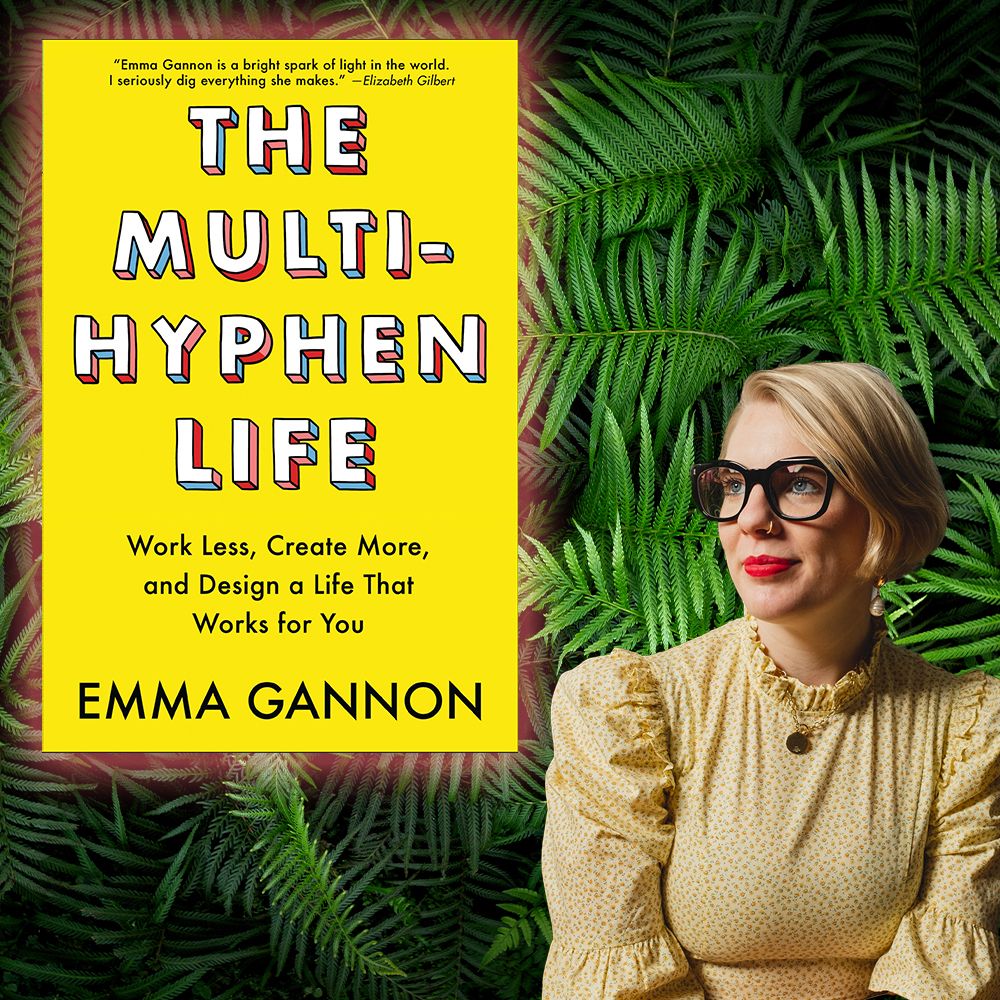
The Multi-Hyphen career

Book Review: Emma Gannon, The Multi Hyphen Method - Fashion Fix Daily


Today I will be spending more time to talk about the Multi-Hyphen Method by Emma Gannon.

The concept of a Multi-Hyphen career is not all that complex. In this economy, it is probably counterproductive to have a monolithic career. 

Twenty years this was the norm and I started out as a Systems Analyst at Procter and Gamble. That lasted about 4 years until an outsourcing exercise sent me packing to the arms of Hewlett Packard. I spent about 14 years having my identity tied to that of an IT professional. 

An engineer today will have a hard time hardwiring his career to his company or his primary vocation. The half-life of his knowledge is getting much shorter and he can become obsolete while remaining gainfully employed at his company. Looking at retrenched engineers driving Grab, I suspect most Gen Z workers will not be so eager to marry into their primary day jobs or companies. 

So enter the multi-hyphenated career. We can have multiple careers at the same time. 

Even my job is hyphenated today. 

Perhaps one day I can call myself the following :

Engineer-Lawyer-Investor-Blogger-Author-Investment Trainer-Startup Founder

Basically, that's about it for the entire book. 

I did not really enjoy this book. I felt that the rest of the book was written in a chaotic manner. 

The author jumps from topic to topic, inviting readers to detox themselves from social media on some chapters and then talking feminism in others.

There are only three useful lessons I can extract from the book :

a) Manage your career and lifestyle from a position of strength.

Most hyphenated jobs are bullshit lah. This is often back-up plan for folks who do not have the skills for a company to want to hire you full time. If you look in Singapore, most of these Millenial careers have too much "Social Media", "Marketing" and "Consulting" in them. 

Truth is, if you have "Software Developer" in your job scope, have a product to show off, there is no need for a hyphen to show that you mean business. 

That being said, skills atrophy very quickly, and those with full-time jobs need to start building their side hustles or get their first hyphen quickly. By the time that Computer Science degree hits half-life, you should have a domain-knowledge or a side business very quickly.

The best time to hyphenate your career is while the going is good. Showcasing your coding skills on Youtube and putting up code on Github may be a better way to build a better iron rice bowl.

Otherwise, you'll become one of those house-husband-internet-business type of dudes career women can identify and judge very quickly.  

b) No one knows what online skills will matter so pick them all up

When you have a legitimate IT role in a company, SEO seldom comes under your radar. When you become jobless, suddenly you become proficient in copy-writing, SEO, and mass-mailing.

Neither the author nor myself would know what new-fangled web IT skill-sets can pay the bills. 

But at least I will tell you to try everything out, keep an open mind, and emphasize the hardest skill-set first.

I am sure marketing campaigns can be complex, but I don't have the bandwidth to actually know. I do know those engineer founders have a bad record with hiring marketers because it is so difficult to measure their performance. A failed campaign can be easily blamed on the product. 

Creating a Django website with Data Science components and then building a mobile app to drive the features is really hard. The website alone requires knowledge in Javascript, JSON, Python, Django templates, etc...

Any see-gee-nah with a loud-mouth can claim to be a good marketer. In my opinion from observing others, the best founders keep firing them until they get someone that can deliver the goods. Engineering bosses have trouble identifying the good ones from the bad ones. 

Learn the basic functionality of everything you can get your hands on Canva, Camtasia,  Zoom, Gimp, Git, some email blaster, a suite of open-sourced Office tools. It's not the tool that matters, it's dealing with ambiguity and the settling in to use any tool quickly that matters more. 

MNCs don't teach this skillset well.

c) Money management should take centre-stage as multi-hyphenation is a problem and not a solution

I'm multi-hyphenated enough to say that given a choice, most people do not want such complicated work titles. My fans like the fact that I can drink Butter Kopi on a weekday afternoon, but they are not there when relatives ask for the umpteenth time whether my law degree was wasted when I became an investment trainer.

The lament of Generation X men has always been why their dads can sustain and raise a family on one job but they can't. Worse, their children may have to take on multiple roles to sustain a singleton lifestyle.   

The fundamental truth of all vocations is this :

  • Having multiple gigs can be poisonous because of the lack of CPF-OA and SA contributions that can ruin your retirement plans. 
  • MNCs are poisonous because your roles are often narrow and you can become functionally obsolete while on the job. 
  • SMEs are poisonous because Singapore is full of horrible bosses who send you fake termination letters and slime you on their websites. 
  • Entrepreneurship is poisonous because of possible bankruptcy and stigma from failure.

The only solution is to see everything as a tool to attain financial stability, a job is a means to remove all debts and get a small income flowing initially to cope with emergencies and finally to wean away from a dead-end vocation in your 40s. 

The biggest disappointment of this book is that something that tackles a multi-hyphenated career should have cashflow and money as its primary chapter. 

The author admits that she's not particularly good at money so she made it the last chapter. 


Monday, September 07, 2020

Personal Update

Emma Gannon on How to Thrive with Multiple Pursuits 


Ok, it is time for another personal update.

a) Training Business 

I'm reducing my class frequency and thought I would get a break this month, but, instead, I have a pro-bono talk coming up in a top secondary school and a community webinar planned on 24th September to talk about the latest toolset for my program. I'm taking the pro bono talk quite seriously, as who knows what kind of opportunities it can turn up in the future. The talk would be enhanced and then delivered to my own community a few days later.

b) Start-up Incorporation update

Readers are kind enough to forward this document for me to read. It reminds us that entrepreneurs should not go too far to incorporate a company solely for the purposes of tax avoidance. 

The circular from IRAS serves as a warning to doctors who incorporate to reduce their tax burdens but I think it applies to all businesses. In my opinion, I think some doctors in incorporating multiple entities for tax purposes have gone too far and lends credence to the idea that the rich will find ways to pay lower taxes. 

c) Halfway through Django Tutorials

I've completed two out of four Django modules on Coursera which is basically about using Python to build web applications. The Django framework has it's own language syntax and I doubt that I can consider myself a practitioner unless I can create a website of my own and host it in the cloud. Interestingly, this is a completely different skill-set from Data Science using Python so it's actually quite possible that data scientists and AI experts may not be all that good at this.

d) Books I am reading 

There is a limit to how focused I can be when I am learning how to code. I drifted in and out of Warhammer 40,000 fiction, but now I am reading The Multi-Hyphen Method by Emma Gannon. I thought that if I am going to hire people before year-end I need to understand what modern career aspirations are. There's no need to impose my work ethic on younger people when they live in a wholly different context where they need more than one job to survive. 

Just for fun, I have also borrowed Marie Kondo's Joy At Work.

 e) Health

Combining intermittent fasting and light exercise has paid its first dividend as I pushed my blood sugar HbA1C to 7.1. It's no big deal for most people but I was as high as 11 before my regime. Unfortunately, my triglyceride numbers peaked to 4. 

My doctor suspects that it's the four to five cups of coffee I drink every day. So right now, I am cold turkeying on just one cup of coffee a day and feel lethargic the entire afternoon. I also need to start on some cod liver oil. 

If I fail to control my triglyceride, my pancreas will commit suicide one day and I will develop Type I diabetes. But that being said, I'm in a better state given that I only have one really bad reading right now.

f) Leisure

I can't keep so many balls in the air, so I have to stop anime watching and will switch over to watching The Boys when Season 2 hits Amazon Prime. I managed to watch Tenet and really enjoyed it. I am wondering whether The New Mutants is worth watching.

Still, I managed to squeeze a D&D game last weekend.

Saturday, September 05, 2020

Free-Riding the Singapore Welfare System

Dealing with Free Riders 

The term "free-rider" is currently having its day on the Internet. As I've made a decision to many years ago to align more fully with our Capitalist system rather than the Political system, I think my actual aim is to find as many legitimate means to free-ride in Singapore, always put in slightly less to extract maximum benefits from the system.  

The truth is that the kind of moves I make are quite noob-level. An ordinary employee can use the following means to free-ride in Singapore today :

  • Open an SRS account, put in the maximum $15,300 every to get tax deductibles.
  • Inject $7,000 into you and your spouse's CPF-SA.
  • Take more public transport as it is running at a loss and funded by tax-payer money.
  • If you serve NS, use credits to buy New Balance running shoes. I even got a pair for my dad.
If you level up as an investor, you bring free-riding to a whole new level. Singapore is a welfare-state for the rentier. You can commit the following "tax atrocities" with no legal consequences :

  • Invest in securities as dividends do not flow into personal taxation numbers and are not accounted for qualifying for HDB ownership.
  • Buy REITs as REIT incomes do not even incur taxation at the corporate level when the REIT distributes 90% from rental proceeds.
I suspect incorporation will allow a person to level-up as a free-rider even further. I'm looking at the following schemes and studying them carefully and will consult a company secretary to make it high-priority for my business, do correct me if I am wrong : 
  • $200,000 of revenue does not attract taxes for the first three years.
  • Beyond the first $200,000, legitimate deductions for company expenses can be made. This is a 17% discount on cloud-hosting fees and software purchases which I already pay as an investment trainer. I can also buy an explicit PC or tablet to be used exclusively for work to free up my home PC resources.
  • I can pay myself a minimum salary to lower the tax burden more.  
  • If I hire a local worker, I can even get $30,000 under the Jobs Growth Incentive.
  • This is not counting the startup funding I can get for my business. I already have a small web app launched for my ERM community. 
In short, I think folks with legitimate business are the biggest free-riders of all. The government will incentivise Singaporeans to invent new jobs. 

For folks who can code in middle-age, incorporation is probably the best move a person can make given all this age discrimination we are facing. Given that I already have some revenue, I will probably incorporate, hire an assistant before even deciding what new business I will get into beyond investment training. 

What a great time to be alive in Singapore!


Wednesday, September 02, 2020

Who can I afford to hire if I incorporate?

 My classes have become more fun thanks to two reasons. 

This first is that it is longer - We have 4 days of webinars where students get to digest my material at a more reasonable pace. This frees up the one day face to face session for pure practical exercises and student engagement. 

The second is that my course is going through a mini-recession - my classes are smaller, so I get to have better conversations with my students. 

Consequently, I can be more candid during my lessons and I get to share some of the challenges I see in the future. For this class, I have at least one HR professional, so the topic of incorporating a start-up and who to hire was discussed. Also, thanks to Delane Lim's online tirade against younger workers, readers may be interested to know how to think about hiring.

Initially, my thoughts were to hire a designer or UX expert to complement my lack of design aesthetic, or even do up the CSS that I really hate doing for my website. According to the HR professional, that's actually not a very good idea because the market for UX and design folks is quite hot and I'd end up paying top dollar for perhaps mediocre design skills. No employer's market there. 

So I ask her a point-blank question - who do employers skip in this job market? This is a reasonable question because right now, I can design a job for my employee provided that this person exercises initiative and would be willing to learn.

She said that odds improve greatly if I am willing to take on students who do Fine Arts.  So basically the "non-essential" types. I don't understand why bosses discriminate in the industry because I'm pretty sure a painter or artist can be taught to use Canva and a Theatre performer can be given a sales role. 

I think an intern from a Fine Arts institution would be a good fit for a business I am about to create. I won't outsource finance and I practically can do everything else, I just hate doing all the stuff to beautify my slides. Also, a big perk is that my intern gets to attend my course for free - makes a big difference if someone picks up the DIY investing skills when they are young. 

At the end of the day, the key debate is about the nature of employee hunger.

I've done some work in the public sector. The hungriest folks in Singapore are businessmen. There is nothing more pathetic than an SME boss who tails public servants to keep pandering for "collaborative opportunities". If you have a viable product, the most productive thing is to keep marketing it rather than to spend all that time in agencies.  It is not fair to ask employees to be hungry when the real hunger is for SGUNited income support and cheaper interns.

I think hunger is a low-class way to ask for someone who is conscientious. Someone who can delay gratification, show up on time, and deliver what was promised. The FIRE community folks are punctilious in the way they handle their personal lives, but they would hardly qualify as hungry people. 

Dr Wealth staff is super-conscientious, I wonder how Alvin Chow does it. I know, because I got paid this week. 

So I probably won't penalise a Fine Arts candidate who shows up with a Starbucks for an interview, but I would probably prefer a candidate from Bukit Timah because it is more consistent with my target market - my students are upper-middle class.

The problem arises where bosses do have a reason to discriminate - that is if Fine Arts majors really lack conscientiousness. I find that unlikely because, from what I know,  dance requires a ridiculous amount of personal discipline to master. I pay a lot of money for my daughter's art classes and what she can do takes time and amazes me. 

For that reason, I will risk getting flamed for sharing the second part of my conversation. 

The HR professional told me that if I can't get any design intern, there are plenty of "part-time RMIT" types looking for opportunities in the market. 

...just kidding.... 

I this age of cancel culture, I will not risk getting flamed for sharing this second part of my conversation!

Better luck next time !