Thursday, February 20, 2020

Which type of Charlatan are you ?

Image result for ben carlson scam book

I strongly recommend Ben Carlson's Don't Fall For It for any reader who is trying to become more streetwise. More importantly, as someone who aspires to disrupt the training industry, it is important for me to be armed with a better way to distinguish between a crook and the real deal in my own industry and, as it turns out, one of the chapters from the book makes the price of of the book worth paying for.

Basically, there are two kinds of Charlatans, each corresponding to one form of statistical error.

a) Type 1 Charlatan

A type I error in statistics is a false positive. If you are shopping and get a fire alarm but there is no fire, you get a false positive. Correspondingly a type I charlatan is someone who is sincere about what he is doing, but following this charlatan ultimately destroys you. The example in the book is John Law, a Scottish economist who convinced the French government to develop the use of paper money and ultimately precipitated the Mississippi Bubble which led to massive losses for French citizens and led to his dismissal in 1720.

b) Type II Charlatan

A type II error in statistics is a false negative. It is the situation where there is indeed a fire but it was not detected by a fire alarm. Correspondingly, a type II charlatan is someone who knows that he is a fraud and goes ahead to cheat other people with the aim of becoming really rich. John Blunt, who was the founding director of the South Sea Company, did something similar to John law and was responsible for the South Sea Bubble that affected many hapless English investors, is an example of such a person.

If we contextualize the situation to Singapore, this framework may be useful in daily life :

I think the first application is on any financial adviser that you may have. There will be a class of FAs who are doing this work to churn commissions. Those that fall into Type II category may be the kind of folks who openly refuse to sell you term insurance or find all sorts of ways to churn the current policies that you have. My commissioned-based agent friend, before quitting, used to tell me stories of their agency bosses who spent a lot on a lavish lifestyle. An agent friend, prior to leaving the agency, told me his boss even flew into a rage when he publicly challenged his lavish spending ways in some company meeting.

( But I think he had fun asking why his soon-to-be ex boss why she was not setting a good example. )

In my opinion, the Type II FAs are actually the safer ones - once you know someone who just wants to earn commissions, you can do your own research and just buy what you need. As practice, I think there are enough groups in the Web that act as a zoo for Type II FAs - just observe how aggressively they defend the high-commission ILP products online.

The real danger are the Type I FAs - The sincere folks who are not really numerically savvy who really believe that some products are great until they explode in your face. Type I FAs can sell a lot of products and ruin a lot of lives. There is very little defense against someone who is genuine about helping you. The only way I can think is to flip the table and educate the FA on how insurance products are structured on the back-end. One possible approach is to get them to befriend an actuary and say that you'll buy something if the actuary buys it for himself.

I would avoid eating sausages that the sausage maker would, himself, refuse to eat.

Of course for any discussion to be fair, the framework has to apply to investment trainers as well. Generally speaking, a trainer is more likely to be Type II if :

  • Employs fake credentials. Without mentioning actual names, there is case law on such trainers in Singapore.
  • Cherry picks investment results. For results to be credible a consolidated snap-shot of the entire portfolio should be made available. If you just share your 10x baggers, what about the bad investment calls you have made ?
  • Demonstrates best effort to employ empirical findings to back all assertions. 

This leaves folks in a conundrum. What about the Type I investment trainer ? Someone who is earnest about his training program but we have no idea whether his approach can lead to ruin.

Because finance is a wicked problem, it is entirely possible for someone sincere to product horrible investment results. Heck, even someone with the right methodology can lead to horrible results.

In this matter even my suggestions are somehow incomplete and need further refinement :

  • The trainer should be open-minded to accept that there are plenty of alternatives to make money. 
  • There is an adherence to the doctrine of falsifiability - Every model can potentially be disproved by investment results. This can lead to new, improved model over time.
  • The trainer must be intellectually humble enough to flag out all bad judgment calls and find ways to turn them into teachable moments.

The Type I or Type II Charlatan is a great framework for assessing any scheme you encounter. The first thing you do is to assess whether you might be subject to a con from someone who is out to get something from you. Next you need to accept the reality that even if the person is sincere, the scheme in question may still be unsafe for you to act.

Nevertheless, if you can, read this book.


Tuesday, February 18, 2020

MBA in a Nutshell #25 - Accounting and Finance : Internal Controls

To safeguard assets, every organization needs to establish internal controls.

Here is the list of widely-accepted forms of financial control:

a) Be clear about roles and responsibilities. One person to be made responsible for losses in the cash register as and when they occur. In IT we use a RACI chart to do this and its a nifty tool for this purpose.

b) Where there is a potential of interest, create two or more roles. The person who controls cash cannot double-hat as the book-keeper. In a previous job, my role as IT governance reported within the IT department. I actually got into some trouble suggesting that I report to internal audit instead.

c) There has to be a system of checks and balances like two signatures on checks or access to lock boxes.

d) Hire reliable personnel. A nice acid test was suggested by the book is to ask a previous employer whether they would rehire the worker if he were available.

e) Document control procedures wherever possible. A simple example is an incentive given to every customer to report incidents where a receipt was not given to them.

f) Create duty rotation. Banks do this a lot to see whether some problems stop when an employee goes on vacation.

g) Utilize independent checks like auditors and CPAs.

h) Supervise closely to monitor performance.

As you can see, this is a lot of work. If I ever set up a company to do all this, I won't be able to focus on providing training and research on financial markets. Imagine having to create these internal processes for marketing and finance at the same time.

This is why MBAs still matter. You need good administrators with book smarts to keep a business running.

Visionaries can't do much without able lieutenants.

Sunday, February 16, 2020

What can we learn from Oscar winning movie Parasite ?

Image result for parasite movie

English Literature in lower secondary school would be more interesting to me if my Literature teacher were to spend more time talking about how to make money and attract chicks.

There's actually plenty of financial inspiration from literary works - In Jane Austen's Pride and Prejudice, Mr. Darcy value as a mate was tied to his $2000 GBP income from Pembroke estate. If students are taught that $160,000 USD in passive income would make them as eligible as Mr. Darcy, the value of English Literature lessons in Singapore would be much higher today.

I'm not sure what deserves more scorn - English Literature classes in lower secondary school, or the Oscars ? In my entire life, the Oscars has never chosen a respectable Best Picture, skipping movie greats like Inception to classics like Empire Strikes Back or Superman v Batman.

But this year, things are different. The Oscars actually picked a decent movie for Best Picture. 

Parasite is a wonderful riff off Ursula Le Guin's The Ones who Walk Away from Omelas and brutally explores the differences between the rich and the poor in Korean society. To really appreciate this piece, you need to understand the idea from Ursula's work that in every Utopia every  household has a child locked in the home basement and kept miserable so that the household and society can remain prosperous. If somehow this child were to escape, calamity ensues.

Parasite takes it one step further, proposing the idea that there is a basement within a basement and the movie climaxes by showcasing what happens if someone from this deep basement actually escapes. The movie leads to a satisfying conclusion that does not attempt to molly-coddle the audience with a good ending.

As my own literary criticism skills are stuck in Secondary 2 because my teacher could not teach me about making money or hitting on chicks, I am unable to provide that analysis that most RGS-Literature-Goths chicks can give. Reading that may cost your a significant portion of your life-force, instead this is what watching Parasite means to me :

a) The Rich will always attract Parasites

I think the things that freaked me out the most watching the movie is how easily the Rich attract Parasites. In the movie, a parasitical family eventually replaces all the staff supporting the wealthy. This is the same in real life - the middle-class are constantly harassed by commissioned financial advisors and real estate agents. As you climb up the ladder, the parasites change - they get replaced with private bankers and personal shoppers. It also recurses downwards as personal bankers also attract parasites of their own.

( Note : The idea that investment trainers can be considered parasites if they keep finding ways to monetise their students community is not lost on me. I think the movie's greatest weakness is that it did not portray the rich family also as parasites of something even bigger than themselves ! )

b) Tragedy comes from misunderstanding

Another thing that makes me glad is the the rich family was not portrayed as being callous or cruel. This is much unliked the viral Prince Ea videos that always had to portray the evil system as an old, white guy.  The rich in the movie behaved in a human manner, but questioned the lifestyle of the poor and criticised their smell only when they believed that the poor are not listening. In essence, they were less blameworthy than the poor family who had to scheme to be able to leech off their resources.

The real evil was the misunderstanding that comes from class differences. This is the beauty of the movie as even the instant noodles eaten by the rich has to be infused with top class steaks. My own take is that a person's wealth does not have to come with isolation. A millionaire can take public transport and fly coach. I think  with more exposure to ordinary people, it is easier to avoid situations like that in the movie. Conserve the money to solve real emergencies.

c) Compassion is a weakness poor people cannot afford to have

This is the kind of answer that will make the English Literature teacher hate my guts and why one principle I follow is to always avoid being examined on humanities subjects.

An important moral people may refuse to acknowledge is that for the lower classes, they simply cannot afford to be compassionate to others. The tragedy in the movie can be avoided if the parasite family did not grant access to a previous parasite access to the home basement premises.

If you want to displace others in the hierarchy, you need to be totally cruel and block access to the people you have just displaced.

Compassion is something only the wealthy can afford.

Anyway, I hope that some of you would be willing to brave COVID-19 to watch this movie that is still showing in some cinemas.

I will be replicating the Ram-Don instant noodles tonight. Hope I don't end up with Lao Sai instead !


Friday, February 14, 2020

Happy Valentine's Day - On assortative mating and hypergamy

I try to write something every Valentine's Day to update my understanding of the dating world. By now I am a dinosaur and have been out of the dating game for over a decade and things have changed quite a bit from the last time I dated.

Recently someone asked FB what is the probability of a JC-Poly union blossoming into an actual marriage. The trolls immediately activated and said that the chances of dying from COVID-19 is higher than such a relationship succeeding. The good news arising from this thread is that I participated by asking for instances of RGS-ITE relationships and was told that a Govt scholar married her ITE sweet heart who works at the front desk in the same government ministry. It's a nice tale that deserves a Jack Neo movie adaptation but I rather not verify it because we are all entitled to our own fantasies of modern living.

Assortative mating is now in mainstream policy making. This was mentioned by Tharman Shanmugaratnam as a major source of inequality in modern society. People are now attracted to others who fall within the same social economic status likely arising from more more women getting into the workplace. Consequences for society are dire as rich couples then transmit a much larger social advantage to their children. I am glad that assortative mating is there to take the heat off rent-seekers like us dividends investors - when some woke person bitches about inequality, I get to ask them why they married a degree holder like themselves.

The other issue is that even though assortative mating takes place, female hypergamy is still rampant. Asian women still do not like marrying down socio-economically. Even CNA Luxury is featuring a new dating app that has an acceptance rate of only 14% that allows only elite men to participate.

Government has not started introducing hypergamy into mainstream discussion even though I think they should. I think it keeps too many women on the shelves. In a meet-up with financial bloggers, many female bloggers alluded to me that they are prepared to decouple salary metrics from a potential mate's masculinity but female bloggers are a small constituency in the female population. It is up to a new generation of Singaporeans to decide how to redefine masculinity. I think the situation is still quite bad - stay at home dads get micro-aggressions in daily life. I take my son to school sometimes and I feel it too - five-digit monthly dividends portfolios are invisible and people will look at you funny anyway.

The response from males in the face of both assortative mating and hypergamy is very straight-forward -They withdraw from mate competition.

In every major recession, males who drop out from the job market experience a boost to their life satisfaction. This is because there is a universe of computer games and streaming videos waiting to entertain them for $20 a month.

We've done this mental exercise before. A $100,000 portfolio can generate $500 a month at 6% yields. More if you are willing to employ leverage. $500 a month can support a BBFA that just streams and eat instant mee. If the portfolio fails due to some reason, just get a gig economy job to top up. This is slowly becoming a acceptable lifestyle for males.

If you take this BBFA route, you will not have a lot of hair left by the time you hit your 50s, but there is no woman to judge you on Valentine's Day.


Wednesday, February 12, 2020

What can Private degree holders learn from Money Launderers

Throughout my working life, I worked with private degree holders of all stripes, some good and some bad. There are bad local degree holders as much as there are bad private degree holders but the good ones I am exposed to are often unfairly tarred by their qualifications. This is largely because educational qualifications in Singapore are signalling instruments rather than skills certificates. Our HR departments want a to use a shortcut to reduce the number of applications to a reasonable number so a local degree provides a convenient tool to make life easier.

So, I probably do not need to need to remind everyone that if a local degree holder play the Game of Life at Normal mode, a private degree holder plays it at Hard or Inferno mode. The salary gap between the local degree holder is over $1,000 a month bench-marked against a private degree counterpart with a much higher employment rate six months after graduation.

When I suggested to a colleague to launder his private degree ( because I think he's a great worker ), he couldn't stop laughing.

This is probably a good reason to do more research towards a blog article.

As it turns out, money launderers can teach private degree holders quite a bit. In fact, if you have a  third class or second lower local degree, the same lesson applies to you here as well. It's not that your degree is crappy - grade inflation just makes things so bad that an Honors degree is just not what it used to be.

As it turns out, money laundering is divided into three phases, all of which can point to useful and practical steps a private degree can do to improve his station in life. This article does not cover the situation whereby a private degree holder gets into a sales role or starts a business because these are options that are least dependent on educational qualifications.

a) Placement

The first step is moving money from the source of its ill gotten gains. In this step, money launderers typically find a way to smuggle the money out of a country. Imagine someone crossing national boundaries with a sack of gold.

When analogizing this process for private degree holders, the national boundary is the boundary between school and the workplace. Needless to say a private degree holder can face a lot of discrimination in a job interview. Here are some suggestions in the placement stage :

  • Do a lot of internships so the employer can witness your actual work ethic. This makes the job interview unnecessary.
  • Pull strings to get a job. Use your family connections to get something. Be shameless at it because us local degree guys will not fight fair anyway.
  • Join the tech industry. Tech discriminates the least because the demand for IT support will always be there and skills matter more. Why so many private degree holders study shit subjects like business management baffles me when Tech is one industry that will hire anyone that can code or do system admin.
  • If all else fails, lower your starting pay to get anything that pays the bills.
During the placement stage, avoid joining the gig economy unless you can developing deep tech skills. You don't want to be stuck as a Grab driver for an extra $800 a month even though that may be tempting.

b) Layering


When layering, a money launderer makes it harder to detect and uncover money laundering activity. One way to do this is to buy a material asset with your cash and then sell it away to make the money more legitimate. In the 1990s, I heard that some folks are offering cash to buy up winning lottery tickets at a face value higher than the winning value.

Layering is critical to a private degree holder. Once you have a steady job to pay the bills, you need have a plan to make your private degree stick out much less in your resume. This phase is not easy, some ideas I have include the following :

  • Produce results that are so stellar that it overwhelms all your previous educational history. This is hard because a lot of job roles may not have clearly defined results.
  • Get a masters degree from NUS or NTU. This works but local universities may also discriminate against private degree holders. 
  • Get into a good MNC via a contract role and then work like a bitch to turn it into a permanent role.
  • Create a stellar record of community service outside the workplace. Joining grassroots or Toastmasters may create something to talk about to an employer beyond work. 
  • Earn a string of industrial qualifications that are recognized in your industry such as the CFA, CPA, CISA or even PMP qualifications.

Remember that you need to be a realist when you commit yourself to layering. I am fully cognizant that private degree holders actually pay more for their degrees and the temptation to emphasize it more will be there, but everything you need to do once you get a job is to take steps to overwhelm it with something better in your resume.

And for God's sake, do not use your hard-earn money to get another advanced qualification from a private university. If you do need skills, use a MOOC or get a graduate diploma from a local university.

c) Integration

The final stage of money laundering is integration where the money, once laundered get reintegrated into the legal economy. Launderers often employ shell money to buy properties where proceeds from these sales would then be 'legitimate'.

With a good resume and a job, it is now time for a private degree holder to improve his station in life. Getting to this stage probably means that this person may have done more career planning than the normal local degree holder so I expect this guy to be tough cookie. At this stage, the usual career advice matters but some common patterns exist :

  • Develop a niche in your company to make it hard to retrench you. When I was in HP, the first managers to be retrenched are non-degree holders. Pink slips came so fast, a work record could not even be established. Doing something no one else wants to do is vital. During my time knowing how to operate a mid-range or mainframe server leads to years of job security.
  • Build networks with other private degree holders to cover each other's backs. In my time in the legal industry, I know that the University of Tasmania lawyers cover each other's backs much better than local degree holders. They go back a long way when they were students in Temasek Polytechnic.
  • Of course it goes without saying that this is the time to start building an investment portfolio.
Also, don't fall for the big lie that soft skills matter. People get better people skills as they get older. To think of soft skills as a competitive advantage is balderdash. Where two executives are equal in tech skills, of course soft skills become a tie breaker. Deliberately building up soft skills beyond just OJT thinking that they will boost your salary is hogwash designed to keep humanities professors employed. I work with a lot of low-EQ troglodytes because they have a mysterious power to keep things going. May of these trogs come from the legal department.

I think while private degree holders in Singapore do find life much harder than local degree holders, developing a stoic and realistic attitude can make a big difference in balancing out life outcomes at a later stage in life. 

While it may be unpleasant for some readers to review the approach used by money launderers to wash money from ill gotten gains, it forms a reasonable analogy to show us how to develop an action plan forward.


Monday, February 10, 2020

MBA in a Nutshell #24 - Accounting and Finance : Creative Accounting

This article highlights various approaches to accounting that can possibly lead to civil and criminal penalties. Because financial statements allow a degree of flexibility and discretion, highly skilled accountants with the right lawyer can this game while avoiding more serious consequences.

It is therefore up to the investor to be wary of creative accounting techniques :

a) Growth in accounts receivables exceed growth in sales 

This happens if you sell a sell a lot of products but keep extending credit terms so you never collect on the debts owed to you. This technique can boost revenue but minimize actual incoming cash flow. The final outcome is that the company eventually runs out of cash while looking profitable throughout this period.

b) Growth of inventories exceed growth of sale

This suggests that the company's products are crap and they are losing market share.

c) Ordinary expenses are included in restructuring charges and restructuring happens frequently

This can overstate future profits. As I am not an accountant, I'm not even sure how to detect this. I am guessing that reading footnotes on the restructuring is required to see this. This gets worse if the company is serially writing off something. In the book, Kodak tried to restructure in 6 out of 7 years.

Having worked for HP and facing restructuring throughout my entire stay there, this should be more common than expected. In fact, I can argue that in old HP, restructuring charges ought to be ordinary expenses.

d) In-process R&D charges are written off by the purchaser at the time of acquisition

As I am not an accountant, I thought this was fine. How much of R&D even results in a product that can be monetized by a company ? Why not just write it off so that investors will not have false hopes about the future. But this idea is also wrong, most decent companies have intangible assets and this has to be R&D spending that will be amortized over time.

As an investor, it is very tempting to build a checklist from the above-mentioned points to qualitatively suss out the weaker counters. Unfortunately, they hardly matter in REITs because there is little by way of product sales and R&D.

The problem in investing is that even if you can build a detailed checklist of accounting watch-outs, you will merely be left with a few obvious stocks to buy that every retail investor is hoarding like toilet paper right now. The outcome of rigorous screening is often the same as intuition.

As such, you need to be be careful of investment experts who talk about screen filters and qualitative checks but end up with a list of strong-sponsor REITs that yield less than 5%. Any uncle with some investing experience can create this list for you without a model or a checklist. 

Saturday, February 08, 2020

Can you support a sugar baby using CPF payouts ?

In Financial Blogger's Cinematic Universe, the topic that always sparks a reader's interest is CPF.

Another topic that readers like to read about is sugar babies.

In times like the Corona virus infection, it may not be too feasible for some of my friends who are life-long investors in the Geylang region to continue to visit their regulars haunts because there may be a chance of infection. In fact, the 12th Corona victim is likely to be a freelance sex worker. The person who reminded me of this fact is strangely enough, my mum, who was so concerned about my friends, she asked me to remind them to stop visiting Geylang this new year season.

But I am a realist.

If I can't sell my investments in anticipation of the situation getting worse, I am pretty sure my pals would still need to have their needs met. With this realization, why not combine these two topics into one and let's see whether it is possible to support a sugar baby. Sugar babies probably see fewer clients so I expect them to be a safer choice in times like this.

Fortunately, we now have data on how much a sugar baby costs. It takes about $3,000 a month to support one. In fact, A friend gave me another data point of $2,500, but he gave the caveat that at this price point, the sugar babies are kind of plain and not really worth the trouble.

Armed with this data, let's go to the CPF Life estimator website to see whether someone born at the same time as me can support a Sugar Baby.

a) Current FRS sum of $181,000

The first simulation is for the sum of $181,000 for a males with around the same birthday as I do.

The output looks like this :


As you can observe, the standard plan is your best best as it has the highest proportion invested in annuities. The Escalating plan increases at 2% every year but you might be too old to enjoy your sugar baby by the time that reaches $3,000 a month.

Ok, so I estimate in most cases attaining FRS is insufficient to support a sugar baby.

b) ERS sum of $271,500

A CPF member can keep an enhanced retirement sum of up to $271,500. If you are really committed to getting a sugar baby at age 65, you can commit more money in your CPF. Based on the calculator you get the following payout :


You get better numbers at around $2,000 under the standard plan. At this stage, it should be pretty obvious that sustaining a sugar baby with CPF is going to be quite hard.

c) CPF Life supplemented with dividends 

I think by now, you should be convinced that CPF Life can, at best, supplement the sugar baby lifestyle and cannot stand on it's own. Suppose you already have FRS, you can expect a pay out of $2,000 a month, you will need a dividend portfolio to do so.

Suppose you blend a REIT portfolio with some blue chip equities, you should be able to attain a 5%.

To generate an extra $1,000 a month, you will need $12,000 / 0.05, you still need an extra $240,000 to cover your short-fall.

d) Share a sugar baby with friends

With a full FRS sum, you will still need $240,000 to life your sugar daddy lifestyle. This can be  insuperable.

Fortunately I know an old friend who was able support a sugar baby while working as a technician in his 40s with an income below $4,000 - He got a few colleagues to share one.

I don't really recommend that readers do this because it's almost tantamount to sleeping with your colleagues and you might be cultivating a super-infector.

Anyway, I hope that you have learnt something from this article and can experiment with the CPF life estimator.


Wednesday, February 05, 2020

Why are there so many jerks outside the private sector ?

Image result for power of bad"

[ Update : The preview tonight is on and most tickets have already been taken. You can review the new format for my preview "Roads to Riches" this evening. Click on this link for further information. ]

When I unsuccessfully transitioned out of the private sector. I was shocked by the number of jerks I had to contend with in my new workplace that eventually led to the demise of my regular salaried career. I fully admit my failure, but it is only recently that I managed to get a glimpse of an idea as to what went wrong.

There is an academic term for a jerk in the workplace. A jerk is an "interpersonal deviant". The typical jerk will say things like "what kind of school did you come from" when they detect weakness in their colleagues.

At a more personal level, I have two experiences to share on this blog :

  • A superior called me into room and hectored me over some "improvements" I made to a table column on a Power-point slide. Her focus was not the merits of amendment, but how my amendment proved that I looked down on her because she does not have a First Class Honours for her first degree. She spent the rest of the time reminding me of her advanced degree qualifications. 
  • Another superior, after the Little India riots, asked an Indian IT vendor whether they participated in the riots the day before. 
  • This behavior was not new to this superior - she even told another superior to be careful when admitting a potential new team member because she was newly married and may create a manpower vacuum if she got pregnant.
In my decade in the private sector, I made my share of mistakes but I never encountered this kind of egregious behavior in the workplace in an MNC.

I finally managed to get some insight from The Economist's Bartleby article this week that explains the difference between the private and government sectors.

Imagine putting a private sector CEO or 6 Sigma expert to screen travelers who were hit by the corona virus. As the numbers infected are low, perhaps there will be cost savings if we just sampled a few passengers from a plane and reject the entire load if one test turns out positive. That would save costs for the taxpayer.

But this would be ridiculous behavior in the government sector. Problems faced by the government cannot be reduced into bottom line. Every action has to consider optics, multiple stakeholders and a lot of different KPIs exist.

Studies in the private sector show that removing a high-performing jerk from the office will mean that the team may lose it's best performer, but the rest of the team will eventually improve their performance, calculated by bottom line, by around 30%.

The government cannot flush out their deadwood and jerks from the organization. 

They don't even know what resources and hidden domain knowledge these folks have. They can't measure what are the improvements when a jerk gets removed from an organization. So they live with it, and eventually the entire organization normalizes jerk-like behavior.

There is a lesson to learn from all this. 

The best way to transition out of the private sector is to target agencies that are very close to the private sector, where there is a semblance of  a bottom line. MAS and EDB comes into mind but these agencies will be highly selective. 

If you are one of those older workers forced to leave the private sector, then good luck to you. Endurance and resilience are more important than actual competence.

Or you can be like me, transition with dividend income more than take home pay. 


Monday, February 03, 2020

MBA in a Nutshell #23 - Accounting and Finance : Tax Reduction Considerations

With the three accounting statements out of the way, it is now time to look at legal forms of tax reduction.

a) Structure of the Organization

The structure of the business will have a strong influence on the taxes paid by the company.  If you incorporate a Private Limited Company in Singapore, corporate taxation is at 17% although generous tax exemption schemes exist. If you were to incorporate Limited Liability Partnership, income is treated as personal income for the business partners.

b) Timing of Purchases

You can game your company expenses to offset high taxes from a good year. This is often because revenues are recognized on an accrual basis, when the sale is paid and not when the bills were collected.

c) Write-off accounts receivable

It is a bitter reality that many companies do not pay up after buying  a product or service. These bad debts can be written off tactically to gain some tax benefits.

d) Depreciation, depletion and amortization

This often involves taken an asset and reducing it's value in the balance sheet annually. If you depreciate an asset more aggressively using a double declining depreciation method versus a straight line method, your expenses will go up short term and may reduce your taxation income accordingly.

In Singapore, depreciation of some asset like machinery may be governed by statutes so there may not be so much flexibility over this.

e) Inventory Valuation

Because we are subject to inflation, sometimes you can manipulate your profits by selection which batch of inventory are sole. If you use a last-in-first-out (LIFO) approach, you can be treated as selling your latest inventory. A first-in-first-out method (FIFO) would mean selling at a price marked for your oldest inventory. Somewhere in between is the weighted average approach.

Singapore is closely aligned to IFRS.  In IFRS, LIFO is not allowed under our accounting conventions because it understates profits and possibly causes inventory to be marked at obsolete values.

An understanding of what is possible in taxation should also govern the decision of whether a self-employed person like myself is better off incorporating a company.

Friday, January 31, 2020

Thoughts about the Wuhan outbreak

Image result for akuma

Other than Wuhan, I am dealing with crisis that has nothing to do with the virus outbreak. I took a blood-test this morning and the results alarmed my specialists so much so that he has to call me up and ask whether there is anything wrong with me. Apparently, I have been working out so aggressively that my Creatine Kinase levels have shot up the roof. I was actually asked by a doctor to STOP WORKING out for one week. In Chinese Wu Xia, this is Zhou2 Huo3 Lu4 Mo2 or "Walk-Fire-Enter-Demon".

Beyond that, let's talk about the Wu Han outbreak. As I am still shaping my ideas, this article is not ready for Dr Wealth blog yet.

Here's what I think :

a) Maybe we should not put so much weight to historical market performance in virus outbreaks.

It is very tempting to make a buy call at this time and it would be really objective in the face of data from outbreaks like SARS and H1N1. Still, I don't think it is wise to start buying now yet. We know objectively that the Wuhan virus has a lower fatality rate, but the transmission rate is likely to be higher than SARs, so I am not about to throw caution into the wind yet. This can still be unprecedented.

Also markets may face another downturn when the first person to person transmission happens in Singapore. I see the probability of this happening in a few months to be very high.

b) Observe the virus, don't fixate on financial ratios

At least Ray Dalio put something up on the virus. HK and China markets are expected to rally if the rate of change of infected becomes zero. Another words, markets will rally when the number of infected stabilize start trending downwards. We're still months behind this milestone.

The problem is publishing this information is that almost every smart investor will look out for stabilization of infected people. So if you want to front-run the smart money, you may have to take the second derivative of the infection over time function. Another words, start buying tactically when the infection numbers stop accelerating, exposing yourself to more downside risk.

Another way to assess the virus is via the basic reproduction number or R0. A precise figure is unknown right now but is now expected to be higher than SARs. If the rate of contact can be reduced, the R0 should be able to drop below SARs.

Coincidentally, I have written about this before.

c) Even if you time the market, the question is what to buy

The simple answer is anything related to HK or China.

If it were me, I'd buy a quintet consisting of CRCT, Sasseur, EC World, MNACT and YZJ, collectively they pay a decent dividend. Still, I think buying anything on the Singapore market will lead to very small gains because we are actually not too bad at controlling the virus.

d) I have suggested to my ERM graduates to stay put and get on with their lives

As the virus outbreak is a significant sea-change in the economy, quantitative models can be invalidated overnight. On the first day of the market reaction, I got worried because our consolidated portfolio lost 2.3% when the blue-chip and REIT market lost about 1.7-1.8%. As our portfolios are designed to be already very defensive, this was very new behavior and I was concerned for a short while. The subsequent behavior on other days were normal and we consistently outperformed the indices on a downturn all thanks to the dividend paying season for the past 2-3 days.

Naturally, some students got stung by their positions in YZJ but I reminded them that they also put in positions in Parkway Life REIT. A good portfolio should have a poison and antidote built-in to counter different situations. Therefore, I think that, net-net, it's better to ride out the virus and be paid dividends for their patience.

So basically, that's it. I am counselling indifference to the Wu Han outbreak for now and rather focus on getting the masks from the CCs over the next few days. I got Book 3 of the Legend of the Condor Heroes - A Snake Lies Waiting and will be binge watching The Expanses.

Even my D&D game tomorrow has been cancelled !


Wednesday, January 29, 2020

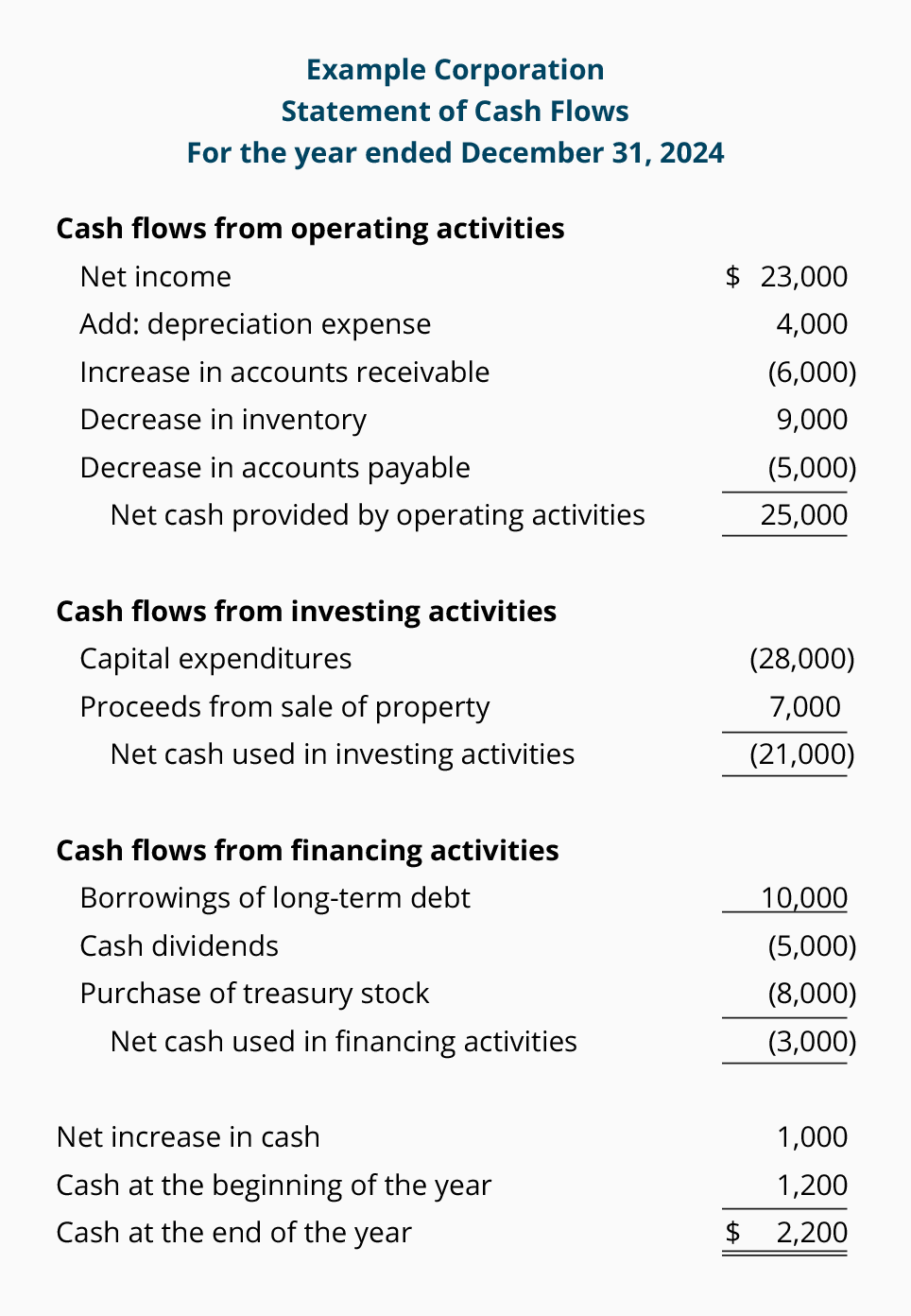
MBA in a Nutshell #22 - Accounting and Finance : The Cash Flow Statement

Image result for cash flow statement

We're now moving onto the cash flow statement. A problem faced in assessing companies is that they can be profitable but lack cash flow. Sales can be recorded but the cash only comes in after period of delay as suppliers sometimes gives customers generous credit terms. The cash flow statement is, thus, a very recent development, made compulsory in the US in 1988.

There are three main components to the cash flow statement :

a) Cash flow from Operating Activities

Measures cash obtained from direct business operations like selling of goods or services. When cash owed is paid to the business by a customer, it is recorded here.

b) Cash flow from investing activities

When you buy plant and equipment, you record the outgoing cash flow here. Companies that sell their means of production will have to record proceeds here. If dividends come from selling plant equipment, this should raise an alarm bell.

c) Cash flow from financing activities

When you get a bank loan or issue shares, the cash flow can be found here. Dividends paid are also found in this section of the cash flow statement.

The cash flow statement is an enabler for dividends investors. When we wish to see whether dividends are sustainable, we normally calculate the ( Cash Flow from Operations - Capital Expenditure ). If this number is higher than dividends given out, we have some assurance that dividends are sustainable moving forward.

Consequently, when back-testing Singapore dividend stocks over the past 10 years, companies that have sustainable dividends have a much improved performance.


Friday, January 24, 2020

Happy Year of the Rat 2020 to all Readers.


Image result for five guys

I will be Malaysia in Chinese New Year so I thought I'd wish everyone earlier this year as I continue to find ways to use up the Ringgit I failed to spend in Kuala Lumpur last week.

a) What I will be doing

Very likely I will go to Kulai tomorrow in the afternoon on the second day, my in laws will take a 2-3 hour drive to visit relatives in Kluang region. I will be relying on 1 Gb of Starhub data unless someone can sell me a SIM card when I am in Malaysia.

b) Financial Markets

It is very apt that we're starting the new year with a reminder that rats bring the Bubonic plague.

The Wuhan virus just claimed 25 lives and China seems to be in a panic mode as we speak. The historical literature on pandemics points to neutral or positive market but I suggest that we hold back from bargain until we know more about the Corona virus.

Epidemiologists model diseases based on three variable, probability of contact, probability of infection and probability of recovery. Probability of contact will be lower than SARS because of drastic measures taken by the Chinese government to lock-down actual cities. We are still not too sure how easy it is to contact the virus and what the odds of recovery are compared to previous outbreaks.  Over the next few weeks, we have to assess these remaining variables. If the numbers are milder than MERS or SARS, then maybe a position can be taken in the markets.

In the meantime just stay safe.

c) What I am working on

My course is taking a one month break but I am busy building a new preview format to keep things fresh. My newer preview entitled "Roads to Riches" is ready for beta launch and Dr Wealth sales staff will be working with me to make the message more coherent and palatable. All my effort will be focused on getting this to work over the CNY holidays. "The Four Seasons" is a frank and brutal discussion about our lives in general, I intend the "Roads to Riches" to be a deconstruction on how people get rich in Singapore. The first launch is the next preview in February.

My other project is the Seedly FIRE talk and we're making greater progress with all the solid materials incorporated into my slides. As in all public talks involving thousands of Millenials, I want to inject elements of pop culture into the presentation but the slides don't seem to be ready for that yet.

d) My physical training regime

After getting my flu jabs to ensure that I can run my classes without interruption, right now I am combining intermittent fasting with weekly gym exercise. The primary objective is to lower my blood sugar and arrest my muscle decline (and possible Sarcopenia). I am starting to see some improvements within 2 weeks of work, but I have a long way to go.

My body is still weak from years of neglect. After a workout with my trainer, I can't even feel my legs. Two days later, I would get really bad muscle pains but after that, I feel fitter than before and walked 9 hours in KL non-stop with a full pack of second hand books. 

My trainer is quite appalled at the state of my physical fitness. He kept saying that I should have showed up years ago. If you really want to deconstruct my life right now, it's all about making money early and then using the money to sort out the areas you have neglected earlier in your life.

I don't think this is a smart thing to do but I should enjoy my better body this CNY. Resolutions lose their momentum sometime in March and I won't be surprised I start to slack later this year.

The jury is still out whether my diabetes control will improve, workouts make my hungry and I went to Five Guys to have a burger last night !

e) Leisure and Hobbies

Took me damn long to start following The Expanse on Amazon Prime. This is a serious hard sci-fi story that has spawned at least one RPG. I am taking it slow and prioritizing my work.

I am still on figuring out Machine Learning in the finance domain and reading a book on it. The book has gotten really hard core but the insights are amazing. I think ETFs combined with AI will get fund managers into serious trouble.

The future looks bright for the retail investor though.


Thursday, January 23, 2020

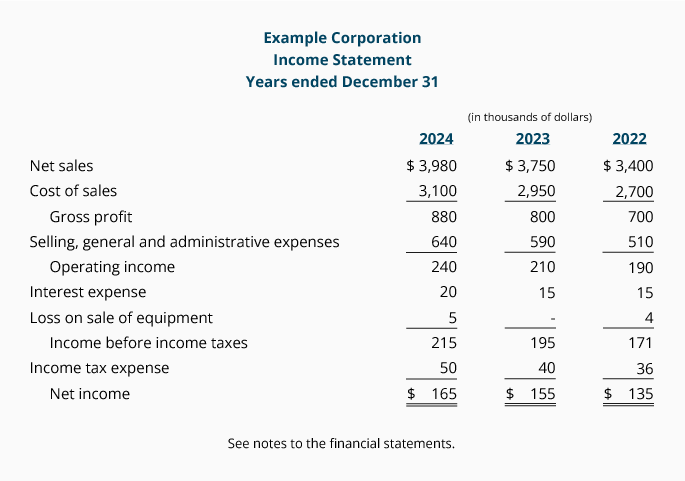
MBA in a Nutshell #21 - Accounting and Finance : The Income Statement

Image result for income statement

Today we will meditate upon the Income Statement.

The most important relationship within an income statement is simply :

Gross income - Total expenses = Net Profit (loss)

It is obviously not so simple :

Operating income = Sales - Expenses, expenses being cost of goods sold, sales and general expenses and depreciation.
Income before taxes = Operating income - interest charges
Net income (loss) = income before taxes - provision for taxes

From an internal management perspective, this is a precious data on how to improve the bottom line :

  • Can we improve sales by marketing harder ?
  • Is the rise in cost of goods outstripping inflation ? Can we negotiate harder with suppliers ?
  • Are general expenses increasing faster than inflation ? Can we cut down on labor costs by outsourcing ?
  • Are we reducing depreciation by playing with accounting rules ? Are we depreciating more because of more equipment we are buying ?
  • Can tax and interest payments be optimized further ?
These are actually questions an investor can ask when they drill into a company's financial statements. But this is much harder for an investor who has 50-60 counters to manage, many are investments with conglomerates that have a finger in every pie and therefore hard to analyse.

Investors however can piggyback on analyst reports and have someone else analyse the numbers full time for them. 

I've always been wary of investment styles that drill so deeply into company statements and ignore the overall picture of portfolio construction. Even if you can outperform the markets, the lack of diversification means that you will suffer crippling losses if you do not foresee an inflection point coming. 


Wednesday, January 22, 2020

On my latest trip to KL...


I just came back recently from KL.

The objective of my trip was to accompany my mum to visit relatives, do some shopping and eat local food. My mum observed 100 days from my dad's passing so this is the first time she can unwind and relax after close to a decade of being my father's caregiver.

Here are some highlights of my trip :

a) Went to an Avant Garde arts event and hated every moment of it

On the first day when my cousin brought me around, he asked whether I'd be willing to attend an Art event so that he can meet up with an old university buddy. Since I am a big fan of bad B-grade movies and that my policy is that a bad event can also be a memorable one, I agreed to give it a try.

The event did not disappoint because it really pissed me off :

I found myself in an abandoned warehouse surrounded by KL hipsters. The audience is particularly entertaining to watch : One guy with long hair was wearing some kind of Han costume and spoke with the accent of someone who is rich enough to waste his father's money to study some shit design qualification in Australia. Some edgy patrons wore a Yayoi Kusama T shirt - that was cool because I always thought she was the mother of modern hentai and medically insane.

During the performance, a long haired musician dancer was aping Sun Wu Kong on a tambourine while a female dancer tried to wrestle it away. One dude ( who looked so much like Dan Lok ) painted black ink over the lady dancer with a brush in some weird interpretive dance move, I thought he might be creating a new search category on Pornhub.

The dance was incoherent.

There was no story.

There was a lot of light, sound and 450 gallons of wasted water. Tons of granite were lifted to the location of the stage. One was 650 kg.

You can look at what I suffered through here.

Still, Singaporeans need to be sympathetic towards the Arts scene in KL. The artists here have got real balls and have little or no government funding. I've always thought that Malaysians are practical people and no sane Malaysian will pay $50 to waste so much water and construction equipment.

I was clearly wrong and will cherish this as one of my worst but best experiences of 2020.

b) Almost kena cheated by a KL restaurant

Are Singaporeans stupid when they currency bloats to 3x the size of the Malaysian Ringgit? YES.

But are Singaporeans that stupid to countenance to endure a bill of $1,158 to feed a family of 11 ? MAYBE, This is a subjective question. The meal can be a good one and we are really feeding 11 people.

Should Singaporeans tolerate the restaurant double-counting the receipt and recording the meal items more than once? HELL FUCKING NO !

My aunt alerted me to an added item in the bill that my mum did not notice. We got overcharged. To keep drama to a minimum we asked for a dessert to balance out the overcharge on our meal. Seriously, the bill was over $1,000 and you still want to overcharge us ?

The meal was ok for the price but terribly executed. The rice was served first and we were too bloated to enjoy the rest of the meal. The prawns, the star of the evening, were overcooked. The negatives far outweighed the positives.

The next few days, I took revenge on KL and brought my mum to all the street eats near KL Sentral.

In spite of going to multiple top restaurants ( I strongly recommend Nasi Kerabu in Serai Pavilion ), we never succeeded in blowing half the meal budget for that one meal. In fact, the picture above showed the best meal we had and we spent 10 ringgit.

c) Bored while shopping in KL

I think Carousell has finally ruined shopping in KL for me.

Because the Malaysian government does not invest in having good libraries the way we do. KL is supposed to have seriously good bookstores. Their Kinokuniya is huge and has a role-playing game section that stocks weird titles.

I like second hand game-books, so I love going through old second hand bookshops to hunt for them.

The collection in Junk Books can no longer compete with Singapore's few bookstores with Carousell. The game shops in KL has also become Singaporean-like, almost singularly focused on brands that sell easily like Warhammer and Magic the Gathering. It only perked up when I visited Books Xcess at Farenheit 88 that had books that are cheap and not sold widely in the bigger bookstores. Good news for Singaporeans is that their store at Sunway Big Box should be open this year.

My mother had a slightly better time at Sungei Wang that sells clothes for as cheap as $14 MYR.

Overall, I think Singaporeans should go out into other countries every now and then to enjoy how strong our currency truly is. Over the years, we have become jaded and nothing beats waiting for 20 minutes for a KL monorail without an announcement to understand how much work it takes to create systems that actually work.

With more compelling bookstores and gameshops flourishing in Bangkok, I doubt I would be visiting KL for a while after this trip.


Friday, January 17, 2020

Personal Update

It's time for another personal update.

a) No classes until end-March 2020.

My next ERM is quite a while away on 28 March. This is to have a short break for Chinese New Year but I will be keeping myself  busy. At the top of my agenda is to create an alternative preview for my course to keep things fresh for myself as well as for folks who need another preview to make up their minds.

This year we are going to push the envelope further and one of the things I want to disrupt is the idea that  preview is merely sales vehicle to drive more conversions. With an alternative preview format with different content, I am trying to embrace the idea of the course preview as "theatre", an opportunity not just to inform, but to entertain.

So we will still have the current play (super-successful so far I might add) which is entitled "The Four Seasons", but I will performing in February a different preview called "Roads to Riches" next month.

I think the crux of my drive is to do less selling and to do more edutainment. Expect to see more research and data in the newer talk that will be relevant for your financial life. The idea is that if you can learn so much in 2 hours, imagine how much you can pick up in 2 days.

b) Work-life integration of Netflix

As part of the drive towards a new theatrical performance, I have made it a point to integrate Netflix to my personal life. I have started binge watching on stand up comedy - trying to integrate some aspects of it into my work. I've not managed to go very far, having only managed to repurpose a few quips from The Witcher into my last finance talk.

I would just like to say that of all the stand-up comedy I watched, Ricky Gervais' Humanity is the best one so far. Do watch it if you can. Also, if you want something Singaporeans can relate to, you can follow Ronnie Chieng.

c) Starting work-outs with a personal trainer

This has also been a painful week with my first session with a personal trainer. My trainer has experience with diabetics patients and started with a rigorous workout targeting my leg muscles on Tuesday. The work-out were ok on that day itself, but I ended up taking painkillers on Thursday.

I have just recovered and will go back to normal exercise later. Hopefully the pain will pay off dividends in the form of stronger muscles as I suspect that I am suffering from sarcopenia or accelerated muscle loss.

d) Travelling this weekend

There will be no update this weekend as I will be travelling to KL with my mum. We will be travelling to KL to meet up with some relatives and I need to get some second hand book shopping done.

e) Books I am reading

I am currently reading a Wiley Finance volume on how to integrate Big Data and Machine Learning into Quantitative Finance and am really shocked at the new sources of alpha hedge fund managers are currently using, many involving non-traditional sources of data.

I am pretty certain now that almost all of us are really in the stone age when it comes to investing and I suspect even these hedge fund analysts will be rendered obsolete by newer ideas in a year or two. Maybe the only way to keep being in the know is to become a perpetual student and never leave cutting edge.


Thursday, January 16, 2020

My first dumb trading move in 2020...

Occasionally, I do something that is so dumb that it's worth putting up a blog article to warn readers not to do the same thing as I did.

I am currently in the process of cleaning out my father's portfolio and slowly removing his less promising investments from the family portfolio. One of the items I was eager to get rid of is 80,000 shares in Neratel. So two days ago, I put a sell position on 80,000 of Neratel and cycled the position into an equivalent amount of Netlink trust - I needed my mum to get dependable dividends moving forward so I can afford only the safest investments moving forward.

This would have been fantastic move.... if only I actually had 80,000 shares of Neratel !

So I got a call from the broker the next day telling me that I sold stocks that I did not actually own in my CDP. This was the first time it has happened, and it was the shock of my life.

The broker then sent me an email explaining what happens when an idiot like me sells stocks he does not have in his CDP account.

  • SGX will attempt to buy back the stock with this idiot's account on due date and due date + 1. Due date being T+2 where T was the date the original transaction took place.
  • Here's the scary bit. If the buy-in on due date and due date+1 is unsuccessful, a penalty of 5% of the transaction value or $1,000 will be imposed (whichever amount is larger).
  • A buy-in fee of $80.25 will be imposed along with fees that scale with the size of the transaction.
  • SGX will slowly ratchet up the offer price by 2 minimum bids during the buy-in attempt.
So for the next two days, I was gritting my teeth and staring at Neratel stock. Adding to the suspense, Neratel was illiquid and there were several offers at $0.285. Making matters worse, my broker advised me not to buy into the counter proactively to lock in the price earlier because the settlement would be too late and SGX would still perform the buy-in on due date based on the rules they established earlier.

To make the long story short, this stupid attempt to trade Neratel cost me about $800-$1,000. The pain was bearable because the amounts were small compared to my greater portfolio and the past two days has been rather good for the stock market. Also, the results would have been more catastrophic if I did not have about $20,000 in my cash account - I initially wanted farm my proceeds into Netlink Trust, so now I have to pay for Netlink Trust using cash at T+2 !

Nevertheless, this amount of money would have gotten me several good meals in KL.

If I had simply opened my CDP account on a browser tab and made a quick check before I sold my stocks, I would have saved myself from a world of pain.

Anyway, please learn from my mistake and don't be like me ! 


Tuesday, January 14, 2020

MBA in a Nutshell #20 - Accounting and Finance : The Balance Sheet

Image result for balance sheet

Interesting the section on balance sheet is only two pages long.

In a nutshell, a balance sheet is a snap-shot that summarizes everything the company owns (assets) and owes (liabilities). The difference between what the company owns and owe belongs to shareholders and this is called equity. The following equation must hold for all balance sheet

Assets = Liabilities + Equity

Beyond this very simple discussion on the balance are some items investors need to be aware of.

Assets minus Liabilities is also known as a company's Book Value. Dividing the market capitalization of the stock by the total book value will generate the P/B ratio. Value investors buy low P/B ratio companies because they are in essence buying up assets at a price lower than its value. Interesting, if you have gone for a lower P/B ratio in the Singapore stock market, you would get a return of 10.11% over the return of the entire universe of Singapore stocks which was 8.2%. This return would have been obtained at a lower risk.

The other interesting ratio is the debt to equity ratio which is total liabilities divided by total equity. I never do back-testing on this metric for equities because in all the tests done in the US that stretch back 50+ years, having a high D/E ratio and a low D/E ratio both lead to under performance. The sweet spot is to be around the 30% percentile. While I do D/E ratio back-testing for REITs, strategies targeting low gearing are no longer profitable in our stock-market. 

No one ever said investing is easy.


Sunday, January 12, 2020

Letter to Batch 11 of the Early Retirement Masterclass


Dear Students of Batch 11,

It’s been a great honour and privilege to be able to conduct a 2-Day Early Retirement Workshop for you.

One of my worst fears came true when teaching this class. I fell sick and was running a high fever throughout Day 1. Because I previously had a flu vaccine, the symptoms were so minor that I was able to use Panadol to still get away with a decent program run over the weekend. The lesson I would think we can learn from this is to get a flu jab wherever possible - A $30 intervention can prevent the loss of not just my trainer fees, but also the valuable time of the students of this program.

Otherwise, a lot of things occurred outside the classroom. DPP won the Taiwanese elections. This means that Chinese tourists would continue to visit Singapore since they are probably not welcome in Hong Kong or Taiwan, which in my opinion, should make this a bullish event for hospitality trusts with Singapore assets.

This is also the class where I begin my attempts to introduce investments outside our quantitative models. For the blue-chips equity portfolio, I made sure that only household brands were admitted into the portfolio mix. This is consistent with the idea that 2020, investors will be willing to take on more investment risk as it is the last year of the Presidential cycle. I am glad that after review, the class has accepted both proposals.

For the income portfolio, the class took a different tactic compared to previous classes, voting for a portfolio that gave higher returns but at a higher risk. Given that yields of such a portfolio is low, I had to insert two counters to uplift the dividend yields and am glad that one stock was chosen. The final product would yield 6.55% and over 10.02% when leveraged with an equity multiplier of 2.

I felt that the class did it’s best today and we were careful and judicious about eliminating stocks from the quantitative models. I will be investing $17,000 into the 17 counters that you have selected over the past two days. As I might be travelling to KL this week, execution will be at latest next week.

Finally, it is heart-warming is that I am seeing students leave the classroom and chatting in groups after class. Please don’t forget that the ERM Class is a significant investment on your part and you should network aggressively – maybe a fellow classmate may become a springboard to better things in the future.

I will see you folks at the Facebook group.

Christopher Ng Wai Chung

Wednesday, January 08, 2020

MBA in a Nutshell #19 - Accounting and Finance : Risk management

We're opening a new year to discuss Chapter 2 of the book MBA in a Nutshell. As it turns out the accounting and finance section of most MBA sections are structured very differently from the CFA syllabus. CFA charter-holders assess an investment as an outsider looking in whereas MBAs use their knowledge to manage a company from an insider's perspective. The author also disclaims that the book focuses on the managerial aspects of accounting and not the financial aspects of accounting that focuses more on compliance.

The chapter opens with the most important tasks performed by Chief Financial Officers or CFOs - Risk Management. As it turns out, doing risk management for a company is a complicated task requiring the support of a multidisciplinary workforce.

Risk Management covers the following :

a) Business Partners - How dependent is the company on them ? This requires knowledge on legal aspects of the relationship as well as an understanding of their culture.

b) Adversaries - What is our competitor's market share ?  Do we have intelligence on them ? Are they spying on us ?

c) Customers - What credit risk do they pose ? Do we have product liabilities ?

d) Intermediaries - Can the intermediaries deliver ? What is their cost of distribution ?

e) Financial considerations - How much forex risk are we exposed to ?

f) Operational - This occupies a lot of time as it covers issues like systems downtimes and physical security.

g) Human Resources - What are our staffing needs ? What are HR policies like ?

h) Political - Is there a risk of terrorism or war ?

g) Legal - How do we protect our intellectual property ? Is there ongoing litigation ?

h) Reputation risk - Is the corporate image vulnerable to attacks ?

i) Strategic considerations - How are resources planned and allocated ?

I was actually quite surprised at how broad this subject matter is. In fact, it is plain unfair to make risk management under one CFO - the whole company should play a role in risk management.

Another way of looking at this list is that the more anal investment analysts can use this framework to cover all the bases when analysing the future prospects of the company. But if you resolve to analyse the company using this framework, at what point does an investor stop and conclude that data gathering has ended and a decision needs to be made ?


Sunday, January 05, 2020

Readers need to stop doing this in this new decade !

Image result for booger

With 2020 in full swing and anti-goals being in vogue, maybe it is time readers of this blog stop doing the following :

a) Gawk at the CPF interests earned by other bloggers.

Incidentally, Brian Halim was the first to call people out on this.

I think it is a great practice to check your CPF statement first thing in the new year. If we emerge from a bear market, your CPF will be the only account that will give you something to smile about.

But waving your CPF statement on the Internet like it is your big giant 12-inch penis is dumb. Some folks start out at higher salaries. Others had the benefit of compounding over many years and are old enough to remember Fitzpatrick supermarkets and the grisly Sunny Ang murder case.

Also, as much as I like a nice payout from my CPF as any other Singaporean, having $1 million in your CPF means money to spend only after age 55. Maybe you should find a way to have a million before you are 55...

b) Whine about the revision of T&Cs of the new-age bank deposit accounts

I think the bloggers who shared this news are doing a great public service, but I have been very leery of these deposit accounts for a while. In my opinion, signing up for these accounts is like buying a curry puff, and then finding out that it has no filling inside.

First of all, Interest rates on SSBs have been dropping throughout 2019, it is no accident that banks will tweak the T&Cs of these accounts. Secondly, banks clearly want control over your financial destiny so they can offer you a higher interest on deposits if you buy insurance or invest with them. Thirdly, these interest rates are de minimus compared bigger issues on your plate - the rest of your investment portfolio and your human capital that comes in the form of your day job.

So use your common sense - Higher interest rates are a rebate for paying hefty management fees.

Instead, buying a bank stocks can easily fetch you 4% in dividends. If dividends get slashed, you can even KPKB at the AGM or even get more food during the buffet.

c) Stop bothering about your miles or cash back schemes

While I do pop into some apps before I buy from Amazon to get discounts. I do not take a lot of pains to optimize my purchases. The financial equivalent of  improving your aim when flicking your Pi Sai is thinking about miles and cash back schemes.

When I discussed this issue with a friend, he said that a lot of Millenials actually think that finding out loopholes to optimize miles and cash back is a significant component of personal financial planning.

It is not.

Stop majoring in minor things.

You are better off not spending in the first place.

So what should we think about ?

Let's just start with one thing to think about this year for most blog readers who have yet to FIRE.I don't want to get into a discussion on investments because it largely depends on the size of your portfolio. Also, after a great year, I doubt defensive investments would repeat its performance this year.

So I googled "wage increase in Singapore" and the projection for 2020 is 3%.

If you draw $50,000 a year, that is $1,500 more money every year thereafter. What if you find a way to get an increment that is twice as high as someone else ? If you find a better job that pays an additional 15%, that's a $7,500 increase every year hence. This will significantly increase the the flow of money into your CPF.

Maybe in the grander scheme of things, you might want to take steps to make yourself more valuable to an employer. This can be farmed back into the markets to make even more for yourself.


Thursday, January 02, 2020

My talk on the Seedly Personal Finance Festival 2020


Time and date of event: 7 March 2020, 10AM-6PM

The venue of the event: Suntec Hall 405 & 406

The following topics will be explored in this event :


This time round, I have been invited to speak on FIRE during the Seedly Personal Finance event this year.


As you can see the working title is still a little generic at the moment as I have yet to start planning my presentation. I expect the final material to be totally new and different from my usual course previews. Maybe one way of predicting the material I will present is to read this blog and see where my literature review is heading over the next few weeks.

You can now book your tickets here :  https://Seedly.sg/events/personal-finance-festival-2020 

There is even a promo code to get a 50% discount here.


Details on the specifics can be found here.

Just remember that last year, tickets were sold out very quickly so get yours as quickly as possible.


Wednesday, January 01, 2020

A brand new decade - Happy New 2020 !

This wishes to congratulate all readers on reaching a new decade.

Here are some personal thoughts this new year.

a) 2019 is about a rare successful personal transformation

The hardest part about a FIRE journey is to transform your identity post-retirement. Can you accept your personal identity without your pre-FIRE career ?

Compared to even other FIRE aspirants, I managed to pull a once in a lifetime transformation to  freelancer/businessman. Although I don't really believe that this is something many financial independent folks should attempt (because they might just want to find more meaningful and relaxed employment for someone else), there is huge psychological pay-off when you transition out of getting paid for time spent into getting paid for results.

The business world is unrelentingly results-oriented but if you have something that benefits other people, the rewards are aplenty but you need to market yourself well to make things happen. I consider myself a pretty poor marketer and salesman but I am glad my partners can make up for these weaknesses.

This may be one of the rare instances in my life where I can get paid a new magnitudes more while spending way less time compared to working for someone else.

b) 2019 is also about letting go and moving on

As we transform, we have to let go of our own lives. I begin this new decade without my dad who has been a great support for me throughout my life.

At the career level, placing more bets on becoming a successful trainer means giving up on the idea that I can marry tech and law and disrupt the legal industry. I think this is fine industry to get into regardless of whether you are a computer scientist or lawyer.

c) Some things stay the same no matter which realm or decade you belong to

Within the personal domain, I realized that in spite of transformation, nothing really changes. As I move from the D&D Wulin into the Investment trainer Wulin the same characters and archetypes always repeats itself from the sour boomer who thinks he knows better than the younger punks to the bitter person that is always ready to convert his lack of success into a moral high ground. Some personalities are just like literary tropes.

For the first time in my life, I think my health may potentially raise an issue as I get older, as a defensive maneuver I have decided to hire a personal trainer to help me build up enough muscle to maintain my lifestyle. This means going to the gym like all the jokers who have made new year resolutions this year. Maybe I will start later this year as resolutions will start to lose some power sometime end-Feb when I can start my regime.

For the financial discussion on investments, there should be a three-part discussion on the Early Retirement Masterclass portfolio as we open 2020 on the Dr. Wealth website.