Growing your Tree of Prosperity is an introductory investment guide written specifically for Singaporeans who wish to take their first step towards financial independence.
Monday, August 28, 2017
The things that a Model Singapore Citizen has to do ?
Just some personal sharing today...
So last Sunday my wife finally managed to earn her Singaporean citizenship. It was a rough journey that began with me getting scolded by by ICA staff but it all ended well and I am happy that the government has shown a willingness to consider a sponsor like me who did not hold a steady job for the past 4 years to get his wife citizenship.
Ok, back to the story.
My son Durendal is overly attached to mommy but the seat was too small to accommodate my family so I took my son out of the theatre. My son started to cry for over an hour. It got so bad that the pre-school in Ulu Pandan CC asked me to bring my son in to play with their toys so he would stop crying. But even that did not work.
Soon enough, Minister Vivian Balakrishnan came to the CC as GOH for the citizenship ceremony, on his way in I was pretty sure he saw me struggling with my kid who would not stop crying.
Eventually, I couldn't hack it anymore so I went back to the theatre and I handed my son over back to his mom. So after some back and forth, my son calmed down and we managed to take a picture with Minister Balakrishnan after my wife got her NRIC from him during the ceremony.
After the picture was taken, Minister Balakrishnan whispered into my ear, and he said the dreaded words...
"Please have another kid soon."
This got me thinking...It's hard to be a model citizen.
a) We have to be courteous.
b) We have to have high productivity.
c) We must engage in our mother tongue.
d) We must get straight As in school.
e) We have to marry and have 2.1 kids. ( Especially so for graduate women )
f) Guys must serve NS and pass IPPT every year.
g) Everyone must engage in lifelong learning.
h) Everyone must avoid smoking and gambling.
i) Now everyone needs to lower sugar intake.
j) For bonus points, we must now become more innovative and take bigger risks.
The list goes on...
I'm fully aware the Minister Vivian is possibly very close to being a model citizen. Being a grandfather at his age makes him a model even for his fellow cabinet members. I'm actually a bigger fan of his dad G D Balakrishnan who was principal of my primary school Bukit Panjang English School and a mid-career lawyer switching into a legal career at age 55.
But back to moral of the story... The Singapore Government wants you to be many things and there's nothing stopping you from trying to become a model citizen.
But, in contrast,the Singapore Financial Blogosphere only wishes that you succeed with one goal in mind :
Have passive income that afford you a modest living.
After you succeed, you wouldn't be a model. Outwardly, people might not even notice that you have already achieved this.
But you certainly will not regret it.
Saturday, August 26, 2017
Ten Year Series Mentality Amongst Investors
I just experienced how tough it is to be in the investment education business.
Like Brian Halim, I was invited to TUB's value investing seminar. You can check out Brian's account of today's event here.
A big problem which plagues the business is that investors have this Ten Year Series mentality. They want to skip the entire process of figuring out how to invest and go directly into buying the stocks that is owned by the information vendor. Just like a secondary school student, they just want the model answers and do not really care for the process.
This is highly dangerous for both the vendor and the customer.
Some blog articles ago, I spoke about the danger of getting paid in a public seminar and then mentioning stock names too overtly and then running the risk of contravening the Securities and Futures Act. I'm glad that neither Terence nor John bowed to client pressure in today's talk.
The customer suffers as well as he or she would also not have a plan of exit buying the stock because there is no clear idea of the conditions which arose to make the purchase in the first place.
At this stage, on balance, I think we need to be fair to the vendor. Filtering the stocks and going through the bottom up process to select stocks for one's portfolio is tough work involving quite a lot of man-hours. To expect the model answers after paying $20 is not being reasonable at all.
Besides, I actually felt that Terence and John probably revealed too much in today's session because I was definitely confident that I can reverse engineer their processes to produce returns which will be similar to what they can replicate in their portfolios.
But I will NOT do this because I really want these plucky entrepreneurs to succeed in Singapore.
Instead, over the next few days I will verify their investment thesis by back-testing a few of their investment ideas to give everyone a hint of whether what they claim is true at least for the local markets :
a) For John, I will verify the effectiveness of growth metrics combining CAGR (net profit), low D/E and a PEG below 1 to see if claims of outperformance are true along with semivariance information to see if it comes with a greater downside. It is time for me to gain some useful insight into growth investing.
b) For Terence, I am already relatively confident about his claims because I have tested some of his ideas independently on my own but I would focus on two of his novel suggestions : his dividend yield to price/book ratio idea and his management capability ratio represented by price/book value divided by return on equity.
Hopefully, I would be able to share return characteristics and the expected volatility of these portfolios.
And no, I will not share the actual stock picks from my stock screens.
Either you do your own due diligence or pay these guys because they've done fairly solid work to show you how to outperform the markets.
Like Brian Halim, I was invited to TUB's value investing seminar. You can check out Brian's account of today's event here.
A big problem which plagues the business is that investors have this Ten Year Series mentality. They want to skip the entire process of figuring out how to invest and go directly into buying the stocks that is owned by the information vendor. Just like a secondary school student, they just want the model answers and do not really care for the process.
This is highly dangerous for both the vendor and the customer.
Some blog articles ago, I spoke about the danger of getting paid in a public seminar and then mentioning stock names too overtly and then running the risk of contravening the Securities and Futures Act. I'm glad that neither Terence nor John bowed to client pressure in today's talk.
The customer suffers as well as he or she would also not have a plan of exit buying the stock because there is no clear idea of the conditions which arose to make the purchase in the first place.
At this stage, on balance, I think we need to be fair to the vendor. Filtering the stocks and going through the bottom up process to select stocks for one's portfolio is tough work involving quite a lot of man-hours. To expect the model answers after paying $20 is not being reasonable at all.
Besides, I actually felt that Terence and John probably revealed too much in today's session because I was definitely confident that I can reverse engineer their processes to produce returns which will be similar to what they can replicate in their portfolios.
But I will NOT do this because I really want these plucky entrepreneurs to succeed in Singapore.
Instead, over the next few days I will verify their investment thesis by back-testing a few of their investment ideas to give everyone a hint of whether what they claim is true at least for the local markets :
a) For John, I will verify the effectiveness of growth metrics combining CAGR (net profit), low D/E and a PEG below 1 to see if claims of outperformance are true along with semivariance information to see if it comes with a greater downside. It is time for me to gain some useful insight into growth investing.
b) For Terence, I am already relatively confident about his claims because I have tested some of his ideas independently on my own but I would focus on two of his novel suggestions : his dividend yield to price/book ratio idea and his management capability ratio represented by price/book value divided by return on equity.
Hopefully, I would be able to share return characteristics and the expected volatility of these portfolios.
And no, I will not share the actual stock picks from my stock screens.
Either you do your own due diligence or pay these guys because they've done fairly solid work to show you how to outperform the markets.
Thursday, August 24, 2017
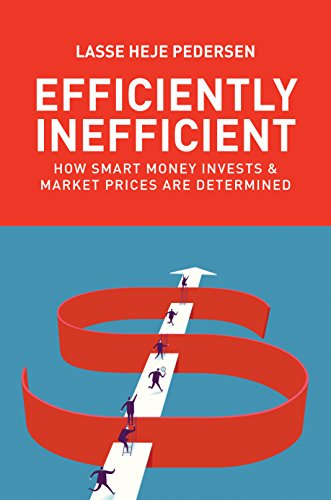
Efficiently Inefficient #6 : On the costs of trading.
Some folks wrote to me concerning whether my back-testing models incorporate transaction costs. As of today, I kept the settings on transactions mostly default so I expect my models to over-estimate returns. To keep things safe, I always create a benchmark portfolio of equal-weighted STI stocks to compare investment return so that I do not get too carried away when I observe good back-test results.
In today's article, we will look at transaction costs. And as it turns out, it is hard to perfectly simulate transaction costs into a back-testing exercise.
One of the most objective definitions of transaction costs is the difference between the cost of one share upon execution and the average between the bid price and ask price of a stock, so generally speaking, any of the following can increase your transaction costs.
a) Brokerage costs
Not all brokers are the same. For investors who really want to pinch pennies, they should consider opening an account with FSMOne. Casual observation is that trading costs can be as low as $10 and there are no platform fees for stock trades.
b) Bid-ask spreads
The next element of transaction fees are bid-ask rates. Take for instance a counter like CEI, you can buy it from SGX at $1.055 but a seller will only accept $1.015 per share making this a really illiquid counter. Bid-ask rates are also insidious as the transaction fees tends to become larger the more units you buy.
This cost is what torpedoes back-tested dividends portfolios which tend to flag out thinly traded counters that generate a lot of free cash flow. Which brings us to the next point.
c) Illiquid counters
Illiquid counters also increase transaction costs. Suppose you want to buy 100,000 of Global Testing. There are only 40 lots on sale at $1.10. If you insist on 100,000 in one trade, you might put in a Limit order of $1.15 and pray that you will get 100,000 shares with an average price of maybe $1.135.
This happens to me quite a lot because I trade during lunch breaks and just want to get my trades over and done with. As I seldom sell and look forward to years of dividend flows, I do not have patience to stretch my purchases over a couple of days.
d) There is an opportunity cost to optimizing transaction costs.
The is a limit to optimizing your transaction costs because you would need to change the way you trade to keep it at a minimum. The trade-off is against your opportunity cost. Perhaps your strategy exploited a trading opportunity that would disappear too quickly.
Where your transaction costs are too high, perhaps you need to put more focus on implementation measures. Trade more slowly and go after more liquid counters and find cheaper brokers. If this results in high opportunity costs, you might want to execute with faster speed.
I guess my only cold comfort is that all my back-tests so far tend to rebalance a portfolio only once a year.
In today's article, we will look at transaction costs. And as it turns out, it is hard to perfectly simulate transaction costs into a back-testing exercise.
One of the most objective definitions of transaction costs is the difference between the cost of one share upon execution and the average between the bid price and ask price of a stock, so generally speaking, any of the following can increase your transaction costs.
a) Brokerage costs
Not all brokers are the same. For investors who really want to pinch pennies, they should consider opening an account with FSMOne. Casual observation is that trading costs can be as low as $10 and there are no platform fees for stock trades.
b) Bid-ask spreads
The next element of transaction fees are bid-ask rates. Take for instance a counter like CEI, you can buy it from SGX at $1.055 but a seller will only accept $1.015 per share making this a really illiquid counter. Bid-ask rates are also insidious as the transaction fees tends to become larger the more units you buy.
This cost is what torpedoes back-tested dividends portfolios which tend to flag out thinly traded counters that generate a lot of free cash flow. Which brings us to the next point.
c) Illiquid counters
Illiquid counters also increase transaction costs. Suppose you want to buy 100,000 of Global Testing. There are only 40 lots on sale at $1.10. If you insist on 100,000 in one trade, you might put in a Limit order of $1.15 and pray that you will get 100,000 shares with an average price of maybe $1.135.
This happens to me quite a lot because I trade during lunch breaks and just want to get my trades over and done with. As I seldom sell and look forward to years of dividend flows, I do not have patience to stretch my purchases over a couple of days.
d) There is an opportunity cost to optimizing transaction costs.
The is a limit to optimizing your transaction costs because you would need to change the way you trade to keep it at a minimum. The trade-off is against your opportunity cost. Perhaps your strategy exploited a trading opportunity that would disappear too quickly.
Where your transaction costs are too high, perhaps you need to put more focus on implementation measures. Trade more slowly and go after more liquid counters and find cheaper brokers. If this results in high opportunity costs, you might want to execute with faster speed.
I guess my only cold comfort is that all my back-tests so far tend to rebalance a portfolio only once a year.
Wednesday, August 23, 2017
Why finance bloggers are not the prophesied heroes that you are looking for.

This post started out with Whatsapp discussion between friends who examined the difference between paper generals and entrepreneurs.
The impression I got from a large part of the discussion is that entrepreneurs are heroes in Singapore society because they dare to take on business risks and very often take a personal stake in their enterprises. On the other hand, paper generals can broadly be used to reflect Singaporeans who were overladen paper qualifications and attain a degree of comfort without risking too much of their skin.
This discussion reflects the dreams and desires of the common Singaporean. Everybody wants to be the hero of their own story - specifically in GOT, an Azor Ahai who was named in prophecy to overcome personal and environmental challenges to save the world from disaster with nothing but a flaming sword in his hand.
There is also a moral element to this story - You need to overcome difficult odds and, in spite of such odds, you still succeed. Otherwise you are not a hero.
This is when I came upon this insight - Most, but probably not all, financial bloggers are not the heroes that most ordinary Singaporeans are looking for. This is because most prominent bloggers come from the comfortable middle class. Even the few financial bloggers who run companies have fairly decent degrees.
( But there area few minor exceptions ! )
Here are the reasons why we are closer to paper generals then entrepreneurs :
a) Investors are better off when they have better paper qualifications
This is politically incorrect but bear with me for the moment.
When you need more money to invest and have a job in the Smart Nation economy, odds are you will need a degree. Local degree holders start out $600 ahead of private degree holders and $1400 ahead of diploma holders and can get access to more permanent jobs. Statistics also show a steeper salary curve for degree holders who have more experience. This additional money is important because it becomes savings which is then invested in the markets.
I am not asserting that we should be satisfied with society as it stands. My kids might not do that well in school so my struggle as a parent has just begun.
b) A stable career facilitates risk-taking your investments
One of the side effects of Gary Becker's theory of Human Capital is that our career and investment portfolio should be taken as a whole and a good stable job can be reframed as the bond component of a person's total wealth. This facilitates more risk taking in his investment portfolio and as a result he can take on more equity risk.
The result being that a SAF general can take on much more market and credit risk than a salesman or an Uber driver.
So paper generals can extract more market premiums than their risk taking counterparts.
c) Investors wants the odds in their favor.
Even the most successful business men will admit that the odds are against them when they first started out. You pay the landlord rent, pay salary to your employees and even a merchant terminal extracts 3% from your revenues. If your company becomes insolvent, secured creditors and employees take precedence over shareholders.
We investors prefer to take on the other side of the bet. Preferably the rental payments go into their pockets. For quite a while Neratel was a good investment when they supplied payment terminals.
d) We are closer to monsters than heroes
If you follow the Game of Thrones, a credible financial bloggers cannot afford to be Jon Snow who somehow blunders from victory to victory while knowing absolutely nothing.
The closest thing I can think of when I see financial bloggers as community is that we are the Night Walkers. The best financial bloggers are cold AF. They have an army of zombies to do their dirty work for them. Even a (market) bear can be zombified and turned to their advantage.
Investors also try to be objective as possible and are generally hard to faze by the markets.Notice how calmly the Night King took out his Ice Spear when Daenaery's dragons attacks. It is as if he was preparing for this encounter for quite a while.
Which is the last insight I leave with you GOT fans, we really would not know when the Dragon will attack in the financial markets.
Winter is Coming.
But with the right spear in reserve, we can bounce back from the assault riding on an Ice Dragon the next time the bull run returns.
Sunday, August 20, 2017
It is time to harbour some doubts about the STI ETF.
It is now about the right time to start casting doubt on the STI ETF. At this time, a lot of my fellow bloggers have started to integrate the STI ETF into their primary strategies and it would be useful to consider counter-arguments against using the STI ETF as a primary tool to extract market returns from the SGX counters.
Before I start, active managers have waged a media campaign against ETFs for quite a while now and you can easily find such articles all over the web. When I criticise ETF strategies, I am not suggesting that we regress and begin looking at expensive active management funds again. No sane investor should tolerate high management expenses only to have unit trust managers try to replicate the STI ETF to minimise their career risks.
a) If everyone invests in the STI ETF, the market will fail.
The primary argument against ETFs is that when everyone invests in it to the exclusion of everything else, the market will fail because you can't reward well run companies and punish those which are run badly. This argument is relatively weak because there is currently no risk of everyone investing in ETFs. Even if the risk were to ever happen, we would likely see many smart beta ETFs in the market to ensure that this would never come to pass.
The question has always been whether your performance would be inferior as adoption of the STI ETF ramps up over the next few years.
b) Equal weighting the STI index components leads to better performance.
The STI index is biased towards stocks with a larger capitalisation and the banking sector. Right now the banking sector is dealing with the bad loans from the O&M sector.
In the last event by BigScribe, Teh Hooi Ling reports an annual performance of around 3.5% over 10 years for the STI. I backtested a portfolio that uses equal weights in the STI index and I can report a 1-2% improvement over the STI ETF.
This would have been a great argument to buy STI components in equal proportions directly until I figured out that the minimum size of an investment in Jardine Matheson Holdings is $6,520 USD. The minimum portfolio size you will need to craft an equal weighted STI portfolio is slightly less than $300,000 SGD.
c) Using a sane retail investment strategy can result in superior performance quite easily.
So far in all my backtests, it does not seem to difficult to beat the STI index. Choosing REITS that yield between 6-8% can result in double the performance, so can simply looking out for stocks with a dividend yield above 7%. It also seems that Factor investing, taught my many credible providers like Dr Wealth, can consistently outperform the markets if the horizon is long enough.
Of course sane is not a very objective measure.
For me, sane means that it should begin with a hypothesis about over performance. For example, the idea that cheap stocks outperform, with cheap being a low P/B ratio or high yields. Then this needs to be backtested. As an added measure, the strategy should remain robust when employed against data from a different market. As a bonus, you should also read up on analysts who specialise in bottom up investing to understand the state of the companies you are investing in.
Overall, the STI ETF remains a much welcomed innovation in the markets. Combined with a Asian Bond ETF, it allows most retail investors to basically put in a market position and then tune out of monitoring the markets. Furthermore, a lot of of financial bloggers welcome this instrument as we conveniently have an answer to any novice who wants to know what is the best way to invest their first $10,000.
But for intermediate investors who can afford more time on investing their money, it's time to start thinking about how we can craft a portfolio which goes beyond the STI ETF in effectiveness.
If we do a good job at that, we might even save the STI ETF strategy from it's own success.
Before I start, active managers have waged a media campaign against ETFs for quite a while now and you can easily find such articles all over the web. When I criticise ETF strategies, I am not suggesting that we regress and begin looking at expensive active management funds again. No sane investor should tolerate high management expenses only to have unit trust managers try to replicate the STI ETF to minimise their career risks.
a) If everyone invests in the STI ETF, the market will fail.
The primary argument against ETFs is that when everyone invests in it to the exclusion of everything else, the market will fail because you can't reward well run companies and punish those which are run badly. This argument is relatively weak because there is currently no risk of everyone investing in ETFs. Even if the risk were to ever happen, we would likely see many smart beta ETFs in the market to ensure that this would never come to pass.
The question has always been whether your performance would be inferior as adoption of the STI ETF ramps up over the next few years.
b) Equal weighting the STI index components leads to better performance.
The STI index is biased towards stocks with a larger capitalisation and the banking sector. Right now the banking sector is dealing with the bad loans from the O&M sector.
In the last event by BigScribe, Teh Hooi Ling reports an annual performance of around 3.5% over 10 years for the STI. I backtested a portfolio that uses equal weights in the STI index and I can report a 1-2% improvement over the STI ETF.
This would have been a great argument to buy STI components in equal proportions directly until I figured out that the minimum size of an investment in Jardine Matheson Holdings is $6,520 USD. The minimum portfolio size you will need to craft an equal weighted STI portfolio is slightly less than $300,000 SGD.
c) Using a sane retail investment strategy can result in superior performance quite easily.
So far in all my backtests, it does not seem to difficult to beat the STI index. Choosing REITS that yield between 6-8% can result in double the performance, so can simply looking out for stocks with a dividend yield above 7%. It also seems that Factor investing, taught my many credible providers like Dr Wealth, can consistently outperform the markets if the horizon is long enough.
Of course sane is not a very objective measure.
For me, sane means that it should begin with a hypothesis about over performance. For example, the idea that cheap stocks outperform, with cheap being a low P/B ratio or high yields. Then this needs to be backtested. As an added measure, the strategy should remain robust when employed against data from a different market. As a bonus, you should also read up on analysts who specialise in bottom up investing to understand the state of the companies you are investing in.
Overall, the STI ETF remains a much welcomed innovation in the markets. Combined with a Asian Bond ETF, it allows most retail investors to basically put in a market position and then tune out of monitoring the markets. Furthermore, a lot of of financial bloggers welcome this instrument as we conveniently have an answer to any novice who wants to know what is the best way to invest their first $10,000.
But for intermediate investors who can afford more time on investing their money, it's time to start thinking about how we can craft a portfolio which goes beyond the STI ETF in effectiveness.
If we do a good job at that, we might even save the STI ETF strategy from it's own success.
Friday, August 18, 2017
Efficiently Inefficient #5 : General principles of portfolio construction.
This books is really shaping up to be something that is good for novices and the experts.
Today I will talk about six very basic principles of portfolio construction. It is actually quite humbling that my own portfolio does not make the cut for all of these principles.
a) Diversification
The first principle is to diversify your portfolio. This is the only known free lunch in finance. This is best done across asset classes and industries. For folks like me who focus on dividend yields, it is much harder to conform to these principles. I normally look at REITs, business trusts and high yielding equity counters to get the job done. Ideally, you have to throw in annuities and some high yielding bonds into that mix.
b) Have position limits.
You can have too much of a good thing. Always ensure that no matter how attractive an investment is, it should be limited to a reasonable proportion of your portfolio. 5% is a great number but for me this is more like 15%. This is not too straightforward if you only go for REIT yields because half the SGX would mean investing in only 20 REIT counters, so you have to look at other industries to keep your position limits low.
c) Make larger bets on high conviction trades.
At this stage, you have to deviate from the vanilla ETF strategies and look for high conviction investments and be willing to put more of money in it. Some folks are willing to do this if they like a particular story. For me, I like to use statistical tools to make my decision and generally speaking, the larger the yield, the larger stake I take.
d) Moderate your position by the risk of the underlying investment
The higher the risk of a position, the lower you size it. To balance (c) and (d), I try to reach for higher returns at a lower risk via my back-test, then I employ some leverage so that i can sacrifice a smaller part of my portfolio to take a larger stake in a margin account.
e) Correlations matter
This is violated by me because of the amount of number crunching involved. REITs are generally tied to real estate and move in tandem with real estate trends. Ideally you need to balance out your investments with other countries and industries but this is a mathematical exercise. Correlations also tend towards 1 in a very bearish market making this a very difficult exercise to do properly as a retail investor.
f) Resize positions dynamically.
Once you have all the five principles in action, you would need to react to resize your positions when the risk changes. The simplest expression of this principle is to rebalance your portfolio at regular intervals. This is also very hard to achieve for retail investors who may not have the time and discipline to make this happen.
At this stage, I can only say that I can apply these principles on a best-effort basis. This is something I need to keep in mind if the winds of changes were to affect my legal career.
If I go professional, these principals are possible the bare minimum that I have to adhere to before I start playing with other people's money.
Bonus : Read the Kelly Criterion from an earlier article or Wiki it to understand more about position sizing.
Today I will talk about six very basic principles of portfolio construction. It is actually quite humbling that my own portfolio does not make the cut for all of these principles.
a) Diversification
The first principle is to diversify your portfolio. This is the only known free lunch in finance. This is best done across asset classes and industries. For folks like me who focus on dividend yields, it is much harder to conform to these principles. I normally look at REITs, business trusts and high yielding equity counters to get the job done. Ideally, you have to throw in annuities and some high yielding bonds into that mix.
b) Have position limits.
You can have too much of a good thing. Always ensure that no matter how attractive an investment is, it should be limited to a reasonable proportion of your portfolio. 5% is a great number but for me this is more like 15%. This is not too straightforward if you only go for REIT yields because half the SGX would mean investing in only 20 REIT counters, so you have to look at other industries to keep your position limits low.
c) Make larger bets on high conviction trades.
At this stage, you have to deviate from the vanilla ETF strategies and look for high conviction investments and be willing to put more of money in it. Some folks are willing to do this if they like a particular story. For me, I like to use statistical tools to make my decision and generally speaking, the larger the yield, the larger stake I take.
d) Moderate your position by the risk of the underlying investment
The higher the risk of a position, the lower you size it. To balance (c) and (d), I try to reach for higher returns at a lower risk via my back-test, then I employ some leverage so that i can sacrifice a smaller part of my portfolio to take a larger stake in a margin account.
e) Correlations matter
This is violated by me because of the amount of number crunching involved. REITs are generally tied to real estate and move in tandem with real estate trends. Ideally you need to balance out your investments with other countries and industries but this is a mathematical exercise. Correlations also tend towards 1 in a very bearish market making this a very difficult exercise to do properly as a retail investor.
f) Resize positions dynamically.
Once you have all the five principles in action, you would need to react to resize your positions when the risk changes. The simplest expression of this principle is to rebalance your portfolio at regular intervals. This is also very hard to achieve for retail investors who may not have the time and discipline to make this happen.
At this stage, I can only say that I can apply these principles on a best-effort basis. This is something I need to keep in mind if the winds of changes were to affect my legal career.
If I go professional, these principals are possible the bare minimum that I have to adhere to before I start playing with other people's money.
Bonus : Read the Kelly Criterion from an earlier article or Wiki it to understand more about position sizing.
Wednesday, August 16, 2017
New insights from Ramesh s/o Krishnan v AXA Life Insurance Singapore Pte Ltd
Sometimes, a lawsuit sheds such interesting insights on the world of financial planning, it becomes impossible to resist making a small mention of it on this blog.
I will not write about the legal issues raised by this case as I expect a lot of more qualified folks to discuss this negligence case in the next few months.
Just two points before my classes start :
A) Persistency ratios.
The insurance industry tracks this very interesting ratio which tracks the percentage of policies sold by an advisor that are still in force after a certain period of time. So if an agency has a 13 month persistency ratio of 10%, it means that after 13 months, 9 out of 10 policies are no longer in force, consumers have have cancelled those policies within that year.
Sadly, the industry does not have a standardized mechanism to define what a persistency ratio is and how it should be reported to authorities. If MAS can standardize that all insurance companies should standardise their persistency ratios for Term life, whole life and ILPs for a fixed period like 36 months and make this metric transparent, we would actually have a means of measuring how much regret a consumer is experiencing when buying insurance products.
B) Twisting of policies.
The second insight is the concept of twisting which was also mentioned in the case. Twisting occurs when a financial planner advises a customer to drop an existing policy only to pick up another very similar policy. Twisting occurs to the detriment to the consumer because he or she incurs a sales charge all over again for a new policy.
Naturally, when an agency cultivates an aggressive sales culture, advisors may end up twisting their customer's policies. When done industry wide, persistency ratios will go down.
This case is a fascinating read even though it is tad long at 50+ pages.
Technology can come to the rescue of the hapless consumer of financial products. I imagine a future where MAS or a consortium of companies sets up a blockchain registry that tracks the take-up and put-down of all insurance policies so that citizens can go to a central website to track the persistency rate of the agencies they deal with and the specific products sold by an insurer.
This would keep agencies and insurers honest.
In the meantime, readers can try to pep their financial advisors on the persistency ratios of their agencies although I think you are more likely to draw a blank stare in return.
( If you actually do that, do share your results with me. )
Saturday, August 12, 2017
Efficiently Inefficient #4 : Backtest Noob musings.
There are some murmurings that I am emerging as some sort of back-test guru but that cannot be further from the truth. I am still very much of a noob and have a whole lot more to learn.
Today I will take about some aspects of backtesting that I will need to straighten out to improve some of my own investing strategies.
a) Understanding superior returns
The book explains that there are just two sources of superior returns. First, acceptance of liquidity risk. And second, superior information. Back-testing may refers to obtaining of superior information that compares strategies against each other although some of the counters flagged by a stock screener can lack liquidity. ( Like my frustration of being unable to buy more Global Testing stocks )
b) The problem of trading costs
Bloomberg's backtesting tool should allow us to factor in trading costs. In such a case, monthly rebalancing is costlier than annual rebalancing.
c) Data-mining as a serious form of bias when backtesting the markets
Kyith Ng of Investment Moats asked me privately what would backtesting results be if I changed the order of stock selection in my screens. So instead of choosing the highest dividend yielding stocks and then looking for those with the lowest gearing, I would look for REITs with the lowest gearing and then find the highest yielding stocks in the set. Both backtests will yield different results so one will clearly be superior to the other.
We will always be seduced into backtesting more sophisticated screens to get a higher return or lower risk but we are still operating on one historical dataset and may overfit the data.
d) Need alternative sets of data.
One day to preventing ourselves from data mining would be to test a different set of data with the screens which I have unfortunately not done in any of my talks so far.
We first find a strategy that works in Singapore, for example dividend stocks with sustainable free cash flows. We use a completely different set of data like the US or Japan and we observe to see if we can obtain outperformance in a different market.
This gives us better assurance that our investment ideas are not completely off the wall.
Today I will take about some aspects of backtesting that I will need to straighten out to improve some of my own investing strategies.
a) Understanding superior returns
The book explains that there are just two sources of superior returns. First, acceptance of liquidity risk. And second, superior information. Back-testing may refers to obtaining of superior information that compares strategies against each other although some of the counters flagged by a stock screener can lack liquidity. ( Like my frustration of being unable to buy more Global Testing stocks )
b) The problem of trading costs
Bloomberg's backtesting tool should allow us to factor in trading costs. In such a case, monthly rebalancing is costlier than annual rebalancing.
c) Data-mining as a serious form of bias when backtesting the markets
Kyith Ng of Investment Moats asked me privately what would backtesting results be if I changed the order of stock selection in my screens. So instead of choosing the highest dividend yielding stocks and then looking for those with the lowest gearing, I would look for REITs with the lowest gearing and then find the highest yielding stocks in the set. Both backtests will yield different results so one will clearly be superior to the other.
We will always be seduced into backtesting more sophisticated screens to get a higher return or lower risk but we are still operating on one historical dataset and may overfit the data.
d) Need alternative sets of data.
One day to preventing ourselves from data mining would be to test a different set of data with the screens which I have unfortunately not done in any of my talks so far.
We first find a strategy that works in Singapore, for example dividend stocks with sustainable free cash flows. We use a completely different set of data like the US or Japan and we observe to see if we can obtain outperformance in a different market.
This gives us better assurance that our investment ideas are not completely off the wall.
Friday, August 11, 2017
National Day Middle Finger Meditations
It is amazing that a day before National Day, I made an obscure reference to Henry Park and the Law of Attraction responded by giving all of us this courageous kid from Henry Park who took the chance and gave the middle finger to all Singaporeans during National Day. I am sure the poor kid must have been given a hard time by his parents or teachers for what he did.
Before I share with everyone my version of the moral of the story, let me share with everyone a small snippet of my life.
SMU Law Faculty is under new management and it's fair to say that things are certainly getting better for SMU Law Students. For the first time in my life, I sense that SMU is trying to engage with alumni and working really hard to consult with us on making key changes to the syllabus and pedagogical techniques. The alumni responded enthusiastically and I could certainly feel the passion in the seminar room with the new Dean talking directly to us.
But one small observation bothers me.
As I am quite clueless about the legal industry, some JD classmates pointed out to me that the eager folks who came back to help out were the older generations of former Justice Legal Clerks and basically the best of the best that SMU ever produced. If Law School were DC comics - these guys are the New Gods; if Law School were Marvel - they are the Inhumans. They gave well argued points on how legal education can be improved and enhanced and backed it up with industry experience.
[ Side note : Do Law undergrads pay some version of Magic the Gathering that feature prominent lawyers and member of the bench ? Can I tap my Associate and Trainee card to play a Writ of Summons ? Can you tap a tap a Senior Counsel to play a Strike out my Proceedings card ? ]
Then it suddenly hit me.
This is just like a JC reunion. Successful folks will come back to see how everyone else is doing. More ordinary folks will not want to show their face unless they are also into MLM or insurance.
The views represented in alumni feedback sessions, through no fault of anyone, would be overly represented by the folks who had the most positive experience of SMU law school. Why else would you come back?
Law School is awesome when you're kicking ass, but it's worse than eating SAF coconut bun in the 90s when your ass is being kicked.
There may be fewer folks who represented the views of those who might be able to give valuable feedback which makes Law School better for the rest of the 80% of the graduates, such as those :
a) Who tried hard by missed out from getting with a Latin distinction grade by 0.01.
b) Got dumped by bf/gf just before the exams.
c) Who fell sick and had to drop out from the entire semester.
d) Just can't get their writing up to par to meet university standards.
e) Almost had a nervous breakdown from the workload because they have no muggers.
f) Became class pariah and was never willingly invited to form a group with someone else.
g) Who are enraged by some professors who can get tenure in spite of being tardier than a Henry Park primary school student.
Social science research has that same problem. Some research samples are drawn from US universities and run into the bias of being white, industrialised, democratic, highly-educated and rich.
But let's come back to National Day.
If you want a primary school that represents highly successful Singaporeans whether they are parents or students in the future, you will choose to feature a bulge-bracket white-shoe primary school like Henry Park. And then you hope that a successful upper middle-class kids will never give you the middle finger... That hope was dashed last night.
I would like to celebrate the NDP middle finger.
It reminds us that no system is perfect.
It's not even close when everyone is trying their best.
The Changkat Monyet Primary School kids stayed largely at home to watch NDP or may be helping out at their parent's hawker stall. They can't give you the middle finger, but when they get shunted to the Normal(Technical) stream and look forward to a life of constantly being undervalued by society, they might just decide to give a big "fuck you" to the society they live in. The 30% who keep blaming everything on the 70% has a constant middle finger thrown at the rest of Singapore.
But things are looking great.
At least in yesterday's NDP - These folks were represented.
[ Note : I think a bunch of us ordinary mortals were quite committed to future Alumni activities and we've made a pact to attend as many as we can in the future. ]
Tuesday, August 08, 2017
How Singaporeans can be their worse enemy !
Every National Day, I will try to write something to get readers thinking about some important issue they are likely to experience in the future.
Of late, I have been trying to get my daughter into the primary school that is the located closest to our HDB EC. Westspring Primary School has recently been in the news in a good way lately so it is highly sought after by residents in my area. To keep the long story short, we got extremely worried when we had to ballot under Phase 2C but in the end we managed to get a seat in the Primary school of our choice.
While you may want to congratulate me for my good luck, I recently discovered that my own primary school, Bukit Panjang Primary School, an extremely silly and mediocre place in the 80s (where some of us had to engage in melee with Primary 8E and 8M students) has climbed up the ranks and now positioned at 36th place nationwide. My alma mater is now one of the upper tier primary schools in Singapore.
Not putting my kids into my own primary school was not a straight forward choice. We are confident of the high standard of education in all primary schools in Singapore but have no illusions about the social economic status of classmates my daughter will meet and the lifelong friends she can hope to have when we vary our primary school choices.
In the end, a short commute would save costs and give my daughter more time to sleep. So neighborhood school it is.
The ability of Singaporeans to secure their children in top primary schools through legacy admissions is one of the biggest weaknesses of our meritocracy and belongs to a class of behaviors known as opportunity hoarding.
While it is very convenient to blame the top 1% in wealth and income, a lot of opportunity hoarding is conducted by folks largely by myself and readers of this blog who belong to the top 20% of the Singapore population.
Yes, we, Singaporeans of the top 20% are the worse enemy of Singaporeans.
The upper 20% has evolved from just buying better toys and game consoles for their children to doing something with time and money that can entrench their kids in the upper crust for life.
Consider this, a neighborhood primary school is often lacking in volunteers. In contrast, in our best primary schools, a presentation on the human body can be made by a medical specialist who wants to volunteer to give a head start to his own child via Phase 2B. A fairy tale can be narrated by someone who is a legal counsel for the same reason. The upper crust volunteers in the best places to get their kids into the same slots that gave them the social networks that played a role in their success. The situation in universities can be worse when rich folks can pay to put their kids in foreign universities and can insure them from bad A level results.
Opportunity hoarding can also be subtle. Some medical guidelines state that babies should be optimally breastfed for 6 months. In Singapore, however, maternity leave lasts only 4 months. The most powerful couples can afford this luxury for their children because the father is capable enough to hold the fort while the mum finds some way to spend more quality time for their kids. Assortative mating, where the best graduates marry each other, account for 40% of income inequality in many Western societies.
For interested readers who want to know more, how the upper middle class is leaving everyone else in the dust in the US can be found in Richard Reeve's Dream Hoarders, which in my opinion, is a lot worse than what is faced in Singapore.
At the end of the day, I can't change the way I play the game because the future of my own kids are at stake. In fact, I intend to play it to the fullest and bring the financial markets into the picture to boost their chances of succeeding in the future.
So expect no quarter from the top 20% of Singaporeans.
Amazingly, PM Lee, is already on the case putting enhancements to pre-school education as a top priority which is heartwarming.
Our government needs to be a government for all Singaporeans, not just Henry Park Singaporeans.
But we can do more.
I can imagine Singapore mining a new kind of crypto-currency that can be used when wealthier parents volunteer in the neighborhood schools. Mining of the coins is inversely proportional to school popularity and awarded proportionally to volunteers and these coins can then be traded to get their kids into the best primary schools in Singapore. This currency can scale to provide some sort of remuneration to volunteers and do-gooders in our society. I would definitely spend more time giving library talks to get these SamaritanCoins in my wallet.
That is the least we can do - eliminate the ability of old boys from sending their kids into their own primary schools and create a system to grant incentives to folks who help in schools that need help the most.
This way we can build a better age for our children where our generation's best is yet to be.
Of late, I have been trying to get my daughter into the primary school that is the located closest to our HDB EC. Westspring Primary School has recently been in the news in a good way lately so it is highly sought after by residents in my area. To keep the long story short, we got extremely worried when we had to ballot under Phase 2C but in the end we managed to get a seat in the Primary school of our choice.
While you may want to congratulate me for my good luck, I recently discovered that my own primary school, Bukit Panjang Primary School, an extremely silly and mediocre place in the 80s (where some of us had to engage in melee with Primary 8E and 8M students) has climbed up the ranks and now positioned at 36th place nationwide. My alma mater is now one of the upper tier primary schools in Singapore.
Not putting my kids into my own primary school was not a straight forward choice. We are confident of the high standard of education in all primary schools in Singapore but have no illusions about the social economic status of classmates my daughter will meet and the lifelong friends she can hope to have when we vary our primary school choices.
In the end, a short commute would save costs and give my daughter more time to sleep. So neighborhood school it is.
The ability of Singaporeans to secure their children in top primary schools through legacy admissions is one of the biggest weaknesses of our meritocracy and belongs to a class of behaviors known as opportunity hoarding.
While it is very convenient to blame the top 1% in wealth and income, a lot of opportunity hoarding is conducted by folks largely by myself and readers of this blog who belong to the top 20% of the Singapore population.
Yes, we, Singaporeans of the top 20% are the worse enemy of Singaporeans.
The upper 20% has evolved from just buying better toys and game consoles for their children to doing something with time and money that can entrench their kids in the upper crust for life.
Consider this, a neighborhood primary school is often lacking in volunteers. In contrast, in our best primary schools, a presentation on the human body can be made by a medical specialist who wants to volunteer to give a head start to his own child via Phase 2B. A fairy tale can be narrated by someone who is a legal counsel for the same reason. The upper crust volunteers in the best places to get their kids into the same slots that gave them the social networks that played a role in their success. The situation in universities can be worse when rich folks can pay to put their kids in foreign universities and can insure them from bad A level results.
Opportunity hoarding can also be subtle. Some medical guidelines state that babies should be optimally breastfed for 6 months. In Singapore, however, maternity leave lasts only 4 months. The most powerful couples can afford this luxury for their children because the father is capable enough to hold the fort while the mum finds some way to spend more quality time for their kids. Assortative mating, where the best graduates marry each other, account for 40% of income inequality in many Western societies.
For interested readers who want to know more, how the upper middle class is leaving everyone else in the dust in the US can be found in Richard Reeve's Dream Hoarders, which in my opinion, is a lot worse than what is faced in Singapore.
At the end of the day, I can't change the way I play the game because the future of my own kids are at stake. In fact, I intend to play it to the fullest and bring the financial markets into the picture to boost their chances of succeeding in the future.
So expect no quarter from the top 20% of Singaporeans.
Amazingly, PM Lee, is already on the case putting enhancements to pre-school education as a top priority which is heartwarming.
Our government needs to be a government for all Singaporeans, not just Henry Park Singaporeans.
But we can do more.
I can imagine Singapore mining a new kind of crypto-currency that can be used when wealthier parents volunteer in the neighborhood schools. Mining of the coins is inversely proportional to school popularity and awarded proportionally to volunteers and these coins can then be traded to get their kids into the best primary schools in Singapore. This currency can scale to provide some sort of remuneration to volunteers and do-gooders in our society. I would definitely spend more time giving library talks to get these SamaritanCoins in my wallet.
That is the least we can do - eliminate the ability of old boys from sending their kids into their own primary schools and create a system to grant incentives to folks who help in schools that need help the most.
This way we can build a better age for our children where our generation's best is yet to be.
Saturday, August 05, 2017
Deep REIT investing insights from Investors Exchange 2017
Sometimes, the good stuff needs to wait until after a seminar is over.
As speakers in BIGSCribe events are also investors, we are also part of the audience when someone else is speaking.
Kenny Loh or Marubozu gave a fantastic presentation on REITs investing and runs a course here. Here are the results of my back-testing to refine my own REIT investing strategy using the insights I learned from Kenny Loh's Three Musketters approach to REIT investing. Paying customers would already have some sort of quick tutorial on what semivariance is from my presentation.
a) Baseline - buying all REITs at one go
If you buy all 41 REITs in equal proportions, your returns would have been 8.5% with a semivariance of 13.67% for the past 10 years. This is our baseline and I recommend that every investor who might not want to go too deep into screening should just buy all the REITS in SGX in equal proportions.
b) Choosing REITs with the highest Yield
As I have spoken in my own presentation, buying half of the higher yielding universe of REITs can outperform the strategy of buying all the REITs in the SGX universe. Last time I backtested 9.64% with a higher semivariance of 14.25%.
c) Choosing REITs with the lowest Gearing
Kenny spoke about looking for REITs with a lower gearing. I backtest a strategy that buys half of the REITs in SGX with a lowest debt to equity ratio. Once again, I was able to outperform at 9.56% with semivariance of 13.98%.
d) Choosing REITS with the lowest Price to Net Asset Value
Kenny spoke about being careful when looking for REITs with a high net asset value. I backtest a strategy that buys half of the REITs in SGX with a lowest pice to book ratio. This time I underperformed at 7.28% with semivariance of 15.08%.
Attempting to buy a dollar worth of real estate with 99 cents actually backfires on the investor with lower returns and higher risk.
e) Super-duper REIT screening strategy
So thanks to Kenny, there are at least two working strategies. Find REITs with a high yield and low gearing. I combined both screens, searching for the top 50% highest yielding REITs and then within that set, short-listing 50% of those with the lowest gearing.
This time I had a winning strategy in my hands. A final return of 13.16% with a semivariance of 14.49%. It has a fairly high Sharpe ratio of 0.54. 1 in 40 years, you may lose about 16% of your portfolio value, making this something which may be amenable to 200% leverage.
What is the moral of the story ?
When investors get together and mutually present seminars, our insights are silo-ed and we might not be able to extract the maximum benefit if we stick to our own investing approach. Even my 6-8% strategy returned only 10%.
Because I always make sure that I follow up on my learnings from other speakers, the blogosphere can benefit from a much sharper insight that combines the investment ideas of several speakers.
[ Note : The Singapore REITs universe is small, applying a screen to choose a quarter of sticks in the universe will only yield about 8-11 stocks. A diversified investor will need a few different strategies to build a portfolio that can withstand the test of the time. ]
As speakers in BIGSCribe events are also investors, we are also part of the audience when someone else is speaking.
Kenny Loh or Marubozu gave a fantastic presentation on REITs investing and runs a course here. Here are the results of my back-testing to refine my own REIT investing strategy using the insights I learned from Kenny Loh's Three Musketters approach to REIT investing. Paying customers would already have some sort of quick tutorial on what semivariance is from my presentation.
a) Baseline - buying all REITs at one go
If you buy all 41 REITs in equal proportions, your returns would have been 8.5% with a semivariance of 13.67% for the past 10 years. This is our baseline and I recommend that every investor who might not want to go too deep into screening should just buy all the REITS in SGX in equal proportions.
b) Choosing REITs with the highest Yield
As I have spoken in my own presentation, buying half of the higher yielding universe of REITs can outperform the strategy of buying all the REITs in the SGX universe. Last time I backtested 9.64% with a higher semivariance of 14.25%.
c) Choosing REITs with the lowest Gearing
Kenny spoke about looking for REITs with a lower gearing. I backtest a strategy that buys half of the REITs in SGX with a lowest debt to equity ratio. Once again, I was able to outperform at 9.56% with semivariance of 13.98%.
d) Choosing REITS with the lowest Price to Net Asset Value
Kenny spoke about being careful when looking for REITs with a high net asset value. I backtest a strategy that buys half of the REITs in SGX with a lowest pice to book ratio. This time I underperformed at 7.28% with semivariance of 15.08%.
Attempting to buy a dollar worth of real estate with 99 cents actually backfires on the investor with lower returns and higher risk.
e) Super-duper REIT screening strategy
So thanks to Kenny, there are at least two working strategies. Find REITs with a high yield and low gearing. I combined both screens, searching for the top 50% highest yielding REITs and then within that set, short-listing 50% of those with the lowest gearing.
This time I had a winning strategy in my hands. A final return of 13.16% with a semivariance of 14.49%. It has a fairly high Sharpe ratio of 0.54. 1 in 40 years, you may lose about 16% of your portfolio value, making this something which may be amenable to 200% leverage.
What is the moral of the story ?
When investors get together and mutually present seminars, our insights are silo-ed and we might not be able to extract the maximum benefit if we stick to our own investing approach. Even my 6-8% strategy returned only 10%.
Because I always make sure that I follow up on my learnings from other speakers, the blogosphere can benefit from a much sharper insight that combines the investment ideas of several speakers.
[ Note : The Singapore REITs universe is small, applying a screen to choose a quarter of sticks in the universe will only yield about 8-11 stocks. A diversified investor will need a few different strategies to build a portfolio that can withstand the test of the time. ]
Wednesday, August 02, 2017
Efficiently Inefficient #3 : Alpha shenanigans from Investor Exchange 2017
In today's segment, I'm going to talk about how to incorporate some concepts from hedge fund investing into the talk we just had last week, but first you need to remember what I reported on REIT returns last Saturday.
If you buy all the REITS in the stock market and rebalance your purchases annually for the past 10 years, you would expect to earn about 8.3%. Generous returns by any standard as the STI could barely stretch 5% during that same period of time.
Suppose you then buy 50% of the REIT universe which gives higher yields, you would do 1.15% better or earn a return of 9.45%. It does not take much mathematics to figure out that the lower yielding REITS would return 1.15% less than the average at 7.15%.
A hedge fund manager with a prime broker might be able to structure a bet that allows buying of the top 50% yielding REITs and shorting 50% of the lowest yielding REITs.
This method of investing would yield a really nice 2.3% that does not correlate with the general REIT index. So you can have a market neutral fund that returns 2.3%. This is realistic because Singapore Savers Bonds return about 2.3% risk free.
The industry calls this alpha, which in this example, would be 2.3%.
But the book also mentions this ratio called the Alpha-to-margin ratio.
Some hedge fund managers are given a lot of flexibility from their prime brokers. Suppose the prime broker allows a margin of 20% which allows the hedge fund manager to obtain a leverage ratio of 500%.
The alpha to margin ratio in this case is 2.3% / 20% or 11.5%. This is a 5x magnification of returns.
I bet this is how accredited investors can be told about market neutral returns at such ridiculous.
While it would be fun to create small portfolios like this for individuals, investing in such hedge funds was probably what led to market nightmares like what happened to LTCM. You are using a vacuum cleaner to suck up pennies on the railway while there is an incoming train.
It starts with a simple backtest suggested by an engineering geek which is then followed up generous offers of market leverage from brokers. Sometimes, a market anomaly occurs and low yielding REITs might outperform high yielding REITs for a period of time and KABOOM !
You got a disaster in your hands.
If you buy all the REITS in the stock market and rebalance your purchases annually for the past 10 years, you would expect to earn about 8.3%. Generous returns by any standard as the STI could barely stretch 5% during that same period of time.
Suppose you then buy 50% of the REIT universe which gives higher yields, you would do 1.15% better or earn a return of 9.45%. It does not take much mathematics to figure out that the lower yielding REITS would return 1.15% less than the average at 7.15%.
A hedge fund manager with a prime broker might be able to structure a bet that allows buying of the top 50% yielding REITs and shorting 50% of the lowest yielding REITs.
This method of investing would yield a really nice 2.3% that does not correlate with the general REIT index. So you can have a market neutral fund that returns 2.3%. This is realistic because Singapore Savers Bonds return about 2.3% risk free.
The industry calls this alpha, which in this example, would be 2.3%.
But the book also mentions this ratio called the Alpha-to-margin ratio.
Some hedge fund managers are given a lot of flexibility from their prime brokers. Suppose the prime broker allows a margin of 20% which allows the hedge fund manager to obtain a leverage ratio of 500%.
The alpha to margin ratio in this case is 2.3% / 20% or 11.5%. This is a 5x magnification of returns.
I bet this is how accredited investors can be told about market neutral returns at such ridiculous.
While it would be fun to create small portfolios like this for individuals, investing in such hedge funds was probably what led to market nightmares like what happened to LTCM. You are using a vacuum cleaner to suck up pennies on the railway while there is an incoming train.
It starts with a simple backtest suggested by an engineering geek which is then followed up generous offers of market leverage from brokers. Sometimes, a market anomaly occurs and low yielding REITs might outperform high yielding REITs for a period of time and KABOOM !
You got a disaster in your hands.
Sunday, July 30, 2017
Aftermath : Investor Exchange 2017
Yesterday, BIGScribe had our biggest event for the year and we sold out all 250 tickets for the event. Although I did speak for 20min yesterday, I attend these events as a fan boy myself and would generally try to follow-up on them on this blog. Here are the comments I have on the event.
a) Optimal search for Real Estate properties
This is just my personal opinion on Vina Ip's talk. While I know very little about the actual purchase of real estate, I am quite sure that only a small minority of real estate investors can review 100 pieces of real estate before making a solid buy decision. I'm not even sure if the sales person would get fed-up and stop working with the buyer after the 60th viewing. But that being said, I buy homes to stay in and do not make money from buying and selling properties.
But I do have the aid of Computer Science via this concept known as the Secretary's Problem.
If you have 1 year to find a piece of real estate, spend 37% of the time building a database of searches just to know your own preference. After around 4 months of viewing property, you have a pretty good idea of price and the value of the property you are searching for. The scientific advice to minimise regret is to find the next piece of real estate that is better than the 37% database you have built earlier. In this case, if you have a few years to buy real estate, you might really end up going through 100 pieces of real estate but you certainly do not need do this if you have to buy a house in 6 months.
( This is the same mathematical model computer scientists used for Tinder matches and blind dates )
b) Marubozu's three considerations when buying REITS.
I really enjoyed Kenny's talk about cautioning REIT buyers on gearing and Price/NAV. Over the next few weeks, I am going to empirically verify his talk and see if there is a way to come up with better performance when screen REITs with a gearing lower than 40% and NAV/Price above 1.
If it returns over 10% backtested over 10 years with a low semivariance, I would adjust my margin strategy to accommodate this framework.
c) Teh Hooi Ling's super-duper awesome talk.
I am a gushing fan-boy when Hooi Ling started talking about her investment ideas. She is my senpai in the MSc Finance programme in NUS. We have very similar training in finance but it was obvious that I am just an amateur and she the astute investing professional.
The gem of Hooi Ling's talk is the idea that you can construct some kind of indicator to figure out when the game is up and we may be staring at an economic downturn. This involves the process of creating a value screen that returns the number of stocks that meet criteria. When the number of deep value bargains drops to a low number, it may be time to leave the market.
The question is how should such a screen look like?
I have constructed deep value screens before using P/B and P/E, I need a third criteria to create this screening prototype and may have the exact research journal paper from the Financial Analysts Journal to get this task complete.
If I do successfully construct a cheap and dirty screen for retail investors, I would possibly do a talk on it next year.
BIGSCribe is currently collating the feedback on the event and I might talk about it again over the next few days.
Some fans told me that they did not like my 50 Shades of Grey theme but judging at the body language and interaction of the audience, I know that you secretly enjoy talks like this.
Just remember to have a safe word !
a) Optimal search for Real Estate properties
This is just my personal opinion on Vina Ip's talk. While I know very little about the actual purchase of real estate, I am quite sure that only a small minority of real estate investors can review 100 pieces of real estate before making a solid buy decision. I'm not even sure if the sales person would get fed-up and stop working with the buyer after the 60th viewing. But that being said, I buy homes to stay in and do not make money from buying and selling properties.
But I do have the aid of Computer Science via this concept known as the Secretary's Problem.
If you have 1 year to find a piece of real estate, spend 37% of the time building a database of searches just to know your own preference. After around 4 months of viewing property, you have a pretty good idea of price and the value of the property you are searching for. The scientific advice to minimise regret is to find the next piece of real estate that is better than the 37% database you have built earlier. In this case, if you have a few years to buy real estate, you might really end up going through 100 pieces of real estate but you certainly do not need do this if you have to buy a house in 6 months.
( This is the same mathematical model computer scientists used for Tinder matches and blind dates )
b) Marubozu's three considerations when buying REITS.
I really enjoyed Kenny's talk about cautioning REIT buyers on gearing and Price/NAV. Over the next few weeks, I am going to empirically verify his talk and see if there is a way to come up with better performance when screen REITs with a gearing lower than 40% and NAV/Price above 1.
If it returns over 10% backtested over 10 years with a low semivariance, I would adjust my margin strategy to accommodate this framework.
c) Teh Hooi Ling's super-duper awesome talk.
I am a gushing fan-boy when Hooi Ling started talking about her investment ideas. She is my senpai in the MSc Finance programme in NUS. We have very similar training in finance but it was obvious that I am just an amateur and she the astute investing professional.
The gem of Hooi Ling's talk is the idea that you can construct some kind of indicator to figure out when the game is up and we may be staring at an economic downturn. This involves the process of creating a value screen that returns the number of stocks that meet criteria. When the number of deep value bargains drops to a low number, it may be time to leave the market.
The question is how should such a screen look like?
I have constructed deep value screens before using P/B and P/E, I need a third criteria to create this screening prototype and may have the exact research journal paper from the Financial Analysts Journal to get this task complete.
If I do successfully construct a cheap and dirty screen for retail investors, I would possibly do a talk on it next year.
BIGSCribe is currently collating the feedback on the event and I might talk about it again over the next few days.
Some fans told me that they did not like my 50 Shades of Grey theme but judging at the body language and interaction of the audience, I know that you secretly enjoy talks like this.
Just remember to have a safe word !
Friday, July 28, 2017
The disruptive potential of Amazon Prime.
I was really lucky because on Thursday morning, I was able to slip an order for some groceries from Amazon and was able to experience the Prime service on my own. As it was Amazon Prime's first day in operation, the order obviously came late and the delivery person was very confused. Thereafter, the service actually went down and even at this time, the delivery service is still currently marked as being sold out.
Regardless of how badly they performed this week, Amazon will get its act right within the next few months if not weeks. The price point of their products were really attractive and I can imagine a lot of Singaporeans opting to order from them instead of going to the nearest supermarket to queue for their groceries.
Here are some preliminary thoughts :
a) Retail is very likely doomed but it has been doomed for a while
Retail has been doomed for quite a while and you notice that malls are switching their focus on providing services and experiences rather than goods. I don't think they will get it right so soon so I expect landlords to seek lower rents over the next few years.
You can definitely expect to see more cafes, tuition centres and maid agencies in our malls over the next few years.
b) There might be a boom for delivery personnel in Singapore.
I expect this to be positive for drivers who don't mind working in the gig economy. Not everyone likes to work for Uber and some just want to deliver goods for a living. Over the short term, expect some really attractive jobs which would be a relief for males with lower educational qualifications.
Demand for driver might even ramp up the pay for Uber and taxi drivers. This boom should last until driverless cars start showing up on Singaporean roads.
c) Warehouses are the next malls.
I am fairly bullish on warehouses now and expect e-commerce companies to start new leases on large warehouses to house all these goods Singaporeans will eventually buy. A new equilibrium will be reached between the space used in malls and space used in warehouses.
I have a particular concern for our Friend Local Game Shops. I have scanned the board games section on Amazon Prime and find that the discounts are so deep that buying them from vendors on Carousell. Singapore may no longer be able to sustain so many game shops and those that do survive will need to find some means of organizing events to make it more compelling for gamers to show up.
This is going to be bad for me because, without bookshops and game-shops, I no longer have a reason to even go to Orchard Road.
Tuesday, July 25, 2017
Efficiently Inefficient #2 : How to be your own Hedge Fund manager.
At this stage of my personal finances, I am edging ever closer to to becoming an accredited investor. But as of now, I am not there yet. Accreditation can allow a person to qualify for hedge funds but evidence of hedge funds outperforming the market are hard to find because many hedge fund managers simply do not wish to report their results to a central database.
It is probably easier to expect that investors of hedge funds would generally underperform the market because the fees are so high. Hedge funds can charge a management fee of 2% and 20% of their outperformance compared to a benchmark. Furthermore, the book mentions that hedge funds tend to have returns which have a large kurtosis and are negatively skewed. This is geek-speak for returns which can be very large and negative when the time is not right.
Thus, it may be safer for us retail investors to just see hedge funds as a sophisticated compensation plan for hedge fund managers.
For intermediate DIY investors, it may be better to get your hands dirty yourself and avoid paying ridiculous management fees by considering some of the key features of hedge funds and adopting it on a much smaller scale towards your own portfolio.
Here are some ideas for your consideration :
a) Leverage
I am fairly familiar with leverage as my margin account has will be invested in over $100,000 of SGX counters this week. Leverage allows investment gains to be magnified. A portfolio yielding 6.5% leveraged at 200% at a borrowing cost of 3% can yield 10% for an investor.
The problem is that leverage also magnifies losses so this feature need to be handled with care. I backtest my portfolio strategy and note the semi-variance of my strategy before committing my funds into my margin account. ( More will be shared in my talk this weekend. )
b) Shorting
Hedge funds also regularly short their positions so as to create portfolios that are market neutral. I am less familiar with this as I have yet to implement a portfolio of short positions. Previous blog commentators have explained how to implement some short investing ideas. The latest being Daily leveraged certificates which allow an investor the ability to take short leverage bets on the STI index making perhaps 3% or 5% gains when the index dips 1%.
c) Derivatives
I can do some mathematics behind derivatives but have very exposure to them. The only derivatives I have are long-dated company warrants on Second Chance stock. I bought them when they seemed underpriced a while ago.
d) Cryptocurrency
While not mentioned in the book, I think it is unavoidable that a new class of hedge funds would take up positions in cryptocurrencies in order to generate returns uncorrelated with the stock and bond markets. It is interesting area of development and something I am looking into closely.
In general, I think that for a retail investor, a basket of ETFs is enough to create some means of preserving the purchasing power of your wealth. I certainly would not risk my core portfolio on any of the strategies I mentioned.
The rest of the introductory chapter of the book would be dry for most investor readers but fascinating for lawyers who get some exposure in figuring out how hedge funds are structured.
Sunday, July 23, 2017
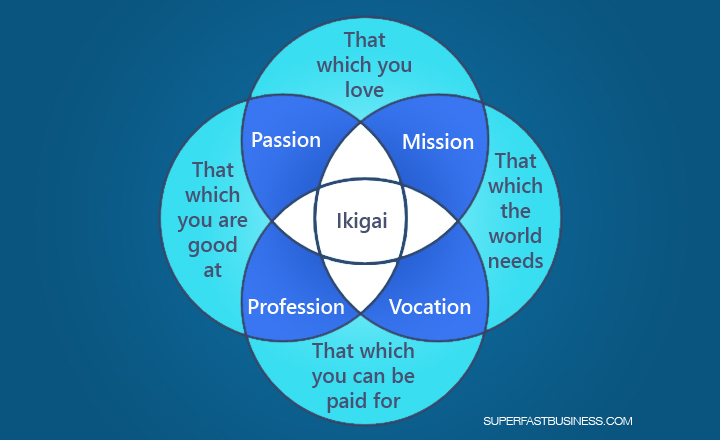
A Prostitute's Ikigai
One of the points raised by the cruel commenters of Reddit when my article on why Singaporeans do not matter became a top read on this blog was that I have a a very narrow circle of friends who are gamers. I wanted to use this opportunity to show that my choice of social circle can lead to better insights compared to just hanging out with Singaporeans who want to take Instagrams of food or talk about their children's PSLE preparations.
Consider this scenario :
Someone wants to hire a Singaporean prostitute for a night of fun. When the time came to meet up with her, she did not show up, saying that she does not know whether she can get off her day job as a PA on time. The second time round, the person tried to make another appointment with her, but she was fussy and refused to service her client in a hotel room, instead she insisted that the client should do her outside (as in the open wilderness).
I felt that this is a teachable moment for my blog readers - maybe the prostitute really was in this line of work to attain self-actualisation.
Prostitution is a good threshold example when we look at different frameworks on career and life satisfaction.
The Western model of career planning we learn about in TED talks and self-help books is that we look for three things when deciding on a career :
- Choose a career you are passionate about.
- Choose a career that pays well.
- Choose a career you are good at.
If we adopt the Western model, we can say that it is definitely possible for a prostitute to find that her job is a calling. In this case, the freelancer already has a day job and takes on clients because she enjoys the work, the work pays well and she is quite good at her job role ( Maybe she gives good GFE vibes and is always fully booked, who knows ?).
What's interesting is when you adopt the Eastern model and decide whether prostitution work will allow someone to find his / her "reason for being" or what the Japanese say Ikigai.
The Eastern model introduces a fourth element.
Prostitution must be the kind of work that the world needs.
At this stage, it is arguable as to whether Prostitution work can be someone's Ikigai.
A judgmental prude can argue that the world does not need Prostitution because it destroys families and introduces more negatives than positives to society. A more liberal interpretation can be that Prostitution can curb other sexual crimes by creating an outlet for men without conventional forms of sexual access.
Something that is acceptable by a society that emphasises individualism can be frowned upon when we assess it through the lens of a more communitarian society.
One thing is clear - Readers can benefit when they ask themselves whether their current vocation is their Ikigai.
Wednesday, July 19, 2017
Efficiently Inefficient #1 : How to think about market efficiency.
I am writing this article in Raffles City Food Court after a second day of lectures for the Part B Bar preparation exams. Two uncles sitting next to me are talking to each other about MLM and bragging about their recent trading successes via cryptocurrency trades. The conversation is quite fascinating but I have a blog article to write.
The book Efficiently Inefficient by Lasse Heje Pedersen was written as a textbook for folks who want an introduction into various hedge fund strategies. I thought the concepts may be be useful for retail investors who want to craft a more sophisticated investment strategy. After all, you guys are aware that I have since the last book, built a margin account which I intend to expand over the next two weeks. By August this year, about 4% of my total portfolio value would be leveraged by 200%.
We will start with a relatively simple concept of market efficiency.
The idea that markets are efficient is the idea that our stockmarket reflects all market information. Market prices always reflect fundamental value and readjust when breaking news occur. If markets are efficient, then active investing is pointless and your should just minimise your costs and just buy ETFs for your portfolio.
The converse of market efficiency is that the market prices do not reflect fundamental value and it is possible for active investors to succeed. Human beings make mistakes and it is possible for the investing crowd to become overexuberant or overly pessimistic.
The idea of markets being efficiently inefficient is a new one which tries to be a halfway house between market efficiency and market inefficiently. Markets are inefficient enough just to compensate money managers for their costs and fees but efficient enough to make it hard for a new market manager to enter the market.
If you adopt this belief, then market managers will typically perform well enough to be rewarded for the liquidity they provide to the markets but will find it challenging to perform beyond what they charge an investor in terms of trading costs and management expenses.
Some active managers will be able to exploit market anomalies over the short term but they will need to keep searching for new ideas to remain relevant to their clients.
I would this hypothesis to be correct. The only way to keep ahead of the markets is to keep reading and finding new ways to invest your money.
It does not make sense for anyone to be permanently financially independent without performing a porfolio review every now and then readjusting their investments to adapting to changing circumstances.
The book Efficiently Inefficient by Lasse Heje Pedersen was written as a textbook for folks who want an introduction into various hedge fund strategies. I thought the concepts may be be useful for retail investors who want to craft a more sophisticated investment strategy. After all, you guys are aware that I have since the last book, built a margin account which I intend to expand over the next two weeks. By August this year, about 4% of my total portfolio value would be leveraged by 200%.
We will start with a relatively simple concept of market efficiency.
The idea that markets are efficient is the idea that our stockmarket reflects all market information. Market prices always reflect fundamental value and readjust when breaking news occur. If markets are efficient, then active investing is pointless and your should just minimise your costs and just buy ETFs for your portfolio.
The converse of market efficiency is that the market prices do not reflect fundamental value and it is possible for active investors to succeed. Human beings make mistakes and it is possible for the investing crowd to become overexuberant or overly pessimistic.
The idea of markets being efficiently inefficient is a new one which tries to be a halfway house between market efficiency and market inefficiently. Markets are inefficient enough just to compensate money managers for their costs and fees but efficient enough to make it hard for a new market manager to enter the market.
If you adopt this belief, then market managers will typically perform well enough to be rewarded for the liquidity they provide to the markets but will find it challenging to perform beyond what they charge an investor in terms of trading costs and management expenses.
Some active managers will be able to exploit market anomalies over the short term but they will need to keep searching for new ideas to remain relevant to their clients.
I would this hypothesis to be correct. The only way to keep ahead of the markets is to keep reading and finding new ways to invest your money.
It does not make sense for anyone to be permanently financially independent without performing a porfolio review every now and then readjusting their investments to adapting to changing circumstances.
Saturday, July 15, 2017
Equity Management ( Last Episode ) : Time to move on and how to think about GLP.
I'm closing this segment in favour of something more reader-friendly next week based on more interesting hedge fund strategies.
I thought perhaps I'd like to show how the stuff I wrote on this column would be applied to the latest news on GLP.
Based on what can figure out on the news, GLP is being bought out at $3.38 and dividends declared in May will not reduce it's value which means that potentially whoever owns GLP will get to exit at $3.44 by latest April 2018. Looking at the current price, GLP is also trading at $3.29 which provides a nice 15 cent profit even for investors who decide to buy after the news has been declared.
Here are a few points :
I thought perhaps I'd like to show how the stuff I wrote on this column would be applied to the latest news on GLP.
Based on what can figure out on the news, GLP is being bought out at $3.38 and dividends declared in May will not reduce it's value which means that potentially whoever owns GLP will get to exit at $3.44 by latest April 2018. Looking at the current price, GLP is also trading at $3.29 which provides a nice 15 cent profit even for investors who decide to buy after the news has been declared.
Here are a few points :
- Basic maths says that buying and holding GLP until next April will return around 4.55% or around 6.825% annualised. A lot of friends and bloggers have been sounding the alarm on such an arbitrage opportunity.
- At this stage it is very easy to fall into a trap of equating this deal as a short term bond issue which gives 4.55% in 8 months. A 4.55% corporate bond is relatively stable but a buyout largely depends on whether the buyout will succeed. Serious losses can result in the buyout does not take place.
- At this stage, we can give benefit of the doubt to the folks who see this as a bond-like investment because the underlying mechanism is what we folks in law school know as a s210 Scheme of Arrangement which is welcomed by initiated by internal management. ( But a s210 can be shot down by the courts in a myriad of ways which will not be the subject of this article. )
- So will you invest your money to earn an annualised 6.825% ? Depending on your level of risk aversion, some folks might. For me, I have much more attractive counters yielding 8-10% on my radar.
What is more interesting is when you apply leverage and try to mirror what some professional hedge fund managers do.
If you look at Maybank's lending rates for GLP, they consider this a Tier 1 stock so they only charge 2.88% for margin. Suppose you leverage at 300%, You can expect to earn over 6.825 * 3 - 2.88 * 2 or 14.715% annualised over 8 months.
14.715% is a decent return, but take note that if the buyout fails, you may be looking at perhaps 20% drop which would cost you 60% of your capital. There is no such thing as a free lunch.
This is something that I don't have the guts to do, but thinking about risk and return in this manner may provide more interesting insights that you can't find elsewhere.
( I am not vested in GLP )
Anyway, beginning next week, we will trying to go through the following book :
Tuesday, July 11, 2017
JD Aftermath #7 : Future of the legal industry

Today marks the end of my journey with SMU where I travelled back to campus for Commencement 2017. I wanted to save one last salvo before I begin preparations for the bar exams next week.
Today's highlight was Minister Shanmugam's speech. I would like to share some personal thoughts on what was presented to us today.
I felt that Minister Shanmugam's tone was generally positive. However, I can't help but feel that lawyers are going to be in for some really tough times unless they belong to the category that do bespoke work for big clients.
a) Elephant in the Room : No one knows how the legal landscape is going to be disrupted.
I interviewed with SMU as someone who has just left the data.gov team in IDA. At that time, I just completed my Coursera specialization on Data Analytics with R. I spent my time during the interview talking about legal analytics and ultimately how judgments can be predicted with the right deep learning algorithms. During my final year, some judgments from the European Court of Human Rights can already be predicted with 80% accuracy by just scanning the submissions.
In today's Commencement, what was not said was more important than what was said. Ho Kwon Ping's opening address briefly mentioned Fintech but nothing more was said about legal-tech.
IMHO, the Big Elephant in the room is that SMU does not have a module that teaches lawyers how to address the latest developments in computer science and give law students a sample of the skill-set required to master them. We are still not creating lawyers with the ability to speak to engineers and other technology professionals.
NUS, in contrast, offers this module to its students.
( If SMU wants to start, it should make Richard Susskind a compulsory read. Just sayin.... )
b) Inevitably, many of us will leave for greener pastures.
Minister Shanmugam puts up a series of very interesting slides which talk about how easy it is for other countries to take our lunch. In particular, Singapore is always under the threat of losing its position as an air hub. We also do not have a particularly efficient people-to-lawyer ratio compared to countries like South Korea (I felt that the Minister should not have withheld that ratios for the US but that's just me). If we want to succeed, we have to do more with less and a subtle message I received is that companies would not be satisfied with paying so much for non-bespoke legal advice. This is convincing to me because I spent over a decade in IT outsourcing.
I might be better off using the ITSM discipline to control a cadre of Indian lawyers to generate the low level research for more experienced partners before the passing the work to the client. I can even implement follow-the-sun where a document can be handed over to an Indian Call center and work complete before breakfast the following day.
If the legal landscape is going IT's way, then lawyers may be wiser to try to leverage on this outsourcing trend or at least find a bluer ocean to swim in.
c) Two great places to get into are Arbitration and Insolvency.
I felt a certain pang of regret when the Minister showed his info-graphic for Arbitration which was showing rampant growth.
Over a decade ago, fresh after my CFA I almost wanted to pick up a graduate diploma in Arbitration but was stunned when I was turned down for the inaugural batch of the course. Even in SMU, I pursued modules which taught me more about business so that I can be a better investor so I no longer had enough credit to study the arbitration module.
I was luckier because I spent a lot of time on Insolvency which was a tough subject. Initially I wanted to get into an area of the law where I get a leading indicator of whether the economy is coming to an inflection point. So I hope to get some real work on Insolvency in a later phase of my career.
Perhaps the most positive aspect of the talk is when the Minister sharing about growing areas of practice that rookies can get into.
What's next ?
Well what is next for me is that I will begin Part B next week.
I will withhold judgment until I meet the hordes of overseas graduates who are coming back to compete for a pie that growing smaller and smaller over time.
On the whole, I believe that SMU has prepared me well.
Heck, NUS Engineering and Finance school has prepared me well for this.
Bring it on !
Sunday, July 09, 2017
Why Singaporeans will not matter in the future.
I thought I'd spend Sunday writing about some of the key conclusions from the book Homo Deus by Yuval Harari within our local context. This is a very interesting read which I strongly recommend to all readers. In fact, you might be better off skipping Sapiens and going into Homo Deus straight because it talks about the future instead of the past.
a) Politically Singaporeans do not matter
If you look at the Oxley Road matter, one takeaway is that ordinary Singaporeans do not really matter in this unfolding drama, the support for our constituencies will not collapse overnight whether we preserve or demolish 38 Oxley Road. Ditto for the Elected Presidency.
The more interesting insight I gained from reading Homo Deus is the philosophical question of whether PAP is a political party or an algorithm. I find the algorithm argument convincing because the PAP is one of the most successful and consistent political parties in the world. Imagine the PAP as some sort of computer process or daemon with the Constitution and associated Statutes as some kind of database.
The PAP algorithm under the hood may work like this : Keep unemployment low within 5%, keep economic growth reasonable at 2-3%, manage constituencies to cover all basic and security needs. If all these conditions are being met, no opposition party can gain enough foothold to block a Constitutional amendment which further allows PAP to tweak the Constitution to continue to meeting these hard economic guidelines further entrenching their power.
Unlike the ministers that direct the PAP, the PAP is a highly intelligent algorithm without the requisite consciousness that knows Singaporeans better than Singaporeans themselves. Where Singaporeans can make a difference is only during rare cases like in 2011, when they gave an entire GRC to the Worker's party which triggers a flag for the PAP to make bigger changes to its social policies. But any intelligent programmer will know that code can be written to adjust to external sensor. This external sensor being an election poll.
b) Militarily Singaporeans do not matter
This is a much easier argument to extend because the nature of war itself is changing. A fat, overweight soldier can be a butcher in the battlefield because he can command a squad of attack robots. The consciousness of a solder is no longer an asset in a world where command and control can be simplified suing highly-refined AIs.
This will be a province of a few select Elite Singapore battle scholars.
c) Economically Singaporeans do not matter.
The ordinary Singaporean will have about 20-30 years head-start but will will become irrelevant much faster than his counterpart from another country because we are embracing a Smart Nation with a much bigger sense of urgency.
Look no further than the emergence of a robo-advisor, a low cost financial planner that would not push products down your throat or create a conflict of interest. The technology will not just render an army of financial professionals unemployed, it will create a better environment for millenials to invest their money. In the future, a robo-advisor might even be able to replicate active fund manager capabilities. I see this happening within 10 years.
As more technologies begin to disrupt the services, the population will split into a caste of "useless" citizens and a "super-elite" core that will control and direct an army of artificial intelligences to keep the economy humming.
I actually believe that the creation of the "useless' caste has already started.
I had a conversation with a bunch of friends the other day where 80% of the subject matter is about events in the virtual world such as : What games to play. How to power level your Necromancer and what we bought in the latest Steam Sale.
A world in which Singaporeans do not matter may be welcomed by many Singaporeans
What I painted on this blog is very dystopian but I also believe that it would be welcomed by many Singaporeans who finally get the rest they desire. There will be no Marxist nightmare because the proletarian are too busy killing Diablo to overpower the bourgeois elite.
The ordinary "useless" class will withdraw from the marriage and breeding market ending years of heartache and frustration (Already happening based on the latest survey). They can plug into a virtual world where you can have a sense of achievement and even lead meaningful lives. (Unless you power-level and depend on someone else to give you free xp, which is akin to living on your inheritance). A world where non-degree males have problems finding employment, a government algorithm only needs to provide enough basic universal income to sustain a lifetime of plugging in playing games for an entire lifetime or watching Netflix videos.
The population will likely drop and the Singapore will be ruled by an enhanced and very small caste of High Programmers/Policy makers.
Your future Ikigai will be to reach 1000 paragon points.
What can you do?
This is not a question that I will need to answer as I have already retired once. But this is a serious challenge for my children.
The first answer for everyone is to simple embrace the future. For this to take place, some form of Universal basic income for internet bandwidth and food needs to be provided for the population. Efficiencies may make this a very small burden even for 5% of the population that pays taxes.
The next best answer is to attempt to join the super-elite. This is not going to be easy as the skills in the future would be advanced degrees in both biology and computer science. But perhaps 5-10% of the population will make the cut.
My answer is for folks within our generation to amass enough wealth to support just one or two generation ahead of ours. Investing in companies that will bring in this new age will maintain prosperity for our children who may or may not qualify to be super-elite.
If they fail, the family line will end with them but they will have comfortable lives. If they succeed, they will work very hard to keep the nation advancing into the future and may be able to continue going one perhaps a few generation more.
Saturday, July 08, 2017
Equity Management #19 : Dividends strategy versus Deep Value Investing.
During my preparations for the talks at the end of the month ( which is rapidly selling out ! ), I would go to Lee Kong Chian Library and take down some interesting observations on the market from the Bloomberg terminals.
Today's observation goes beyond the scope of my presentation in July so it's better to share this on my blog for intermediate investors. It will also give attendees and idea of what my presentation would be like at the end of the month.
An important question investors are curious to know is whether deep value strategies outperform a well-crafted dividends strategy. I have always maintained in my talks that a dividend strategy is, in many cases, inferior to the deep value strategy.
( Information on my dividends strategy will be shared on my talk itself but let's look at simple deep value strategy I back-tested on Bloomberg.)
Suppose we take the bottom 20% P/E ratios from a set of local SGX stocks. And then within this set, we find the bottom 20% P/B ratio. We will end up with a list of deep value stocks that belongs to the province of deep value investors.
Backtested 10 years and annually rebalanced, the performance is abysmal :Returns are 3.07% and the portfolio is highly volatile with a semivariance of 23.40%.
Investing in the STI ETF would have gotten better results.
As I could not believe my eyes, I then tried to observe the stocks selected by this approach. The market returned mostly Chinese companies.
So the next step would be to limit the scope of this strategy to locally domiciled companies.
The improvement is very dramatic - Once you filter out the Chinese companies, the returns become 52.46% annually ! The semivariance becomes higher at 34.69%.
This is superior to any dividends strategy I will be presenting end of this month and possibly superior to any performance of active managers covering the Singapore market !
Some preliminary suggestions for investors :
a) If you go for deep value, filter out the China stocks in SGX.
b) While your returns will improve, your risks will also be magnified.
c) The backtest does not account for the lack of liquidity of good deep value stock counters. So you might even be able to buy the stocks suggested by the screen becuase no one is selling them.
d) While it's tempting to leverage such counters, brokers are unlikely to give you decent lending rates for deep value stocks.
e) Unlike dividend stocks, deep value counters may not occasionally give you a reward you for holding counters over time.
f) No release of dopamine in your brain when you get rewarded with dividends. ( Which is what got me hooked more than a decade ago ! Dividends are the opiate for the investing masses ! )
Today's observation goes beyond the scope of my presentation in July so it's better to share this on my blog for intermediate investors. It will also give attendees and idea of what my presentation would be like at the end of the month.
An important question investors are curious to know is whether deep value strategies outperform a well-crafted dividends strategy. I have always maintained in my talks that a dividend strategy is, in many cases, inferior to the deep value strategy.
( Information on my dividends strategy will be shared on my talk itself but let's look at simple deep value strategy I back-tested on Bloomberg.)
Suppose we take the bottom 20% P/E ratios from a set of local SGX stocks. And then within this set, we find the bottom 20% P/B ratio. We will end up with a list of deep value stocks that belongs to the province of deep value investors.
Backtested 10 years and annually rebalanced, the performance is abysmal :Returns are 3.07% and the portfolio is highly volatile with a semivariance of 23.40%.
Investing in the STI ETF would have gotten better results.
As I could not believe my eyes, I then tried to observe the stocks selected by this approach. The market returned mostly Chinese companies.
So the next step would be to limit the scope of this strategy to locally domiciled companies.
The improvement is very dramatic - Once you filter out the Chinese companies, the returns become 52.46% annually ! The semivariance becomes higher at 34.69%.
This is superior to any dividends strategy I will be presenting end of this month and possibly superior to any performance of active managers covering the Singapore market !
Some preliminary suggestions for investors :
a) If you go for deep value, filter out the China stocks in SGX.
b) While your returns will improve, your risks will also be magnified.
c) The backtest does not account for the lack of liquidity of good deep value stock counters. So you might even be able to buy the stocks suggested by the screen becuase no one is selling them.
d) While it's tempting to leverage such counters, brokers are unlikely to give you decent lending rates for deep value stocks.
e) Unlike dividend stocks, deep value counters may not occasionally give you a reward you for holding counters over time.
f) No release of dopamine in your brain when you get rewarded with dividends. ( Which is what got me hooked more than a decade ago ! Dividends are the opiate for the investing masses ! )
Wednesday, July 05, 2017
Personal Update : The Road to Commencement and Part B.
Just another personal update as I have just returned from my short holiday which has been spent mostly queuing for Universal Studio rides.
The next few weeks is going to be rough :
a) Signing up for a 2-day shorthand course
Fans of my blog know that when it comes to lifelong learning, I tend to go all-out and take a skills mismatch quite personally. One of the problems I faced during my internship is the taking of Court Attendance notes during Pre-Trial Conferences. My fingers were too slow when taking the notes down and the quality of my work was generally quite poor. ( These are verbatim notes, not the summaries which I can comfortably handle in the past. )
So yesterday, I shortlisted a shorthand approach called the Pitman approach which is efficient but has a high learning curve and will begin lessons this Friday. I am rushing this through so that I can unleash this new Talent Tree/Feat when I begin my lectures for Part B.
I will let everyone know whether I can claim my Skillsfuture credit for this class.
b) Cryptocurrency classes on Coursera
Just one day before Commencement, a Coursera class on Blockchains would be opening up next Monday. I am now considering whether I should attend this course. The question is whether I should pay for the course to do the capstone project.
This is somewhat risky since Part B has a distinction grade and a senior lawyer half-jokingly told me that I should not try to merely try to just pass my bar exams. ( Gimme a break I SMU is brutal enough ! )
If you do wanna sign up for the course and want a study buddy, do let me know.
c) My next talk "50 Shades of Dividends Investing"
This talk is shaping up well and all my content has been incorporated into my slides so I can share my overview here. Generally speaking, expect a highly quantitatively driven talk. I don't make bald assertions without backing it up with a back-test from a Bloomberg terminal. You can sign up for this mega-event here.
Some of my findings should be counter-intuitive and controversial enough even for intermediate investors but there is definitely two useful investment strategies which I will share in my talk.
The Overview look like this :
•The
Corporate workplace as a Brutal Master
•Fifty
Shades Darker
–Earning
–Saving
–Investing
your way to freedom
•Investing
specifics :
–The
flaws of the STI ETF strategy.
–How
dividends can assist you.
–Importance
of REITs in a dividends strategy.
–Two
cool approaches to dividends investing.
•Question
of leverage
•Fifty
Shades Freed
–Attaining
Financial Independence
Monday, July 03, 2017
Oxley Road Saga : Lee Kuan Yew as an intersubjective phenomenon.
I did not follow closely what was said in Parliament today. The reason is because Singaporean should not be distracted by what is essentially an internal family dispute. However, the dispute is interesting because it raises a very interesting philosophical problem which goes beyond the agendas of Team Preserve and Team Demolish. After some consideration, I think that I now belong to the Team Preserve faction but it is a lot more interesting to look to at the issue from Team Demolish's point of view.
If this issue is merely a family dispute, then 30% of Singaporeans belonging to the anti-PAP would possibly spend a lot more time eating popcorn than throwing their lot for Team Demolish. Why would the folks who hate the PAP want to fulfill the wishes of LKY so much?
Personally, the answer lies in the concept of an intersubjective phenomenon narrated in the books by Yuval Harari. To get under the hood and understand why the factions are split, we have to see the difference between Lee Kuan Yew as a man and Lee Kuan Yew as an intersubjective phenomenon.
As a man, Lee Kuan Yew is mortal. He has his failings as a human being.
As I am a dad myself, I know that my kids will run away from me when I release a nice wet fart when I was out on staycation with them for the past two days. I can imagine what PM Lee's personal relationship with his dad is like. Lee Kuan Yew is a demigod to most of us but, very likely, he farts just like me. To all of us, LKY was Singapore's first PM. But to PM Lee and his brother, his dad farts like most other dads. Hence the idea that there is nothing "magical" about Oxley Road.
In this case, PM Lee cannot be more wrong about how magical Oxley Road is. I agree with PM Lee that Singaporeans do not currently need 38 Oxley Road and will not make political decisions based on the preservation of one historical monument.
But belief is powerful. And people need a symbol in times of crisis and instability.
A belief in an intersubjective phenomenon like Christianity can launch a crusade to take back Jerusalem in the middle ages and result in the destruction of millions of lives. Bitcoin and Ethereum are also intersubjective phenomenons which made quite a few people rich over the past few months.
Thus, I think that Lee Kuan Yew as an ideal is millions of times more powerful than Lee Kuan Yew as a mortal, and 38 Oxley Road is the physical manifestation of Lee Kuan Yew as an ideal. While it can be argued that Singapore itself is such a symbol, 38 Oxley Road can at least be identified while you are within the country.
Why do we need ideals ? The reason we need ideals is that science and economics is not enough to galvanise millions of people into one nation. To do really big, astronomical things, we need an ideology.
Not everything can be explained or proven by science or social science.
Take for instance the statement by Lee Kuan Yew that "Poetry is a luxury that we cannot afford". Economists cannot prove that, if we emphasise English Literature and Poetry as a nation, it would definitely bring ruin to our island economy. The statement is, thus, an ideological one which positions the study of poems as being "unethical" and antithetical to a practical Confucianist society like ours. The truth is that a lot of things in life which make societies work require a conflation of morality and facts. The political process determines which facts/morality wins.
Keeping 38 Oxley Road preserves a part of Lee Kuan Yew as an ideology. Depending on where you fall on the political spectrum, you might want to preserve it if in the future you see a faction which may try to resurrect Republican and right wings values based on some of the things Lee Kuan Yew did. A rising political left in the far future might wish to emphasise the other side of Lee Kuan Yew who fought hard for labour unions. This may happen hundreds of years down the road and independent of the wishes of the Lee family or the PAP.
(Would Chairman Mao be happy to have his face printed on every dollar note in China ?)
The faction that wants to see 38 Oxley Road destroyed probably believe whole-heartedly that any ideology brought forth by Lee Kuan Yew as a concept is repugnant to their sensitivities. As such, my personal bet is that the literati forms the vanguard of the Team Demolish faction.
Like it or not, Lee Kuan Yew is now an intersubjective phenomenon, which is why our government will need to perform some sort of calculus before deciding to preserve or demolish 38 Oxley Road.
IMHO, it's already out of the Lee family's hands.
This is not an easy task, because there are many ways to wield and weaponise an ideology.
If this issue is merely a family dispute, then 30% of Singaporeans belonging to the anti-PAP would possibly spend a lot more time eating popcorn than throwing their lot for Team Demolish. Why would the folks who hate the PAP want to fulfill the wishes of LKY so much?
Personally, the answer lies in the concept of an intersubjective phenomenon narrated in the books by Yuval Harari. To get under the hood and understand why the factions are split, we have to see the difference between Lee Kuan Yew as a man and Lee Kuan Yew as an intersubjective phenomenon.
As a man, Lee Kuan Yew is mortal. He has his failings as a human being.
As I am a dad myself, I know that my kids will run away from me when I release a nice wet fart when I was out on staycation with them for the past two days. I can imagine what PM Lee's personal relationship with his dad is like. Lee Kuan Yew is a demigod to most of us but, very likely, he farts just like me. To all of us, LKY was Singapore's first PM. But to PM Lee and his brother, his dad farts like most other dads. Hence the idea that there is nothing "magical" about Oxley Road.
In this case, PM Lee cannot be more wrong about how magical Oxley Road is. I agree with PM Lee that Singaporeans do not currently need 38 Oxley Road and will not make political decisions based on the preservation of one historical monument.
But belief is powerful. And people need a symbol in times of crisis and instability.
A belief in an intersubjective phenomenon like Christianity can launch a crusade to take back Jerusalem in the middle ages and result in the destruction of millions of lives. Bitcoin and Ethereum are also intersubjective phenomenons which made quite a few people rich over the past few months.
Thus, I think that Lee Kuan Yew as an ideal is millions of times more powerful than Lee Kuan Yew as a mortal, and 38 Oxley Road is the physical manifestation of Lee Kuan Yew as an ideal. While it can be argued that Singapore itself is such a symbol, 38 Oxley Road can at least be identified while you are within the country.
Why do we need ideals ? The reason we need ideals is that science and economics is not enough to galvanise millions of people into one nation. To do really big, astronomical things, we need an ideology.
Not everything can be explained or proven by science or social science.
Take for instance the statement by Lee Kuan Yew that "Poetry is a luxury that we cannot afford". Economists cannot prove that, if we emphasise English Literature and Poetry as a nation, it would definitely bring ruin to our island economy. The statement is, thus, an ideological one which positions the study of poems as being "unethical" and antithetical to a practical Confucianist society like ours. The truth is that a lot of things in life which make societies work require a conflation of morality and facts. The political process determines which facts/morality wins.
Keeping 38 Oxley Road preserves a part of Lee Kuan Yew as an ideology. Depending on where you fall on the political spectrum, you might want to preserve it if in the future you see a faction which may try to resurrect Republican and right wings values based on some of the things Lee Kuan Yew did. A rising political left in the far future might wish to emphasise the other side of Lee Kuan Yew who fought hard for labour unions. This may happen hundreds of years down the road and independent of the wishes of the Lee family or the PAP.
(Would Chairman Mao be happy to have his face printed on every dollar note in China ?)
The faction that wants to see 38 Oxley Road destroyed probably believe whole-heartedly that any ideology brought forth by Lee Kuan Yew as a concept is repugnant to their sensitivities. As such, my personal bet is that the literati forms the vanguard of the Team Demolish faction.
Like it or not, Lee Kuan Yew is now an intersubjective phenomenon, which is why our government will need to perform some sort of calculus before deciding to preserve or demolish 38 Oxley Road.
IMHO, it's already out of the Lee family's hands.
This is not an easy task, because there are many ways to wield and weaponise an ideology.
Friday, June 30, 2017
Personal Update : Career transitioning continues.
Ok, as I have just completed another round of internship, it is time to take a break and go for a staycation in Sentosa over the weekend, so there will be no updates until this weekend is over.
a) Career transition into a lawyer is proceeding smoothly so far.
I won a a training contract after two months of gritty, realistic training, my boss admitted that I was thrown somewhat over the deep end and I was treated more like a trainee than an intern.I did my usual share of legal research, assisted in pre-trial conferences, wrote parts of some affidavits, and even used my multidisciplinary skills to produce some spreadsheets and charts to reinforce some of the legal arguments we wanted to use. It was rewarding seeing some of my multi-disciplinary ideas get implemented in a dispute. I'm not too sure if my crazier ideas would have been taken this seriously in a bigger firm.
The only sad thing was that it took 4 months of work before I was able to be offered a contract. The economy for lawyers really sucks right now but I think that things will get better over the next few years.
I believe the 2:1 requirement for foreign grads would have to brought back to ease the glut somehow, let's see if I am right.
b) Was finally conferred my degree by SMU
At the same time, my time in SMU is almost coming to an end and I was conferred my JD this week. I spent the morning getting my gown and certificates and will be attending my third convocation within the next 2 weeks.
My 3 year journey as a Law Student is finally coming to an end !
I will be spending the next 6 months preparing for my Bar Exams. I hope it would be less stressful than Law School.
c) Croesus ! Croesus ! Croesus !
A bona fide dividends yield investor would never miss out on having Croesus in his/her portfolio and I was no exception to this rule. While almost all Croesus investors would be disappointed at losing a wonderful yield counter thanks to the impending offer from Blockrock, most would accept the attractive offer.
I always had an unusually sizeable portion of my portfolio in Croesus and made about 50% returns since the time I started investing around 2013. I guess it's time to move on and I know exactly which part of my portfolio to reinforce with my winnings so that my annual yields would increase after conclusion of the acquisition.
d) Next talk - 50 Shades of Dividends Investing
Once I get back from my short holiday, I will be all hands on deck for the next talk. My slides are quite skeletal at the moment and I need some time with a Bloomberg terminal before I can nail my material down pat.
Getting the numbers is one thing, making the theme consistent with 50 Shades of Grey is of course the biggest challenge for me so far.
e) Readings
A recent survey on what CEOs intend to read this summer show that the book lists are dominated by one name : Yuval Noah Harari. Both his books Sapiens and Homo Deus are similar to each other but I am currently reading the latter after have a great time with the former. ( It was recommended to me by a reader of this blog ! )
The insights are so brilliant, I would possibly need a few articles to ground these ideas into ordinary living in Singapore.
Otherwise, there has been a spate of books which show that the trend is shifting away from blaming inequality on the 1% and more towards the new meritocratic. I expect to comb them all in due time.
Also, we should be getting ready for the return of Game of Thrones.
Catch you guys next week !
a) Career transition into a lawyer is proceeding smoothly so far.
I won a a training contract after two months of gritty, realistic training, my boss admitted that I was thrown somewhat over the deep end and I was treated more like a trainee than an intern.I did my usual share of legal research, assisted in pre-trial conferences, wrote parts of some affidavits, and even used my multidisciplinary skills to produce some spreadsheets and charts to reinforce some of the legal arguments we wanted to use. It was rewarding seeing some of my multi-disciplinary ideas get implemented in a dispute. I'm not too sure if my crazier ideas would have been taken this seriously in a bigger firm.
The only sad thing was that it took 4 months of work before I was able to be offered a contract. The economy for lawyers really sucks right now but I think that things will get better over the next few years.
I believe the 2:1 requirement for foreign grads would have to brought back to ease the glut somehow, let's see if I am right.
b) Was finally conferred my degree by SMU
At the same time, my time in SMU is almost coming to an end and I was conferred my JD this week. I spent the morning getting my gown and certificates and will be attending my third convocation within the next 2 weeks.
My 3 year journey as a Law Student is finally coming to an end !
I will be spending the next 6 months preparing for my Bar Exams. I hope it would be less stressful than Law School.
c) Croesus ! Croesus ! Croesus !
A bona fide dividends yield investor would never miss out on having Croesus in his/her portfolio and I was no exception to this rule. While almost all Croesus investors would be disappointed at losing a wonderful yield counter thanks to the impending offer from Blockrock, most would accept the attractive offer.
I always had an unusually sizeable portion of my portfolio in Croesus and made about 50% returns since the time I started investing around 2013. I guess it's time to move on and I know exactly which part of my portfolio to reinforce with my winnings so that my annual yields would increase after conclusion of the acquisition.
d) Next talk - 50 Shades of Dividends Investing
Once I get back from my short holiday, I will be all hands on deck for the next talk. My slides are quite skeletal at the moment and I need some time with a Bloomberg terminal before I can nail my material down pat.
Getting the numbers is one thing, making the theme consistent with 50 Shades of Grey is of course the biggest challenge for me so far.
e) Readings
A recent survey on what CEOs intend to read this summer show that the book lists are dominated by one name : Yuval Noah Harari. Both his books Sapiens and Homo Deus are similar to each other but I am currently reading the latter after have a great time with the former. ( It was recommended to me by a reader of this blog ! )
The insights are so brilliant, I would possibly need a few articles to ground these ideas into ordinary living in Singapore.
Otherwise, there has been a spate of books which show that the trend is shifting away from blaming inequality on the 1% and more towards the new meritocratic. I expect to comb them all in due time.
Also, we should be getting ready for the return of Game of Thrones.
Catch you guys next week !
Thursday, June 29, 2017
Equity Management #18 : Mysteries of short selling stocks.
Ok, now that I have established a system for margin trading, it is time to move on and consider this other system which I have always been curious about which is short selling.
In the US, short selling is quite interesting as a sale should ideally result in some cash in your hands. You can then deploy this cash into various other long positions.
I've always been curious as to how short selling works but I have no idea how to start. I am somewhat familiar with Contra trading where you sell a stock and then try to buy it back within the next three days but this is more akin to speculation and I can't take up a long-term short position against a stock that is being mis-managed or over-hyped. ( I don't wish to engage in CFDs for now because it's more like getting into a derivatives position. )
The Equity Management textbook mentioned that short positions are very different compared to long positions and are subject to many interesting constraints, some of these constraints are regulatory and others are self-inflicted :
a) You are obviously constrained by a budget which you have set for yourself.
b) Another constraint that is interesting is called Regulation T which applies to equity, convertible bonds and equity mutual funds. Suppose you have $10,000 in your cash account. The sum of long positions and absolute value of short positions cannot exceed $20,000. So if you short $5,000, you can at most create a $15,000 long position. Seems logical but this only applies in the US.
c) Some investor specify a fixed gap between the value of the long positions and the short positions. A 120-20 position has a gap of 100%. A market neutral portfolio has a gap of 0.
d) Some securities are simply hard to borrow and the broker will not even allow you to short those counters.
I would really appreciate it if a reader would point me towards some kind of short selling facility for local stocks.
As of now, the closest thing is my margin account which is basically shorting a 2.88% bond to buy REITs and Business trusts.
In the US, short selling is quite interesting as a sale should ideally result in some cash in your hands. You can then deploy this cash into various other long positions.
I've always been curious as to how short selling works but I have no idea how to start. I am somewhat familiar with Contra trading where you sell a stock and then try to buy it back within the next three days but this is more akin to speculation and I can't take up a long-term short position against a stock that is being mis-managed or over-hyped. ( I don't wish to engage in CFDs for now because it's more like getting into a derivatives position. )
The Equity Management textbook mentioned that short positions are very different compared to long positions and are subject to many interesting constraints, some of these constraints are regulatory and others are self-inflicted :
a) You are obviously constrained by a budget which you have set for yourself.
b) Another constraint that is interesting is called Regulation T which applies to equity, convertible bonds and equity mutual funds. Suppose you have $10,000 in your cash account. The sum of long positions and absolute value of short positions cannot exceed $20,000. So if you short $5,000, you can at most create a $15,000 long position. Seems logical but this only applies in the US.
c) Some investor specify a fixed gap between the value of the long positions and the short positions. A 120-20 position has a gap of 100%. A market neutral portfolio has a gap of 0.
d) Some securities are simply hard to borrow and the broker will not even allow you to short those counters.
I would really appreciate it if a reader would point me towards some kind of short selling facility for local stocks.
As of now, the closest thing is my margin account which is basically shorting a 2.88% bond to buy REITs and Business trusts.
Subscribe to:
Posts (Atom)